Urgent question on Abu Qatada
7 Feb 2012 : Column 165
Abu Qatada
3.34 pm
Paul Goggins (Wythenshawe and Sale East) (Lab) (Urgent Question): To ask the Secretary of State for the Home Department to update the House on the decision to release Abu Qatada on bail.
The Secretary of State for the Home Department (Mrs Theresa May): Since December 2001, successive British Governments have sought to deport Abu Qatada to Jordan, his home country, because he poses a serious risk to our national security. Qatada has a long-standing association with al-Qaeda. British courts have found:
“His reach and the depth of his influence…is formidable…He provides a religious justification for…acts of violence and terror”.
In Jordan, he has been tried and found guilty in absentia of terrorism offences including conspiracy to cause explosions at western and Israeli targets and involvement in the bombings of the American school and the Jerusalem hotel in Amman in 1998.
The House of Lords agreed with the Government that Qatada can be deported to Jordan to face a retrial because of the diplomatic assurances negotiated by Britain and the Jordanian Government. That agreement ensures that individuals deported to Jordan will not be tortured upon their return. Despite the House of Lords agreement that Qatada should be deported, and despite accepting that he would not face mistreatment in Jordan, the European Court of Human Rights ruled last month against his deportation. It did so on the grounds that deportation would violate article 6 of the convention, the right to a fair trial, due to the risk that evidence obtained from the torture of others would be used against him. Hon. Members should be aware that that argument had already been considered by a British court and rejected.
I hardly need tell the House that the Government disagree vehemently with Strasbourg’s ruling. We believe that Abu Qatada should be deported. We are considering all the legal options available, including whether to refer the case to the Grand Chamber. As we do so, we will continue to negotiate with the Jordanians to see what assurances they can give us about the evidence used against Qatada in their courts. Following the Strasbourg ruling, Qatada’s lawyers appealed to the Special Immigration Appeals Commission for bail. We opposed that appeal vigorously, but yesterday it was granted, and bail will start within a week.
The bail conditions are among the most stringent imposed on anybody facing deportation from the UK, and reflect the conditions set out when Qatada was bailed in 2008. He will be under a 22-hour curfew. He will not be allowed to access the internet or any electronic communication devices. He will not be allowed to travel outside an approved boundary. Visitors will need to be approved, under very strict conditions. He will be subject to a specific condition preventing him from attending mosques and leading group prayer. If any of those conditions are breached, he will be re-arrested and we will seek his immediate re-detention. But however strict the bail conditions, I continue to believe that Qatada should remain behind bars.
It is simply not acceptable that after the Jordanians have guaranteed his treatment, after British courts have found that he is dangerous and after his removal has
7 Feb 2012 : Column 166
been approved by the highest courts in our land, we still cannot deport such a dangerous foreign national. We continue to consider the case for a British Bill of Rights, and the Prime Minister is leading the Government’s attempts to reform the European Court of Human Rights.
The right place for a terrorist is a prison cell. The right place for a foreign terrorist is a foreign prison cell, far away from Britain. That is why we will do everything that we can within the existing legal regime to deport Qatada, and we are doing everything that we can to reform that regime to avoid such cases in future.
Paul Goggins: I am grateful to the Home Secretary for her answer. She will understand, of course, that there is considerable concern throughout the House about yesterday’s decision. I appreciate, as do we all, that it places her in a difficult situation, but the public will want reassurance that the Government are doing everything possible to protect their safety.
First, can she offer any explanation why Mr Justice Mitting decided to bail Abu Qatada now, while an appeal to the European Court of Human Rights is still possible, rather than give notice that that would happen at some point in future if Ministers were ultimately unable to deport him? Will she say more about the discussions with the authorities in Jordan? Does she expect to receive assurances on the use of evidence, and if so, when? Given the urgency of the situation, will Ministers be directly involved in those discussions? Does she intend to make further representations to the Special Immigration Appeals Commission? Has Mr Justice Mitting indicated that he would be prepared to reconsider the three-month deadline for removing bail conditions if the Government received the necessary assurances and appealed against the ECHR ruling?
The public will be reassured by the fact that Home Office lawyers were successful in pressing SIAC to impose a 22-hour curfew on Abu Qatada. What arguments were advanced for that level of control, and how do they compare with the much-reduced arrangements that would be available if Abu Qatada were made subject to a terrorism prevention and investigation measure? Will the Home Secretary confirm that, under a TPIM, Abu Qatada would be entitled to a mobile phone and have access to the internet, that an overnight residence requirement would not exceed 16 hours, and that she would be unable to relocate him to another part of the country?
What additional costs will fall to the police and the Security Service as a result of the decision to grant Abu Qatada bail? Will the Home Secretary update the House on progress made since the Prime Minister’s recent speech in Strasbourg on the need to reshape the relationship between the ECHR and the UK’s own judicial system? Does she agree that it should only be in truly exceptional cases that a Supreme Court judgment can be challenged in the ECHR? Finally, does she agree that it is a good thing that indefinite detention without trial was ruled to be unlawful, but that the answer in Abu Qatada’s case is deportation, with assurances, to Jordan, not release into the community in Britain?
Mrs May: The right hon. Gentleman has raised several issues in his supplementary questions, some of which relate to the approach that Justice Mitting might take
7 Feb 2012 : Column 167
in certain circumstances, but obviously it is not for me to indicate what approach the judge would take. However, were assurances received from the Jordanian Government—we are working hard on that—obviously that would change the scenario and, by introducing a new factor, would enable the Government to take action that would, I think, change SIAC’s approach. If any case were to go before it again, though, it would be for it to determine.
The right hon. Gentleman referred to the work being done on the ECHR. As he will be aware, because of our chairmanship of the Council of Europe, we are in a position for six months to take action on this matter, and we are working actively with other countries with a similar interest in ensuring that the European Court acts as originally intended, which is as a Court considering the most serious issues and key points of human rights law, rather than as a body to which people automatically appeal once they have gone through national courts. That work is being actively led by my right hon. and learned Friend the Secretary of State for Justice. Furthermore, as I mentioned, the Prime Minister has been to Strasbourg, spoken on these matters and explained our position.
The right hon. Gentleman mentioned TPIMs and bail, but of course they are two separate matters—one should not conflate the two. The Home Office made vigorous representations to SIAC arguing that Abu Qatada should not be released on bail, but that were it to happen, the most stringent conditions should be applied. As I said, these are among the most stringent conditions applied to anybody we are currently unable to deport from the UK.
As the right hon. Gentleman said at the end, it is absolutely right that in this country we do not have indefinite detention without trial. However, everyone on both sides of the House wants to ensure that we can deport those who represent a danger to the United Kingdom and whom we believe should be deported. That is why we are considering our options within the legal process, and why we are negotiating with Jordanians on further assurances in order to deport Abu Qatada. However, it is also why we are working to make the changes in the European Court to which the right hon. Gentleman referred, and looking at the whole issue of assurances with other countries, to ensure that we strengthen our ability to deport people who are a danger to us.
Mr William Cash (Stone) (Con): The Home Secretary has made a robust statement; the Prime Minister has made robust statements. Unfortunately, the declaration that she made some months ago—that we would repeal the Human Rights Act—is the remedy. I would like to know, and I would be grateful if the Home Secretary would say, whether she intends to carry through our commitment—her own statement that she would repeal the Human Rights Act—return the remedy to this House and pass the legislation necessary to get this right; otherwise it will be all talk and no action.
Mrs May: I have been used, over time in my political life, to words that I have said being taken slightly out of context. I said that it was my personal view that the Human Rights Act should be repealed, not that I was about to repeal it—which my hon. Friend sort of implied in his question. I would simply remind him that even if
7 Feb 2012 : Column 168
we were to repeal the Human Rights Act, we would of course still be subject to the European convention and the European Court.
Yvette Cooper (Normanton, Pontefract and Castleford) (Lab): The Home Secretary has given a serious account of the risk from Abu Qatada. She will know that we agree that he should be deported, on the grounds of being a risk to national security. However, she has not said much about what she is doing now in response to the judgment. She is right to look at the legal options for appealing against the European Court judgment, but what more is she doing to get further assurances from Jordan so that he can be deported now? She will know that an agreement was reached by the British Government before the election, so it is possible to make diplomatic progress. We understand that the British ambassador has been in some discussions, but what actions have Ministers taken? Has the Home Secretary taken this up herself with the Jordanian Government? If she has not done so, will she do so now? If so, will she go back to SIAC to ask for a stay of the bail until those high-level discussions with the Jordanian Government have been completed, given the urgency and seriousness of this case?
On the second issue—protecting public safety in the meantime—it is unclear whether the Home Secretary is looking for more evidence to take to SIAC to overturn the bail decision. However, what will happen if the negotiations with Jordan fail and if the courts conclude that bail cannot be extended in three months’ time? Those are the circumstances that control orders were introduced to address, but her decision has been to weaken those counter-terror laws, and that will make it harder. Under the current system, if TPIMs have to be introduced after three months if bail is stopped, she will not be able to ask the courts for a curfew—only an overnight residence requirement—and she will have to provide access to the internet and telephones. She will not be able to ask the courts to relocate Abu Qatada outside London, should that be appropriate—during the Olympics, for example—nor will she be able to extend those restrictions for more than two years. The restrictions that the Home Secretary will have available to her in three months’ time are a far cry from the restrictions that she and the courts understandably believe are necessary now to protect the public, which include the 22-hour curfew, no access to the internet and no access to phones.
The Home Secretary cannot blame the European Court for her decision to weaken British counter-terror powers. The courts, the security experts and the Home Secretary have all made it clear that Abu Qatada is a continued threat to public safety and national security. We support her in her actions to protect the public and get the deportation in place, but she should be straining every sinew, on behalf of the public, to get him deported. If she cannot, she should make sure that we have the legislation and the safeguards in place to protect the public now.
Mrs May: I have to say to the shadow Home Secretary that she appears to have prepared her statement before listening to my answer, because I made it clear that I continue to believe that Qatada should face trial in Jordan and that the Government have begun discussions with the Jordanians to see what assurances we can
7 Feb 2012 : Column 169
secure about the quality of evidence used in their courts. We will be pursuing those discussions at every level that is appropriate to ensure that we work towards the aim that we share across the House: getting the assurances that will enable us to deport Abu Qatada. As I said, we will also consider the legal options that are available, including whether we should refer the case to the Grand Chamber, but we need to consider the consequences of those actions before we take a decision.
I referred, obviously, to the bail conditions that have been placed on Qatada, as the right hon. Lady did. I continue to believe that he should be behind bars. The bail conditions are among the most stringent on anybody facing deportation from Britain. She referred to the difference between TPIMs and control orders. I remind her that the bail conditions are stronger than would be possible under TPIMs or control orders. I also refer her to the wider point that I have made about TPIMs in the Chamber in the past, which is that the police and the Security Service are content with the package that was negotiated in relation to TPIMs and with the extra funding that has been made available to the Security Service and the police.
We should be able to deport Abu Qatada; that is the view across the whole House. He should be behind bars. Home Office Ministers and previous Home Secretaries under the previous Government have tried to do everything possible to get him to Jordan, and that is what this Government are trying to do. The case has been ongoing since 2001. In 2008, there was a brief period during which he was released on bail. We should send a clear message from across the House that we believe he should be deported, and this Government are doing what we can to ensure that we achieve that. That is what is right for the security of our citizens.
Tom Brake (Carshalton and Wallington) (LD): What specific points does the Home Secretary believe still need to be negotiated with the Jordanians in order to allow Abu Qatada to be returned to Jordan?
Mrs May: The specific reason for the European Court finding against deportation was the question of whether the evidence that would be used against Abu Qatada in his retrial—he had been tried in absentia—had been obtained as a result of torture. That is the issue that was raised by the European Court, and that is the issue that we are addressing.
Mr David Blunkett (Sheffield, Brightside and Hillsborough) (Lab): In 2002, when Abu Qatada was eventually apprehended, he was in a flat about 400 yards away from MI5 headquarters, using what was then the most sophisticated electronic equipment to communicate his message. Given that the Home Secretary has said time and again this afternoon that the bail conditions are tough and would restrict him from being able to do that again, how can she possibly justify allowing a situation to arise at the end of April, with the Olympic games and the Queen’s jubilee taking place, in which terrorism prevention and investigation measures would come into effect that would do away with all the restrictions that she has set out in the bail conditions?
7 Feb 2012 : Column 170
Mrs May: I wish to be in a position in which we can deport Abu Qatada, so that he will not be in this country when the Olympics take place.
Mr Julian Brazier (Canterbury) (Con): Does my right hon. Friend accept that, in our unwritten constitution, there is a distinction between the rule of law and the tyranny of lawyers? Does she also accept that the interaction between the European Court of Human Rights and the ruling by Justice Mitting on the question of bail has created a dangerous situation in which millions of people in this country are starting to lose confidence in our legal system?
Mrs May: I do not believe that millions of people are losing confidence in our legal system. I believe that they are concerned about the ability of the European Court to come to decisions that we do not believe to be in the best interests of the United Kingdom. This decision on Abu Qatada is clearly a case in point. That is why it is important for the Government to pursue the work that we are doing, not only in looking into the possibility of a British Bill of Rights but in trying to make changes to the way in which the European Court operates, so that in future we will be able to deport people who present a danger to us.
Mr Jack Straw (Blackburn) (Lab): The right hon. Lady’s peremptory answer to my right hon. Friend the Member for Sheffield, Brightside and Hillsborough (Mr Blunkett) was simply not acceptable for a Home Secretary. My right hon. Friend asked her a very serious question, but she failed to give him any answer to it at all. All of us believe that Abu Qatada should be sent back to Jordan. Many of us, myself included, personally sought to negotiate with the Jordanians—unsuccessfully—to achieve that. If that cannot happen, however, and if the bail conditions lapse at the end of three months, will she accept that, on any analysis, the powers that she has put on to the statute book—these so-called TPIMs—are much weaker than the powers of the control orders that were in place and that worked satisfactorily in the past?
Mrs May: I will repeat the point I made in response to the right hon. Member for Sheffield, Brightside and Hillsborough (Mr Blunkett)—that our work now is to try to get the assurances necessary to ensure that we could deport Abu Qatada, but also to look at the other available legal options, such as whether or not to refer the case to the Grand Chamber.
The right hon. Member for Blackburn (Mr Straw) and many of his right hon. and hon. Friends have raised in the House on a number of occasions the issue of the conditions relating to TPIMs and I have every confidence that they will be raised again in future. I repeat the comments I made in response to the shadow Home Secretary, which I have made previously, that we have put together, from TPIMs and additional funding available to the Security Service and the police, the package that we believe is right and with which the police and the Security Service are content. Let me say to the right hon. Gentleman as I did to the shadow Home Secretary that the bail conditions applied in this case are more stringent than control orders, so even if control orders were in place, it would not be possible to apply the same conditions as have been made available under these bail conditions.
7 Feb 2012 : Column 171
Mr David Ruffley (Bury St Edmunds) (Con): Signatories to the European convention on human rights, such as Italy, have simply ignored in exceptional circumstances rulings from the Court. Have Her Majesty’s Government considered that course of action in the Qatada case?
Mrs May: As I made clear in my earlier responses, we are looking at every option available to us under the current legal regime in order to deal with this issue. We wish to be able to deport Abu Qatada; we do not believe he should be in the United Kingdom, but we are looking at all options under the existing legal regime.
Hazel Blears (Salford and Eccles) (Lab): The Home Secretary said quite rightly that she wishes to be in a position to deport Abu Qatada, but I am afraid that, much as we all might wish that, if it does not happen in three months’ time, the Home Secretary will face a serious choice. The bail conditions might well be relaxed, so the only choice she will have under current legislation would be to impose a TPIM. Time and again, we have seen that TPIMs do not have the measures necessary to give the British people the degree of security that they need. In this year, with the Olympics and the diamond jubilee and with half a dozen people on control orders coming back to London and being relocated, there is layer upon layer of risk. What steps is the right hon. Lady going to take to make sure that we can be assured of our safety and security?
Mrs May: I can assure the right hon. Lady that this Government place the security of this country and its people as their priority. That is why we have put in place a series of measures that we believe will satisfy that requirement. Right now, the Government’s intention is to work to try to achieve what the right hon. Lady has recognised that all of us want across the House when it comes to dealing with Abu Qatada.
Patrick Mercer (Newark) (Con): The European Court of Human Rights has yet again placed the Home Secretary and this Government in an extremely difficult position. In the short term at least, we are stuck with it, but can the right hon. Lady assure us that she will renegotiate not just with Jordan but with other countries that are subject to memorandums of understanding so that we can head these sorts of problem off—before they happen, not once they have happened?
Mrs May: Negotiations take place with a number of countries about the memorandums of understanding required to enable us to deport people so that we do not find ourselves unable to do so because of legal requirements. One important aspect of the Strasbourg Court’s decision in this case was that it supported the memorandum of understanding in respect of what would happen to Abu Qatada himself, were he to be returned to Jordan. In that sense, the memorandum of understanding was found to be workable by the Strasbourg court; access to a fair trial was the issue that it raised, but we will continue to be in negotiations with a number of countries where we feel it would be helpful to have such memorandums of understanding in place.
Keith Vaz (Leicester East) (Lab): The Home Secretary’s robust approach on this case mirrors that of previous Home Secretaries who have spoken today, but is there
7 Feb 2012 : Column 172
not a case for fast-tracking cases of national security through the European Court? The main complaint is that it took three years to pass from the House of Lords to the European Court. In cases like this, urgent action needs to be taken. Will the right hon. Lady confirm whether Sheikh Raed Saleh is still in the country?
Mrs May: The issue with the European Court is not so much one of whether certain cases should be fast-tracked; rather, the question we need to ask is which cases should be going through to the European Court. One issue we need to look at is the fact that when cases have gone through every single level of judicial consideration through national courts, appeal to the European Court is too often seen as a natural thing to happen at the end of the process. That contrasts with the original intention, which was about defining some very key points of law relating to human rights. That is the issue on which we need to focus.
Mrs Anne Main (St Albans) (Con): Yet again, it seems that the rights of terrorists trump the universal right of people in this country to feel that they have safety on their side. This must be costing some police force an enormous amount of resources. Would it not be better to allocate one police officer to go with Mr Qatada and hold his hand throughout the time he is in Jordan than to allocate someone to hold his hand here when he will potentially walk out of the door three months later?
Mrs May: As I said in answer to an earlier question, the European Court has upheld the memorandum of understanding on the basis of assurances in relation to the treatment of Abu Qatada himself were he to be returned to Jordan. The issue it has raised is that of a fair trial, and concerns the evidence that has been obtained from others and whether that evidence was obtained with or without torture.
Mr George Howarth (Knowsley) (Lab): Does the Home Secretary agree that this case reflects a wider problem? Courts, whether in Europe or here, often weigh the integrity of their own proceedings against national security. Is it not now necessary for us to make absolutely clear how important national security is, and that it should be given priority? Should we not also make that absolutely clear in legislative terms?
Mrs May: The right hon. Gentleman has made an interesting point about the balance between judicial proceedings and the consideration of those proceedings, and the interests of national security. If I may say so, I think it possible that those who have been in the Home Office are often more acutely sensitive than others to the fact that the balance sometimes goes in a direction that we do not feel gives sufficient weight to issues of national security. However, as we try to bring 46 other countries along with us in our attempt to introduce some reform to the European Court, we shall need to examine exactly what sort of cases should be going there.
Mr Dominic Raab (Esher and Walton) (Con): The Qatada case highlights wider chinks in our security strategy. It is a fact that the number of terrorism convictions has plummeted by 100% in the last four years. Will my
7 Feb 2012 : Column 173
right hon. Friend consider lifting the ban on intercept evidence so that we can prosecute more of these terrorists? Will she also consider amending the UK Borders Act 2007 to strengthen our capacity to deport, which we can do without touching the Human Rights Act? Above all, does not the Qatada ruling show that it is time for Britain to say no to Strasbourg?
Mrs May: Of course we are always in the business of considering what measures we can take to ensure that we can strengthen our ability to deal with potential terrorists. As for the issue of intercept evidence, we are still pursuing it, the advisory council of Privy Counsellors is considering it again, and it has been considered by successive Governments. It is a complex issue, but that work continues while we try to establish whether there is a way in which it would be possible to introduce intercept as evidence.
Mr David Winnick (Walsall North) (Lab): This person is clearly motivated by murderous hatred—there is no doubt about that—but can the Home Secretary answer this question? He has been here for some 16 or 17 years. If there is evidence that he was inciting murder, why was he not charged? Would that not have been the most appropriate way of dealing with this fanatic?
Mrs May: In all cases relating to terrorists, potential terrorists or those who are inciting others, our preference is always to be able to prosecute, and for those people to be behind bars. That is why all cases are looked at very carefully, and, obviously, the appropriate judgments are made.
Philip Davies (Shipley) (Con): Does the Home Secretary not accept that the British Government are now in a rather pathetic, humiliating situation? A proud, sovereign country cannot deport foreign terrorists. It is no good the Home Secretary simply huffing and puffing about the decision. What the British public want to know is this: if we cannot secure the reforms that we need from the European Court of Human Rights, will we withdraw from the European convention? In the absence of that commitment, the Home Secretary will simply be spitting in the wind.
Mrs May: As my hon. Friend knows, the Government are putting considerable effort into ensuring we can do what he wants, notably to reform the European Court and how it operates so that we will not be in such situations in the future.
Dr William McCrea (South Antrim) (DUP): What message does the Home Secretary think the Court’s decision sends to other terrorists who pose a threat to the safety and security of the United Kingdom?
Mrs May: One of the important messages comes from part of the Court’s decision, which is that where we have memorandums of understanding in relation to the treatment of individuals, that was upheld by the European Court. That is an important part of the judgment. Obviously, as I have said we vehemently disagree with the other part of the Court’s judgment in relation to the issue of a fair trial, which is why we
7 Feb 2012 : Column 174
continue to do what all hon. Members have said they want, which is to see if there are ways we can move to Abu Qatada’s deportation.
Jacob Rees-Mogg (North East Somerset) (Con): My right hon. Friend referred to the current legal framework. Will she confirm that it is open to Parliament to change this legal framework, and would it therefore be possible to repeal any rights of the European Court to interfere in our affairs and to return this matter to British courts—and could a Bill to achieve this be introduced tomorrow?
Mrs May: We are signatories to the European convention on human rights, and we remain signatories to that convention. That has been the policy across Governments in this country. As I have said in response to a number of questions, we are doing what we can at this time, with our chairmanship of the Council of Europe, to bring change to the way the European Court operates.
Steve McCabe (Birmingham, Selly Oak) (Lab): Is it true, as some press reports suggest, that, despite the stringent bail conditions, this individual will enjoy the privilege of a daily school run? If that is the case, what steps are in place to offer protection and reassurance to innocent parents and their children who may inadvertently find themselves forced into contact with this man?
Mrs May: As I have said, the bail conditions include a 22-hour curfew. The exact details of the curfew have yet to be determined by the Special Immigration Appeals Commission.
Mrs Eleanor Laing (Epping Forest) (Con): Does my right hon. Friend appreciate that we have now reached the point where the vast majority of people right across the country are saying, “Enough is enough”? While we understand the difficulties the Home Secretary faces with the European convention on human rights, the Human Rights Act and so forth, will she reassure the House that the Government will use its presidency of the Council of Europe to seek to reform the European Court of Human Rights?
Mrs May: I am grateful to my hon. Friend, who in a nice way points out that I referred to our chairmanship of the Council of Europe when I should have referred to our presidency. I can absolutely assure her that we are putting considerable effort into the possibility of reform of the European Court and the way it operates. As my hon. Friend will know, the Prime Minister went to Strasbourg and gave a speech to assure people of the reasons why we feel that is necessary. We are, of course, working to bring the other 46 countries along with us in achieving what I am sure all Members want: appropriate reform of the Court.
Richard Drax (South Dorset) (Con): May I compare this case to that of my constituent, Michael Turner, who under a European arrest warrant spent four months in jail in Hungary, without charge, for alleged fraud? Does the Qatada case show that there is one rule for fanatical terrorists and quite another for British citizens?
Mrs May: No, I do not draw that lesson from this case. As my hon. Friend will know, we are looking at the various measures on which we have the block opt-out or block opt-in in 2014 in relation to European matters, which includes the European arrest warrant.
7 Feb 2012 : Column 175
Mark Pritchard (The Wrekin) (Con): For people watching the news bulletins tonight, it will be both depressing and alarming that once again the European Court of Human Rights is undermining British justice and British national security. Is it not time that the United Kingdom temporarily suspended its membership of the European convention and European Court pending the reforms my right hon. Friend has set out today, and then once those reforms are in place go back into the convention and the Court? Will she set out a timetable for those reforms?
Mrs May: We have the opportunity, particularly with the six-month presidency of the Council of Europe, to bring other countries around the table to discuss the possibility of reform and we hope to achieve agreement on reforms that might be possible. We should be putting our energies into looking at how the European Court operates and at reasonable reform of how it operates.
Charlie Elphicke (Dover) (Con): Does the Home Secretary agree that entrenching the convention by the Human Rights Act was a catastrophic error on the part of the previous Labour Government? Will she set out a process that she will follow to take us towards a British Bill of Rights?
Mrs May: I have made my views on the Human Rights Act clear, but I also point out that even before that Act we were signatories to the European convention and subject to the European Court of Human Rights. On the process of reforms towards a possible Bill of Rights, a commission is examining a possible UK Bill of Rights. It was set up by my right hon. and learned Friend the Justice Secretary and the Deputy Prime Minister, and I believe that it is due to report before the end of this year.
Mr David Nuttall (Bury North) (Con): How are the bail conditions going to be enforced? How much will their enforcement, and any benefits that this individual will be entitled to, cost the British taxpayer?
Mrs May: The precise details of how the bail conditions are enforced will be a matter for the police. Abu Qatada does not have immigration status and therefore he is not entitled to claim benefits.
Kris Hopkins (Keighley) (Con): This individual supports terrorists who want to kill our children. Regardless of what somebody says in Strasbourg, we must protect the human rights of the good people of this country, so I ask the Home Secretary to take the lead and put this man on a plane to Jordan.
Mrs May: I believe the feeling of the whole House is the same as that of my hon. Friend, in that we all want to be able to deport Abu Qatada. That is why the Government are making every effort to negotiate with the Jordanians to see whether it is possible to put in place the assurances that would enable that to happen.
Bob Stewart (Beckenham) (Con): Surely this international law is an ass. It is clear that this man is a terrorist and he laughs at our weakness. He considers that he is at war with us—that is what he thinks. In wartime conditions, our Government can take extraordinary actions, so
7 Feb 2012 : Column 176
surely he should not come out of prison. If we cannot send him to Jordan now, he should stay in prison until we can send him there.
Mrs May: It was the Government’s view that he should not be given bail. We argued that vigorously before SIAC, but Justice Mitting determined that he should be given bail, on the conditions that I set out earlier.
Mr Stewart Jackson (Peterborough) (Con): James Adams, a decent, gentle, law-abiding constituent of mine, was murdered by Islamist terrorists on 7/7, and my constituents will be appalled and disgusted by this judgment of the Court. Following on from the point made by my hon. Friend the Member for The Wrekin (Mark Pritchard), is it possible that the Home Secretary could consider the efficacy of doing what Sweden did and suspending our membership of the European convention on human rights?
Mrs May: Of course everybody in this country—everybody who wants to ensure that we can deport those who are a danger to us here in the United Kingdom—will be appalled by the decision that was taken by the Strasbourg Court. As I have said, we are doing everything we can to examine the legal options available to us. I continue to say that I believe it is right that we should be working to reform the European Court of Human Rights, and to do that we need to get the support of all of the other 46 countries involved.
Mark Reckless (Rochester and Strood) (Con): We cannot currently repeal the Human Rights Act because the Liberal Democrats will not let us. However, so many Labour Members are running in the police elections that, come November—if they all win—it is possible that we may have a Conservative-Democratic Unionist party majority. Will we use it?
Mrs May: My hon. Friend is well aware of the position set out in our manifestos at the last election, but he is also well aware that the coalition Government have agreed that we will look at a British Bill of Rights. That work is being done by the commission and, as I said in response to an earlier question from another hon. Friend, I expect it to report by the end of the year.
Several hon. Members rose —
Mr Speaker: Order. These hypothetical ruminations are always very enjoyable, but perhaps we can return to the subject of Abu Qatada. I know I can rely on Mr Henry Smith to do that.
Henry Smith (Crawley) (Con): Is not the absurdity of the European Court of Human Rights such that Abu Qatada could even challenge his stringent bail conditions, and does that not mean that we really should be moving towards a British Bill of Rights?
Mrs May: As I have said in answer to a number of questions, it is right that we look at the prospect of a British Bill of Rights. That is why the Government have put in place the commission that will be reporting on that very issue later this year.
7 Feb 2012 : Column 177
Jason McCartney (Colne Valley) (Con): I joined many Members in this Chamber last year in voting to continue the ban on prisoners getting the vote. Could my right hon. Friend confirm to all my constituents, many of whom have been getting in touch with me today, what the sanctions would be if we just ignored the European Court and put national security first? If it were to be a fine, I personally would put £50 in the pot to help pay it off.
Mrs May: I have noted my hon. Friend’s suggestion that he could come forward with a sum of money of the sort he has described. It is right that the Government look at operating within the legal framework open to us and that we look at the legal options available, which include whether we should refer to the Grand Chamber of the Strasbourg Court. Also, on the other side, it is right that we continue the negotiations with the Jordanians. His constituents, mine and others across the country wish to see Abu Qatada deported and the Government will do what they can to see whether we can get to a position where that is possible.
Robert Halfon (Harlow) (Con): Does my right hon. Friend accept that article 17 of the European convention says explicitly that human rights law should never be used to defend those aiming
“at the destruction of any of the rights and freedoms…in the Convention”
such as the activities of Abu Qatada? Article 16 makes it clear that Governments can restrict the political activity of foreign nationals in self-defence, and the Jordanian hate-preacher Abu Qatada is a clear case of that. Does she agree that it was never the intention of the framers of the European convention, which was founded to avoid a repeat of the horrors of Nazi Germany, to let the poison of Islamist terrorists go free?
Mrs May: I agree with my hon. Friend that the way in which the European Court operates is not how it was originally intended to operate. That is precisely why we are looking at possible reform and, as I have said, discussing with the other countries involved whether that reform would be possible in a way that enables us to be in a better position in future to deport those who are a danger to us.
Mr Peter Bone (Wellingborough) (Con): We have a vicious, nasty terrorist, we have the Supreme Court, which says, “Send him home,” and we have a friendly Government. We also have a gutsy Home Secretary, who has listened to what Parliament has said today. She could become a national hero if, when she left the Chamber she picked up the phone and ordered that he be sent back to Jordan tonight.
Mrs May: I am always grateful for my hon. Friend’s contributions to these debates but as I have said, the right course for the Government to take at this time is to pursue negotiations with the Jordanians to see whether we can receive the assurances that would enable us to deport Abu Qatada, at the same time as looking at our legal options.

A mixture of law, politics, autobiography and humour. Once described as "The Devilish Advocate" (Guardian), I do have the ability to provoke a response. Sometimes it comes from someone who uses a thought process, and sometimes from jerks usually associated with the knee.
Site Meter

Wednesday, February 08, 2012


The case against Abu Qatada
The case against Abu Qatada
He's been detained for almost a decade but never charged. So what exactly is it about the Islamist cleric that makes him 'a grave threat to national security'?

It was just 19 days before the Millennium that the Jordanian authorities began rounding up suspects. Two weeks earlier, the intelligence services had intercepted a message from known Islamists believed to be linked to al-Qa'ida, an organisation yet to carry out its most notorious and deadly attack.
The targets, part of a coordinated international assault on the Western celebrations to mark the date change, included Israeli, American and Christian sites within Jordan. In the end they were thwarted. At the trial it was alleged that a Jordanian living in London called Omar Mahmoud Mohammed Othman, now better known as Abu Qatada, had played a vital role in setting up the attacks.
Yesterday, the Home Secretary Theresa May told the House of Commons that a senior immigration judge's decision that Abu Qatada should be bailed was unacceptable. "The right place for a terrorist is a prison cell; the right place for a foreign terrorist is a foreign prison cell far away from Britain," she told MPs.
Ms May was speaking in the wake of a European Court for Human Rights decision last month that the 51-year-old cleric, who has been in prison in Britain for the best part of the past decade fighting extradition, could not be returned to Jordan because the authorities could not provide assurances that a trial there would not involve evidence gained through torture.
One of Abu Qatada's alleged conspirators, who was later sentenced to death, claimed the cleric had provided the plotters with money to buy a computer. It was also alleged he had encouraged them to carry out the attacks through his writings which had been discovered at the defendant's house.
Abu Qatada was already known to the Jordanian authorities. In 1999 he was found guilty (again in his absence) by a state security court of conspiring to cause explosions at the American School and the Jerusalem Hotel in Amman a year earlier. He was convicted on the evidence of one of his co-defendants, who claimed he had encouraged the cell to carry out the attacks and congratulated the group after they had done so.
The cleric was sentenced to life imprisonment with hard labour for his role in the 1998 attack. For the second offence he was sentenced to 15 years in jail, again with hard labour. In both cases the defendants later claimed they had been tortured – allegations that were rejected by the Jordanian authorities.
Abu Qatada has lived in the UK since 1993, when he entered the country with his family on a forged United Arab Emirates passport. He was granted asylum nine months later, becoming a potent figure in the extremist intellectual community in London during the 1990s. He was imam at a mosque in north London, and preached across the capital where he built a strong following. In evidence which later emerged at one of his Special Immigration Appeals Commission hearings, it was claimed that in 1995 he issued a "fatwa" which appeared to justify the killing of "apostate" women and children in Algeria.
A 2005 Home Office report on him concluded: "He provides advice which gives religious legitimacy to those who wish to further the aims of extreme Islamism and to engage in terrorist attacks, including suicide bombings. A number of individuals arrested or detained in connection with terrorism have acknowledged his influence upon them."
In February 2001, he was arrested and questioned by anti-terrorism officers in connection with a German terror cell which plotted to blow up a Strasbourg Christmas market. All charges were later dropped because of insufficient evidence – but tapes of his sermons were discovered in a Hamburg flat used by the 9/11 hijackers, earning him the title of "spiritual guide" to ringleader Mohamed Atta.
After the introduction of new anti-terror legislation in the UK in the wake of 9/11, Abu Qatada, who had hitherto lived with his family in Acton, west London, disappeared. His absence and previous alleged contact with MI5 prompted speculation he had agreed to provide the British authorities with information on suspects in the war on terror. But in 2002 he was traced to a council house in south London where he was arrested and taken to Belmarsh Prison – setting in trail his long battle against deportation.
During this time, Abu Qatada was indicted by the Spanish Judge Baltasar Garzon along with several dozen other suspected militants. The court claimed the cleric had provided support and funds to al-Qa'ida militants in Europe, the Middle East and Afghanistan. Abu Qatada continues to deny any involvement with terrorism or ever meeting Osama bin Laden despite the repeated insistence of several home secretaries that he is a danger to the public.
Abu Qatada says he fears he will be tortured should he be returned to Jordan. And since his arrest in 2002, because of the security considerations surrounding his case, he has lived in a legal twilight world, explained Asim Qureshi, of UK-based human rights group CagePrisoners. "He has not been able to see the evidence against him neither has his lawyer. The only person representing him is a special advocate who is not allowed to speak to him or his solicitor. There you have the bizarre situation where someone is representing him who has never met him or his lawyer," he said.
He's been detained for almost a decade but never charged. So what exactly is it about the Islamist cleric that makes him 'a grave threat to national security'?

It was just 19 days before the Millennium that the Jordanian authorities began rounding up suspects. Two weeks earlier, the intelligence services had intercepted a message from known Islamists believed to be linked to al-Qa'ida, an organisation yet to carry out its most notorious and deadly attack.
The targets, part of a coordinated international assault on the Western celebrations to mark the date change, included Israeli, American and Christian sites within Jordan. In the end they were thwarted. At the trial it was alleged that a Jordanian living in London called Omar Mahmoud Mohammed Othman, now better known as Abu Qatada, had played a vital role in setting up the attacks.
Yesterday, the Home Secretary Theresa May told the House of Commons that a senior immigration judge's decision that Abu Qatada should be bailed was unacceptable. "The right place for a terrorist is a prison cell; the right place for a foreign terrorist is a foreign prison cell far away from Britain," she told MPs.
Ms May was speaking in the wake of a European Court for Human Rights decision last month that the 51-year-old cleric, who has been in prison in Britain for the best part of the past decade fighting extradition, could not be returned to Jordan because the authorities could not provide assurances that a trial there would not involve evidence gained through torture.
One of Abu Qatada's alleged conspirators, who was later sentenced to death, claimed the cleric had provided the plotters with money to buy a computer. It was also alleged he had encouraged them to carry out the attacks through his writings which had been discovered at the defendant's house.
Abu Qatada was already known to the Jordanian authorities. In 1999 he was found guilty (again in his absence) by a state security court of conspiring to cause explosions at the American School and the Jerusalem Hotel in Amman a year earlier. He was convicted on the evidence of one of his co-defendants, who claimed he had encouraged the cell to carry out the attacks and congratulated the group after they had done so.
The cleric was sentenced to life imprisonment with hard labour for his role in the 1998 attack. For the second offence he was sentenced to 15 years in jail, again with hard labour. In both cases the defendants later claimed they had been tortured – allegations that were rejected by the Jordanian authorities.
Abu Qatada has lived in the UK since 1993, when he entered the country with his family on a forged United Arab Emirates passport. He was granted asylum nine months later, becoming a potent figure in the extremist intellectual community in London during the 1990s. He was imam at a mosque in north London, and preached across the capital where he built a strong following. In evidence which later emerged at one of his Special Immigration Appeals Commission hearings, it was claimed that in 1995 he issued a "fatwa" which appeared to justify the killing of "apostate" women and children in Algeria.
A 2005 Home Office report on him concluded: "He provides advice which gives religious legitimacy to those who wish to further the aims of extreme Islamism and to engage in terrorist attacks, including suicide bombings. A number of individuals arrested or detained in connection with terrorism have acknowledged his influence upon them."
In February 2001, he was arrested and questioned by anti-terrorism officers in connection with a German terror cell which plotted to blow up a Strasbourg Christmas market. All charges were later dropped because of insufficient evidence – but tapes of his sermons were discovered in a Hamburg flat used by the 9/11 hijackers, earning him the title of "spiritual guide" to ringleader Mohamed Atta.
After the introduction of new anti-terror legislation in the UK in the wake of 9/11, Abu Qatada, who had hitherto lived with his family in Acton, west London, disappeared. His absence and previous alleged contact with MI5 prompted speculation he had agreed to provide the British authorities with information on suspects in the war on terror. But in 2002 he was traced to a council house in south London where he was arrested and taken to Belmarsh Prison – setting in trail his long battle against deportation.
During this time, Abu Qatada was indicted by the Spanish Judge Baltasar Garzon along with several dozen other suspected militants. The court claimed the cleric had provided support and funds to al-Qa'ida militants in Europe, the Middle East and Afghanistan. Abu Qatada continues to deny any involvement with terrorism or ever meeting Osama bin Laden despite the repeated insistence of several home secretaries that he is a danger to the public.
Abu Qatada says he fears he will be tortured should he be returned to Jordan. And since his arrest in 2002, because of the security considerations surrounding his case, he has lived in a legal twilight world, explained Asim Qureshi, of UK-based human rights group CagePrisoners. "He has not been able to see the evidence against him neither has his lawyer. The only person representing him is a special advocate who is not allowed to speak to him or his solicitor. There you have the bizarre situation where someone is representing him who has never met him or his lawyer," he said.
Tuesday, February 07, 2012
Rupert Murdoch, Milly Dowler's phone hacker, says...
Rupert Murdoch, Milly Dowler's phone hacker, says...
UK surrenders
Published: Today
YET again Europe's judges have overruled the right of British citizens to live in safety in favour of the rights of an al-Qaeda monster who wants us dead.
And yet again a British judge has pathetically followed suit.
Abu Qatada, a Bin Laden stooge and an inspiration for the 9/11 hijackers, poses exactly the same danger as he did before he was locked up.
His own lawyer spoke of the "grave risk" of him "reoffending".
But never mind that, he said, because Qatada had simply been inside long enough. The judge agreed.
Tight bail restrictions should keep us safe from him for a few weeks.
But Theresa May has only three months to persuade his homeland, Jordan, to take him back without breaching his human rights.
If she fails, Qatada, a magnet for every wannabe terrorist in Britain, will be back on our streets.
Unlike us, Europe's unelected judges will sleep soundly in their beds.
And evil Qatada will snigger at our humiliation and our weakness.
Comment: Yet again we have to put up with this disgusting phone hackers bile!
UK surrenders
Published: Today
YET again Europe's judges have overruled the right of British citizens to live in safety in favour of the rights of an al-Qaeda monster who wants us dead.
And yet again a British judge has pathetically followed suit.
Abu Qatada, a Bin Laden stooge and an inspiration for the 9/11 hijackers, poses exactly the same danger as he did before he was locked up.
His own lawyer spoke of the "grave risk" of him "reoffending".
But never mind that, he said, because Qatada had simply been inside long enough. The judge agreed.
Tight bail restrictions should keep us safe from him for a few weeks.
But Theresa May has only three months to persuade his homeland, Jordan, to take him back without breaching his human rights.
If she fails, Qatada, a magnet for every wannabe terrorist in Britain, will be back on our streets.
Unlike us, Europe's unelected judges will sleep soundly in their beds.
And evil Qatada will snigger at our humiliation and our weakness.
Comment: Yet again we have to put up with this disgusting phone hackers bile!
Onwards Islamist soldiers marching off to war
Onwards Islamist soldiers marching off to war
Terrorist on the school run: Bin Laden's 'ambassador in Europe' to be free in days... and judge says he can take his child to class
By Jack Doyle and James Slack, Daily Mail
Last updated at 9:24 AM on 7th February 2012
Abu Qatada, as I understand it, is an innocent man who has not been convicted of any terrorist related offences in the UK, and yet he has either been locked up in prison or subjected to house arrest in the UK for six and a half years! His barrister, Ed Fitzgerald QC, said "the six-and-a-half years Qatada had spent in immigration detention was the equivalent of a 13-year prison sentence".
In a so-called liberal democracy, it is perfectly natural for an innocent man to take his children to school. The Daily Mail is wrong to call an innocent man a terrorist and seek to demonise a preacher for his beliefs. It amounts to religious persecution of a man who was granted asylum in this country to escape this in his native Jordan.
The Nazi Jew Dominic Raab said "It makes a mockery of human rights law that a terrorist suspect deemed 'dangerous’ by our courts can’t be returned home because European judges don’t trust the Jordanian justice system. The shifting goalposts of human rights law are undermining public protection".
Obviously, it is the failed international lawyer, Dominic Raab, who moved the goalposts to beocome a MP, who is trying to make a mockery of human rights law. Article 6 of the ECHR guarantees a fair trial. What he is seeking to do is overturn the principle of innocent until proved guilty. A suspect remains a suspect until found guilty.
Let's face it, Abu Qatada is really no different from the Pope or the Archbishop of Canterbury. We are not seeking to jail them or deport them. Rather than guard against the likes of Abu Qatada we should guard ourselves against the likes of Dominic Raab who is more extremist.
More bunkum form the Nazi party aka the Tory party...
European judges’ ruling on Abu Qatada ' a threat to our national security’
The European Court of Human Rights is undermining Britain’s national security by giving terrorists such as Abu Qatada grounds to remain in this country, senior MPs have warned.
Terrorist on the school run: Bin Laden's 'ambassador in Europe' to be free in days... and judge says he can take his child to class
By Jack Doyle and James Slack, Daily Mail
Last updated at 9:24 AM on 7th February 2012
Abu Qatada, as I understand it, is an innocent man who has not been convicted of any terrorist related offences in the UK, and yet he has either been locked up in prison or subjected to house arrest in the UK for six and a half years! His barrister, Ed Fitzgerald QC, said "the six-and-a-half years Qatada had spent in immigration detention was the equivalent of a 13-year prison sentence".
In a so-called liberal democracy, it is perfectly natural for an innocent man to take his children to school. The Daily Mail is wrong to call an innocent man a terrorist and seek to demonise a preacher for his beliefs. It amounts to religious persecution of a man who was granted asylum in this country to escape this in his native Jordan.
The Nazi Jew Dominic Raab said "It makes a mockery of human rights law that a terrorist suspect deemed 'dangerous’ by our courts can’t be returned home because European judges don’t trust the Jordanian justice system. The shifting goalposts of human rights law are undermining public protection".
Obviously, it is the failed international lawyer, Dominic Raab, who moved the goalposts to beocome a MP, who is trying to make a mockery of human rights law. Article 6 of the ECHR guarantees a fair trial. What he is seeking to do is overturn the principle of innocent until proved guilty. A suspect remains a suspect until found guilty.
Let's face it, Abu Qatada is really no different from the Pope or the Archbishop of Canterbury. We are not seeking to jail them or deport them. Rather than guard against the likes of Abu Qatada we should guard ourselves against the likes of Dominic Raab who is more extremist.
More bunkum form the Nazi party aka the Tory party...
European judges’ ruling on Abu Qatada ' a threat to our national security’
The European Court of Human Rights is undermining Britain’s national security by giving terrorists such as Abu Qatada grounds to remain in this country, senior MPs have warned.
Monday, February 06, 2012
Abu Qatada release: Home Office fury as judge frees 'Bin Laden aide'
Abu Qatada release: Home Office fury as judge frees 'Bin Laden aide'
Radical Islamist cleric will walk free from Long Lartin maximum security prison after more than six years without trial

The Home Office clashed openly with judges on Monday when it criticised a decision to free on bail within days the radical Islamist cleric Abu Qatada, who is accused of posing a grave threat to British national security.
Radical Islamist cleric will walk free from Long Lartin maximum security prison after more than six years without trial
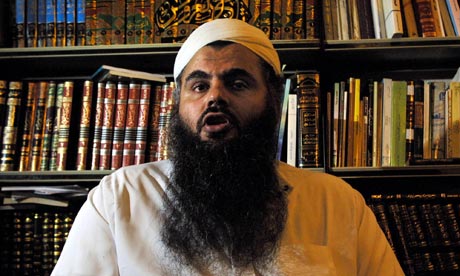
The Home Office clashed openly with judges on Monday when it criticised a decision to free on bail within days the radical Islamist cleric Abu Qatada, who is accused of posing a grave threat to British national security.
Retired police officer wins injury pension ruling
Retired police officer wins injury pension ruling
High court overturns Home Office guidance in landmark legal case that could add £80m to police authorities' bills
 Northumbria police, relying on Home Office guidance, reduced payments to Edward Crudace when he reached 65. Photograph: Owen Humphreys
Police authorities may have to find tens of millions of pounds extra to fund their pension liabilities after a retired inspector won a landmark legal challenge preserving his income.
The ruling by a court in Leeds overturns Home Office guidance that permitted a review of the pensions of injured officers once they reach retirement age and resulted in lower payments.
One estimate suggested it could add £80m to police authorities' bills. A high proportion of police authorities had accepted the guidance.
The test case was brought by Edward Crudace, 67, who served with Northumbria police. He was seriously injured when arresting a prisoner and was forced to retire from the force.
His injuries meant he could not work and he was awarded a substantial injury pension. When he reached the age of 65, however, it was cut by Northumbria police, relying on the Home Office guidance, leaving Crudace with a severely reduced income.
David Lock QC of No5 Chambers, who represented Crudace, argued that the Home Office guidance was unlawful because it led to police injury pensions routinely being reduced to the lowest level when former officers reached the age of 65.
In a high court ruling in Leeds, Judge Behrens reversed the cuts to Crudace's pension and ruled that the Home Office guidance was unlawful because it was inconsistent with the statutory scheme under which the pensions were paid.
The judgment, he acknowledged, would enable other former police officers who had had their pensions reduced in a similar way to apply to police authorities for the decisions to be reversed and for their pensions to be restored.
Crudace's solicitor, Ron Thompson, of the law firm Lake Jackson, said: "This judgment opens the door for thousands of injured police officers who have had their pensions reduced unlawfully to apply to have the decision reversed. When the decision is reviewed they will be entitled to a pension at its proper level and, in many cases, to a substantial backpayment.
"The right thing for police authorities to do now is to identify every former injured police officer whose pension has been wrongly reduced, and to agree to review each one. I hope that the Home Office recognises that the fault for this misconceived guidance lies with officials at the Home Office rather than individual police forces. The cost of putting this debacle right ought to be met by the Home Office and not individual police forces."
Crudace said: "I always knew that my pension had been wrongly reduced but Northumbria Police Authority refused to accept this, and have wasted thousands of pounds of taxpayers' money attempting to defend an unlawful decision.
"I know there are many former police officers who have been injured serving their communities in the same position as me. I hope they will be able to use this landmark decision to get their pensions restored to the level they are entitled to."
The Home Office declined to comment. A spokesperson for Northumbria Police Authority said: "[We] and Northumbria police, along with a number of other authorities and forces, implemented Home Office guidance concerning the granting of injury awards in addition to pensions. The guidance stated that once a retired officer reached state pension age then the force could review their injury award. Following judicial review proceedings the high court has ruled that the guidance is wrong in law.
"Northumbria Police Authority and the force have a duty to ensure the most effective use of public money and acted in good faith when following this guidance. We now welcome the clarity provided on this issue by the high court. As a matter of urgency we will be reviewing all the decisions made in light of this judgment and will be contacting anyone affected personally.
"We also recognise the valuable contribution all our retired officers have given to the community and this in no way should be underestimated."
Mike Barker, the deputy chief executive and solicitor of Northumbria Police Authority, said: "We are still assessing all of the implications of the ruling at this stage and are looking at the impact this may have on the budget."
High court overturns Home Office guidance in landmark legal case that could add £80m to police authorities' bills

Police authorities may have to find tens of millions of pounds extra to fund their pension liabilities after a retired inspector won a landmark legal challenge preserving his income.
The ruling by a court in Leeds overturns Home Office guidance that permitted a review of the pensions of injured officers once they reach retirement age and resulted in lower payments.
One estimate suggested it could add £80m to police authorities' bills. A high proportion of police authorities had accepted the guidance.
The test case was brought by Edward Crudace, 67, who served with Northumbria police. He was seriously injured when arresting a prisoner and was forced to retire from the force.
His injuries meant he could not work and he was awarded a substantial injury pension. When he reached the age of 65, however, it was cut by Northumbria police, relying on the Home Office guidance, leaving Crudace with a severely reduced income.
David Lock QC of No5 Chambers, who represented Crudace, argued that the Home Office guidance was unlawful because it led to police injury pensions routinely being reduced to the lowest level when former officers reached the age of 65.
In a high court ruling in Leeds, Judge Behrens reversed the cuts to Crudace's pension and ruled that the Home Office guidance was unlawful because it was inconsistent with the statutory scheme under which the pensions were paid.
The judgment, he acknowledged, would enable other former police officers who had had their pensions reduced in a similar way to apply to police authorities for the decisions to be reversed and for their pensions to be restored.
Crudace's solicitor, Ron Thompson, of the law firm Lake Jackson, said: "This judgment opens the door for thousands of injured police officers who have had their pensions reduced unlawfully to apply to have the decision reversed. When the decision is reviewed they will be entitled to a pension at its proper level and, in many cases, to a substantial backpayment.
"The right thing for police authorities to do now is to identify every former injured police officer whose pension has been wrongly reduced, and to agree to review each one. I hope that the Home Office recognises that the fault for this misconceived guidance lies with officials at the Home Office rather than individual police forces. The cost of putting this debacle right ought to be met by the Home Office and not individual police forces."
Crudace said: "I always knew that my pension had been wrongly reduced but Northumbria Police Authority refused to accept this, and have wasted thousands of pounds of taxpayers' money attempting to defend an unlawful decision.
"I know there are many former police officers who have been injured serving their communities in the same position as me. I hope they will be able to use this landmark decision to get their pensions restored to the level they are entitled to."
The Home Office declined to comment. A spokesperson for Northumbria Police Authority said: "[We] and Northumbria police, along with a number of other authorities and forces, implemented Home Office guidance concerning the granting of injury awards in addition to pensions. The guidance stated that once a retired officer reached state pension age then the force could review their injury award. Following judicial review proceedings the high court has ruled that the guidance is wrong in law.
"Northumbria Police Authority and the force have a duty to ensure the most effective use of public money and acted in good faith when following this guidance. We now welcome the clarity provided on this issue by the high court. As a matter of urgency we will be reviewing all the decisions made in light of this judgment and will be contacting anyone affected personally.
"We also recognise the valuable contribution all our retired officers have given to the community and this in no way should be underestimated."
Mike Barker, the deputy chief executive and solicitor of Northumbria Police Authority, said: "We are still assessing all of the implications of the ruling at this stage and are looking at the impact this may have on the budget."
Inverness Prison workers face substances allegation
Inverness Prison workers face substances allegation
Two prison workers have been accused of having suspicious substances in their luggage as they returned to Scotland on a flight from Amsterdam.
Customs officials were understood to have detained the pair at Edinburgh Airport before Christmas.
The Scottish Prison Service confirmed a warder at Inverness Prison had been suspended.
Highland Council which employs a drugs counsellor facing the allegation has refused to comment.
The local authority said it did not comment on personnel issues.
Two prison workers have been accused of having suspicious substances in their luggage as they returned to Scotland on a flight from Amsterdam.
Customs officials were understood to have detained the pair at Edinburgh Airport before Christmas.
The Scottish Prison Service confirmed a warder at Inverness Prison had been suspended.
Highland Council which employs a drugs counsellor facing the allegation has refused to comment.
The local authority said it did not comment on personnel issues.
What is wrong with what the Strasbourg court has done for human rights?
What is wrong with what the Strasbourg court has done for human rights?
Why it was felt that there was a need for human rights protection throughout Europe.
The development of a regional system of Human Rights protection operating across Europe can be seen as a direct response to twin concerns. First, in the aftermath of the Second World War, the convention, drawing on the inspiration of the Universal Declaration of Human Rights can be seen as part of a wider response of the Allied Powers in delivering a human rights agenda through which it was believed that the most serious human rights violations which had occurred during the Second World War (most notably, the Holocaust) could be avoided in the future.
Dominic Raab's father fled to Britain to escape Nazi persecution.
Raab grew up in Buckinghamshire, to a Czech father, who came to Britain in 1938 as a Jewish refugee.
Clearly Dominic Raab is ungrateful that this country provided refuge from the Nazi regime, and would perhaps like to adopt some of Hitler's policies?
Mr Raab added: “The last thing the UK needs is the European Courts of Justice in Luxembourg doing for British crime and policing what the Strasbourg court has done for human rights.”
Why it was felt that there was a need for human rights protection throughout Europe.
The development of a regional system of Human Rights protection operating across Europe can be seen as a direct response to twin concerns. First, in the aftermath of the Second World War, the convention, drawing on the inspiration of the Universal Declaration of Human Rights can be seen as part of a wider response of the Allied Powers in delivering a human rights agenda through which it was believed that the most serious human rights violations which had occurred during the Second World War (most notably, the Holocaust) could be avoided in the future.
Dominic Raab's father fled to Britain to escape Nazi persecution.
Raab grew up in Buckinghamshire, to a Czech father, who came to Britain in 1938 as a Jewish refugee.
Clearly Dominic Raab is ungrateful that this country provided refuge from the Nazi regime, and would perhaps like to adopt some of Hitler's policies?
Mr Raab added: “The last thing the UK needs is the European Courts of Justice in Luxembourg doing for British crime and policing what the Strasbourg court has done for human rights.”
'Scroungers' rhetoric over benefits fuels abuse say charities
'Scroungers' rhetoric over benefits fuels abuse say charities
Government focus on alleged fraud and over-claiming to justify cuts in benefits is fuelling abuse against disabled people, charities have warned.
Six groups told the Guardian that a narrative of “benefits scroungers or fakers” was making disabled people increasingly become the target of resentment, which some organisations fear could spill over into hate crimes.
The charities - Scope, Mencap, Leonard Cheshire Disability, the National Autistic Society, Royal National Institute for the Blind (RNIB) and Disability Alliance - said inflammatory media played a part, but laid the blame largely with ministers and civil servants for repeatedly highlighting supposed mass abuse of the system, it was reported.
The Government has pledged to cut the bill for disability living allowance (DLA), which is to be replaced by the personal independence payment (PIP), by 20% by 2015/16.
Last month, minister for disabled people Maria Miller said: “In the past DLA has been poorly managed so we now have a situation where there are hundreds of millions of pounds of overpayments and the vast majority of people get the benefit for life without systematic checks to see if their condition has changed.”
Last April, employment minister Chris Grayling said the “vast majority” of new claimants for sickness benefits were in fact able to go back to work, after official figures showed three-quarters of applicants for employment and support allowance (ESA) failed to qualify for assistance.
Tom Madders, head of campaigns at the National Autistic Society, told the newspaper: “The Department for Work and Pensions is certainly guilty of helping to drive this media narrative around benefits, portraying those who received benefits as workshy scroungers or abusing a system that's really easy to cheat.”
Some disabled people avoid going out because of the hostile climate, or avoid using facilities such as designated parking bays if they “don't look disabled”, it was claimed.
According to polling by Scope, in September two-thirds of people with disabilities said they had experienced recent hostility or taunts, up from 41% four months before.
Scope chief executive Richard Hawkes said: “Disabled people tell us that increasingly people don't believe that they are disabled and suddenly feel empowered to question their entitlement to support.”
Guy Parckar, policy manager for Leonard Cheshire, spoke of an “incredibly strong focus on benefit fraud” within the DWP, which he said was “mentioned at all possible opportunities”.
“There is the impact of potential hate crime, and the issues around that,” he told the Guardian.
The charities' comments come after a warning that highly vulnerable households could be harmed by the Government's planned £26,000 annual benefit cap.
Entrepreneur Emma Harrison, who was appointed by David Cameron to get families back into work, said she was concerned parents of severely disabled children could lose out.
While she accepted the need for welfare reform, she told BBC Radio 5 Live's Pienaar's Politics: “I think that in all big policies that there are going to be people who are going to be trapped, and I think we need to be really, really careful we don't catch the wrong people.”
A Department for Work and Pensions (DWP) spokeswoman said: “We are absolutely committed to supporting disabled people and whilst we already have laws in place to ensure equality, we need to work together and do more to change negative attitudes.
“That is why we have recently launched a consultation on developing a new cross-government disability strategy, with one of the key areas looking at promoting positive attitudes and behaviours towards disabled people and tackling discrimination and harassment wherever they occur.
“Our welfare reforms are designed to restore integrity into the benefits system and to ensure that everyone who needs help and support receives it.”
PA
Government focus on alleged fraud and over-claiming to justify cuts in benefits is fuelling abuse against disabled people, charities have warned.
Six groups told the Guardian that a narrative of “benefits scroungers or fakers” was making disabled people increasingly become the target of resentment, which some organisations fear could spill over into hate crimes.
The charities - Scope, Mencap, Leonard Cheshire Disability, the National Autistic Society, Royal National Institute for the Blind (RNIB) and Disability Alliance - said inflammatory media played a part, but laid the blame largely with ministers and civil servants for repeatedly highlighting supposed mass abuse of the system, it was reported.
The Government has pledged to cut the bill for disability living allowance (DLA), which is to be replaced by the personal independence payment (PIP), by 20% by 2015/16.
Last month, minister for disabled people Maria Miller said: “In the past DLA has been poorly managed so we now have a situation where there are hundreds of millions of pounds of overpayments and the vast majority of people get the benefit for life without systematic checks to see if their condition has changed.”
Last April, employment minister Chris Grayling said the “vast majority” of new claimants for sickness benefits were in fact able to go back to work, after official figures showed three-quarters of applicants for employment and support allowance (ESA) failed to qualify for assistance.
Tom Madders, head of campaigns at the National Autistic Society, told the newspaper: “The Department for Work and Pensions is certainly guilty of helping to drive this media narrative around benefits, portraying those who received benefits as workshy scroungers or abusing a system that's really easy to cheat.”
Some disabled people avoid going out because of the hostile climate, or avoid using facilities such as designated parking bays if they “don't look disabled”, it was claimed.
According to polling by Scope, in September two-thirds of people with disabilities said they had experienced recent hostility or taunts, up from 41% four months before.
Scope chief executive Richard Hawkes said: “Disabled people tell us that increasingly people don't believe that they are disabled and suddenly feel empowered to question their entitlement to support.”
Guy Parckar, policy manager for Leonard Cheshire, spoke of an “incredibly strong focus on benefit fraud” within the DWP, which he said was “mentioned at all possible opportunities”.
“There is the impact of potential hate crime, and the issues around that,” he told the Guardian.
The charities' comments come after a warning that highly vulnerable households could be harmed by the Government's planned £26,000 annual benefit cap.
Entrepreneur Emma Harrison, who was appointed by David Cameron to get families back into work, said she was concerned parents of severely disabled children could lose out.
While she accepted the need for welfare reform, she told BBC Radio 5 Live's Pienaar's Politics: “I think that in all big policies that there are going to be people who are going to be trapped, and I think we need to be really, really careful we don't catch the wrong people.”
A Department for Work and Pensions (DWP) spokeswoman said: “We are absolutely committed to supporting disabled people and whilst we already have laws in place to ensure equality, we need to work together and do more to change negative attitudes.
“That is why we have recently launched a consultation on developing a new cross-government disability strategy, with one of the key areas looking at promoting positive attitudes and behaviours towards disabled people and tackling discrimination and harassment wherever they occur.
“Our welfare reforms are designed to restore integrity into the benefits system and to ensure that everyone who needs help and support receives it.”
PA
Sunday, February 05, 2012
UN Envoy warns Burma to guarantee basic human rights
UN Envoy warns Burma to guarantee basic human rights
By Zin Linn Feb 06, 2012 1:03AM UTC
The Special Rapporteur on the Situation of Human Rights in Myanmar, Tomas Ojea Quintana released a press statement Sunday at Rangon International Airport, Burma. He concluded his six-day mission to Burma (Myanmar) and the current trip was his fifth visit to the country since he was appointed Special Rapporteur in March 2008.
During the mission, he met with the Minister of Home Affairs, the Minister of Defence, the Minister of Border Affairs, the Attorney-General, the Chief Justice of the Supreme Court, the Union Election Commission, the Deputy Minister of Foreign Affairs, the Deputy Minister of Information, the Deputy Minister of Education, the Deputy Minister of Labour, as well as the Speaker and several members of the Pyi Thu Hluttaw, Quintana stated in his press release which appeared in the United Nations Information Center (UNIC) Yangon website.
He also said that during his talks in Nay Pyi Taw he met with some of the Presidential Advisors and representatives of the Ministry of Social Welfare, Relief and Resettlement, as well as with members of the various Government and Parliamentary peacemaking groups, including the Minister of Rail Transportation.
In Rangoon (Yangon), he had met with Daw Aung San Suu Kyi and made productive exchange of views.
Moreover, he met with members of the recently-established National Human Rights Commission and discussed a range of human rights issues. Additionally, Quintana met with three prisoners of conscience in Insein Prison, as well as with released prisoners of conscience, including members of the 88 Generation Students Group.
He also travelled to Karen and Mon States and met with the respective Chief Ministers and representatives of state government, as well as ethnic parties in state parliaments. He concluded his mission receiving a brief talk with the diplomatic community.
Quintana underlined many important legislative reforms which are on the move, including the adoption of the Labour Organizations Law, the Peaceful Demonstration and Gathering Law and the amendment to the Political Party Registration Law.
He said that he was also informed about the process of drafting a revised Prisons Act, a new media law – the Printing Press and Publications Law and new social security law were presently on the move.
He expressed his concerns regarding some of the provisions in the newly-adopted legislation, particularly the Peaceful Demonstration and Gathering Law, the Printing Press and Publications Law.
Quintana said that he worried about lack of adequate consultation with relevant stakeholders, including civil society, on some of the draft laws being prepared.
In his press statement, Special Rapporteur expressed the ongoing tensions and conflict with armed ethnic groups in border areas, particularly in Kachin State. He said that he received continuing allegations of serious human rights violations committed during conflict, including attacks against civilian populations, extrajudicial killings, sexual violence, internal displacement, land confiscations, the use of human shields, the recruitment of child soldiers, as well as forced labour and portering. However, he did not fail to emphasize that he received reports of violations being committed by all parties to the conflict.
One important thing in his Sunday statement was that Quintana called the upcoming by-elections on 1 April as a key test of the Government’s obligation to reforms.
According to Quintana, polls are essential to be free, fair, inclusive and transparent. During his meeting with the Union Election Commission, he was informed that the use of international observers was under consideration. In last November 2010 elections, international poll-watchers were not allowed.
Furthermore, he pointed out to take lessons from the 2010 elections. Problems such as the high cost of registration, the use of advance votes, and the procedures and costs for filing a complaint should be addressed as a matter of priority.
Quintana basically reminded the authorities to respect and guarantee for the freedoms of expression, assembly and association which are basic citizen’s rights in the Universal Declaration of Human Rights.
By Zin Linn Feb 06, 2012 1:03AM UTC
The Special Rapporteur on the Situation of Human Rights in Myanmar, Tomas Ojea Quintana released a press statement Sunday at Rangon International Airport, Burma. He concluded his six-day mission to Burma (Myanmar) and the current trip was his fifth visit to the country since he was appointed Special Rapporteur in March 2008.
During the mission, he met with the Minister of Home Affairs, the Minister of Defence, the Minister of Border Affairs, the Attorney-General, the Chief Justice of the Supreme Court, the Union Election Commission, the Deputy Minister of Foreign Affairs, the Deputy Minister of Information, the Deputy Minister of Education, the Deputy Minister of Labour, as well as the Speaker and several members of the Pyi Thu Hluttaw, Quintana stated in his press release which appeared in the United Nations Information Center (UNIC) Yangon website.
He also said that during his talks in Nay Pyi Taw he met with some of the Presidential Advisors and representatives of the Ministry of Social Welfare, Relief and Resettlement, as well as with members of the various Government and Parliamentary peacemaking groups, including the Minister of Rail Transportation.
In Rangoon (Yangon), he had met with Daw Aung San Suu Kyi and made productive exchange of views.
Moreover, he met with members of the recently-established National Human Rights Commission and discussed a range of human rights issues. Additionally, Quintana met with three prisoners of conscience in Insein Prison, as well as with released prisoners of conscience, including members of the 88 Generation Students Group.
He also travelled to Karen and Mon States and met with the respective Chief Ministers and representatives of state government, as well as ethnic parties in state parliaments. He concluded his mission receiving a brief talk with the diplomatic community.
Quintana underlined many important legislative reforms which are on the move, including the adoption of the Labour Organizations Law, the Peaceful Demonstration and Gathering Law and the amendment to the Political Party Registration Law.
He said that he was also informed about the process of drafting a revised Prisons Act, a new media law – the Printing Press and Publications Law and new social security law were presently on the move.
He expressed his concerns regarding some of the provisions in the newly-adopted legislation, particularly the Peaceful Demonstration and Gathering Law, the Printing Press and Publications Law.
Quintana said that he worried about lack of adequate consultation with relevant stakeholders, including civil society, on some of the draft laws being prepared.
In his press statement, Special Rapporteur expressed the ongoing tensions and conflict with armed ethnic groups in border areas, particularly in Kachin State. He said that he received continuing allegations of serious human rights violations committed during conflict, including attacks against civilian populations, extrajudicial killings, sexual violence, internal displacement, land confiscations, the use of human shields, the recruitment of child soldiers, as well as forced labour and portering. However, he did not fail to emphasize that he received reports of violations being committed by all parties to the conflict.
One important thing in his Sunday statement was that Quintana called the upcoming by-elections on 1 April as a key test of the Government’s obligation to reforms.
According to Quintana, polls are essential to be free, fair, inclusive and transparent. During his meeting with the Union Election Commission, he was informed that the use of international observers was under consideration. In last November 2010 elections, international poll-watchers were not allowed.
Furthermore, he pointed out to take lessons from the 2010 elections. Problems such as the high cost of registration, the use of advance votes, and the procedures and costs for filing a complaint should be addressed as a matter of priority.
Quintana basically reminded the authorities to respect and guarantee for the freedoms of expression, assembly and association which are basic citizen’s rights in the Universal Declaration of Human Rights.
Can autism be used as a hacking defence?
Can autism be used as a hacking defence?

Computer hacking and autism are increasingly mentioned in the same breath thanks to several high profile court cases but Channel 4 News asks if autism can really be used as a defence to online crime?
Prosecutors claim the condition, typified by fixated behaviour and poor social skills, has led some to break into computer systems.
Dylan Wilson was diagnosed with a form of autism - called Asperger Syndrome - when he was 16. Now aged 39 he has spent years in his bedroom in Lincoln working on his computer. Often more comfortable with cyberspace than face-to-face friendships.
Mr Wilson said: "People with Asperger Syndrome think logically, computers think the same. It's like we think alike. You could say a dog is a man's best friend: computers are our best friend."
It is this condition - Asperger Syndrome - that is now under the spotlight. Both in America and the UK, it is increasingly being used as a defence in high profile hacking cases.
Those with the syndrome are often obsessive, may lack empathy, and have difficulty interacting with others. People therefore who are capable of sitting for hours on end in front of a computer looking for ways to break into a system.
Dylan Wilson himself has never been in trouble with the law and is keen that not everybody with autism is tarnished with that hackers' brush.
He said: "There's people out there who probably still don't understand Asperger Syndrome.
"People don't understand about their social skills, and because their relationship with computers is good, people are worried that they may be tomorrow's alleged hackers, and that might send alarm bells ringing."
The hackers' disease?
But there may be a reason those alarm bells are ringing. WikiLeaks founder Julian Assange calls it the hackers' disease.
All hackers - he said - himself included are a little bit autistic. Most recently Ryan Cleary - alleged to be a leader of the hacker group LulzSec was granted bail after he claimed he has Asperger Syndrome. And Gary McKinnon - fighting extradition to the US after he was caught breaking into the NASA and Pentagon computers - is also using it as a defence.
Simon Baron-Cohen, the director of the Autism Research Centre at Cambridge University, said: "People with autism tend to know right from wrong and often they have a very strong sense of what is good and what is bad; their sense of morality is very clear. But in some cases it may be that they become so preoccupied by their search for information that lose sight of the consequences of their actions."
And this was the case, he said, with Gary McKinnon who had come to his clinic seeking a diagnosis of Asperger's.
He said: "In his case the computer was the tool he was using to get at information that he thought would be in the best interests of humanity so he pursued it, and he didn't really let go of that, it became an obsession in his case."
There is doubt among experts that it can be used as a defence by the sheer fact a person with the condition is likely to know right from wrong.
Computer hacking expert Peter Sommer said it is only recently it has been used a legal tool. "Looking back at hacker cases I have done a fair number where the accused have displayed behaviour that is often now associated with Asperger's and that includes obsessional activity, great determination, a sense of invincibility and a lot of arrogance
"But that doesn't amount of lack of understanding ultimately of the difference between right and wrong, and that as I understand it is the real legal test."
The next few months will show whether this does work as a defence - Cleary's case comes up in May; a decision on McKinnon extradition is in July. But what it will also highlight is something much more positive. Experts like Professor Baron-Cohen say this is a golden opportunity to harness the skills that people like this have and support them in putting their talents to good use.

Computer hacking and autism are increasingly mentioned in the same breath thanks to several high profile court cases but Channel 4 News asks if autism can really be used as a defence to online crime?
Prosecutors claim the condition, typified by fixated behaviour and poor social skills, has led some to break into computer systems.
Dylan Wilson was diagnosed with a form of autism - called Asperger Syndrome - when he was 16. Now aged 39 he has spent years in his bedroom in Lincoln working on his computer. Often more comfortable with cyberspace than face-to-face friendships.
Mr Wilson said: "People with Asperger Syndrome think logically, computers think the same. It's like we think alike. You could say a dog is a man's best friend: computers are our best friend."
It is this condition - Asperger Syndrome - that is now under the spotlight. Both in America and the UK, it is increasingly being used as a defence in high profile hacking cases.
Those with the syndrome are often obsessive, may lack empathy, and have difficulty interacting with others. People therefore who are capable of sitting for hours on end in front of a computer looking for ways to break into a system.
Dylan Wilson himself has never been in trouble with the law and is keen that not everybody with autism is tarnished with that hackers' brush.
He said: "There's people out there who probably still don't understand Asperger Syndrome.
"People don't understand about their social skills, and because their relationship with computers is good, people are worried that they may be tomorrow's alleged hackers, and that might send alarm bells ringing."
The hackers' disease?
But there may be a reason those alarm bells are ringing. WikiLeaks founder Julian Assange calls it the hackers' disease.
All hackers - he said - himself included are a little bit autistic. Most recently Ryan Cleary - alleged to be a leader of the hacker group LulzSec was granted bail after he claimed he has Asperger Syndrome. And Gary McKinnon - fighting extradition to the US after he was caught breaking into the NASA and Pentagon computers - is also using it as a defence.
Simon Baron-Cohen, the director of the Autism Research Centre at Cambridge University, said: "People with autism tend to know right from wrong and often they have a very strong sense of what is good and what is bad; their sense of morality is very clear. But in some cases it may be that they become so preoccupied by their search for information that lose sight of the consequences of their actions."
And this was the case, he said, with Gary McKinnon who had come to his clinic seeking a diagnosis of Asperger's.
He said: "In his case the computer was the tool he was using to get at information that he thought would be in the best interests of humanity so he pursued it, and he didn't really let go of that, it became an obsession in his case."
There is doubt among experts that it can be used as a defence by the sheer fact a person with the condition is likely to know right from wrong.
Computer hacking expert Peter Sommer said it is only recently it has been used a legal tool. "Looking back at hacker cases I have done a fair number where the accused have displayed behaviour that is often now associated with Asperger's and that includes obsessional activity, great determination, a sense of invincibility and a lot of arrogance
"But that doesn't amount of lack of understanding ultimately of the difference between right and wrong, and that as I understand it is the real legal test."
The next few months will show whether this does work as a defence - Cleary's case comes up in May; a decision on McKinnon extradition is in July. But what it will also highlight is something much more positive. Experts like Professor Baron-Cohen say this is a golden opportunity to harness the skills that people like this have and support them in putting their talents to good use.

Saturday, February 04, 2012
IPP sentences
IPP sentences
SHAD Ali believes that the type of sentence given to Jackson – an indeterminate public protection sentence (IPP) – should be abolished.
These type of sentences were introduced under the previous Labour government in 2003 and can keep criminals in prison for much longer than their sentence from the court.
Justice secretary and Rushcliffe MP Kenneth Clarke addressed the House of Commons in November last year and called for these sentences to be abolished.
At the time, there were more than 6,500 offenders in prison on IPP sentences – and more than 3,000 of them were incarcerated beyond their original court sentences.
Mr Ali said: "I don't believe the IPP is the answer. In too many incidents this type of sentence is being used as a tool to keep prisoners locked up and then the key is thrown away.
"I don't believe prison is offering these people the support they need to become rehabilitated back into society.
"In Glenn Jackson's case, what better person to offer him support than the person he attacked? Whatever his situation I am at least willing to try and make things better for him."
Mr Clarke's plans to scrap the IPP were backed in the House of Commons by 311 votes to 235, a majority of 76.
The reforms form part of the Legal Aid, Sentencing and Punishment of Offenders Bill which is currently going through the House of Lords and is due to be discussed next at a committee meeting on February 7.
SHAD Ali believes that the type of sentence given to Jackson – an indeterminate public protection sentence (IPP) – should be abolished.
These type of sentences were introduced under the previous Labour government in 2003 and can keep criminals in prison for much longer than their sentence from the court.
Justice secretary and Rushcliffe MP Kenneth Clarke addressed the House of Commons in November last year and called for these sentences to be abolished.
At the time, there were more than 6,500 offenders in prison on IPP sentences – and more than 3,000 of them were incarcerated beyond their original court sentences.
Mr Ali said: "I don't believe the IPP is the answer. In too many incidents this type of sentence is being used as a tool to keep prisoners locked up and then the key is thrown away.
"I don't believe prison is offering these people the support they need to become rehabilitated back into society.
"In Glenn Jackson's case, what better person to offer him support than the person he attacked? Whatever his situation I am at least willing to try and make things better for him."
Mr Clarke's plans to scrap the IPP were backed in the House of Commons by 311 votes to 235, a majority of 76.
The reforms form part of the Legal Aid, Sentencing and Punishment of Offenders Bill which is currently going through the House of Lords and is due to be discussed next at a committee meeting on February 7.
For mentally ill inmates, health care behind bars is often out of reach
For mentally ill inmates, health care behind bars is often out of reach
By Elizabeth Chuck, msnbc.com
A man who was declared suicidal by a New Mexico jail and alleges he was then left to rot in solitary confinement for nearly two years is just one of many former inmates who say they were denied essential mental health services while incarcerated at that detention center, which like others across the country has struggled with how to treat the mentally ill.
Stephen Slevin, 57, made headlines last week when a jury awarded him $22 million after he alleged inhumane treatment in the Dona Ana County Detention Center following his arrest in August 2005 on charges of driving while under the influence and possession of a stolen vehicle.
But a search of Dona Ana County court records reveals the detention center was also hit with a class-action lawsuit six months prior to Slevins', in which 13 former inmates alleged their constitutional rights to mental health care had been "continually and persistently ignored."
The lawsuit was settled in 2010, with a judgment of $400,000 for the plaintiffs and a commitment from the county to change its practices.
According to criminal justice experts, many other jails and prisons have struggled to adequately handle mentally ill inmates. Few areas of the country, they say, have the money and resources and staff to handle such a challenging population.
"The Supreme Court has established that you have a constitutional right to a basic level of adequate health care, which now includes mental health care," Thomas Hafemeister, an associate professor at the University of Virginia School of Law, told msnbc.com. "They've recognized that there tends to be limited resources in this setting. As long as a qualified professional has examined the inmate and exercised his or her judgment as to what needs to be done, that's all that is required."
'Cruel and unusual'
But Hafemeister, who has written about alternatives to the traditional criminal justice system for the mentally ill, explained that the definition of a "qualified professional" is a loose one.
"Some would argue for inmates, all that is required is medication," he said, meaning anyone with a medical degree, from a physician to a psychiatrist, could be considered qualified.
"Often it's very expensive. They're only willing to come in for an hour a week, and they zoom through very quickly. It can be a very cursory examination," Hafemeister said.
Slevin was detained for 22 months, released in June of 2007 without ever having been given a trial. By the time he was freed, he was deemed mentally incompetent, and his charges were dropped.
Slevin claims the only response he got while in Dona Ana Detention Center to his repeated requests for antidepressants was an increase in sedatives. Other mentally ill inmates at Dona Ana, according to the class-action lawsuit, struggled to get adequate care as well. One allegedly was punished by a medical technician, who discontinued his medications for two weeks; others complained of side effects but were not offered alternatives, the suit said.
“A jail like Dona Ana County was trying for years to cut costs, and nothing would force them to spend the money that they’re constitutionally required to,” Brendan Egan, an attorney who represented the plaintiffs on behalf of the ACLU and is now in private practice, told msnbc.com. “It’s cruel and unusual punishment. They weren’t willing to put money into it, even though they made money off of this jail. They’re paying the price for how they treated people for years.”
The primary plaintiff named in that suit, Jaime Bravo, was jailed from April 2007 until February 2008 after a domestic dispute. Bravo had depression, anxiety and acute psychosis, the suit said.
Four times during his detainment, Bravo attempted suicide, and each time he was then put in a padded cell or a restraint cell, said court documents.
“On or about November 15, 2007, Mr. Bravo made a fourth suicide attempt, by cutting his arm with a razor blade, necessitating stitches. DACDC staff placed him in a padded cell as a consequence … On or about November 16, 2007, Mr. Bravo tore out his sutures. DACDC staff placed him in a restraint chair as a consequence.”
In jail, mental ilness will 'get exponentially worse'
While Dona Ana County was ordered to pay a total of $400,000 to the plaintiffs, a small amount compared to Slevin’s judgment, the bigger reward was that the jail changed how it handled mentally ill inmates, Egan said.
The jail renovated an entire section and “turned it into a very humane and real mental health unit,” he said. Officials also dedicated beds at a separate mental health hospital staffed by jail guards for the sickest detainees.
“Even if you take someone who has a slight mental illness like depression and you put them in a regular jail, they get worse,” Egan said. “[At Dona Ana County], they would just lock them in. They already had issues and you lock them up 22, 23 hours a day – they’re going to get exponentially worse.”
Just last month, the county approved a $2 million plan for a crisis triage center, which would offer an alternative for mentally ill people other than jail – something Egan believes will help.
“There were no mental health facilities or treatment for homeless people on the street, so you would have people on the street getting arrested basically for being mentally ill,” Egan said. “But once they got arrested, the county commissioners didn’t provide resources.”
According to Fred Osher, director of health systems and services policy at the Council of State Governments Justice Center, people with mental disorders are overrepresented in the mental health system.
"There's a variety of factors that contribute, but one of the research studies that I did looked at two jails in Maryland and three in New York. Seventy percent [of inmates] met the criteria for mental illness," he told msnbc.com.
Nationwide, prevalence of severe mental illness among inmates is at least 15 percent, said Richard Bonnie, director of the University of Virginia’s Institute of Law, Psychiatry, and Public Policy.
“There are many factors at work here, but many us involved in this field are convinced that diversion from the criminal justice system into mental health services … can alleviate the problem without compromising public safety,” he told msnbc.com via email.
Jail diversion options include drug courts, where a substance abuse program is worked out instead of a jail sentencing; mental health courts, where a behavioral contract including drug tests and treatment appointments is drawn up; and sometimes, assignment to a mental health probation officer who is trained to handle mental issues and knows how to direct someone to health services.
"Lots of people have recognized there's this population with severe mental disorders that just isn't going to do well in a prison population," said Hafemeister, from the University of Virginia Law School.
Care doesn't have to cost more
And it doesn't always have to be expensive to divert those with mental issues, added Osher.
"What many systems are coming to realize is if you provide alternatives, then you can reduce length of stay. You can actually have this be a resource-neutral event. It doesn't necessarily require an infusion of dollars," he said. "We're spending tons of money warehousing, having people in a revolving door without producing good outcomes."
He cited Montgomery County, Md. as a successful example.
"They do a really nice job in screening and identifying folks with mental illness and diverting them when possible," he said. The county also tries get to them in psychiatric programs and help them with re-entry into the community, which reduces chances of them returning to jail, and helps them with their medication management as they transition out.
Similar programs are also happening at Alleghany County Jail in Pittsburgh and Miami-Dade, he said. Riker's Island in New York is undergoing a major transformation with their mental health care as well.
"Good things are happening at Riker's because of a settlement. The folks at Rikers with mental illness were ... without any resources to fend for themselves," he said. Baltimore and Memphis jails have also reformed their mental health care after being subject to lawsuits.
Training police officers to recognize mental illness is another key, Osher said, so those who need medical help can hopefully get diverted to emergency rooms or psychiatric centers before they are sent to jails in the first place - but only if that's not where they should be.
"We're not giving people a pass because they have mental illness," Osher said. "We're not being soft on crime. For those individuals that don't pose a public safety risk, there are these alternatives. There are treatments that can be provided."
By Elizabeth Chuck, msnbc.com
A man who was declared suicidal by a New Mexico jail and alleges he was then left to rot in solitary confinement for nearly two years is just one of many former inmates who say they were denied essential mental health services while incarcerated at that detention center, which like others across the country has struggled with how to treat the mentally ill.
Stephen Slevin, 57, made headlines last week when a jury awarded him $22 million after he alleged inhumane treatment in the Dona Ana County Detention Center following his arrest in August 2005 on charges of driving while under the influence and possession of a stolen vehicle.
But a search of Dona Ana County court records reveals the detention center was also hit with a class-action lawsuit six months prior to Slevins', in which 13 former inmates alleged their constitutional rights to mental health care had been "continually and persistently ignored."
The lawsuit was settled in 2010, with a judgment of $400,000 for the plaintiffs and a commitment from the county to change its practices.
According to criminal justice experts, many other jails and prisons have struggled to adequately handle mentally ill inmates. Few areas of the country, they say, have the money and resources and staff to handle such a challenging population.
"The Supreme Court has established that you have a constitutional right to a basic level of adequate health care, which now includes mental health care," Thomas Hafemeister, an associate professor at the University of Virginia School of Law, told msnbc.com. "They've recognized that there tends to be limited resources in this setting. As long as a qualified professional has examined the inmate and exercised his or her judgment as to what needs to be done, that's all that is required."
'Cruel and unusual'
But Hafemeister, who has written about alternatives to the traditional criminal justice system for the mentally ill, explained that the definition of a "qualified professional" is a loose one.
"Some would argue for inmates, all that is required is medication," he said, meaning anyone with a medical degree, from a physician to a psychiatrist, could be considered qualified.
"Often it's very expensive. They're only willing to come in for an hour a week, and they zoom through very quickly. It can be a very cursory examination," Hafemeister said.
Slevin was detained for 22 months, released in June of 2007 without ever having been given a trial. By the time he was freed, he was deemed mentally incompetent, and his charges were dropped.
Slevin claims the only response he got while in Dona Ana Detention Center to his repeated requests for antidepressants was an increase in sedatives. Other mentally ill inmates at Dona Ana, according to the class-action lawsuit, struggled to get adequate care as well. One allegedly was punished by a medical technician, who discontinued his medications for two weeks; others complained of side effects but were not offered alternatives, the suit said.
“A jail like Dona Ana County was trying for years to cut costs, and nothing would force them to spend the money that they’re constitutionally required to,” Brendan Egan, an attorney who represented the plaintiffs on behalf of the ACLU and is now in private practice, told msnbc.com. “It’s cruel and unusual punishment. They weren’t willing to put money into it, even though they made money off of this jail. They’re paying the price for how they treated people for years.”
The primary plaintiff named in that suit, Jaime Bravo, was jailed from April 2007 until February 2008 after a domestic dispute. Bravo had depression, anxiety and acute psychosis, the suit said.
Four times during his detainment, Bravo attempted suicide, and each time he was then put in a padded cell or a restraint cell, said court documents.
“On or about November 15, 2007, Mr. Bravo made a fourth suicide attempt, by cutting his arm with a razor blade, necessitating stitches. DACDC staff placed him in a padded cell as a consequence … On or about November 16, 2007, Mr. Bravo tore out his sutures. DACDC staff placed him in a restraint chair as a consequence.”
In jail, mental ilness will 'get exponentially worse'
While Dona Ana County was ordered to pay a total of $400,000 to the plaintiffs, a small amount compared to Slevin’s judgment, the bigger reward was that the jail changed how it handled mentally ill inmates, Egan said.
The jail renovated an entire section and “turned it into a very humane and real mental health unit,” he said. Officials also dedicated beds at a separate mental health hospital staffed by jail guards for the sickest detainees.
“Even if you take someone who has a slight mental illness like depression and you put them in a regular jail, they get worse,” Egan said. “[At Dona Ana County], they would just lock them in. They already had issues and you lock them up 22, 23 hours a day – they’re going to get exponentially worse.”
Just last month, the county approved a $2 million plan for a crisis triage center, which would offer an alternative for mentally ill people other than jail – something Egan believes will help.
“There were no mental health facilities or treatment for homeless people on the street, so you would have people on the street getting arrested basically for being mentally ill,” Egan said. “But once they got arrested, the county commissioners didn’t provide resources.”
According to Fred Osher, director of health systems and services policy at the Council of State Governments Justice Center, people with mental disorders are overrepresented in the mental health system.
"There's a variety of factors that contribute, but one of the research studies that I did looked at two jails in Maryland and three in New York. Seventy percent [of inmates] met the criteria for mental illness," he told msnbc.com.
Nationwide, prevalence of severe mental illness among inmates is at least 15 percent, said Richard Bonnie, director of the University of Virginia’s Institute of Law, Psychiatry, and Public Policy.
“There are many factors at work here, but many us involved in this field are convinced that diversion from the criminal justice system into mental health services … can alleviate the problem without compromising public safety,” he told msnbc.com via email.
Jail diversion options include drug courts, where a substance abuse program is worked out instead of a jail sentencing; mental health courts, where a behavioral contract including drug tests and treatment appointments is drawn up; and sometimes, assignment to a mental health probation officer who is trained to handle mental issues and knows how to direct someone to health services.
"Lots of people have recognized there's this population with severe mental disorders that just isn't going to do well in a prison population," said Hafemeister, from the University of Virginia Law School.
Care doesn't have to cost more
And it doesn't always have to be expensive to divert those with mental issues, added Osher.
"What many systems are coming to realize is if you provide alternatives, then you can reduce length of stay. You can actually have this be a resource-neutral event. It doesn't necessarily require an infusion of dollars," he said. "We're spending tons of money warehousing, having people in a revolving door without producing good outcomes."
He cited Montgomery County, Md. as a successful example.
"They do a really nice job in screening and identifying folks with mental illness and diverting them when possible," he said. The county also tries get to them in psychiatric programs and help them with re-entry into the community, which reduces chances of them returning to jail, and helps them with their medication management as they transition out.
Similar programs are also happening at Alleghany County Jail in Pittsburgh and Miami-Dade, he said. Riker's Island in New York is undergoing a major transformation with their mental health care as well.
"Good things are happening at Riker's because of a settlement. The folks at Rikers with mental illness were ... without any resources to fend for themselves," he said. Baltimore and Memphis jails have also reformed their mental health care after being subject to lawsuits.
Training police officers to recognize mental illness is another key, Osher said, so those who need medical help can hopefully get diverted to emergency rooms or psychiatric centers before they are sent to jails in the first place - but only if that's not where they should be.
"We're not giving people a pass because they have mental illness," Osher said. "We're not being soft on crime. For those individuals that don't pose a public safety risk, there are these alternatives. There are treatments that can be provided."
Easy come easy go...
Easy come easy go...
Yesterday the BBC finally paid me the £100 it owed for taking part in a BBC 2 documentary.
In 2 hours it was spent!
£100 just does not go anywhere these days!
Yesterday the BBC finally paid me the £100 it owed for taking part in a BBC 2 documentary.
In 2 hours it was spent!
£100 just does not go anywhere these days!
Judge's lock picker query after Exeter court door jams
Judge's lock picker query after Exeter court door jams

A Devon judge said he was surprised there were no lock pickers in court after the door to the dock in his courtroom jammed shut.
Proceedings at Exeter Crown Court were suspended while security staff tried to open the glass door of the dock.
Defendants on bail had to stand or sit in the well of the court because they could not access the secure area.
Seventeen people were listed to appear before Judge Graham Cottle, who said a picker could have had extra credit.
Judge Cottle said: "I'm very surprised that particularly on a Friday morning there is nobody in the building who can pick a lock.
"I may be able to give credit for something other than a guilty plea."
The crown court building, in Southernhay Gardens, was opened in 2004.
It is hoped the lock will be repaired next week.
Court managers have not been available for comment.

A Devon judge said he was surprised there were no lock pickers in court after the door to the dock in his courtroom jammed shut.
Proceedings at Exeter Crown Court were suspended while security staff tried to open the glass door of the dock.
Defendants on bail had to stand or sit in the well of the court because they could not access the secure area.
Seventeen people were listed to appear before Judge Graham Cottle, who said a picker could have had extra credit.
Judge Cottle said: "I'm very surprised that particularly on a Friday morning there is nobody in the building who can pick a lock.
"I may be able to give credit for something other than a guilty plea."
The crown court building, in Southernhay Gardens, was opened in 2004.
It is hoped the lock will be repaired next week.
Court managers have not been available for comment.
The cynical world of America's private prisons
The cynical world of America's private prisons
A major factor in why US prisons are overflowing is the highly profitable privatised industry that has an incentive to fill them
 Joe Arpaio, sheriff of Maricopa county, Arizona, orders illegal immigrants to be moved into a separate area of a detention centre. Photograph: Ross D Franklin/AP
In the past few decades, changes in sentencing laws and get-tough-on-crime policies have led to an explosion in America's prison population. Funding this incarceration binge has been an enormous drain on taxpayer dollars, with some states now spending more to lock up their citizens than to provide their children with education. It's difficult to spin anything positive out of that scenario, but as it turns out, even this blackest of clouds has a silver lining – silver as in dollars, that is, for the private prison industry.
In 2010, two of the largest private prison companies in America, GEO Group, Inc and the Corrections Corporation of America (CCA) generated over $4bn dollars in profit between them. Their respective CEOs, George Zoley and Damon Hininger, each earned well in excess of $3m in 2010. Although there have been some concerns that any relaxation of sentencing or drug laws might negatively impact their bottom line (profit), they remain confident in their ability to drum up new ways of generating their taxpayer-funded commodities (also known as inmates): lobbying California for their excess prisoners being one; caging juveniles on trivial charges another. But the favorite, by a long shot, is the accelerated drive to lock up America's immigrants.
So far, these strategies seem to be working nicely. In their 2011 third-quarter earnings report, the GEO group proudly announced an increase in profits from the previous year. This joyous news can be at least partially attributed to changes in immigration law, particularly in states like Arizona and Oklahoma, which allow for, among other things, the indefinite detention of illegal immigrants, including those whose asylum proceedings are underway. The majority of immigrants who are picked up by law enforcement officials, mostly on civil charges, like being caught with a broken tail light for instance, will end up in privately run prisons. In many of these facilities, they will be charged $5 per minute to call their loved ones, whilst earning $1 per day for their labor, from which the corporation running the facility will profit.
According to an investigation by NPR, in 2008, two men, allegedly from CCA, showed up in a small Arizona town, close to the Mexican border to pitch the construction of a new prison specifically to house women and children who were illegal immigrants. Local officials were not convinced that the prison could be kept full, but that is, perhaps, because they were unaware that, at the time, CCA was one of the key groups involved in drafting and promoting the Arizona Senate Bill 1070 (which requires police to lock up anyone who cannot prove they came to the US legally), under the auspices of a secretive group called the American Legislative Exchange Council (ALEC), which specializes in model legislation.
It's hard to think of a more cynical way to earn one's fortune than to devise means of placing innocent children in prison. But if no one's going to stop you, then why the hell not?
It's not all sunshine and roses in private prison land, however. These dens of inequity were sold to the public as super-efficient, money-saving, job-creating dream machines. The trouble is, most of the savings are derived from hiring too few prison guards and paying them on average 30-40% less than their counterparts in government-run prisons. According to Brian Dawe, executive director of the American Correctional Officers (ACO), an organization that promotes the well-being and safety of corrections officers (COs), no self-respecting CO wants to work in a private prison – where their chances of being assaulted are 49% higher, where escapes are commonplace, where riots are frequent and where the staff are ill-equipped to cope.
It might seem counterintuitive to create conditions that are conducive to outbreaks of violence, until you realize that violence is good for business. Inmates who act out tend to get time added to their sentence. Time added to sentences means more money, and more money is exactly what the CEOs and their shareholders are interested in.
This brings me to what the ACLU's David Shapiro, who authored the recent report Banking on Bondage, calls a "fundamentally flawed incentive". In a sane society, the purpose of a prison should be to keep the public safe. The goal should not be to encourage criminal behavior or to find new ways to incriminate people, so that certain private individuals can line their pockets.
It's an added kick in the face that these corporations which profit from human misery are doing so at the taxpayers' expense and to the detriment of public safety. But until the public cries foul, there will be no stopping them.
Interested parties can write to:
Sadhbh Walshe
PO Box 1466
New York, NY 10150
Or send an email to: sadhbh@ymail.com
A major factor in why US prisons are overflowing is the highly profitable privatised industry that has an incentive to fill them

In the past few decades, changes in sentencing laws and get-tough-on-crime policies have led to an explosion in America's prison population. Funding this incarceration binge has been an enormous drain on taxpayer dollars, with some states now spending more to lock up their citizens than to provide their children with education. It's difficult to spin anything positive out of that scenario, but as it turns out, even this blackest of clouds has a silver lining – silver as in dollars, that is, for the private prison industry.
In 2010, two of the largest private prison companies in America, GEO Group, Inc and the Corrections Corporation of America (CCA) generated over $4bn dollars in profit between them. Their respective CEOs, George Zoley and Damon Hininger, each earned well in excess of $3m in 2010. Although there have been some concerns that any relaxation of sentencing or drug laws might negatively impact their bottom line (profit), they remain confident in their ability to drum up new ways of generating their taxpayer-funded commodities (also known as inmates): lobbying California for their excess prisoners being one; caging juveniles on trivial charges another. But the favorite, by a long shot, is the accelerated drive to lock up America's immigrants.
So far, these strategies seem to be working nicely. In their 2011 third-quarter earnings report, the GEO group proudly announced an increase in profits from the previous year. This joyous news can be at least partially attributed to changes in immigration law, particularly in states like Arizona and Oklahoma, which allow for, among other things, the indefinite detention of illegal immigrants, including those whose asylum proceedings are underway. The majority of immigrants who are picked up by law enforcement officials, mostly on civil charges, like being caught with a broken tail light for instance, will end up in privately run prisons. In many of these facilities, they will be charged $5 per minute to call their loved ones, whilst earning $1 per day for their labor, from which the corporation running the facility will profit.
According to an investigation by NPR, in 2008, two men, allegedly from CCA, showed up in a small Arizona town, close to the Mexican border to pitch the construction of a new prison specifically to house women and children who were illegal immigrants. Local officials were not convinced that the prison could be kept full, but that is, perhaps, because they were unaware that, at the time, CCA was one of the key groups involved in drafting and promoting the Arizona Senate Bill 1070 (which requires police to lock up anyone who cannot prove they came to the US legally), under the auspices of a secretive group called the American Legislative Exchange Council (ALEC), which specializes in model legislation.
It's hard to think of a more cynical way to earn one's fortune than to devise means of placing innocent children in prison. But if no one's going to stop you, then why the hell not?
It's not all sunshine and roses in private prison land, however. These dens of inequity were sold to the public as super-efficient, money-saving, job-creating dream machines. The trouble is, most of the savings are derived from hiring too few prison guards and paying them on average 30-40% less than their counterparts in government-run prisons. According to Brian Dawe, executive director of the American Correctional Officers (ACO), an organization that promotes the well-being and safety of corrections officers (COs), no self-respecting CO wants to work in a private prison – where their chances of being assaulted are 49% higher, where escapes are commonplace, where riots are frequent and where the staff are ill-equipped to cope.
It might seem counterintuitive to create conditions that are conducive to outbreaks of violence, until you realize that violence is good for business. Inmates who act out tend to get time added to their sentence. Time added to sentences means more money, and more money is exactly what the CEOs and their shareholders are interested in.
This brings me to what the ACLU's David Shapiro, who authored the recent report Banking on Bondage, calls a "fundamentally flawed incentive". In a sane society, the purpose of a prison should be to keep the public safe. The goal should not be to encourage criminal behavior or to find new ways to incriminate people, so that certain private individuals can line their pockets.
It's an added kick in the face that these corporations which profit from human misery are doing so at the taxpayers' expense and to the detriment of public safety. But until the public cries foul, there will be no stopping them.
Interested parties can write to:
Sadhbh Walshe
PO Box 1466
New York, NY 10150
Or send an email to: sadhbh@ymail.com
Friday, February 03, 2012
£6M more paid to prisoners in compensation for Parole Board delays
£6M more paid to prisoners in compensation for Parole Board delays
The Inside Time reports (hard copy, story not available online) that parole delays cost £6m as more prisoners seek compensation.
A National Audit Office internal report states that it is costing £6m per year in compensation payouts. In addition, there is the cost to the taxpayers of keeping prisoners in prison after they should have been released.
Court decisions have awarded prisoners £1,000 per month for unlawful imprisonment. The Parole Board is to waste even more of taxpayers money as it seeks to overturn the court decisions at the UK Supreme Court.
The Inside Time reports (hard copy, story not available online) that parole delays cost £6m as more prisoners seek compensation.
A National Audit Office internal report states that it is costing £6m per year in compensation payouts. In addition, there is the cost to the taxpayers of keeping prisoners in prison after they should have been released.
Court decisions have awarded prisoners £1,000 per month for unlawful imprisonment. The Parole Board is to waste even more of taxpayers money as it seeks to overturn the court decisions at the UK Supreme Court.
The veto that wasn’t
The coalition and Europe
The veto that wasn’t
Conservative MPs wonder what their leader’s act of defiance amounts to
The Economist, Feb 4th 2012

FOR all its eventfulness, 2011 only produced one incident that really shifted the opinion polls. David Cameron’s refusal to support a new European Union (EU) treaty last December went down well with voters, who rewarded the Conservatives with their first lead over Labour in a year. It also cheered Tory MPs, many of whom had never warmed to their leader.
Their initial joy increasingly looks misplaced, and they know it. Mr Cameron had initially said that the countries which signed up to the new “fiscal compact” to strengthen the euro—potentially all 26 other members of the union—would not be able to use EU institutions such as the Commission and the Court of Justice. These are part-funded by the British taxpayer and meant to serve the whole EU.
Soon after, Mr Cameron was deluged by behind-the-scenes legal advice, which suggested that Britain would not get its way on the institutional matter, and by angry Liberal Democrats, the more pro-European of the coalition parties. Sure enough, by the time of an unofficial EU summit in Brussels on January 30th, the government had watered down its position. It now says only that it has “legal concerns” about the Court of Justice being used to enforce new fiscal rules. Although Mr Cameron says he will take action if the new arrangements compromise British interests, it is hard to see what, if anything, has been prevented by his veto.
The prime minister’s lack of a persuasive answer to that question was exposed on January 31st during perhaps the most difficult parliamentary session he has endured in the job. Ed Miliband, the Labour leader, mocked his “phantom veto” while Tory backbenchers interrogated their leader as to what his vaunted act of defiance had achieved. Meanwhile Lib Dem MPs commended Mr Cameron for changing his position—the kind of praise he could have done without.
Tory backbench grumbling could harden into something concrete. It is possible that the government will have to ask Parliament for more money for an International Monetary Fund (IMF) package to help euro-zone countries. Many Tory MPs are likely to vote against this; as recently as October, around 80 defied the party whip to vote for a referendum on EU membership. Worryingly for the government, Labour has hinted that it too may refuse to support the IMF request. The prospect of defeat on the issue is looming.
In and of itself, Mr Cameron’s backsliding on his own veto is not as important as the furore surrounding it might suggest. Britain, with its own currency, was never going to be subjected to the new rules on fiscal policy proposed by the treaty. If anything, Eurosceptics should be happy that Britain is moving to the outer circle of an increasingly integrated EU. In December Mr Cameron said he was mainly vetoing the treaty because it did not provide enough assurances on financial regulation, which poses a growing threat to Britain’s vast banking sector. Many in Downing Street wish he had stopped there. Instead he embarked upon the question of which countries would be able to use which institutions—a subject on which the government had previously declared no principled view.
But the rapid change in policy, and the confusion it has wrought, does expose one of the prime minister’s foibles. He sometimes neglects strategy and long-term planning. This is partly because he has so much confidence in his ability to respond to events as they happen—a faith largely justified by his track record. It also has something to do with his traditional Tory reluctance to turn his thoughts into grand, systematic plans. It is an approach that works much of the time. But in areas of profound importance and complexity, such as European diplomacy, it can be inadequate to the task.
The veto that wasn’t
Conservative MPs wonder what their leader’s act of defiance amounts to
The Economist, Feb 4th 2012
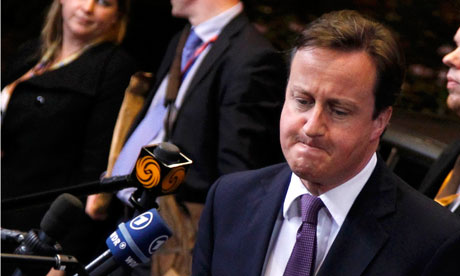
FOR all its eventfulness, 2011 only produced one incident that really shifted the opinion polls. David Cameron’s refusal to support a new European Union (EU) treaty last December went down well with voters, who rewarded the Conservatives with their first lead over Labour in a year. It also cheered Tory MPs, many of whom had never warmed to their leader.
Their initial joy increasingly looks misplaced, and they know it. Mr Cameron had initially said that the countries which signed up to the new “fiscal compact” to strengthen the euro—potentially all 26 other members of the union—would not be able to use EU institutions such as the Commission and the Court of Justice. These are part-funded by the British taxpayer and meant to serve the whole EU.
Soon after, Mr Cameron was deluged by behind-the-scenes legal advice, which suggested that Britain would not get its way on the institutional matter, and by angry Liberal Democrats, the more pro-European of the coalition parties. Sure enough, by the time of an unofficial EU summit in Brussels on January 30th, the government had watered down its position. It now says only that it has “legal concerns” about the Court of Justice being used to enforce new fiscal rules. Although Mr Cameron says he will take action if the new arrangements compromise British interests, it is hard to see what, if anything, has been prevented by his veto.
The prime minister’s lack of a persuasive answer to that question was exposed on January 31st during perhaps the most difficult parliamentary session he has endured in the job. Ed Miliband, the Labour leader, mocked his “phantom veto” while Tory backbenchers interrogated their leader as to what his vaunted act of defiance had achieved. Meanwhile Lib Dem MPs commended Mr Cameron for changing his position—the kind of praise he could have done without.
Tory backbench grumbling could harden into something concrete. It is possible that the government will have to ask Parliament for more money for an International Monetary Fund (IMF) package to help euro-zone countries. Many Tory MPs are likely to vote against this; as recently as October, around 80 defied the party whip to vote for a referendum on EU membership. Worryingly for the government, Labour has hinted that it too may refuse to support the IMF request. The prospect of defeat on the issue is looming.
In and of itself, Mr Cameron’s backsliding on his own veto is not as important as the furore surrounding it might suggest. Britain, with its own currency, was never going to be subjected to the new rules on fiscal policy proposed by the treaty. If anything, Eurosceptics should be happy that Britain is moving to the outer circle of an increasingly integrated EU. In December Mr Cameron said he was mainly vetoing the treaty because it did not provide enough assurances on financial regulation, which poses a growing threat to Britain’s vast banking sector. Many in Downing Street wish he had stopped there. Instead he embarked upon the question of which countries would be able to use which institutions—a subject on which the government had previously declared no principled view.
But the rapid change in policy, and the confusion it has wrought, does expose one of the prime minister’s foibles. He sometimes neglects strategy and long-term planning. This is partly because he has so much confidence in his ability to respond to events as they happen—a faith largely justified by his track record. It also has something to do with his traditional Tory reluctance to turn his thoughts into grand, systematic plans. It is an approach that works much of the time. But in areas of profound importance and complexity, such as European diplomacy, it can be inadequate to the task.
Thursday, February 02, 2012
Immigration Minister Damian Green shoots himself in the foot!
Immigration Minister Damian Green shoots himself in the foot!
"[W]e have seen in recent years a number of high-profile court cases in which people have been allowed to stay here by asserting rights under Article 8 of the European Convention on Human Rights. Many of these rights, at least in the form they have been given expression through the case law, are not recognised as such by the bulk of the population. That leads to the ridiculous and damaging situation where the whole concept of Human Rights is called into question. This is not healthy for anyone. It is also dangerous for there to be a long-term stand-off between Parliament and the judges, which is why we want to give better Parliamentary guidance on what should be considered in these kind of cases in future.
I do want to do what I can to avoid any obvious mismatch between immigration rules on the one hand, and the interpretation of human rights legislation on the other. When we bring forward the new rules on Family migration which I referred to earlier, they will set out to Parliament the Government’s view on how the balance between individual rights and the public interest should be struck. That means the Rules will reflect how the conditions we set for entry and the right to remain are in our view proportionate and therefore consistent with Article 8 entitlements. This means the Rules will mean what they say and we, applicants and the public will be clear about who is entitled to be here, on what conditions and why".
The UK signed up to the ECHR, and this includes accepting that the ECtHR interprets the ECHR.
Parliament passed the HRA 1998. It is for the courts to interpret statutes.
It beggars belief that Damian Green appears to be suggesting that an ignorant public's interpretation should prevail over the judgments of our courts. He calls into question the whole concept of human rights, whilst recognising this is both ridiculous and damaging.
It is not the role of Parliament to give the Judiciary guidance how to interpret statutes. This interferes with the independence of the Judiciary.
"[W]e have seen in recent years a number of high-profile court cases in which people have been allowed to stay here by asserting rights under Article 8 of the European Convention on Human Rights. Many of these rights, at least in the form they have been given expression through the case law, are not recognised as such by the bulk of the population. That leads to the ridiculous and damaging situation where the whole concept of Human Rights is called into question. This is not healthy for anyone. It is also dangerous for there to be a long-term stand-off between Parliament and the judges, which is why we want to give better Parliamentary guidance on what should be considered in these kind of cases in future.
I do want to do what I can to avoid any obvious mismatch between immigration rules on the one hand, and the interpretation of human rights legislation on the other. When we bring forward the new rules on Family migration which I referred to earlier, they will set out to Parliament the Government’s view on how the balance between individual rights and the public interest should be struck. That means the Rules will reflect how the conditions we set for entry and the right to remain are in our view proportionate and therefore consistent with Article 8 entitlements. This means the Rules will mean what they say and we, applicants and the public will be clear about who is entitled to be here, on what conditions and why".
The UK signed up to the ECHR, and this includes accepting that the ECtHR interprets the ECHR.
Parliament passed the HRA 1998. It is for the courts to interpret statutes.
It beggars belief that Damian Green appears to be suggesting that an ignorant public's interpretation should prevail over the judgments of our courts. He calls into question the whole concept of human rights, whilst recognising this is both ridiculous and damaging.
It is not the role of Parliament to give the Judiciary guidance how to interpret statutes. This interferes with the independence of the Judiciary.
Enjoyable
Enjoyable
I had a painless day yesterday with both my chest and right knee not causing any problems. So far today it is the same.
I had a painless day yesterday with both my chest and right knee not causing any problems. So far today it is the same.
Tory MP arrested for assault
Tory MP arrested for assault
Calder Valley MP Craig Whittaker arrested in assault probe

A West Yorkshire MP was arrested after an alleged assault at a service station, it has emerged.
Craig Whittaker, Conservative MP for Calder Valley, was arrested in early January over the incident on Burnley Road, Mytholmroyd, on Boxing Day.
West Yorkshire Police confirmed a 49-year-old man had been bailed pending the outcome of further inquiries.
Mr Whittaker said he had given police a "full statement" but added it would be inappropriate to comment further.
Former LibDem council leader on perjury charge

The former Liberal Democrat leader of Liverpool City Council has been summonsed to appear in court to face a charge of perjury.
Warren Bradley, 45, of Woodsorrell Road, Wavertree, stepped down as leader of the city's Liberal Democrat party last April over electoral fraud claims.
He will be charged under Section 5 of the Perjury Act which relates to false statutory declarations.
He is due to appear at Liverpool City Magistrates' Court on 9 March.
If convicted he could face up to two years in prison, a fine, or both.
A Merseyside Police spokesman said: "The summons follows a police investigation into a complaint referred to the force in April 2011.
"Following that investigation, a file of evidence was passed to the CPS, which took the decision to prosecute."
Mr Bradley was suspended from the Liberal Democrats in April 2011.
He recently announced he would stand as an independent candidate for re-election in May for Liverpool's Wavertree ward.
A Liberal Democrat party spokesperson said that Mr Bradley had now been "permanently excluded" for breaking party rules by standing as an independent.
The Lib Dems lost control of Liverpool City Council to Labour in 2010.
Calder Valley MP Craig Whittaker arrested in assault probe

A West Yorkshire MP was arrested after an alleged assault at a service station, it has emerged.
Craig Whittaker, Conservative MP for Calder Valley, was arrested in early January over the incident on Burnley Road, Mytholmroyd, on Boxing Day.
West Yorkshire Police confirmed a 49-year-old man had been bailed pending the outcome of further inquiries.
Mr Whittaker said he had given police a "full statement" but added it would be inappropriate to comment further.
Former LibDem council leader on perjury charge

The former Liberal Democrat leader of Liverpool City Council has been summonsed to appear in court to face a charge of perjury.
Warren Bradley, 45, of Woodsorrell Road, Wavertree, stepped down as leader of the city's Liberal Democrat party last April over electoral fraud claims.
He will be charged under Section 5 of the Perjury Act which relates to false statutory declarations.
He is due to appear at Liverpool City Magistrates' Court on 9 March.
If convicted he could face up to two years in prison, a fine, or both.
A Merseyside Police spokesman said: "The summons follows a police investigation into a complaint referred to the force in April 2011.
"Following that investigation, a file of evidence was passed to the CPS, which took the decision to prosecute."
Mr Bradley was suspended from the Liberal Democrats in April 2011.
He recently announced he would stand as an independent candidate for re-election in May for Liverpool's Wavertree ward.
A Liberal Democrat party spokesperson said that Mr Bradley had now been "permanently excluded" for breaking party rules by standing as an independent.
The Lib Dems lost control of Liverpool City Council to Labour in 2010.
Wednesday, February 01, 2012
More determination is needed to make human rights real
More determination is needed to make human rights real
Strasbourg, 26/1/2012 – “Europe must move with more determination from rhetoric to enforcement of human rights standards” stated the Council of Europe Commissioner for Human Rights, Thomas Hammarberg, when presenting today the last annual report of his mandate.
The report identifies fields in which stronger political action is required. One concern is the justice system which is dysfunctional in several member states. “Corruption, political interference and lack of resources erode the independence and credibility of the judiciary. Strengthening the rule of law is essential to rebuild public confidence in the justice system.”
The Commissioner also regrets the increased pressure on the media, which hamper their independence and pluralism. “In a number of European states media freedom is undermined through criminalisation of defamation; law-induced censorship; intimidation, harassment and even murder of journalists. These factors have a detrimental effect on our democracies.”
Persons with disabilities remain largely excluded from key sectors of life, including access to adequate and humane health care, decent work and housing, public places, transportation, quality education and sometimes even civil rights, such as the right to vote. “The needs of persons with disabilities are still given low priority in state and municipality budgets. More recognition, protection and social inclusion should be ensured for them.”
Roma people still live in abject misery and suffer alienation in many European countries. “Urgent measures must be taken to ensure more humane housing conditions for Roma families, access to quality education and foster social inclusion. It is crucial to guarantee that all Roma, in particular children, have personal identity documents and are no longer treated as stateless. It is imperative to put an end to the wide-spread anti-Gypsyism, to which some politicians have also contributed.”
Marginalisation and stigmatisation deeply impinge on the everyday life of lesbian, gay, bisexual and transgender (LGBT) persons in some countries. “It is particularly important that opinion makers address these prejudices and take the lead in fighting discrimination against LGBT persons.”
The Commissioner observes that attitudes towards asylum-seekers and migrants have gradually become more negative. “Political leaders have all too often preferred to follow – rather than lead – public opinions, thus feeding xenophobic movements. Europe should adopt a more humane migration policy and asylum procedures based on human rights principles.”
Despite some progress in awareness and legal protection, discrimination against women persists in employment, education and political participation. Violence against women and children remains a scourge in Europe. “Taboos, ignorance and machismo still surround the issue of domestic violence, contributing to its persistence.”
Finally, the Commissioner stresses that the living conditions of older persons are a major concern. “The elderly have suffered, more than others, by the recent economic crisis and austerity budgets. I have seen signs of deep old-age poverty in several countries. A deeper discussion on the rights of older people is needed.”
Commissioner Hammarberg’s six-year mandate comes to an end next March 31. The newly elected Commissioner, Nils Muižnieks, will take up his functions on April 1.
Strasbourg, 26/1/2012 – “Europe must move with more determination from rhetoric to enforcement of human rights standards” stated the Council of Europe Commissioner for Human Rights, Thomas Hammarberg, when presenting today the last annual report of his mandate.
The report identifies fields in which stronger political action is required. One concern is the justice system which is dysfunctional in several member states. “Corruption, political interference and lack of resources erode the independence and credibility of the judiciary. Strengthening the rule of law is essential to rebuild public confidence in the justice system.”
The Commissioner also regrets the increased pressure on the media, which hamper their independence and pluralism. “In a number of European states media freedom is undermined through criminalisation of defamation; law-induced censorship; intimidation, harassment and even murder of journalists. These factors have a detrimental effect on our democracies.”
Persons with disabilities remain largely excluded from key sectors of life, including access to adequate and humane health care, decent work and housing, public places, transportation, quality education and sometimes even civil rights, such as the right to vote. “The needs of persons with disabilities are still given low priority in state and municipality budgets. More recognition, protection and social inclusion should be ensured for them.”
Roma people still live in abject misery and suffer alienation in many European countries. “Urgent measures must be taken to ensure more humane housing conditions for Roma families, access to quality education and foster social inclusion. It is crucial to guarantee that all Roma, in particular children, have personal identity documents and are no longer treated as stateless. It is imperative to put an end to the wide-spread anti-Gypsyism, to which some politicians have also contributed.”
Marginalisation and stigmatisation deeply impinge on the everyday life of lesbian, gay, bisexual and transgender (LGBT) persons in some countries. “It is particularly important that opinion makers address these prejudices and take the lead in fighting discrimination against LGBT persons.”
The Commissioner observes that attitudes towards asylum-seekers and migrants have gradually become more negative. “Political leaders have all too often preferred to follow – rather than lead – public opinions, thus feeding xenophobic movements. Europe should adopt a more humane migration policy and asylum procedures based on human rights principles.”
Despite some progress in awareness and legal protection, discrimination against women persists in employment, education and political participation. Violence against women and children remains a scourge in Europe. “Taboos, ignorance and machismo still surround the issue of domestic violence, contributing to its persistence.”
Finally, the Commissioner stresses that the living conditions of older persons are a major concern. “The elderly have suffered, more than others, by the recent economic crisis and austerity budgets. I have seen signs of deep old-age poverty in several countries. A deeper discussion on the rights of older people is needed.”
Commissioner Hammarberg’s six-year mandate comes to an end next March 31. The newly elected Commissioner, Nils Muižnieks, will take up his functions on April 1.

Subscribe to:
Posts (Atom)