Site Meter

Tuesday, April 26, 2011

Dominic Raab's strike bill is taking liberties

Dominic Raab's strike bill is taking liberties

The Tory MP's bill proposing further restrictions on workers' right to strike attacks the liberties he and his party once endorsed


Clarke: European Court should allow for genuine differences of national approach

Clarke: European Court should allow for genuine differences of national approach

Ministry of Justice

26 April 2011


The European Court of Human Rights should pay proper regard to the democratic role of national Parliaments and the decisions of domestic courts, Justice Secretary Kenneth Clarke will today tell a European ministerial conference.

Speaking at a Council of Europe conference on the Future of the European Court of Human Rights, the Justice Secretary will make clear that the UK will continue to press for reform of the Court in the wake of increasing concern over controversial judgments and a backlog of more than 140,000 cases.

Speaking prior to the Conference, Kenneth Clarke said:

"In the UK we believe that the principles of the rule of law and the independence of the judiciary are fundamental to democracy. A country in which the government never loses a court case is not one in which most of us would wish to live."

"However we also believe that courts exist to serve the democracies over which they have jurisdiction."

"The UK has always been a strong supporter of the European Court of Human Rights. But at times the Court has been rather too ready to substitute its own judgment for that of national courts, without giving enough weight to the strength of the domestic legal system, or allowing for genuine differences of national approach."

Urgent need to improve efficiency

"There is also an urgent need to make sure that the Court’s efficiency is improved so that its vast backlog of cases is reduced, and for States to send the best possible judges to serve on the Court."

The UK is due to take over the rotating Chairmanship of the Council of Europe in November, and the Government has identified reform of the Court as its key priority.

During the conference, the Justice Secretary, will meet senior officials from the Council of Europe, including the Secretary General Thorbjørn Jagland and the President of the European Court of Human Rights, Jean-Paul Costa.

Comment: Perhaps, someone should update Kenneth Clarke because The plan for Court reform started in 2001!

Gourmet food cooked and served by convicts

Gourmet food cooked and served by convicts

Kitchen manager Al Crisci runs a tight ship and is not afraid to sack staff

Wild mushrooms en croute, guinea fowl, red cabbage and fondant potatoes. Not a typical prison dinner menu, but the kitchen turning out this food at HMP High Down in Surrey is a one-off.

At the centre of this prison for 1,100 criminals is a gourmet restaurant, where the prisoners themselves cook and serve food for people who book their visit in advance.

The Clink is the brainchild of professional chef and prison kitchen manager Al Crisci.

"It's a real restaurant. These are paying customers so they expect a service. The Clink is not on the outside of a prison, the Clink is bang smack in the middle of the prison and there's always a security risk," he said.

The restaurant is funded by the Clink Charity and a discerning clientele.

"We have MPs we have lords and ladies, we have some celebs, we have all sorts," said Mr Crisci.

Guests have to go through security checks and alcohol is not on the menu, but otherwise it could pass as a restaurant in London's West End.

It offers prisoners an opportunity to change, to gain experience of food preparation, food service and cleaning qualifications with the chance of a full-time job within the hospitality industry upon release.

It opened in 2009 and in its first 18 months released 13 fully-trained chefs and waiters from prison with a catering job.

Inmates are paid £14.70 a week to work in the restaurant - 50p a week more than those working in the main kitchen where the prisoners' food is prepared.

High Standards

The Clink Charity hopes to build on its success at High Down and roll out more restaurants in other prisons.

Mr Crisci said he demanded high standards: "It's a dictatorship so I'm the dictator. They have to do what I say. You know it's got be like that. I've got 18 prisoners in here. I can't have anarchy."

For some it is not easy - breaking the rules by taking food or drink without permission, hacking into a till or having a crafty cigarette can be too much of a temptation. But if they are caught, they are out of the restaurant business.

For others though, it really can mean a new start.

Robbie Lister, 24, grabbed his chance enthusiastically when Mr Crisci offered him a job as chef and soon made his mark with the Italian chef Giorgio Locatelli, owner of the Michelin-starred Locanda Locatelli restaurant.

Mr Locatelli is a supporter of the Clink project and has been happy to do a stint in the kitchen passing on some of his tips to the inmates.

Robbie was offered the chance of some work experience at Locanda Locatelli and was released on temporary licence.

"I'm feeling nervous but it's a good nervous. It's a good opportunity. I could turn a page and start a new chapter," he said, as he arrived at the restaurant with Mr Crisci.

Robbie's first challenge was to make a fennel and blood orange salad, to satisfy the palate of Mr Locatelli.

"I'm sure I can handle it. If I can pass the test of being in prison, I can pass the test of doing this hopefully."

Mr Locatelli had a few words of advice for him: "When you do something as simple as that, you really need to be spot on with the seasoning and everything, so that's what we're going to taste - your ability to season it."

After two mouthfuls, he told Robbie: "I think you can come back."

Robbie now has the prospect of earning £19,000 a year.

It was a great moment for Mr Crisci too: "I've got faith. I think he's going to start slow, it's going take him a while but I think he's going to be alright. I think he's got it in him."

And he said that was the main aim of the project: "In a nutshell, the idea of The Clink is a prisoner comes in and a very well trained chef leaves us with a job. And society is better off."

Sample lunch menu

Starters

Warm Chicken Liver Salad with smoked bacon & watercress - £3.95

Roast Beef Tartare with onion relish & dandelion salad - £4.50

Main course

Slow Braised Beef Skirt with chasseur sauce & beef cheek with cabbage hearts & stuffed tomatoes, served with Pont Neuf chips & seasonal vegetables - £6.95

Grilled Fillet of Sea Bass with spring onion, soy, lime and sesame, served with carrot & coriander rice cakes - £6.95

Homemade Crab Ravioli with a rich crab bisque sauce, served with chicory, endive, tomato & onion salad - £6.50

Dessert

Homemade Ice Cream ask your waiter for our flavours - £3.75

A Celebration of English Pears a trio of pear desserts - £4.50

The Prison Restaurant can be seen on BBC One at 2235 BST on Tuesday 26 April and after on BBC iPlayer.

The Guantánamo files: Tale of two prisons

The Guantánamo files: Tale of two prisons

Guantánamo embodies the failure of the Afghan war, which began amid bombast in 2001, but which collapsed long ago

Editorial, The Guardian, Tuesday 26 April 2011


As a metaphor for everything that has gone wrong with the Afghan war, the story of two prisons is hard to beat. In one prison, they can't get the remaining inmates out. In the other, they can't keep them in. Either way, the military coalition has been left looking like a fool.

In southern Afghanistan yesterday morning, 475 prisoners, almost all said to be Taliban insurgents, escaped through a tunnel that seems to have been dug under the eyes of their captors. And just as the Taliban were digging their way out, the Guardian and the New York Times were putting online leaked documents describing the management of inmates in that other, more famous prison in Guantánamo Bay. President Obama was elected on a promise to close the latter within a year of taking office. Instead he has abandoned the task with 172 inmates still inside. Some of these, as the Guantánamo files show, are seriously unpleasant and dangerous but others are lesser figures who have become lost in the system after years of abuse and misinformation made them impossible to prosecute or simply homeless, like the Chinese Uighur Muslims, who have nowhere to go.

Either way, Guantánamo embodies the failure of America and Britain's Afghan war, which began amid bombast in 2001, but which collapsed long ago into confusion. The thing that stands out from the newly published Guantánamo files is not the disgraceful self-exempted off-shoring of the rule of law, or even the torture and sustained abuse of inmates – grotesque though these things are, we have long known about them – but the random ineffectiveness of the system. The defence put forward by the people who set Guantánamo up – it was an efficient way of keeping the world safe – is shown to be wrong.

Click through the records of the 779 prisoners who have passed through the Guantánamo system, on the Guardian's interactive guide, and you find an unpredictable mix of the evil, the criminal and the accidental. Some of them fought the west, some of them are doing so again and indeed some may be among the prisoners who escaped yesterday in Kandahar. But as we report today, Guantánamo turned out to be a bad way of gathering intelligence and even worse as a system of justice. The files show that a large amount of the information supposedly collected from prisoners has in fact come from a handful of informants among the inmates. Some of the things they have passed on may be true. Other things are surely false. After nine years of operation, it is impossible to know which.

Guantánamo was and still is a dumping ground for all sorts of people, not (as America once claimed) the distillation of its most extreme enemies. Among the leaked files is a guide for interrogators, telling them what to look out for in order to identify terrorists. It reveals a desperate lack of precision, and a system in which it was almost impossible for inmates to convince anyone of their innocence. One supposed sign of terrorist links was a particular kind of Casio watch. Another was the fact that someone had gone to Afghanistan after 2001. Yet among the original detainees was a 14-year-old boy and an 89-year-old man, neither of whom had anything to do with the Taliban. Imprisoned beyond the rule of law, as enemy combatants, they found themselves part of a cruel and surreal system which sustained itself through its own illegitimacy.

As President Obama has found, once someone has entered the Guantánamo system it has proved very difficult to get them out. The nature of their imprisonment and questioning makes prosecution in a federal court all but impossible. The innocent or insignificant were trapped, or only gradually released. The more that is revealed about Guantánamo, the worse it looks as a way of responding to terrorism. It was a symbol of vengeance, not a system of justice. Read the files and find out why.

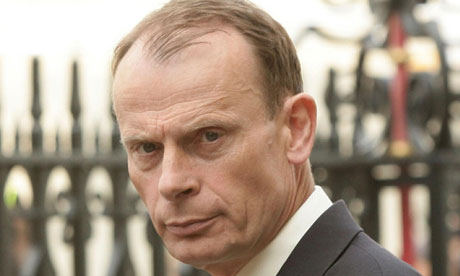
Andrew Marr outs himself before he ges outed!

Andrew Marr outs himself before he ges outed!

Andrew Marr reveals he took out superinjunction

BBC presenter says he feels 'uneasy' about high court order, which he won to protect his family's privacy


Andrew Marr has revealed he took out a superinjunction to protect his family's privacy. Photograph: Yui Mok/PA

BBC presenter Andrew Marr said on Tuesday he had taken out a superinjunction to protect his family's privacy.

Marr said he felt "uneasy" and "embarrassed" about the use of the high court injunction, which he won in 2008 to suppress reports of an extramarital affair.

He said the use of the so-called rich man's gag "seems to be running out of control" and said he would no longer seek to prevent the story being published.

Marr's decision to go public comes after Private Eye launched a challenge to the injunction last week.

"I did not come into journalism to go around gagging journalists. Am I embarrassed by it? Yes. Am I uneasy about it? Yes," Marr told the Daily Mail.

But he added: "I also had my own family to think about, and I believed this story was nobody else's business.

"I still believe there was, under those circumstances, no legitimate public interest in it."

Marr, the BBC's former political editor who now presents a Sunday morning politics show on BBC1, said that the use of injunctions seemed to be "running out of control".

"There is a case for privacy in a limited number of difficult situations, but then you have to move on. They shouldn't be forever and a proper sense of proportion is required," he added.

His comments come amid a growing disquiet at the use by celebrities of injunctions and so-called superinjunctions to prevent media reporting of their private lives.

At least 30 superinjunctions currently appear to be in place, including one relating to allegations of water pollution and another to a right-to-die case.

Private Eye editor Ian Hislop said he had challenged the Marr injunction last week.

"In a sense he led the pack because he was the most respectable of the people putting super-injunctions in," Hislop told the BBC Radio 4 Today programme.

"But the principle remains wrong, which he knows, articulated once and should still believe."

Hislop said he thought the super-injunction had been "a touch hypocritical" because Mr Marr had written an article saying that Parliament - not judges - should determine privacy law.

"As a leading BBC interviewer who is asking politicians about failures in judgment, failures in their private lives, inconsistencies, it was pretty rank of him to have an injunction while working as an active journalist," he added.

"I think he knows that and I'm very pleased he's come forward and said 'I can no longer do this'."

Hislop said Private Eye did not have the money to challenge all super-injunctions, adding: "Here was a case that was quite important and should be challenged so I wasted the money challenging it."

Last week David Cameron sounded a warning about the way judges are creating a new law of privacy "rather than parliament".

Cameron said: "The judges are creating a sort of privacy law whereas what ought to happen in a parliamentary democracy is parliament, which you elect and put there, should decide how much protection do we want for individuals and how much freedom of the press and the rest of it.

"So I am a little uneasy about what is happening."

The prime minister's remarks came after high court judge Mr Justice Eady issued what was thought to be the first order permanently blocking publication of material relating to an individual's private life.

In another high court hearing, a married Premier League footballer who reportedly had an affair with Big Brother star Imogen Thomas won the right to maintain his anonymity.

Comment: Andrew Marr could have at least also admitted that he was trying to protect his reputation. I recall Angus Deayton being sacked from Have I Got News For You because he was involved in an affair...

This is worth a listen.

Prisoners sign up for law degrees

Prisoners sign up for law degrees

Legal degrees are proving popular with prisoners and ex-convicts – but can they ever become solicitors?

Joanna Moorhead, guardian.co.uk, Monday 25 April 2011 17.30 BST


Ana Ruiz, a former offender, is in her final year of a law degree. Photograph: Sarah Lee for the Guardian

Like many students, Malcolm Sang, who is working towards a law degree, spends hours poring over his books. But when it comes to some aspects of his studies, the reality of what he's working on is very close to home – because he is in jail, serving a life sentence for murder.

And if his subject is unlikely, his educational past is, too: because when Sang was convicted, a decade ago, he hadn't a single GCSE to his name. "Malcolm was kicked out of school at 13," explains Jude, his mother (as he's a prisoner, Sang isn't allowed to give interviews, but he has given her permission to tell his story). "It wasn't until he found himself inside that he went back to studying. He passed GCSEs in English and maths and then got an A in A-level English."

Sang's decision to pursue a distance-learning degree in law at Nottingham Trent University was partly motivated by his disillusionment with the law. He believes he should have been convicted not of murder, but of manslaughter, as his co-defendant was.

Now 30, Sang is an inmate at Verne prison in Portland, Dorset – but when he started his degree, he was in another prison and staff there tried to dissuade him from enrolling. "They said law wasn't a suitable subject for a prisoner to study. But there's no reason why not, and he was determined to do it," says his mother.

Sang's funding came from the young people's charity The Longford Trust, named after the Labour peer and prison reformer, which since 2004 has offered scholarships to current and former convicts who want to study for a degree. But what the trust has come to realise, explains its director, Peter Stanford, is that prisoners like Sang aren't alone: law is a subject that prisoners often feel particularly drawn towards; so much so, that the Longford Trust decided to establish a new batch of awards aimed at enabling prisoners to study law. The Patrick Pakenham awards are named after Lord Longford's son, a barrister who died in 2005, and they offer practical, emotional and psychological support to students during their time at university.

"In many ways it's entirely understandable why prisoners who get involved in education should feel drawn to law as a subject," says Stanford. "They're far more likely to want to study law than they are to be drawn to, say, English or classics or history – these subjects aren't going to have the same relevance for them that they do for young people coming out of school, who have maybe had more advantages in life than many of those who end up in jail."

Another law student who has had personal experience of being on the wrong side of the law is Ana Ruiz, who was convicted of drug dealing eight years ago. "Being sent to prison is a crushing blow to anyone's self-esteem – you think you're worthless, you feel excluded," she says. "Starting to study makes all the difference, because you realise you can achieve something."

Ruiz, who is 33, is in her final year of a law degree that she started in 2007, having been released from prison the previous year. She hopes to become a solicitor, specialising in environmental law. "I feel very strongly about these cases, and I'd love to make working on them my future."

Maria Aristodemou, a senior law lecturer at Birkbeck College, where Ruiz is studying, says students who have direct experience of being caught up in the criminal justice system often have fascinating insights to share in seminars and tutorials. "At many universities, though not at Birkbeck, many students have come straight from school and have no experience like this – so someone who can talk from personal experience can be really interesting for them," she says.

"But there is a downside, too, which is that people who've been in this situation can sometimes be quite opinionated and stubborn – they're entrenched in their own experience, and they're unable to see the wider picture. You start to feel that what they're unpacking in a seminar would be better unpacked on an analyst's couch, and it can be hugely time-consuming for everyone else.

"But certainly in the long term, those who stay the course and maybe go on to work in the legal system will be able to relate to defendants in a way that many lawyers maybe can't, and that has to be valuable."

One anxiety for people like Ruiz and Sang – who would also like to work as a solicitor eventually – is that they may never be able to make the leap from one side of the courtroom to the other, despite having studied hard for their degrees. That's because they fear that the Solicitors' Regulation Authority (SRA), part of the Law Society, won't sanction their applications to work as solicitors. "I understand their worries, because certainly on past experience the Law Society has been reluctant to admit people who've been convicted of crimes to the solicitors' course," says Stanford.

According to Diane Lawson of the SRA, every application for admission to the solicitors' course is evaluated on merit – but there are concerns. "The overriding consideration is public protection," she says. "The type and number of convictions are taken into consideration, and applicants have to provide evidence of rehabilitation.

"It's quite understandable that someone who'd been exposed to the legal system may have a great interest in pursuing legal studies. However, the SRA has an obligation to build public confidence in our legal system and has to ensure that all entrants to the profession meet the requirements for competence and conduct."

But some prisoner law students have already put their learning to practical use. "Gary", who can't be named for legal reasons, served three years of a six-year sentence for rape. Like Sang, he became interested in studying law partly because he felt he'd been the victim of injustice. "When I was convicted, I was disqualified from seeing any children including my own – but when I read up on what the law actually said, I discovered it shouldn't have happened in my case.

"I lodged an appeal and represented myself – and I got the disqualification overturned. I was very nervous, but I knew I could do it. The judges took 10 minutes to reach their decision, and winning really spurred me on to study law. It made me realise how brilliant it is to be able to argue a case in a court of law – it made me determined that this was what I'd like to do."

And when he got back to prison, there was a long queue of fellow inmates all waiting to see him. "They wanted me to work on their appeals for them. My nickname became "the QC"; even some of the prison guards came to see me, to ask advice about their divorce cases.

"You need a lot of books to study law, and when I was inside, it was difficult to get them. Eventually, I decided to write to every judge, barrister and solicitor I could find, asking them to donate books they didn't need any more. Lots of them did – in the end, I had 40 or 50 books, so many that I had to be moved to a bigger cell!"

Gary is now out of prison and continuing the law degree. Like Sang and Ruiz, he hopes to practise as a solicitor. "I'd like to work in criminal and family law," he says. "I don't feel the lawyers I encountered served me as well as they should have done. I want to be a better lawyer for some other defendant in the future."

Fourth Reich Minister for Propaganda Rupert Murdoch pours bile out

Fourth Reich Minister for Propaganda Rupert Murdoch pours bile out

Human rights law costs £9bn a year

By RHODRI PHILLIPS

Published: Today


THE hated European human rights act is costing the UK more than £9BILLION a year, experts said last night.

The law is used by celebs to hide their secrets behind superinjunctions and lets prisoners fight barmy causes in court.

Compensation claims created by the act - the European Convention on Human Rights (ECHR) - cost £7.1billion a year, while £2.1billion is paid out to ensure we follow the often ridiculous rules set down by Eurocrats.

Greedy lawyers are raking in another £250million a year to pursue human rights cases.

ECHR expert Dr Lee Rotherham, who calculated the enormous sums, said: "The cash we pay out is like a mountain. It's monstrous. Those most to blame are the ones who abuse the courts to pursue their particular agenda."

Increase

Dr Rotherham said the ECHR has cost us £42billion since it came into force in 1953. But there has been a sharp increase in the past five years.

There are now at least 2,000 human rights lawyers in the UK. Big earners include the firms Chivers Solicitors and Leigh Day who represent UK prisoners demanding the right to vote. One legal source said: "There are some companies who have made millions."

We reported yesterday how many experts believe the ECHR should be axed to stop stars using Section 8 - which promises a right to privacy - to get their superinjunctions.

Dr Rotherham said: "Celebrities' lawyers are exploiting the act."

Related shit from The Sun...

Time to bin the gag laws

By RHODRI PHILLIPS

Published: 25 Apr 2011


BARMY European human rights laws must be axed to stop stars using superinjunctions to hide sordid secrets, say experts.

Member of the Fourth Reich Dr Lee Rotherham

Celebs are increasingly using the legal gags to keep flings under wraps.

Their lawyers quote Section 8 of the European Convention on Human Rights (ECHR) - which promises a right to privacy - when applying for them.

MPs, legal and media experts last night called for an end to the "abuse" of the system.

ECHR expert Dr Lee Rotherham said: "Celebrities' lawyers are exploiting the act for their clients' own ends.

"As long as our position with the ECHR remains, judges are basically being forced into a position where they have to pay attention to it."

Tory MP Dominic Raab called for a British Bill of Rights to protect free speech "instead of importing the continental European model by the back door through the Human Rights Act".

And Lib Dem MP John Hemming said: "It is ridiculous that you can be sued for gossiping when it's true."

PR guru Max Clifford said gagging orders protect "rich men" but "out" the woman he is having an affair with.

We revealed how a famous married actor won an injunction banning exposure of his romps with Wayne Rooney hooker Helen Wood.

Master of the Rolls Lord Neuberger began a review of gagging orders last year - but chances of a change look bleak. A legal source said his committee would not scrap superinjunctions.

Monday, April 25, 2011

Taliban fighters escape in mass Afghan prison break

Taliban fighters escape in mass Afghan prison break

Taliban insurgents dug a 1,050-foot (320-metre) tunnel underground and into the main jail in Kandahar city and whisked out more than 450 prisoners, most of whom were Taliban fighters, officials and insurgents have claimed.


The massive jailbreak overnight in Afghanistan's second-largest city serves as a reminder of the Afghan government's continuing weakness in the south, despite an influx of international troops, funding and advisers. Kandahar city, in particular, has been a focus of the international effort to establish a strong Afghan government presence in former Taliban strongholds.

The 1,200-inmate Sarposa Prison has been part of that plan. The facility has undergone security upgrades and tightened procedures following a brazen 2008 Taliban attack that freed 900 prisoners. Afghan government officials and their NATO backers have regularly said that the prison has vastly improved security since that attack.

But on Sunday night, around 475 prisoners streamed out of a tunnel dug between the prison and the outside and disappeared into Kandahar city, prison supervisor Ghulam Dastagir Mayar said. He said the majority of the missing were Taliban militants.

Taliban spokesman Zabiullah Mujahid said insurgents on the outside dug the 1,050-foot (320-meter) tunnel to the prison over five months, bypassing government checkpoints and major roads. The tunnel finally reached the prison cells Sunday night, and the inmates were ushered through it to freedom by three prisoners who had been informed of the plan, Mujahid said.

He said more than 500 inmates were freed, and that about 100 of them were Taliban commanders.

Four of those who escaped were provincial-level Taliban commanders, said Qari Yousef Ahmadi, another Taliban spokesman

The highest-profile Taliban inmates would likely not be held at Sarposa. The U.S. keeps detainees it considers a threat at a facility outside of Bagram Air Base in eastern Afghanistan. Other key Taliban prisoners are held by the Afghan government in a high-security wing of the main prison in Kabul.

A man who Taliban spokesmen said was one of the inmates who helped organise the escape from the inside said a group of inmates obtained copies of the keys to the cells ahead of time.

"There were four or five of us who knew that our friends were digging a tunnel from the outside," said Mohammad Abdullah, who said he had been in Sarposa prison for two years after being captured in nearby Zhari district with a stockpile of weapons.

"Some of our friends helped us by providing copies of the keys. When the time came at night, we managed to open the doors for friends who were in other rooms."

He said they woke the inmates up four or five at a time to get them out quietly. Abdullah spoke by phone on a number supplied by a Taliban spokesman. His account could not be immediately verified.

The governor of Kandahar province confirmed at least 475 escaped and said that a search operation is going on to recapture them.

"Some of the prisoners have already been recaptured," Gov. Tooryalai Wesa said. He did not provide further details.

Asked how the tunnel was dug without anyone noticing, Wesa said only that the incident was still under investigation.

In the 2008 attack, dozens of militants on motorbikes and two suicide bombers assaulted the prison. One suicide bomber set off an explosives-laden tanker truck at the prison gate while a second bomber blew up an escape route through a back wall. About 900 inmates escaped, including 400 Taliban fighters.

Aegean coastal city to host key meeting on European court

Aegean coastal city to host key meeting on European court

25 April 2011, Monday / TODAY’S ZAMAN, ANKARA


The Aegean city of İzmir, which the government recently said will become one of the centers of diplomacy in Turkey, will on Tuesday and Wednesday host the High Level Conference on the Future of the European Court of Human Rights (ECtHR).

Earlier this month, during a visit to İzmir where he visited some of the more than 300 wounded Libyans who were brought to the city for medical treatment as part of a large-scale humanitarian operation, Turkish Foreign Minister Ahmet Davutoğlu praised İzmir’s hospitality as he also announced that the Foreign Ministry’s third representative office will be launched there soon after Ankara and İstanbul. As for the key conference, it will be opened tomorrow with a speech by Davutoğlu, who is the host of the event in his capacity as the outgoing chairman of the Committee of Ministers of the Council of Europe (CoE).

Following Davutoğlu, Thorbjørn Jagland, secretary-general of the CoE; Mevlüt Çavuşoğlu, president of the Parliamentary Assembly of the Council of Europe (PACE); Jean-Paul Costa, president of the ECtHR, and Thomas Hammarberg, the CoE’s commissioner for human rights, will also address the conference on its first day. Justice and foreign ministers and other senior officials from 47 CoE member and observer states will attend the conference, together with representatives of specialized organizations and institutions.

The Strasbourg court covers 47 countries and some 800 million people. Despite considerable efforts by the ECtHR to streamline internal procedures, its formidable caseload still threatens to paralyze the entire court system. In order to facilitate reform of the court, Switzerland hosted a ministerial conference of the 47 CoE member states in Interlaken on Feb. 18-19, 2010.

As a major step towards following up and maintaining the momentum of the process of reform of the supervisory mechanisms set up by the European Convention on Human Rights, a process launched at the Interlaken Conference, the İzmir conference has three main goals arising from the need to ensure the effectiveness of these mechanisms: to conduct an assessment as of today of the impact of Protocol No. 14; to take stock of what has been achieved by the reform process launched in Interlaken; and following a thorough reflection, lend impetus for pursuing that reform.

British Justice Secretary Kenneth Clarke, whose country is heavily involved in efforts for the court’s reform, and Russian Foreign Minister Sergei Lavrov, whose country has a highly problematic relationship with the Strasbourg-based court, are among those who have confirmed their participation. Earlier this month, the ECtHR rejected an attempt by the British to overturn a ruling that prisoners should get to vote, giving Britain six months to draw up proposals for changing the law. In London, the ruling infuriated both the government and a clear majority of the House of Commons.

Also earlier this month, in a complaint filed by the Republican Party of the Russian Federation, the court has ruled that Russian regulations governing political parties infringe on the rights of freedom of assembly and association. Again, earlier this month, the court rejected an appeal by the Russian government against its earlier ruling that the banning of gay pride marches in Moscow is illegal. Thus, several recent rulings by the court against the British and Russian governments lend the İzmir conference further importance for these two countries.

Sunday, April 24, 2011

Mark Elliott: The UK Bill of Rights Commission

Mark Elliott: The UK Bill of Rights Commission

April 18, 2011 · 6:13 pm


In March, the Ministry of Justice announced the creation of a commission charged with the task of looking into the creation of a Bill of Rights for the United Kingdom. The creation of the commission—and the enactment of the Bill of Rights that it anticipates—has been a long time coming. The possibility of a domestic bill of rights has been regularly mooted by successive governments frustrated at being on the receiving end of judgments under the Human Rights Act 1998. The creation of the commission inevitably raises a number of questions. One set of such questions, concerning the composition of the panel and the method by which its members were selected, are considered in a separate blog post. This post, meanwhile, is concerned with two other issues raised by the establishment of the commission: its terms of reference, and the options open to it.

Terms of reference

The Bill of Rights commission was foreshadowed by the Coalition Agreement, which, in this area as in many others, sought to paper over divisions of opinion between the Conservatives and the Liberal Democrats by establishing a review. In their 2010 general election manifesto, the Lib Dems undertook to ‘[e]nsure that everyone has the same protections under the law by protecting the Human Rights Act’. The Conservative Party, meanwhile, said that it would ‘replace the Human Rights Act with a UK Bill of Rights’. That somewhat opaque manifesto position inevitably fell to be read against more direct statements by Conservative spokesmen, some of which evidenced strong scepticism about the HRA. For instance, David Cameron said that the HRA should be replaced with a British Bill of Rights in order to ‘define the core values which give us our identity as a free nation’ while facilitating a ‘hard-nosed defence of security and freedom’. The implication was that the HRA precluded a sufficiently hard-nosed approach in such areas. The further implication was that a domestic Bill of Rights would strike the balance differently between individuals’ rights (particularly those of such undesirables as terror suspects) and the interests of a the ‘law-abiding majority’ (a constituency almost as precious to politicians of all stripes as ‘hard-working families’).

Cameron’s above-quoted comments were issued some time ago, in 2006. However, they remain a contemporary reference point, at least for the present Attorney-General, and the Conservatives have continued, since assuming office, to imply that a Bill of Rights would be some sort of panacea that would allow the balance between individual rights and the public interest to be revisited. A case is point is the Prime Minister’s reaction to R (F) v Secretary of State for the Home Department [2010] UKSC 17, in which the Supreme Court upheld a declaration of incompatibility concerning s 82 of the Sexual Offences Act 2003. The requirement that certain sex offenders be indefinitely subject to ‘notification requirements’, with no prospect of reprieve in the event of rehabilitation, was held to be a disproportionate breach of Article 8 ECHR. This judgment, said the Prime Minister, was ‘offensive’ and flew ‘completely in the face of common sense’. He also said that a Bill of Rights commission would be ‘established imminently because I think it’s about time we started making sure decisions are made in this Parliament rather than in the courts’.

Against this background, the Commission’s terms of reference look decidedly odd. Alongside a requirement to advise on reform of the Strasbourg Court, the Commission’s principal task is to ‘investigate the creation of a UK Bill of Rights that incorporates and builds on all our obligations under the European Convention on Human Rights, ensures that these rights continue to be enshrined in UK law, and protects and extend our liberties’. It must also ‘examine the operation and implementation of these obligations, and consider ways to promote a better understanding of the true scope of these obligations and liberties’. This appears to leave little, if any, room for doing the sort of thing anticipated by David Cameron’s reaction to the sex offenders case. It was implicit in his remarks—and has been similarly implicit in the sceptical rhetoric of other Conservatives—that a British Bill of Rights might confer upon politicians (and so Parliament) greater latitude, thereby enabling them to strike a different balance between individuals’ rights and (their conception of) the public interest.

The solution to this conundrum, of course, lies in the politics of coalition. While Lord McNally, the Lib Dem Justice Minister, regards the ECHR as ‘part of our DNA’, it has been reported that the Conservative Party may undertake a policy review separate from that to be conducted by the Bill of Rights Commission—presumably with a view to bringing forward, for the 2015 election, proposals more radical than those that would be possible under the Commission’s terms of reference. Indeed, a recent Policy Exchange paper floated precisely such possibilities—including withdrawal from the jurisdiction of the European Court of Human Rights or even from the Convention itself; one of its authors now finds himself on the Bill of Rights Commission. The Conservatives do not, however, speak with one voice on this issue. In 2006, the Justice Secretary, Kenneth Clarke, is reported to have said that the proposal for a British Bill of Rights was ‘xenophobic and legal nonsense’. And, more recently, the Attorney-General, Dominic Grieve, said that the Convention rights ‘reflect deeply held British values on the rights of the individual against arbitrary or excessive state power’.

Options

Against that background, an obvious question arises. Given the constraints inherent in its terms of reference, and leaving aside, for the time being, the possibility of a separate Conservative Party examination of more radical policies, what options are open to the Commission? It seems likely that the Commission will propose that a UK Bill of Rights should extend to certain rights—the most obvious being the right to trial by jury for certain types offences—that are not covered by the ECHR. In the light of the fact that the Convention acts a ‘floor’ rather than a ‘ceiling’, such an ‘ECHR-plus’ model would be unproblematic per se.

But of course HRA-sceptics are not agitating for an ECHR-plus model; rather, they contend for the adoption of an approach that would allow UK lawmakers greater freedom when it comes to trading off individual rights against other interests. Is there any scope for such an approach, bearing in mind the limitations imposed not just by the Commission’s terms of reference but also by law? The Attorney-General certainly thinks so. In an article published on the ConservativeHome website in 2009, endorsing Lord Hoffmann’s Judicial Studies Board lecture criticizing the Strasbourg Court, Dominic Grieve made it clear that while he has no difficulty with the text of the Convention, the same is not true of the way in which it is judicially interpreted and applied.

He argues that ‘there is no duty in the ECHR to follow Strasbourg case-law, and the obligation on the UK to respect Strasbourg Court adverse decisions, in a particular case to which it is a party, is an international treaty obligation and not a legally enforceable matter at all’. This statement conflates two propositions, both of which are, in any event, indefensible. On the one hand, the Convention certainly does require states to abide by the Court’s decisions: Article 46(1) provides that, ‘The High Contracting Parties undertake to abide by the final judgment of the Court in any case to which they are parties.’ And, more generally, Article 1 provides that, ‘The High Contracting Parties shall secure to everyone within their jurisdiction the rights and freedoms defined in Section I of this Convention.’ On the other hand, there is the question of enforceability. Grieve appears to take the view that whatever obligations exist under the Convention are legally unenforceable because they are (merely) international obligations deriving from a treaty. Of course, questions about the ways in and the extent to which such obligations are enforceable is a complex question, but imply, as Grieve does, that we ought to be ultimately untroubled by Convention obligations because of their source in international law is disappointing, to say the least.

Grieve’s article also provides some insight into what the Government might have had in mind when it instructed the Bill of Rights Commission to ‘examine the operation and implementation of these obligations’. The possibilities fall under two main headings: interpretative and remedial.

On the interpretative level, it is possible that a UK Bill of Rights might encourage, or direct, British courts to follow the Strasbourg jurisprudence less slavishly than they have sometimes been inclined to. As is well known, section 2 of the Human Rights Act 1998 merely requires UK courts to ‘take into account’ Strasbourg jurisprudence; yet, as is also well known, British courts normally treat themselves as bound to follow the European Court’s interpretation of the Convention. Of course, if a matter falls within the ‘margin of appreciation’, there is some room for manoeuvre on the part of national authorities (including national courts). So, for instance, a Bill of Rights might conceivably direct domestic courts to consider the relevance, if any, of the margin of appreciation concept before deciding whether it is necessary to follow Strasbourg decisions relating to other jurisdictions. If, however, the European Court has rendered an interpretation of the Convention in a case that is salient and to which the UK was a party, it is hard to see what wriggle room an appeal to the margin of appreciation would be capable of creating.

This explains why British judges have sometimes reluctantly followed on-point Strasbourg jurisprudence with which they disagree. Perhaps the best example of this phenomenon is furnished by Secretary of State for the Home Department v AF (No 3) [2009] UKHL 28, in which the House of Lords followed the Grand Chamber’s decision in A v United Kingdom (2009) 49 EHRR 29 concerning the fairness, in Article 6 terms, of special advocate proceedings. Most notably, Lord Hoffmann fell into line with Strasbourg only through gritted teeth. Its decision, he said, ‘was wrong and … may well destroy the system of control orders which is a significant part of this country’s defences against terrorism’. Nevertheless, he followed it because the UK ‘is bound by the Convention, as a matter of international law, to accept the decisions of the ECtHR on its interpretation. To reject such a decision would almost certainly put this country in breach of the international obligation which it accepted when it acceded to the Convention.’ It is clear, then, that on a proper understanding of the legal position, the scope for interpretative latitude is limited. Of course, the position would be different if, as Dominic Grieve advocates, the Strasbourg Court made greater use of the margin of appreciation doctrine. In such circumstances, the opportunities would be greater for differential domestic interpretations of the Convention. But that is an approach that could only be brought about at a European level, not through the adoption of a British Bill of Rights.

What, then, of the remedial options that the Commission might explore? Here, too, Grieve’s article raises some possibilities that perhaps offer a clue as to the types of things that the government would like the Commission to consider. First, referring to the so-called fast-track amendment procedure under section 10 of the Human Rights Act, Grieve argues that, ‘It is wrong that primary legislation can be altered by Statutory Instrument if found incompatible with the Human Rights Act.’ It is unclear whether this sentiment reflects general discontent with Henry VIII powers, or whether, bizarrely, Grieve considers such powers to be particularly egregious in circumstances where they are used to ensure that UK law complies with international human rights standards. If the former, then it will be interesting to see whether this is manifested in government reluctance to secure and retain Henry VIII powers in other spheres.

Secondly, a more substantially, Grieve—referring to the way in which he perceives courts to have discharged their interpretative obligation under section 3 of the Act—says that it is wrong that courts should ‘have power to stand a statute on its head’. The proper reach of the interpretative obligation is, of course, a contentious matter. Whether, for instance, the House of Lords went too far in the seminal case of Ghaidan v Godin-Mendoza [2004] UKHL 30 is a question that invites disagreement. But the debate about the lengths to which courts are (under section 3) or should be (under a Bill of Rights) required to go in terms of rights-consistent interpretation is not one that can take place in isolation from the wider context. Under the present scheme, if consistent construction is impossible, a declaration of incompatibility under section 4 is issued, in effect, as a matter of course. And, in such circumstances, the government—assuming, that is, that it is not prepared to play fast and loose with its obligations under the ECHR—is, in effect, required to amend the law. Even if British courts—like their New Zealand counterparts—were denied explicit declaratory powers in such cases, the courts’ inability to render a consistent construction would amount to a de facto declaration that UK law was deficient judged in Convention terms. To contend, then, that the courts’ interpretative powers should be weakened is to presuppose that this would carve out for lawmakers a degree of latitude for which the Convention simply does not provide.

The bottom line is very simple. For as long as the United Kingdom is a party to the ECHR, its freedom as a matter of (international) law is constrained by that instrument and by the way in which the Strasbourg Court interprets it. None of this is to suggest that either the Strasbourg Court or the Human Rights Act is perfect. There are undoubtedly aspects of the former (such section 6, which concerns the scope of the Act) that could usefully be changed or clarified; and it is widely recognized that the Court (including the way in which judges are appointed to it) is in need of institutional reform. However, the suggestion which is (at least implicitly) made by those HRA-sceptics who advocate a British Bill of Rights—that the adoption of such an instrument would open up an opportunity for rebalancing rights and ‘responsibilities’, or for greater trading off of individuals’ rights against those of the ‘law-abiding majority’—is inaccurate. Significant latitude could be created only by withdrawing from the ECHR—a step which would carry legal complications of its own, and which would be reputationally devastating for the United Kingdom.

And there is, of course, a bigger point that lurks beneath all of this. Those who put their faith either in legislative reform or in the pursuit of nuclear options such as withdrawal from the ECHR implicitly assume that the political branches ultimately have sole control in this area. Given the development of the notion of common law constitutionalism, and certain judges’ strikingly robust remarks about the legal fundamentality of certain constitutional rights and values, that assumption is a somewhat naïve one. But that is an issue for another day.

Mark Elliott is a Fellow of St. Catharine’s College and a Senior Lecturer in Law at Cambridge University.

Related post...

April 24, 2011 · 12:57 pm

Liora Lazarus: The Composition of the UK Bill of Rights Commission
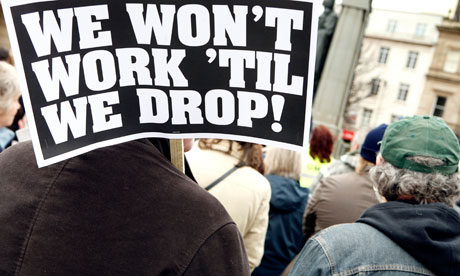
Inmates get onto roof of Bristol Prison

Inmates get onto roof of Bristol Prison

24 April 2011 Last updated at 14:46


Police have been called after two prisoners gained access to the roof of Bristol Prison.

An Avon and Somerset Police spokesman said the prison service called the force to the jail, in the Horfield area of the city, at 1125 BST on Sunday.

The force helicopter has been monitoring the incident.

The spokesman said one prisoner had come down while the other remained on the roof. Prison authorities are dealing with the incident, he added.

A Prison Service spokesperson said: "There is an ongoing incident at height at HMP Bristol. Two prisoners gained access to the roof at 11.30am this morning.

"Specialist staff are at the scene working to bring the situation to a safe conclusion."

This appetite for revenge against offenders will never cut crime

This appetite for revenge against offenders will never cut crime

Angry Daily Mail readers should not define criminal justice policy. Further punishment for already abused troubled youngsters will only lead to more problems, says Mark Johnson

Mark Johnson, guardian.co.uk, Tuesday 19 April 2011 17.43 BST


Last week, this newspaper profiled the new head of the London probation service, Heather Munro. She expressed a new approach to managing offenders. It can be summarised in one word: respect. Over a lifetime of probation work, Munro has come to believe that listening to offenders when they express needs and treating them with the same respect businesses show their customers can help to change behaviour and reduce reoffending.

The Daily Mail was not impressed and neither were its readers. Online, there were many calls for Munro's immediate sacking and insults were hurled. Offenders were "little bastards" who need much tougher treatment, not this politically-correct nonsense.

Those readers think they want punishment, but in fact they are baying for vengeance. Frontline workers such as Munro and Metropolitan police officers, who are trying a talking approach with gangs, recognise that the UK's criminal justice system should not be built on vengeance. But look out of the window and you will see another line of lads in humiliating jackets, sent out in the name of community payback. This might make the public feel good, but it does nothing to cut crime because it isn't about helping bad boys address their behaviour and change: it's simply a piece of theatre to satisfy the audience's desire for vengeance.

The public is appeased but short-changed all through the system. Funding for the high security estate has hardly been trimmed, so prisoners are inside for life on expensive violence reduction programmes, while interventions that might help younger offenders are slashed. Offenders whose crimes are the result of drugs, alcohol or mental health problems still remain untreated. And where there are programmes, these are too often run by the cheapest bidder and too often staffed by volunteers instead of the paid professional therapists who can help bring about change.

The public's desire for vengeance comes as no surprise to offenders. It simply reflects back at them their own behaviour. Many have wrestled with punishment, shame and consequent rage since birth. People from loveless, punishing backgrounds are without self-esteem. They do not have the capacity to love others because they cannot risk rejection without the protection of self-esteem. Inside a loveless void it is possible to commit crimes against others. It is, after all, easier to define yourself as a bad boy than a needy boy.

Munro has recognised that current services do not meet needs. Too many providers are distanced by their own professionalism. The media-appeasing programmes they offer are defined by cost-cutting and streamlined business practice, not by recognising what can bring about change. One childhood experience that we know leads to later criminal activity is abuse – physical, emotional or sexual. But we do little about it, even for those on the at-risk list.

If we want to cut crime then vengeance, disguised as public protection, can no longer remain the cornerstone of the criminal justice system. We should stop reinforcing the loveless, disrespectful world offenders know so well and instead subject them to the tough love that has been denied them at home. We need individual, person-centred programmes to help them change because change is possible in anyone who has the capacity to be honest.

Second, if we want to help victims, we should start by helping the child victims who will grow up enraged, seeking vengeance through crime. If we looked behind more closed doors we would find many children who are frightened, abused and neglected. They are tomorrow's offenders and we must intervene effectively today, training parents and setting up alternative healthy attachments for damaged young people.

Our attitude to the most vulnerable shows how civilised we are. Angry Mail readers should not define policy. A punishing childhood is the bedrock of crime and if our response is based on more vengeance and punishment there can be no solutions. Just more problems.

Mark Johnson, a rehabilitated offender and former drug user, is an author and the founder of the charity User Voice.

The Fourth Reich

The Fourth Reich

Dominic Raab's father fled from the Third Reich and left his native Czechoslovakia in 1938 and came to Britain as a Jewish refugee.

Therefore, it is disappointing that Dominic Raab is displaying Nazi tendencies. He is advocating human rights abuse.

Today the Telegraph is mounting a campaign supporting human rights abuse with its articles here and here.

Such right wing extremism has no place in a so-called liberal democracy.

Saturday, April 23, 2011

Dominic Raab criticises the Coalition

Dominic Raab criticises the Coalition

Dominic Raab concedes that the Coalition's proposals on prisoners votes do not go far enough to satisfy human rights.

"The government has mooted a number of proposals for addressing the Hirst ruling, including proposals to give the vote to prisoners serving less than four years, and an alternative proposal to limit the right to vote to prisoners serving 12 months or less. However, the Frodl ruling suggests that any attempt to define eligibility to vote amongst prisoners by reference to the gravity of the crime or length of sentence would not satisfy the Strasbourg Court".

Remand prisoner is found dead in cell at Preston Prison

Remand prisoner is found dead in cell at Preston Prison

BBC 22 April 2011 Last updated at 16:49


A prisoner on remand at a Lancashire jail has been found hanged in his cell, the Ministry of Justice (MoJ) has said.

Christopher Oldham, 36, was in Preston Prison after being accused of perverting the course of justice.

He was charged at Blackpool Magistrates' Court earlier this year and remanded in custody following a hearing at Preston Crown Court.

His body was discovered at about midnight, the MoJ said.

'A tragedy'

Prison officers tried to resuscitate him and paramedics were called to the prison but he was pronounced dead shortly afterwards.

The Prisons and Probation Ombudsman will carry out an investigation into Mr Oldham's death.

An MoJ spokesman said: "Deaths in custody are a tragedy for family and friends, and have a profound affect on staff and other prisoners.

"The police, coroner and next of kin have been informed.

"All deaths in custody are investigated by the Prisons and Probation Ombudsman."

Should prisoners be allowed to vote?

Should prisoners be allowed to vote?
http://www.blogger.com/img/blank.gif
Should prisoners be allowed to vote? Jonathan Aitken and Frances Crook takes sides in the debate. Emine Saner hosts

Interview by Emine Saner
The Guardian, Saturday 23 April 2011


Jonathan Aitken and Frances Crook debate giving the vote to prisoners. Photograph: Felix Clay

This month, the European Court of Human Rights ruled that the UK must end its ban on votes for prisoners after the government lost its final appeal. The prime minister says the thought makes him feel "physically sick", while reformers say it is a step in the right direction. Emine Saner brought together Frances Crook, director of the Howard League for Penal Reform, and Jonathan Aitken, former Conservative MP and former prisoner, who now campaigns on prison and rehabilitation issues, to take sides.

Frances Crook: I'm surprised we're not on the same side. I would have thought, with your experience, that social responsibility is something you would want to encourage among prisoners.

Jonathan Aitken: It's my experience which makes me against it. Of all the issues prisoners care about, this is about as low as it comes. If you want to do something for prisoners' rights, as we do, there are higher priorities. I think society has the right to say that when you commit a crime serious enough to be sent to prison, you lose your freedom, and with that you lose some of your privileges, of which voting is one.

FC: Voting is not a privilege, it is a right, and actually I think it's a responsibility. I would agree prisoners wouldn't put it at the top of the list of things they want. But voting wouldn't be top of the list if you stopped 100 people in the street and said "What makes a difference to you?" It's still an important civic responsibility. In some ways, voting is even more important if you've lost your freedom, because we want to reintegrate people, we want them to see themselves as citizens, even if they're in prison.

JA: Historically, it has always been part of the punishment that you lose the right to vote. Good old parliamentary common sense has said no to changing that. I think parliament has spoken for the people, and for most prisoners, too.

FC: The parliamentary vote conflated different bêtes noires – prisoners and Europe. Voting against both at the same time was too tempting. We should be talking about what prison is for, what we do with long-term prisoners, and issues about self-injury, inactivity, violence, expense. If you give prisoners the vote, those issues would become more politically sensitive. It's not just about voting every five years – I would like to see prisoners voting in local elections as well. If we encourage the relationship between prisoners and local government, they can pay more attention to resettlement and employment.

JA: As we move from the philosophical to the practical, we get into democratic muddles. Suddenly, quite artificially, people who don't belong to the local community, and may be hundreds of miles from any community they came from, will have the power to change an election result. This afternoon I was at High Down prison in Surrey, which potentially has 1,400 votes; say a third of prisoners decided they would vote in a local election, they could swing it on issues that are nothing to do with the concerns of local residents.

FC: When it comes to the practicality, there are real issues which have not been discussed, because the issue got so hijacked. You are right that 1,400 prisoners all voting in one constituency would swing it, so somehow you have to find a home area. The problem is, what is your home when you're a prisoner?

JA: I'm glad you're conceding the practical ground. These European judges have no sense of the practicalities when concentrating on the high principle. I'm against it on principle as well, but the practicalities seem to be overwhelming. If you say in Brixton prison they're all going to have the right to vote, the average stay there is 35 days. The poor old overworked prison service have to turn themselves into returning officers.

FC: Remand prisoners have always had the right to vote, and other countries which have similarly large and transient prison populations, like Germany, still manage to give the vote to some of those prisons, so it is possible.

Emine Saner: The ECHR only ruled that the blanket ban ends. Would you like to see all prisoners given the right to vote?

FC: Yes. How would you differentiate? You've committed rape, you can't; armed robbery, you can. It would be invidious. Most jurisdictions that give prisoners the vote, give it to all. It's administratively easier, and a matter of principle.

JA: You can get into hopeless muddles when you start to give some prisoners votes and not others. One conceivable way is to leave it to the judge.

FC: The government tried to undermine the principle of voting by saying only short-sentence prisoners will be able to vote. If they restrict it to people serving under four years, they're effectively saying prisoners can't vote, and it's a sleight of hand, which is dishonest.

JA: I think it takes quite a lot to stir up the British people, but they are over this. On the ground level, I can only be amused by prisoners' attitudes. When I was in prison, an awful lot of them thought Margaret Thatcher was still in power. The idea that there will be some huge surge of useful votes for the left, which I think some reformers think …

FC: [laughs] Oh no. Giving prisoners the vote would do more to support the Conservatives than anything I can think of. I have never met a left-wing prisoner!

JA: It's very generous of the Conservatives to be against it.

ES: A recent YouGov poll said 67% of British people were against giving prisoners the vote. Why is there such a strong reaction?

JA: I don't feel it's anti-prisoner. I think people are much more against the idea of the European court imposing something un-British on the British people.

FC: When you ask, "Do you think prisoners should get the vote?" there is a sense that prisoners are not us, they're dangerous and we don't want to give them anything. When you talk to the public in more depth and say, "Do you think prisoners ought to be encouraged to be responsible citizens, live a good and useful life afterwards?", everyone says yes. Citizenship is part of that.

JA: The discussion on rehabilitation is taking a more humane tone, but giving prisoners a new right they haven't had, I think people won't go that extra mile. It would take oceans of evidence to be convinced that voting would encourage a change of character or behaviour.

FC: People have to see themselves engaged with the society they are part of. Being part of the decision-making process is part of being a responsible citizen. Giving the vote is one small step in being engaged with civic power.

JA: One of the terms for criminal is an outlaw, someone who puts themselves outside the law. You might say people who commit crimes serious enough to go to prison put themselves outside the law-making process. The small-c conservative in me says don't change it.

FC: And the big-r for radical in me says change it.

Superinjunctions: The rich man's gag

Superinjunctions: The rich man's gag

The rulings appear to place the power of the courts at the disposal of the rich and famous (and male)

Editorial
The Guardian, Saturday 23 April 2011


The relationship between the courts, the press and parliament has been severely shaken over the past week by a froth of injunctions protecting the identity of allegedly unfaithful footballers and other celebrities. In the process, some of the tensions within the current evolution of the British state have been exposed. Though it may seem far-fetched this sunny Saturday morning, future historians could judge that the wives and girlfriends, so long the objects of prurience and mockery, were indirectly the catalyst of a significant realignment.

There is a long back-story to these developments, but the pace quickened 18 months ago when the courts granted a gagging order against the Guardian that could not be reported in any way despite the evident public importance of the story. This newspaper was barred from printing not just the details of an account of claims of damaging activities by the oil-trading company Trafigura but also anything said in parliament about it – a plain breach of parliamentary sovereignty as defined by the Bill of Rights 1689. The order was rapidly rescinded. But the episode showed how the courts were increasingly using their powers, in secret hearings, in ways that allowed the right to privacy to prevent the press from reporting matters in the public interest. By their very nature, it is hard to judge how many such superinjunctions exist, but there appear to be at least 30, including several that are plainly of public significance, including one relating to allegations of water pollution, and another to a right-to-die case.

These superinjunctions, distinguished by their total secrecy, are different in kind but not in effect from the ones that have generated this week's lurid headlines about the sex lives of unnamed celebrities. In each, the court held that the privacy of the individual (or, in one case, their children) outweighed freedom of expression. The rulings appear to place the power of the courts at the disposal of the rich and famous (and male), to the considerable disadvantage of the women in these cases, some of whom have been brutally exposed to public derision. This granting of anonymity is beginning to look like a trend, interrupted only when the England captain John Terry failed in an attempt to protect his identity after the court held that he was less interested in privacy than in the commercial value of his reputation.

This week David Cameron joined in, admitting his own unease about the rulings and blaming the Human Rights Act for allowing judges to develop a law of privacy in place of parliament. This is a largely spurious claim. In fact, English common law has long been used to protect both confidentiality and the privacy of children, while the European convention on human rights has been an available remedy for breach of privacy for more than a generation. Less partisan observers suspect that the sudden surge of cases may simply be a lawyers' market response to a lucrative new fashion.

Meanwhile some MPs are alarmed at the way the courts appear to be interfering with the right to raise important issues in parliament and, more expressly, with MPs' right to discuss them with concerned constituents. The Lib Dem backbencher John Hemming is at the forefront of a campaign to challenge the courts, in a way that jeopardises the fragile relationship between them and parliament. Equally, senior judges are unhappy at the spread of secrecy: the master of the rolls, Lord Neuberger, will soon publish the findings of his inquiry into the use of superinjunctions. In a speech in March his commitment to open justice was unequivocal, his defence of injunctions to protect privacy equally so. How, he asks, can privacy be sustained if the press reports the claims before the court can rule. Expect a report strong on procedure (time-limited injunctions, perhaps, and submissions from all those with an interest) but one that looks more likely to defend the right to privacy than the freedom of the press.

Friday, April 22, 2011

Dominic Raab and Jack Straw in conspiracy to violate human rights

Dominic Raab and Jack Straw in conspiracy to violate human rights


Dominic Raab: In 2000 he joined the Foreign & Commonwealth Office. He left the FCO in 2006.

Jack Straw was Foreign Secretary 2001-2006.

The Foreign Office represented the UK before the ECtHR in 2004 and 2005 in Hirst v UK (No2).

The FCO is responsible to the Council of Europe for ensuring that the UK meets its obligations under the Treaty of London 1949 (Statute of the Council of Europe), including abiding by the Convention and Court decisions.

On 10 February 2011 the Backbench Business Committee, in the Commons put forward the following motion...

"That this House notes the ruling of the European Court of Human Rights in Hirst v the United Kingdom in which it held that there had been no substantive debate by members of the legislature on the continued justification for maintaining a general restriction on the right of prisoners to vote; acknowledges the treaty obligations of the UK; is of the opinion that legislative decisions of this nature should be a matter for democratically-elected lawmakers; and supports the current situation in which no prisoner is able to vote except those imprisoned for contempt, default or on remand".

According to Hansard: "The motion stands in the names of the right hon. Member for Blackburn (Mr Straw), my hon. Friend the Member for Esher and Walton (Mr Raab)...".

Previously, it was assumed that this unholy alliance only came together on 10 February 2011. However, it now emerges that they came together for 5 years between 2001-2006 at the FCO. What did they get up to during this period on the Prisoners Votes Case which they are now seeking to cover up from Parliamentary scrutiny?