Dave Harnett and the stench of corruption
Dave Harnett is a civil servant as such he is supposed to serve the public's interest. Instead he has been caught out serving the interests of private businesses. "He agreed to allow Vodafone to escape a minimum of £1 billion in tax". He gave "millions of pounds to some of the richest bankers in the world". "Freedom of Information requests revealed that he had enjoyed 107 lunches over two years with corporations, the "big four" accountancy firms, and banks, including Goldman Sachs".
Just how much money has Dave Harnett been paid in bribes by the likes of Vodafone and Goldman Sachs and will he get a job with any of them when he retires, is sacked or resigns as a civil servant?
Revenue and Customs office faces MPs' backlash after secret deals with bankers
Commons committee tells cabinet secretary to act over 'out of control' civil servant Dave Hartnett
Related content:
Welcome to Britain, a haven for tax dodgers
The HM Revenue & Customs chief seems to think it's OK for financial big boys to skip paying their dues

A mixture of law, politics, autobiography and humour. Once described as "The Devilish Advocate" (Guardian), I do have the ability to provoke a response. Sometimes it comes from someone who uses a thought process, and sometimes from jerks usually associated with the knee.
Site Meter

Sunday, October 23, 2011


Boris accused of misleading MPs
Boris accused of misleading MPs
By Jonathan Owen
Sunday, 23 October 2011
Boris Johnson is facing allegations that he misled MPs. The Mayor of London is said to have misled the Home Affairs Select Committee by making false claims over the success of a flagship project to reduce crime. Mr Johnson told parliamentarians last month that a unit in Feltham Young Offenders' Institution had reduced reoffending rates from 80 per cent to 19 per cent.
Sir Michael Scholar, the chair of the UK Statistics Authority, wrote to committee chairman Keith Vaz MP, on Friday, stating that the Mayor's evidence was not supported by official statistics and did not stand up to scrutiny.
Sir Michael's letter accuses Mr Johnson of ignoring official warnings not to use figures that were based on anecdotal information. Mr Johnson last week admitted the real reoffending rate was 40 per cent. Mr Vaz said: "The committee will not hesitate to recall witnesses who have provided them with unfounded evidence."
Friedrich Von Schnitzengrouber added a comment "Johnson will say anything to make himself look good, he couldn't find his arse with both hands!".
By Jonathan Owen
Sunday, 23 October 2011
Boris Johnson is facing allegations that he misled MPs. The Mayor of London is said to have misled the Home Affairs Select Committee by making false claims over the success of a flagship project to reduce crime. Mr Johnson told parliamentarians last month that a unit in Feltham Young Offenders' Institution had reduced reoffending rates from 80 per cent to 19 per cent.
Sir Michael Scholar, the chair of the UK Statistics Authority, wrote to committee chairman Keith Vaz MP, on Friday, stating that the Mayor's evidence was not supported by official statistics and did not stand up to scrutiny.
Sir Michael's letter accuses Mr Johnson of ignoring official warnings not to use figures that were based on anecdotal information. Mr Johnson last week admitted the real reoffending rate was 40 per cent. Mr Vaz said: "The committee will not hesitate to recall witnesses who have provided them with unfounded evidence."
Friedrich Von Schnitzengrouber added a comment "Johnson will say anything to make himself look good, he couldn't find his arse with both hands!".
Saturday, October 22, 2011
Fly there's a waiter in my Hull stew
Fly there's a waiter in my Hull stew
Main course for two (in my case the same tomorrow)
500g of beef mince (half price)
potatoes
swede
parsnip
frozen baby carrots
frozen gaarden peas
onion
salt
mixed herbs
bay leaf
gravy granules
Sweet
banana
Drink
whisky and cola
Main course for two (in my case the same tomorrow)
500g of beef mince (half price)
potatoes
swede
parsnip
frozen baby carrots
frozen gaarden peas
onion
salt
mixed herbs
bay leaf
gravy granules
Sweet
banana
Drink
whisky and cola
Facebook Two should appeal to the Supreme Court or ECtHR
Facebook Two should appeal to the Supreme Court or ECtHR
46 Encouraging or assisting offences believing one or more will be committed
(1)A person commits an offence if—
(a)he does an act capable of encouraging or assisting the commission of one or more of a number of offences; and
(b)he believes—
(i)that one or more of those offences will be committed (but has no belief as to which); and
(ii)that his act will encourage or assist the commission of one or more of them.
(2)It is immaterial for the purposes of subsection (1)(b)(ii) whether the person has any belief as to which offence will be encouraged or assisted.
(3)If a person is charged with an offence under subsection (1)—(a)the indictment must specify the offences alleged to be the “number of offences” mentioned in paragraph (a) of that subsection; but(b)nothing in paragraph (a) requires all the offences potentially comprised in that number to be specified.
(4)In relation to an offence under this section, reference in this Part to the offences specified in the indictment is to the offences specified by virtue of subsection (3)(a).
The maximum sentence for the above offence is 10 years imprisonment. Therefore it is a serious offence. However, I believe that a distinction should be drawn between a serious intent to commit the crime and the stupidity displayed by the Facebook Two. Giving 4 years imprisonment for stupidity is in itself a stupid act. If a general election is called between now and before the Facebook Two are released from custody they will be disenfranchised. On this ground perhaps their lawyers should consider another appeal to the UK Supreme Court and failing this to the ECtHR?
The Facebook Two appeals before the Lord Chief Justice, Lord Judge.
III. The Individual Appeals
(a) Incitement by the use of Facebook
Jordan Philip Blackshaw and Perry John Sutcliffe
Jordan Philip Blackshaw – the facts
53.
We shall deal with the cases of these appellants together although their offences were committed entirely independently of each other.
54.
On 16 August 2011 at Chester Crown Court before the Recorder of Chester, His Honour Judge Elgan Edwards, Blackshaw pleaded guilty to committing an offence contrary to section 46 of the Serious Crime Act 2007, encouraging or assisting offences believing that one or more would be committed. The offence or offences which he believed would be committed were riot, burglary and criminal damage. It is important to emphasise that the applicant admitted and was convicted of doing an act capable of encouraging the commission of riot, burglary and criminal damage, and doing so believing that what he did would encourage or assist the commission of one or more of the offences, and that one or more of the offences would in fact be committed. This was no joke. He was sentenced to four years’ imprisonment.
55.
At 10.30 on 8th August 2011 he used Facebook to set up and plan a public event called “Smash down in Northwick Town”. It would start behind the premises of McDonalds at 13.00 next day. The riots were in full flow. The appellant knew perfectly well that they were. The purpose of his website was to wreak “criminal damage and rioting in the centre of Northwich, and the event called for participants to meet in a restaurant in Northwich at lunchtime on 9th August. The website was aimed at his close associates, who he referred to as the “Mob Hill Massive”, and his friends, but he also opened it to public view and included in the website references to ongoing rioting in London Birmingham and Liverpool. He posted a message of encouragement on the website that read “we’ll need to get on this, kicking off all over”.
56.
Fortunately members of the community who saw the website were revolted by it and alerted the police. It addition, some of them left messages on the website expressing their disgust in no uncertain terms. The police infiltrated the website and posted messages on it, warning of the consequences if the website were followed. By the time it was closed down by the police, 9 people had confirmed their intention to attend. In the result, the offence which the appellant was inciting did not take place.
57.
Following his arrest at 11.00 on 9th August, the appellant admitted that he had watched media coverage of the riots on the television and that he set up the website. He agreed that the event would be carried out, and that he would have attended himself if he had had enough alcohol. He said that it was not something that he would have done sober, and claimed that he had set the site up for a “laugh and to meet people to drink with”, but in later discussions he agreed that what he had done was stupid and that the effect of his actions was to encourage rioting and looting. He accepted responsibility for his actions. As we have indicated, his later guilty plea made clear that he had not set up the website as a joke. He believed that the offences he was inciting would happen.
58.
The appellant is 21 years old. He has no criminal record, save for some motoring convictions, but in May 2011 he was cautioned for causing criminal damage. In the pre-sentence report attention was drawn to the fact that although he described the
offence as a “sick joke” that had gone wrong, he knew that his invitation would make its way to many people.
Perry John Sutcliffe – the facts
59.
On 16th August 2011 in the Crown Court at Chester before the Recorder, this appellant pleaded guilty to intentionally encouraging or assisting the commission of an offence contrary to section 44 of the Serious Crime Act 2007. This conviction meant that the appellant accepted that he had encouraged the commission of riot, and intended to encourage its commission. In other words this too was deliberate action, with a specific intention, and certainly no joke. He was sentenced to four years’ imprisonment.
60.
In the early hours of 9th August the appellant used Facebook to construct a web page called “The Warrington Riots”. On this web page he included a photograph of police officers in riot equipment in a “stand off position” with a group of rioters. He also included a photograph of himself and others in a pose described by police as “gangster like”. He sent invitations on his Facebook to 400 contacts. They were invited to meet at a Carvery in Warrington at 7pm on 10th August. In addition to his own Facebook contacts the website was also made available for general public viewing. Through the website 47 people confirmed that they would go to the meeting. In the meantime the police received communications from local residents who had seen and were concerned by what they read on the webpage and they closed the site down in the early hours of 9th August. In the result no one attended the meeting. The applicant was arrested at 11.00 on 9th August. He gave two “no comment” interviews. The court proceedings were rightly treated as urgent.
61.
At the hearing the appellant pleaded guilty. After he entered his plea it was said on his behalf that he went back to the Facebook site and cancelled the event. It was further said that he woke up at around 10.00 and received a telephone call from a friend who had seen the entry on Facebook and, asked him about it. This had prompted the appellant to go to the Facebook site and cancel the event, posting a remark to the effect that it was a joke. It was suggested that the prosecution could not gainsay the appellant’s assertion that he brought about closure of the event before the police arranged for the Facebook site to be closed down. After discussion the Recorder said that he would deal with the appellant on the basis that he had retracted the entry as he had changed his mind. The issue which the discussion did not address was the reason for the change of mind. It was said on his behalf that the appellant decided to cancel the event after his friend had “asked him about the Facebook entry”. It was however not suggested that he had done so out of an overwhelming sense of regret or concern about the possible consequences of his entry. Nevertheless it was argued that the appellant had attempted to mitigate his crime by “putting things right”. The circumstances in which the appellant cancelled the event was important to any mitigation that might be available. At that stage the evidence on the point was incomplete. In an endeavour to establish the facts we asked for further evidence to be provided by the prosecution. In due course this was circulated to the appellant’s solicitor. We also sent a draft of the judgment which would be based on the further evidence, if admitted. We invited submissions whether the evidence should be admitted in the interests of justice under section 23 of the Criminal Appeal Act 1968. We also made clear that if the appellant wished to give evidence he would be permitted to do so. He declined the opportunity. We received written submissions from the appellant’s solicitor. In effect she asked us to rely on and treat ourselves as bound by the discussions before Judge Edwards. That was not good enough. We had to proceed on the basis of evidence which was not immediately available on 16th August. The interests of justice were clear. The case should proceed on the facts.
62.
They show that at 10.15am on 9th August police went to an address in Warrington searching for the appellant. At this address they spoke to an individual called Phil O’Neil, making inquiries about the appellant’s whereabouts. Then they visited another address in the area and asked another friend of the appellant about his whereabouts. At 11.00am police officers attended 35 Richmond Avenue, Latchford, and they saw the appellant in company with Phil O’Neil, to whom they had spoken some 45 minutes or so earlier. The two men were coming out of the front garden of this address.
63.
A forensic analysis of the appellant’s computer equipment establishes that the posting on Facebook which cancelled the event and said it was “only jokin f... hell” was created at 10.54am, literally a few minutes before the police arrived. Although we approach the decision in the appeal on the basis that the appellant decided to retract the Facebook entry, as his advocate suggested, the inference seems clear that this decision followed an intimation that the police were searching for him.
64.
The appellant is 22. Earlier this year he was convicted of possession a class B drug and fined. According to the pre-sentence report he did not remember much about the offence as he had been drinking during the afternoon and evening, and when he was contacted by a friend he had been unable to recall what he had done.
The Sentencing Decision
65.
In his sentencing remarks the judge made clear to both appellants that the sentence had to be a deterrent sentence to demonstrate that this conduct would not be tolerated. He took account of their early guilty pleas.
66.
In relation to Blackshaw, he noted that the appellant had sought to take advantage of the public disorder and criminality occurring elsewhere and to transfer it to the peaceful streets of Northwich. If such disorder had arisen, he might become personally involved in the troubles. In short he had sought to organise criminality which had revolted many right thinking members of the community, who had expressed their revulsion by contributing to the detection of the offence, enabling the police to give warnings against any attendance. The appellant had sought to create public disorder and mayhem in Northwich. A custodial sentence was inevitable.
67.
Taking account of the appellant’s plea, but as a deterrent to others a sentence of 4 years’ detention was appropriate.
68.
In relation Sutcliffe the judge identified the relevant features of the case, including the fact that no less than 47 people had agreed to attend. They were fortunately outweighed by the number of residents in Warrrington who had contacted the police. The appellant had placed considerable strain on police resources in Warrington and caused real panic in the town, where a number of people anticipated scenes of riot similar to those which had been occurring throughout the country. The judge took the view that the case was more serious than that of Blackshaw, but he gave credit to the appellant for having changed his mind.
69.
Again the sentence had to be a deterrent sentence. This behaviour would not be tolerated. A sentence of 4 years imprisonment was imposed.
70.
In relation to Blackshaw the submission on the appeal is that the sentence was manifestly excessive. Insufficient credit was given for the early guilty plea, and disproportionate weight attached to the necessity to impose a deterrent sentence. The judge failed to give adequate weight to the fact that this was a single stupid act. No one had been contacted outside the entry on Facebook. There was nothing persistent about his conduct. He had not taken any further steps to incite any criminal activity. According to the written grounds of appeal the judge had failed to “distinguish between tangible acts of criminality and incitement which, in actual fact, leads to nothing”. Disproportionate weight to the necessity to deter others had been given by the judge to what was a spontaneous but monumentally foolish act.
71.
In relation to Sutcliffe the effect of the written and oral submissions proceeded on the same broad premise and the judge was criticised for emphasising too heavily the reduction of crime which followed from the attention he paid to the potential for harm rather then the actual harm which had followed. It was suggested that insufficient attention had been given to the fact that the appellant thought better of his actions and closed down the site before any harm could be done. We are however unable to accept that the closing of the site was not directly connected to the information that the police were looking for him. It was also suggested that there was a degree of disparity in relation to different sentences already imposed in other parts of the country, and in particular the sentence imposed by His Honour Judge Milmo QC at Nottingham Crown Court in the case called R v Pelle. This contention, too, is without foundation. In Pelle the maximum sentence available to Judge Milmo was 5 years imprisonment. In the present case it is 10 years imprisonment. In both cases a reduction to allow for the guilty plea was appropriate. In other words, even if all other features of the case were identical (which they were not) the disparity argument is flawed at the outset.
72.
When dealing with these two appeals we are, of course, conscious of the fact that in the end no actual harm in the streets of Northwich and Warrington actually occurred. It is not however accurate to suggest that neither crime had any adverse consequences. We know for a certainty that in each case a number of decent citizens were appalled by what they had read, and given the widespread rioting throughout the country, which at that time was spiralling out of control, we have no doubt that some, at least, of them were put in fear. In any event the fact that no rioting occurred in the streets of Northwich or Warrington owed nothing to either appellant. The reality was that armed with information from members of the public who were disturbed at the prospect, the police were able to interfere and bring the possibility of riot to an end.
73.
We are unimpressed with the suggestion that in each case the appellant did no more than make the appropriate entry in his Facebook. Neither went from door to door looking for friends or like minded people to join up with him in the riot. All that is true. But modern technology has done away with the need for such direct personal communication. It can all be done through Facebook or other social media. In other words, the abuse of modern technology for criminal purposes extends to and includes incitement of very many people by a single step. Indeed it is a sinister feature of these cases that modern technology almost certainly assisted rioters in other places to organise the rapid movement and congregation of disorderly groups in new and unpoliced areas.
74.
As we have already described, well established principles of sentencing have relatively recently been encapsulated in section 143(1) of the Criminal Justice Act 2003. This provides that when deciding the seriousness of any offence the court must consider “the offender’s culpability in committing the offence and any harm which the offence caused, was intended to cause or might foreseeably have caused”. What both these appellants intended was to cause very serious crime, in the case of Blackshaw, rioting burglary or criminal damage, each in the context of serious public disorder, and in relation to Sutcliff, rioting, in the context of serious public disorder. All this was incited at a time of sustained countrywide mayhem.
75.
The judge was fully justified in concluding that deterrent sentences were appropriate. These offenders were caught red-handed. For the citizens of Northwich and Warrington that was just as well, because as we have explained, and the guilty pleas acknowledged, neither offender was joking when the Facebook entry was set up.
These appeals are dismissed.
46 Encouraging or assisting offences believing one or more will be committed
(1)A person commits an offence if—
(a)he does an act capable of encouraging or assisting the commission of one or more of a number of offences; and
(b)he believes—
(i)that one or more of those offences will be committed (but has no belief as to which); and
(ii)that his act will encourage or assist the commission of one or more of them.
(2)It is immaterial for the purposes of subsection (1)(b)(ii) whether the person has any belief as to which offence will be encouraged or assisted.
(3)If a person is charged with an offence under subsection (1)—(a)the indictment must specify the offences alleged to be the “number of offences” mentioned in paragraph (a) of that subsection; but(b)nothing in paragraph (a) requires all the offences potentially comprised in that number to be specified.
(4)In relation to an offence under this section, reference in this Part to the offences specified in the indictment is to the offences specified by virtue of subsection (3)(a).
The maximum sentence for the above offence is 10 years imprisonment. Therefore it is a serious offence. However, I believe that a distinction should be drawn between a serious intent to commit the crime and the stupidity displayed by the Facebook Two. Giving 4 years imprisonment for stupidity is in itself a stupid act. If a general election is called between now and before the Facebook Two are released from custody they will be disenfranchised. On this ground perhaps their lawyers should consider another appeal to the UK Supreme Court and failing this to the ECtHR?
The Facebook Two appeals before the Lord Chief Justice, Lord Judge.
III. The Individual Appeals
(a) Incitement by the use of Facebook
Jordan Philip Blackshaw and Perry John Sutcliffe
Jordan Philip Blackshaw – the facts
53.
We shall deal with the cases of these appellants together although their offences were committed entirely independently of each other.
54.
On 16 August 2011 at Chester Crown Court before the Recorder of Chester, His Honour Judge Elgan Edwards, Blackshaw pleaded guilty to committing an offence contrary to section 46 of the Serious Crime Act 2007, encouraging or assisting offences believing that one or more would be committed. The offence or offences which he believed would be committed were riot, burglary and criminal damage. It is important to emphasise that the applicant admitted and was convicted of doing an act capable of encouraging the commission of riot, burglary and criminal damage, and doing so believing that what he did would encourage or assist the commission of one or more of the offences, and that one or more of the offences would in fact be committed. This was no joke. He was sentenced to four years’ imprisonment.
55.
At 10.30 on 8th August 2011 he used Facebook to set up and plan a public event called “Smash down in Northwick Town”. It would start behind the premises of McDonalds at 13.00 next day. The riots were in full flow. The appellant knew perfectly well that they were. The purpose of his website was to wreak “criminal damage and rioting in the centre of Northwich, and the event called for participants to meet in a restaurant in Northwich at lunchtime on 9th August. The website was aimed at his close associates, who he referred to as the “Mob Hill Massive”, and his friends, but he also opened it to public view and included in the website references to ongoing rioting in London Birmingham and Liverpool. He posted a message of encouragement on the website that read “we’ll need to get on this, kicking off all over”.
56.
Fortunately members of the community who saw the website were revolted by it and alerted the police. It addition, some of them left messages on the website expressing their disgust in no uncertain terms. The police infiltrated the website and posted messages on it, warning of the consequences if the website were followed. By the time it was closed down by the police, 9 people had confirmed their intention to attend. In the result, the offence which the appellant was inciting did not take place.
57.
Following his arrest at 11.00 on 9th August, the appellant admitted that he had watched media coverage of the riots on the television and that he set up the website. He agreed that the event would be carried out, and that he would have attended himself if he had had enough alcohol. He said that it was not something that he would have done sober, and claimed that he had set the site up for a “laugh and to meet people to drink with”, but in later discussions he agreed that what he had done was stupid and that the effect of his actions was to encourage rioting and looting. He accepted responsibility for his actions. As we have indicated, his later guilty plea made clear that he had not set up the website as a joke. He believed that the offences he was inciting would happen.
58.
The appellant is 21 years old. He has no criminal record, save for some motoring convictions, but in May 2011 he was cautioned for causing criminal damage. In the pre-sentence report attention was drawn to the fact that although he described the
offence as a “sick joke” that had gone wrong, he knew that his invitation would make its way to many people.
Perry John Sutcliffe – the facts
59.
On 16th August 2011 in the Crown Court at Chester before the Recorder, this appellant pleaded guilty to intentionally encouraging or assisting the commission of an offence contrary to section 44 of the Serious Crime Act 2007. This conviction meant that the appellant accepted that he had encouraged the commission of riot, and intended to encourage its commission. In other words this too was deliberate action, with a specific intention, and certainly no joke. He was sentenced to four years’ imprisonment.
60.
In the early hours of 9th August the appellant used Facebook to construct a web page called “The Warrington Riots”. On this web page he included a photograph of police officers in riot equipment in a “stand off position” with a group of rioters. He also included a photograph of himself and others in a pose described by police as “gangster like”. He sent invitations on his Facebook to 400 contacts. They were invited to meet at a Carvery in Warrington at 7pm on 10th August. In addition to his own Facebook contacts the website was also made available for general public viewing. Through the website 47 people confirmed that they would go to the meeting. In the meantime the police received communications from local residents who had seen and were concerned by what they read on the webpage and they closed the site down in the early hours of 9th August. In the result no one attended the meeting. The applicant was arrested at 11.00 on 9th August. He gave two “no comment” interviews. The court proceedings were rightly treated as urgent.
61.
At the hearing the appellant pleaded guilty. After he entered his plea it was said on his behalf that he went back to the Facebook site and cancelled the event. It was further said that he woke up at around 10.00 and received a telephone call from a friend who had seen the entry on Facebook and, asked him about it. This had prompted the appellant to go to the Facebook site and cancel the event, posting a remark to the effect that it was a joke. It was suggested that the prosecution could not gainsay the appellant’s assertion that he brought about closure of the event before the police arranged for the Facebook site to be closed down. After discussion the Recorder said that he would deal with the appellant on the basis that he had retracted the entry as he had changed his mind. The issue which the discussion did not address was the reason for the change of mind. It was said on his behalf that the appellant decided to cancel the event after his friend had “asked him about the Facebook entry”. It was however not suggested that he had done so out of an overwhelming sense of regret or concern about the possible consequences of his entry. Nevertheless it was argued that the appellant had attempted to mitigate his crime by “putting things right”. The circumstances in which the appellant cancelled the event was important to any mitigation that might be available. At that stage the evidence on the point was incomplete. In an endeavour to establish the facts we asked for further evidence to be provided by the prosecution. In due course this was circulated to the appellant’s solicitor. We also sent a draft of the judgment which would be based on the further evidence, if admitted. We invited submissions whether the evidence should be admitted in the interests of justice under section 23 of the Criminal Appeal Act 1968. We also made clear that if the appellant wished to give evidence he would be permitted to do so. He declined the opportunity. We received written submissions from the appellant’s solicitor. In effect she asked us to rely on and treat ourselves as bound by the discussions before Judge Edwards. That was not good enough. We had to proceed on the basis of evidence which was not immediately available on 16th August. The interests of justice were clear. The case should proceed on the facts.
62.
They show that at 10.15am on 9th August police went to an address in Warrington searching for the appellant. At this address they spoke to an individual called Phil O’Neil, making inquiries about the appellant’s whereabouts. Then they visited another address in the area and asked another friend of the appellant about his whereabouts. At 11.00am police officers attended 35 Richmond Avenue, Latchford, and they saw the appellant in company with Phil O’Neil, to whom they had spoken some 45 minutes or so earlier. The two men were coming out of the front garden of this address.
63.
A forensic analysis of the appellant’s computer equipment establishes that the posting on Facebook which cancelled the event and said it was “only jokin f... hell” was created at 10.54am, literally a few minutes before the police arrived. Although we approach the decision in the appeal on the basis that the appellant decided to retract the Facebook entry, as his advocate suggested, the inference seems clear that this decision followed an intimation that the police were searching for him.
64.
The appellant is 22. Earlier this year he was convicted of possession a class B drug and fined. According to the pre-sentence report he did not remember much about the offence as he had been drinking during the afternoon and evening, and when he was contacted by a friend he had been unable to recall what he had done.
The Sentencing Decision
65.
In his sentencing remarks the judge made clear to both appellants that the sentence had to be a deterrent sentence to demonstrate that this conduct would not be tolerated. He took account of their early guilty pleas.
66.
In relation to Blackshaw, he noted that the appellant had sought to take advantage of the public disorder and criminality occurring elsewhere and to transfer it to the peaceful streets of Northwich. If such disorder had arisen, he might become personally involved in the troubles. In short he had sought to organise criminality which had revolted many right thinking members of the community, who had expressed their revulsion by contributing to the detection of the offence, enabling the police to give warnings against any attendance. The appellant had sought to create public disorder and mayhem in Northwich. A custodial sentence was inevitable.
67.
Taking account of the appellant’s plea, but as a deterrent to others a sentence of 4 years’ detention was appropriate.
68.
In relation Sutcliffe the judge identified the relevant features of the case, including the fact that no less than 47 people had agreed to attend. They were fortunately outweighed by the number of residents in Warrrington who had contacted the police. The appellant had placed considerable strain on police resources in Warrington and caused real panic in the town, where a number of people anticipated scenes of riot similar to those which had been occurring throughout the country. The judge took the view that the case was more serious than that of Blackshaw, but he gave credit to the appellant for having changed his mind.
69.
Again the sentence had to be a deterrent sentence. This behaviour would not be tolerated. A sentence of 4 years imprisonment was imposed.
70.
In relation to Blackshaw the submission on the appeal is that the sentence was manifestly excessive. Insufficient credit was given for the early guilty plea, and disproportionate weight attached to the necessity to impose a deterrent sentence. The judge failed to give adequate weight to the fact that this was a single stupid act. No one had been contacted outside the entry on Facebook. There was nothing persistent about his conduct. He had not taken any further steps to incite any criminal activity. According to the written grounds of appeal the judge had failed to “distinguish between tangible acts of criminality and incitement which, in actual fact, leads to nothing”. Disproportionate weight to the necessity to deter others had been given by the judge to what was a spontaneous but monumentally foolish act.
71.
In relation to Sutcliffe the effect of the written and oral submissions proceeded on the same broad premise and the judge was criticised for emphasising too heavily the reduction of crime which followed from the attention he paid to the potential for harm rather then the actual harm which had followed. It was suggested that insufficient attention had been given to the fact that the appellant thought better of his actions and closed down the site before any harm could be done. We are however unable to accept that the closing of the site was not directly connected to the information that the police were looking for him. It was also suggested that there was a degree of disparity in relation to different sentences already imposed in other parts of the country, and in particular the sentence imposed by His Honour Judge Milmo QC at Nottingham Crown Court in the case called R v Pelle. This contention, too, is without foundation. In Pelle the maximum sentence available to Judge Milmo was 5 years imprisonment. In the present case it is 10 years imprisonment. In both cases a reduction to allow for the guilty plea was appropriate. In other words, even if all other features of the case were identical (which they were not) the disparity argument is flawed at the outset.
72.
When dealing with these two appeals we are, of course, conscious of the fact that in the end no actual harm in the streets of Northwich and Warrington actually occurred. It is not however accurate to suggest that neither crime had any adverse consequences. We know for a certainty that in each case a number of decent citizens were appalled by what they had read, and given the widespread rioting throughout the country, which at that time was spiralling out of control, we have no doubt that some, at least, of them were put in fear. In any event the fact that no rioting occurred in the streets of Northwich or Warrington owed nothing to either appellant. The reality was that armed with information from members of the public who were disturbed at the prospect, the police were able to interfere and bring the possibility of riot to an end.
73.
We are unimpressed with the suggestion that in each case the appellant did no more than make the appropriate entry in his Facebook. Neither went from door to door looking for friends or like minded people to join up with him in the riot. All that is true. But modern technology has done away with the need for such direct personal communication. It can all be done through Facebook or other social media. In other words, the abuse of modern technology for criminal purposes extends to and includes incitement of very many people by a single step. Indeed it is a sinister feature of these cases that modern technology almost certainly assisted rioters in other places to organise the rapid movement and congregation of disorderly groups in new and unpoliced areas.
74.
As we have already described, well established principles of sentencing have relatively recently been encapsulated in section 143(1) of the Criminal Justice Act 2003. This provides that when deciding the seriousness of any offence the court must consider “the offender’s culpability in committing the offence and any harm which the offence caused, was intended to cause or might foreseeably have caused”. What both these appellants intended was to cause very serious crime, in the case of Blackshaw, rioting burglary or criminal damage, each in the context of serious public disorder, and in relation to Sutcliff, rioting, in the context of serious public disorder. All this was incited at a time of sustained countrywide mayhem.
75.
The judge was fully justified in concluding that deterrent sentences were appropriate. These offenders were caught red-handed. For the citizens of Northwich and Warrington that was just as well, because as we have explained, and the guilty pleas acknowledged, neither offender was joking when the Facebook entry was set up.
These appeals are dismissed.
Turnkey loses set of keys at Brummie nick
Turnkey loses set of keys at Brummie nick
First private jail loses all its keys
Saturday, 22 October 2011
Inmates at the first UK prison to be transferred to the private sector were locked in their cells for almost a full day after a set of keys fitting every cell door went missing.
Staff at Birmingham Prison, which houses 1,450 prisoners and was taken over by the private security firm G4S this month, noticed the keys were missing on Tuesday. It is not known if they have been found, or what action has been taken by the prison, but the firm insisted there was no risk to public safety.
A G4S spokeswoman said: "All prisons have well-established contingency plans to deal with incidents of this nature."
Comment: It is neither the first private prison nor all the keys lost. It is standard operating procedure to change all the locks in the prison. This is a very expensive procedure. I would estimate upwards of £20,000.
UPDATE:
Related content Prison blunder adds to pressure
First private jail loses all its keys
Saturday, 22 October 2011
Inmates at the first UK prison to be transferred to the private sector were locked in their cells for almost a full day after a set of keys fitting every cell door went missing.
Staff at Birmingham Prison, which houses 1,450 prisoners and was taken over by the private security firm G4S this month, noticed the keys were missing on Tuesday. It is not known if they have been found, or what action has been taken by the prison, but the firm insisted there was no risk to public safety.
A G4S spokeswoman said: "All prisons have well-established contingency plans to deal with incidents of this nature."
Comment: It is neither the first private prison nor all the keys lost. It is standard operating procedure to change all the locks in the prison. This is a very expensive procedure. I would estimate upwards of £20,000.
UPDATE:
Related content Prison blunder adds to pressure
Friday, October 21, 2011
Should the wings of the Maltese Falcon be clipped?
Should the wings of the Maltese Falcon be clipped?


Igor Judge is a Maltese-born English judge and has been Lord Chief Justice of England and Wales, the head of the English judiciary, since October 2008.
Recently, I criticised the trial judge in the following case.
"Two men have been jailed for four years for using Facebook to incite disorder...Neither of their Facebook posts resulted in a riot-related event".
More recently, I was astounded when their sentences were upheld by the Court of Appeal. Incredibly, Lord Judge stated that the excessive sentences were justified because people were appalled to read what they had written. Sometimes I am appalled by what I read in the Daily Express and Daily Mail. But that does not justify the editors of those newspapers being jailed for 4 years.
Yesterday the Daily Mail stated "Judge Judge, on sentencing and the right of Britain to look after its own affairs, is a voice of sanity. He must be heard".
Now I am no psychiatrist but I would suggest that Lord Judge suffers from a dose of insanity.
On the other scale of justice Thomas Hammarberg, Commissioner for Human Rights of the Council of Europe recently gave a speech at the Conference on the Prevention of Human Rights Violations.
"We have to speed up progress in turning human rights principles into reality. The rights proclaimed and agreed to are too often not met in the everyday lives of Europeans. After having visited most member states, I am aware of the disappointment felt by many and remain impatient about the shortcomings in fulfilling human rights obligations.
All states encounter challenges in their work for the full realisation of human rights. It takes time and effort to develop a culture of respect for human rights. Scarce resources are often invoked as the main obstacle. Conflicts, corruption, racism and intolerance are other barriers to progress. Even without such hindrances we know that human rights are never fully implemented. There will always be improvements to be made. One reason is that minimum requirements change with economic and social developments.
Politicians have a responsibility – the implementation of human rights principles is largely a question of political will. It is unfortunate that key concepts and the language of human rights have often been politicised and demeaned in political discourse. It also happens that government politicians object strongly when shortcomings in their own countries are exposed by mechanisms set up to verify the practical implementation of agreed standards. Yet those responsible have in all cases an obligation to demonstrate the political will to address the identified problems.
We have to be systematic about human rights work. The objective is to build a society which takes human rights seriously: a society which endeavours to ensure that all its members can fully enjoy their rights. This requires a systematic approach for the prevention of violations and the implementation of the agreed standards".
For arguments sake, let's just say instead of winning Hirst v UK (No2) before the ECtHR I had lost the case. Then I come back to Blighty and say to Lord Judge you don't have to follow the ECtHR judgment please rule in my favour. I suspect he would have given me a very small measure of British justice and informed me that he had to follow the ECtHR judgment.
Lord Judge is giving a classic example of the politics of the judiciary. Time he stepped down.

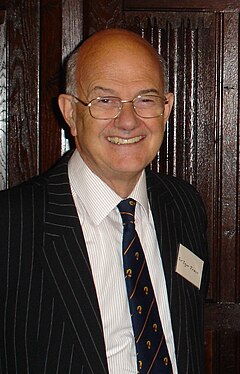
Igor Judge is a Maltese-born English judge and has been Lord Chief Justice of England and Wales, the head of the English judiciary, since October 2008.
Recently, I criticised the trial judge in the following case.
"Two men have been jailed for four years for using Facebook to incite disorder...Neither of their Facebook posts resulted in a riot-related event".
More recently, I was astounded when their sentences were upheld by the Court of Appeal. Incredibly, Lord Judge stated that the excessive sentences were justified because people were appalled to read what they had written. Sometimes I am appalled by what I read in the Daily Express and Daily Mail. But that does not justify the editors of those newspapers being jailed for 4 years.
Yesterday the Daily Mail stated "Judge Judge, on sentencing and the right of Britain to look after its own affairs, is a voice of sanity. He must be heard".
Now I am no psychiatrist but I would suggest that Lord Judge suffers from a dose of insanity.
On the other scale of justice Thomas Hammarberg, Commissioner for Human Rights of the Council of Europe recently gave a speech at the Conference on the Prevention of Human Rights Violations.
"We have to speed up progress in turning human rights principles into reality. The rights proclaimed and agreed to are too often not met in the everyday lives of Europeans. After having visited most member states, I am aware of the disappointment felt by many and remain impatient about the shortcomings in fulfilling human rights obligations.
All states encounter challenges in their work for the full realisation of human rights. It takes time and effort to develop a culture of respect for human rights. Scarce resources are often invoked as the main obstacle. Conflicts, corruption, racism and intolerance are other barriers to progress. Even without such hindrances we know that human rights are never fully implemented. There will always be improvements to be made. One reason is that minimum requirements change with economic and social developments.
Politicians have a responsibility – the implementation of human rights principles is largely a question of political will. It is unfortunate that key concepts and the language of human rights have often been politicised and demeaned in political discourse. It also happens that government politicians object strongly when shortcomings in their own countries are exposed by mechanisms set up to verify the practical implementation of agreed standards. Yet those responsible have in all cases an obligation to demonstrate the political will to address the identified problems.
We have to be systematic about human rights work. The objective is to build a society which takes human rights seriously: a society which endeavours to ensure that all its members can fully enjoy their rights. This requires a systematic approach for the prevention of violations and the implementation of the agreed standards".
For arguments sake, let's just say instead of winning Hirst v UK (No2) before the ECtHR I had lost the case. Then I come back to Blighty and say to Lord Judge you don't have to follow the ECtHR judgment please rule in my favour. I suspect he would have given me a very small measure of British justice and informed me that he had to follow the ECtHR judgment.
Lord Judge is giving a classic example of the politics of the judiciary. Time he stepped down.
Thursday, October 20, 2011
Bloody freezer!
Bloody freezer!
Some while back someone gave me an old fridge/freezer. I used it when I defrosted mine. Then I thought I would use it for the overflow from mine and Rocky's food. I also put all my frozen blackberries in it...
This morning I came downstairs and I thought Amanda Knox must have used it as there appeared to be a pool of blood coming from the freezer.
Mysteriously it decided to defrost itself over night and some of the blackberries juice had seeped out onto the laminate floor. I think I managed to save most of them. But, it did mean turkey escalopes for tea. I suspect that Rocky enjoyed his one more than I enjoyed my two!
Some while back someone gave me an old fridge/freezer. I used it when I defrosted mine. Then I thought I would use it for the overflow from mine and Rocky's food. I also put all my frozen blackberries in it...
This morning I came downstairs and I thought Amanda Knox must have used it as there appeared to be a pool of blood coming from the freezer.
Mysteriously it decided to defrost itself over night and some of the blackberries juice had seeped out onto the laminate floor. I think I managed to save most of them. But, it did mean turkey escalopes for tea. I suspect that Rocky enjoyed his one more than I enjoyed my two!
ALDI get a big thumbs up
ALDI get a big thumbs up

12 sausages for 72p!
250g packs of smoked back bacon for £1.09p!
Bags of toffees and choc eclairs 23p!
I've saved £££s not going to Tesco or Nisa.

12 sausages for 72p!
250g packs of smoked back bacon for £1.09p!
Bags of toffees and choc eclairs 23p!
I've saved £££s not going to Tesco or Nisa.
CIA's desire to torture suspects means Britain loses democracy and justice for CIA led dictatorship
CIA's desire to torture suspects means Britain loses democracy and justice for CIA led dictatorship
Centuries of open justice threatened by secret courts
Government rewrites judicial principles after lobbying by CIA
By Andy McSmith and Kim Sengupta
Thursday, 20 October 2011

Secret justice looks set to be a regular feature of British courts and tribunals when the intelligence services want to protect their sources of information.
Civil courts, immigration panels and even coroner's inquests would go into secret session if the Government rules that hearing evidence in public could be a threat to national security.
The proposals, which run counter to a centuries-old British tradition of open justice, were introduced to a sparsely attended House of Commons yesterday by the Justice Secretary, Ken Clarke – and met almost no opposition. The planned changes to the British justice system follow lobbying of the Government by the CIA.
Civil rights groups warned a serious potential threat to individual liberty lurked behind the all-party consensus.
Mr Clarke is seeking to protect the Government from a repeat of a fiasco which has cost tens of millions of pounds and led to a breakdown in co-operation between British intelligence and an enraged CIA.
The best-known case involved Binyam Mohamed, a British resident who was held in Guantanamo Bay for five years, and started a claim for damages from the UK Government, which he accused of complicity in torture.
The Court of Appeal released a summary of CIA intelligence which supported Mr Mohamed's claim that British intelligence officers knew about the torture of suspected terrorists.
The CIA was furious and halted the flow of information from its headquarters in Langley, Virginia, and other US agencies apart from in the most serious cases. MI6 and the Foreign Office also received complaints from a number of other allied states anxious that information provided on a confidential basis would leak into the public domain.
Faced with irate colleagues at Langley, the British Government paid out to 16 terrorist suspects, to prevent further damage to US-UK relations. Yesterday, Mr Clarke let slip that the cases had already cost around £20m. Another 30 are in prospect because, he told MPs, "it is becoming fashionable" to challenge the Government in court.
Officials have privately complained that they cannot defend these cases without compromising sensitive intelligence, which means suspected terrorists have been able to use the civil courts as a "cashpoint".
If Mr Clarke's proposals are agreed, the power of the courts to order the intelligence services to disclose sensitive material will be curtailed. The Government is also planning to pass a law giving itself much more latitude to use what are called "closed material proceedings" in civil court cases and immigration tribunals, meaning the people at the centre of such cases would not be allowed to hear any evidence that MI5 or MI6 did not want them to hear. The material would, however, be examined by special advocates with security clearance.
There is also the prospect of grieving relatives being security vetted before they are allowed into inquests in cases which might involve sensitive material, such as the death of a terrorist suspect. If they refuse to be vetted, they would be barred.
Mr Clarke went out of his way to avoid a clash with Labour by reminding them that he was dealing with a problem they had to face in government, and emphasising that his Green Paper was "very green".
Mr Clarke told MPs: "The Government is clear that under the current system, justice is not being served and our national security is being put at risk. For justice to be done and the rule of law to be upheld, courts should be able to consider all the facts of the case. At the moment, we are not always getting at the truth because some evidence is too sensitive to disclose in open court."
Last night, a US diplomatic source said: "It is a long-established practice that intelligence supplied by an agency should not be released into the public domain without the say-so of that agency. We were assured when we resumed normal relations that what happened [in the Binyam Mohamed case] would be rectified. I do not know the ins and outs of the British legislature, but I am assuming that is what is happening."
But Clare Algar, executive director of the human rights charity Reprieve, said: "The Government is seeking to close off the very methods by which we first found out about UK complicity in torture and rendition. Were the measures proposed today in place at the time of the Binyam Mohamed case, the British public would never have known about the appalling abuses our own officials had been involved in."
Isabella Sankey, director of policy for Liberty, said: "The security services seem to think that having to compensate former Guantanamo detainees for failing in their duty to them justifies closing down open civil courts. These payouts should encourage the avoidance of complicity in torture not attempts to halt centuries of British justice."
Cases that could have been affected
Omagh bombing The bomb planted by the Real IRA, which killed 29 people including the mother of unborn twins, in Omagh in August 1998 was the worst atrocity of the Northern Irish conflict. No one was brought to criminal trial although it was never denied that the government spy centre, GCHQ, was monitoring the phone calls of Real IRA members. The intelligence services did not want a trial in which phone-tapping evidence would have to be made public.
July 7 bombing More than five years passed before the inquest finally opened last year into the deaths of 52 people murdered in London's worst terrorist outrage, partly over arguments about whether MI5's evidence should be heard in public. It was. The families of the four suicide bombers did not ask for full inquests, and the coroner decided not to hold them.
George Blake When Blake was arrested in 1961, after being exposed as a spy for the Russians, the government was so embarrassed that the Prime Minister, Harold Macmillan, wanted to let him off and keep his treachery secret but the intelligence services insisted on a trial, at which the main evidence was presented in secret. Blake was sentenced to 42 years, but escaped after five.
John Amery The wartime traitor, the son of a Tory MP, saved the authorities a great deal of embarrassment by pleading guilty. His trial lasted eight minutes. He was sentenced to death for treason and hanged on 19 December 1945.
Andy McSmith
Centuries of open justice threatened by secret courts
Government rewrites judicial principles after lobbying by CIA
By Andy McSmith and Kim Sengupta
Thursday, 20 October 2011

Secret justice looks set to be a regular feature of British courts and tribunals when the intelligence services want to protect their sources of information.
Civil courts, immigration panels and even coroner's inquests would go into secret session if the Government rules that hearing evidence in public could be a threat to national security.
The proposals, which run counter to a centuries-old British tradition of open justice, were introduced to a sparsely attended House of Commons yesterday by the Justice Secretary, Ken Clarke – and met almost no opposition. The planned changes to the British justice system follow lobbying of the Government by the CIA.
Civil rights groups warned a serious potential threat to individual liberty lurked behind the all-party consensus.
Mr Clarke is seeking to protect the Government from a repeat of a fiasco which has cost tens of millions of pounds and led to a breakdown in co-operation between British intelligence and an enraged CIA.
The best-known case involved Binyam Mohamed, a British resident who was held in Guantanamo Bay for five years, and started a claim for damages from the UK Government, which he accused of complicity in torture.
The Court of Appeal released a summary of CIA intelligence which supported Mr Mohamed's claim that British intelligence officers knew about the torture of suspected terrorists.
The CIA was furious and halted the flow of information from its headquarters in Langley, Virginia, and other US agencies apart from in the most serious cases. MI6 and the Foreign Office also received complaints from a number of other allied states anxious that information provided on a confidential basis would leak into the public domain.
Faced with irate colleagues at Langley, the British Government paid out to 16 terrorist suspects, to prevent further damage to US-UK relations. Yesterday, Mr Clarke let slip that the cases had already cost around £20m. Another 30 are in prospect because, he told MPs, "it is becoming fashionable" to challenge the Government in court.
Officials have privately complained that they cannot defend these cases without compromising sensitive intelligence, which means suspected terrorists have been able to use the civil courts as a "cashpoint".
If Mr Clarke's proposals are agreed, the power of the courts to order the intelligence services to disclose sensitive material will be curtailed. The Government is also planning to pass a law giving itself much more latitude to use what are called "closed material proceedings" in civil court cases and immigration tribunals, meaning the people at the centre of such cases would not be allowed to hear any evidence that MI5 or MI6 did not want them to hear. The material would, however, be examined by special advocates with security clearance.
There is also the prospect of grieving relatives being security vetted before they are allowed into inquests in cases which might involve sensitive material, such as the death of a terrorist suspect. If they refuse to be vetted, they would be barred.
Mr Clarke went out of his way to avoid a clash with Labour by reminding them that he was dealing with a problem they had to face in government, and emphasising that his Green Paper was "very green".
Mr Clarke told MPs: "The Government is clear that under the current system, justice is not being served and our national security is being put at risk. For justice to be done and the rule of law to be upheld, courts should be able to consider all the facts of the case. At the moment, we are not always getting at the truth because some evidence is too sensitive to disclose in open court."
Last night, a US diplomatic source said: "It is a long-established practice that intelligence supplied by an agency should not be released into the public domain without the say-so of that agency. We were assured when we resumed normal relations that what happened [in the Binyam Mohamed case] would be rectified. I do not know the ins and outs of the British legislature, but I am assuming that is what is happening."
But Clare Algar, executive director of the human rights charity Reprieve, said: "The Government is seeking to close off the very methods by which we first found out about UK complicity in torture and rendition. Were the measures proposed today in place at the time of the Binyam Mohamed case, the British public would never have known about the appalling abuses our own officials had been involved in."
Isabella Sankey, director of policy for Liberty, said: "The security services seem to think that having to compensate former Guantanamo detainees for failing in their duty to them justifies closing down open civil courts. These payouts should encourage the avoidance of complicity in torture not attempts to halt centuries of British justice."
Cases that could have been affected
Omagh bombing The bomb planted by the Real IRA, which killed 29 people including the mother of unborn twins, in Omagh in August 1998 was the worst atrocity of the Northern Irish conflict. No one was brought to criminal trial although it was never denied that the government spy centre, GCHQ, was monitoring the phone calls of Real IRA members. The intelligence services did not want a trial in which phone-tapping evidence would have to be made public.
July 7 bombing More than five years passed before the inquest finally opened last year into the deaths of 52 people murdered in London's worst terrorist outrage, partly over arguments about whether MI5's evidence should be heard in public. It was. The families of the four suicide bombers did not ask for full inquests, and the coroner decided not to hold them.
George Blake When Blake was arrested in 1961, after being exposed as a spy for the Russians, the government was so embarrassed that the Prime Minister, Harold Macmillan, wanted to let him off and keep his treachery secret but the intelligence services insisted on a trial, at which the main evidence was presented in secret. Blake was sentenced to 42 years, but escaped after five.
John Amery The wartime traitor, the son of a Tory MP, saved the authorities a great deal of embarrassment by pleading guilty. His trial lasted eight minutes. He was sentenced to death for treason and hanged on 19 December 1945.
Andy McSmith
The Lord Chief Justice Lord Judge should apologise or resign
The Lord Chief Justice Lord Judge should apologise or resign
UK courts 'not bound by Strasbourg'
By Wesley Johnson
Thursday, 20 October 2011
British courts do not need to abide by the rulings of the European Court of Human Rights, the most senior judge in England and Wales has said.
The Lord Chief Justice Lord Judge said that while courts should always take the rulings of the Strasbourg-based court into account, they were not bound by them.
His comments will fuel the controversial debate over the Human Rights Act as a commission set up by David Cameron looks at the case for a British Bill of Rights.
But in giving evidence to the Lords Constitution Committee, a split over the issue emerged between two of Britain's most senior judges.
Lord Phillips, the president of the Supreme Court and a former Lord Chief Justice, told the peers: "In the end, Strasbourg is going to win so long as we have the Human Rights Act and the Human Rights Act is designed to give effect to that part of the rule of law which says we must comply with the convention.
"If we have Strasbourg saying, 'You can't do that', it raises some very real problems."
But Lord Judge said: "I would like to say that maybe Strasbourg shouldn't win and doesn't need to win."
He went on: "For Strasbourg there is a debate yet to happen, it will have to happen in the Supreme Court, about what we really do mean in the Human Rights Act, what Parliament means in the Human Rights Act, when it said that courts in this country must 'take account' of the decisions of the European Court of Human Rights (ECHR).
"I myself think it's at least arguable that, having taken account of the decision of the court in Strasbourg, our courts are not bound by them.
"We have to give them due weight, and in most cases obviously we would follow them, but not I think necessarily."
The Prime Minister's decision to set up a commission to consider a British Bill of Rights came after the Government lost a legal challenge to the ECHR ruling that the UK's blanket ban on prisoners voting was unlawful.
Speaking in April, Justice Secretary Kenneth Clarke warned that the ECHR has been "rather too ready to substitute its own judgment for that of national courts".
It was failing to give enough weight to the domestic legal system and was not allowing for "genuine differences of national approach", he said.
The Strasbourg-based court has been widely criticised in the UK for assuming a legislative function beyond its powers.
PA
Comment: It would be absurd to allow the Individual to challenge the State by petition to the European Court of Human Rights, and then allow the State the discretion to ignore the Court's decision when the State is the losing party to the action.
The Lord Chief Justice Lord Judge has failed to take into account the European Convention on Human Rights and has only taken into account the Human Rights Act 1998.
Article 44 – Final judgments
The judgment of the Grand Chamber shall be final.
The judgment of a Chamber shall become final:
when the parties declare that they will not request that the case be referred to the Grand Chamber; or
three months after the date of the judgment, if reference of the case to the Grand Chamber has not been requested; or
when the panel of the Grand Chamber rejects the request to refer under Article 43.
The final judgment shall be published.
Article 46 – Binding force and execution of judgments
The High Contracting Parties undertake to abide by the final judgment of the Court in any case to which they are parties.
The final judgment of the Court shall be transmitted to the Committee of Ministers, which shall supervise its execution.
Will the Lord Chief Justice Lord Judge now do the honourable thing and apologise for his error or failing this resign?
UK courts 'not bound by Strasbourg'
By Wesley Johnson
Thursday, 20 October 2011
British courts do not need to abide by the rulings of the European Court of Human Rights, the most senior judge in England and Wales has said.
The Lord Chief Justice Lord Judge said that while courts should always take the rulings of the Strasbourg-based court into account, they were not bound by them.
His comments will fuel the controversial debate over the Human Rights Act as a commission set up by David Cameron looks at the case for a British Bill of Rights.
But in giving evidence to the Lords Constitution Committee, a split over the issue emerged between two of Britain's most senior judges.
Lord Phillips, the president of the Supreme Court and a former Lord Chief Justice, told the peers: "In the end, Strasbourg is going to win so long as we have the Human Rights Act and the Human Rights Act is designed to give effect to that part of the rule of law which says we must comply with the convention.
"If we have Strasbourg saying, 'You can't do that', it raises some very real problems."
But Lord Judge said: "I would like to say that maybe Strasbourg shouldn't win and doesn't need to win."
He went on: "For Strasbourg there is a debate yet to happen, it will have to happen in the Supreme Court, about what we really do mean in the Human Rights Act, what Parliament means in the Human Rights Act, when it said that courts in this country must 'take account' of the decisions of the European Court of Human Rights (ECHR).
"I myself think it's at least arguable that, having taken account of the decision of the court in Strasbourg, our courts are not bound by them.
"We have to give them due weight, and in most cases obviously we would follow them, but not I think necessarily."
The Prime Minister's decision to set up a commission to consider a British Bill of Rights came after the Government lost a legal challenge to the ECHR ruling that the UK's blanket ban on prisoners voting was unlawful.
Speaking in April, Justice Secretary Kenneth Clarke warned that the ECHR has been "rather too ready to substitute its own judgment for that of national courts".
It was failing to give enough weight to the domestic legal system and was not allowing for "genuine differences of national approach", he said.
The Strasbourg-based court has been widely criticised in the UK for assuming a legislative function beyond its powers.
PA
Comment: It would be absurd to allow the Individual to challenge the State by petition to the European Court of Human Rights, and then allow the State the discretion to ignore the Court's decision when the State is the losing party to the action.
The Lord Chief Justice Lord Judge has failed to take into account the European Convention on Human Rights and has only taken into account the Human Rights Act 1998.
Article 44 – Final judgments
The judgment of the Grand Chamber shall be final.
The judgment of a Chamber shall become final:
when the parties declare that they will not request that the case be referred to the Grand Chamber; or
three months after the date of the judgment, if reference of the case to the Grand Chamber has not been requested; or
when the panel of the Grand Chamber rejects the request to refer under Article 43.
The final judgment shall be published.
Article 46 – Binding force and execution of judgments
The High Contracting Parties undertake to abide by the final judgment of the Court in any case to which they are parties.
The final judgment of the Court shall be transmitted to the Committee of Ministers, which shall supervise its execution.
Will the Lord Chief Justice Lord Judge now do the honourable thing and apologise for his error or failing this resign?
Wednesday, October 19, 2011
The winter of pensioners discontent
The winter of pensioners discontent

When I got up this morning my thermostat in my lounge displayed 17°C. As the morning progressed it went down to 16. I decided to go out and buy a 25kg bag of coal. As I made the fire the temperature had dropped to 15.5.
UPDATE: 18.09 Lounge now 24 degrees Celsius which is 75.2 degrees Fahrenheit.

When I got up this morning my thermostat in my lounge displayed 17°C. As the morning progressed it went down to 16. I decided to go out and buy a 25kg bag of coal. As I made the fire the temperature had dropped to 15.5.
UPDATE: 18.09 Lounge now 24 degrees Celsius which is 75.2 degrees Fahrenheit.

Tuesday, October 18, 2011
Lord Hanningfield's latest claim is also a false one
Lord Hanningfield's latest claim is also a false one
I have so far been unable to find any reference to Lord Hanningfield repaying the £14,000 he stole from the taxpayers with his false expenses claims.
Upon eary release from prison he received a visit at his home from police investigating his alleged fiddling of expenses from Essex County Council.
Now a firm of ambulance chasing lawyers Keystone Law are behaving like the Keystone Cops, alleging that the police cannot arrest somebody in their own home.
It is being alleged that the police committed trespass by going through Lord Haddingfield's front door. I saw no report that the police made a forced entry. Therefore, the most likely explanation is that the police were invited into the house. This does not amount to trespass. It is only trespass if someone enters without permission, or stays after being asked to leave.
The comical Mark Spragg of Keystone Law said: "Police actually had no right to go through his front door... they didn't have a search warrant". A search warrant is not required if invited in and no search takes place and the police only question the suspect. If the answers do not satisfy the police they are entitled to arrest the suspect.
The County Court should strike out the claim for £3,000 for unlawful arrest and detention and £1,500 for trespass and costs of £2,000.
Parliament should also seek to reclaim the £14,000 which Lord Haddingfield stole from the public purse.
I have so far been unable to find any reference to Lord Hanningfield repaying the £14,000 he stole from the taxpayers with his false expenses claims.
Upon eary release from prison he received a visit at his home from police investigating his alleged fiddling of expenses from Essex County Council.
Now a firm of ambulance chasing lawyers Keystone Law are behaving like the Keystone Cops, alleging that the police cannot arrest somebody in their own home.
It is being alleged that the police committed trespass by going through Lord Haddingfield's front door. I saw no report that the police made a forced entry. Therefore, the most likely explanation is that the police were invited into the house. This does not amount to trespass. It is only trespass if someone enters without permission, or stays after being asked to leave.
The comical Mark Spragg of Keystone Law said: "Police actually had no right to go through his front door... they didn't have a search warrant". A search warrant is not required if invited in and no search takes place and the police only question the suspect. If the answers do not satisfy the police they are entitled to arrest the suspect.
The County Court should strike out the claim for £3,000 for unlawful arrest and detention and £1,500 for trespass and costs of £2,000.
Parliament should also seek to reclaim the £14,000 which Lord Haddingfield stole from the public purse.
Why Priti Patel should only write about what she knows (if anything)
Why Priti Patel should only write about what she knows (if anything)
Priti Patel MP: Why Parliament must debate ECHR reforms
"Next month Britain has a once in a generation opportunity to spearhead reform of the European Court of Human Rights, the European Convention on Human Rights and their related institutions when it assumes the chairmanship of the Council of Europe. As the chairmanship rotates between the Council of Europe’s 47 members every six months, it will be a quarter of a century until Britain is in this position again so it is an opportunity that cannot be missed".
The correct institution to debate reforms of either the European Convention or European Court is the Parliamentary Assembly of the Council of Europe (PACE) and not our Houses of Parliament. The UK does not have the jurisdiction to interfere in the Council of Europe's affairs. Given the mess MPs made of their sham debate on prisoners votes, it is another reason why they should keep their snout in the trough noses out of business which does not concern them.
The UK is not in any position to spearhead anything in the Council of Europe because the UK is only 1/47th of the Member States and has no greater say than any of the other 46 Member States. The UK will not assume the Chairmanship of the Council of Europe next month, rather it only takes over the chairmanship of the Committee of Ministers within the Council of Europe.
"These Strasbourg-based European institutions have grown in power and the European human rights system they have created has resulted in the powers of our Parliament being eroded. The laws they create have crippled our immigration system, placing huge and often insurmountable barriers in the way of the authorities when they want to throw a foreign murderer, rapist or violent offender out of our country. They give criminals gold-plated rights, such as allowing prisoners access to IVF treatment. And, as we've seen with their desire to force Britain to grant all prisoners the right to vote, they have no respect for British democracy. Worryingly, these institutions are attempting to go even further and are issuing diktats ordering countries to have soft border controls, grant immigrants more rights and criticising cutbacks to public spending".
True, the institutions have grown in power. Powers granted by all Members States (including the UK) within the Council of Europe. Our Parliament sacrificed some of our national sovereignty to enable us to be part of the United States of Europe. Therefore the UK eroded its own powers and cannot legitimately blame Europe for this state of affairs. Why isn't William Hague criticising her for sticking her brown nose into Foreign and Commonwealth Office affairs?
Priti Patel although born in this country is of Ugandan Indian immigrant parents, and the thought of her trying to be whiter than the whites makes me feel physically ill. Immigration comes under the Home Office, why isn't Theresa May telling her to mind her own business?
It is only right that the Council of Europe guarantees all citizens rights including criminals and prisoners. As Hirst v UK (No2) has proven the UK is not a democracy, because universal suffrage is not applicable. So, for Priti Patel to go on about our totalitarian or authoritarian State as though it is a democracy stinks of hypocrisy. She appear to have conveniently forgotten that she only became a MP because of reverse discrimination which saw her placed on the "A-List" of Conservative Party candidates ahead of more suitable candidates. Her status remains as a Tory party token black to satisfy diversity. It beggars belief that first she criticised the Tory party for being institutionally racist, then took a bribe ("A-List" placing) to join a racist party, only to attack other people of ethnic origin. Clearly it is not only whites who can be racist. Priti Patel is a black racist against those of her own skin colour. Would she not be better suited joining the BNP or UKIP?
"It is time to hold them to account and in advance of Britain's chairmanship, Parliament and backbench MPs need to have an opportunity to question ministers over their plans. MPs are aware of the frustration and concern their constituents feel when they see human rights allowing prisoners to have IVF treatment or foreign criminals free to walk our streets by claiming that they have a right to a family life. Our constituents expect action and change. Now that the British Government has an opportunity to deliver that change it would be a beneficial use of Parliamentary time for the Backbench Business Committee to grant time for MPs to debate these matters".
It is time that Parliament was held to account. They work for us, or at least are supposed to. Instead, they are more interested in fiddling their expenses, extending their holiday breaks and increasing their pensions. It appears that Priti Patel is complaining that Ministers are keeping her, a non Minister, in the dark about their plans. It would be a wasteful use of Parliamentary time and taxpayers money (note that the Taxpayers Alliance is silent on this?) for the unconstitutional Backbench Business Committee to air their prejudices.
"Much of the discussions within Europe over the future of the ECHR relates to streamlining its caseload. With claimants going to the Court being successful in claiming their rights have been violated in over 80% of cases, it is not surprising a backlog of 120,000 cases have built up as more and more people view the Court as a final court of appeal. Inevitably, this will lead to greater integration at the expense of the British Parliament being able to make its own laws. Parliament and the Government must resist attempts for deeper integration".
The Interlaken process to which Priti Patel refers equally to Member States failing to abide by the Convention and Court decisions, and sanctions to be applied to rogue or pariah States which ignore Human Rights, Democracy and the Rule of Law (such as the UK, in the Prisoners Votes Case). Priti Patel fails to point out that over 90% of cases lodged before the ECtHR are subsequently declared inadmissible. Therefore the over 80% of the less than 10% which are successful upon being heard is not unusual. Priti Patel fails to state that the UK is guilty of adding 3,500 cases in relation to prisoners votes to those 120,000 backlog of cases. It beggars belief that Priti Patel has been integated via her parents immigration to this country calling to resist deeper integration in Europe. It is either in or out.
"Reforms to the Convention and the last Government's Human Rights Act have already forced our courts to follow the European human rights system. So the priority for the Government in chairing the Council of Europe must be to push forward an ambitious serious of reforms to bring human rights back to Britain. That goes far further than looking into whether a Bill of Rights should replace the Human Rights Act. While the European Court of Human Rights and the Council of Europe continue to act the way they do, British lawmaking and British justice will continue to be undermined".
The UK signed up to the Convention and a requirement is that the UK abide by it and the Court decisions and this includes the domestic courts. It was not forced upon the UK, we signed up to it willingly. The HRA does not belong to the last government, it is part of UK law which Parliament passed. Bring back human rights to Britain? Chance would be a fine thing, but our record of human rights in the past has been atrocious. British justice failed the likes of the Birmingham 6, Guildford 4, Maguire 7 and Stephen Kisko, etc. We in the UK undermined British justice. Priti Patel is beginning to sound like Idi Amin the infamous dictator of Uganda!
"Those who support the current system or who want to see closer integration will often claim that it was British lawyers who drafted the Convention and Winston Churchill who pushed for its adoption, as Nick Clegg alluded to during his speech to the Lib Dem conference. But while Britain has a strong tradition of promoting human rights and after the Second World War and the horrors of the Holocaust were revealed it was right to look at ways to prevent future genocide and persecution in Europe, Churchill would never have allowed Europe to meddle in our laws the way it currently does. He would have stood up to put the British interest first and that is what Government ministers and Parliament must do now. Otherwise, a failure to curtail the Council of Europe and European Court of Human Rights will lead to Britain facing a further unstoppable flow of powers to Europe, which would severely undermine our democracy".
It is a lie for Priti Patel to claim that Britain has a strong tradition of promoting human rights, because we failed to incorporate the Convention into domestic law for 60 years! Winston Churchill was the first European, and saw the benefit of a disintegrating British Empire becoming part of the United States of Europe. The UK is not in any position to curtail either the power of the Council of Europe or jurisdiction of the ECtHR. I would like to see the Council of Europe give the UK a stark warning to either toe the line or get shown the red card. What undermines our democracy is that the elected are choosing the electorate, when in a true democracy the electorate chooses the elected. I have started a revolution in democracy with my campaign for prisoners votes, if Priti Patel does not like it she is free to tender her resignation and her constituents can pick their own candidate rather than a Cameron flunky!
Priti Patel MP: Why Parliament must debate ECHR reforms
"Next month Britain has a once in a generation opportunity to spearhead reform of the European Court of Human Rights, the European Convention on Human Rights and their related institutions when it assumes the chairmanship of the Council of Europe. As the chairmanship rotates between the Council of Europe’s 47 members every six months, it will be a quarter of a century until Britain is in this position again so it is an opportunity that cannot be missed".
The correct institution to debate reforms of either the European Convention or European Court is the Parliamentary Assembly of the Council of Europe (PACE) and not our Houses of Parliament. The UK does not have the jurisdiction to interfere in the Council of Europe's affairs. Given the mess MPs made of their sham debate on prisoners votes, it is another reason why they should keep their snout in the trough noses out of business which does not concern them.
The UK is not in any position to spearhead anything in the Council of Europe because the UK is only 1/47th of the Member States and has no greater say than any of the other 46 Member States. The UK will not assume the Chairmanship of the Council of Europe next month, rather it only takes over the chairmanship of the Committee of Ministers within the Council of Europe.
"These Strasbourg-based European institutions have grown in power and the European human rights system they have created has resulted in the powers of our Parliament being eroded. The laws they create have crippled our immigration system, placing huge and often insurmountable barriers in the way of the authorities when they want to throw a foreign murderer, rapist or violent offender out of our country. They give criminals gold-plated rights, such as allowing prisoners access to IVF treatment. And, as we've seen with their desire to force Britain to grant all prisoners the right to vote, they have no respect for British democracy. Worryingly, these institutions are attempting to go even further and are issuing diktats ordering countries to have soft border controls, grant immigrants more rights and criticising cutbacks to public spending".
True, the institutions have grown in power. Powers granted by all Members States (including the UK) within the Council of Europe. Our Parliament sacrificed some of our national sovereignty to enable us to be part of the United States of Europe. Therefore the UK eroded its own powers and cannot legitimately blame Europe for this state of affairs. Why isn't William Hague criticising her for sticking her brown nose into Foreign and Commonwealth Office affairs?
Priti Patel although born in this country is of Ugandan Indian immigrant parents, and the thought of her trying to be whiter than the whites makes me feel physically ill. Immigration comes under the Home Office, why isn't Theresa May telling her to mind her own business?
It is only right that the Council of Europe guarantees all citizens rights including criminals and prisoners. As Hirst v UK (No2) has proven the UK is not a democracy, because universal suffrage is not applicable. So, for Priti Patel to go on about our totalitarian or authoritarian State as though it is a democracy stinks of hypocrisy. She appear to have conveniently forgotten that she only became a MP because of reverse discrimination which saw her placed on the "A-List" of Conservative Party candidates ahead of more suitable candidates. Her status remains as a Tory party token black to satisfy diversity. It beggars belief that first she criticised the Tory party for being institutionally racist, then took a bribe ("A-List" placing) to join a racist party, only to attack other people of ethnic origin. Clearly it is not only whites who can be racist. Priti Patel is a black racist against those of her own skin colour. Would she not be better suited joining the BNP or UKIP?
"It is time to hold them to account and in advance of Britain's chairmanship, Parliament and backbench MPs need to have an opportunity to question ministers over their plans. MPs are aware of the frustration and concern their constituents feel when they see human rights allowing prisoners to have IVF treatment or foreign criminals free to walk our streets by claiming that they have a right to a family life. Our constituents expect action and change. Now that the British Government has an opportunity to deliver that change it would be a beneficial use of Parliamentary time for the Backbench Business Committee to grant time for MPs to debate these matters".
It is time that Parliament was held to account. They work for us, or at least are supposed to. Instead, they are more interested in fiddling their expenses, extending their holiday breaks and increasing their pensions. It appears that Priti Patel is complaining that Ministers are keeping her, a non Minister, in the dark about their plans. It would be a wasteful use of Parliamentary time and taxpayers money (note that the Taxpayers Alliance is silent on this?) for the unconstitutional Backbench Business Committee to air their prejudices.
"Much of the discussions within Europe over the future of the ECHR relates to streamlining its caseload. With claimants going to the Court being successful in claiming their rights have been violated in over 80% of cases, it is not surprising a backlog of 120,000 cases have built up as more and more people view the Court as a final court of appeal. Inevitably, this will lead to greater integration at the expense of the British Parliament being able to make its own laws. Parliament and the Government must resist attempts for deeper integration".
The Interlaken process to which Priti Patel refers equally to Member States failing to abide by the Convention and Court decisions, and sanctions to be applied to rogue or pariah States which ignore Human Rights, Democracy and the Rule of Law (such as the UK, in the Prisoners Votes Case). Priti Patel fails to point out that over 90% of cases lodged before the ECtHR are subsequently declared inadmissible. Therefore the over 80% of the less than 10% which are successful upon being heard is not unusual. Priti Patel fails to state that the UK is guilty of adding 3,500 cases in relation to prisoners votes to those 120,000 backlog of cases. It beggars belief that Priti Patel has been integated via her parents immigration to this country calling to resist deeper integration in Europe. It is either in or out.
"Reforms to the Convention and the last Government's Human Rights Act have already forced our courts to follow the European human rights system. So the priority for the Government in chairing the Council of Europe must be to push forward an ambitious serious of reforms to bring human rights back to Britain. That goes far further than looking into whether a Bill of Rights should replace the Human Rights Act. While the European Court of Human Rights and the Council of Europe continue to act the way they do, British lawmaking and British justice will continue to be undermined".
The UK signed up to the Convention and a requirement is that the UK abide by it and the Court decisions and this includes the domestic courts. It was not forced upon the UK, we signed up to it willingly. The HRA does not belong to the last government, it is part of UK law which Parliament passed. Bring back human rights to Britain? Chance would be a fine thing, but our record of human rights in the past has been atrocious. British justice failed the likes of the Birmingham 6, Guildford 4, Maguire 7 and Stephen Kisko, etc. We in the UK undermined British justice. Priti Patel is beginning to sound like Idi Amin the infamous dictator of Uganda!
"Those who support the current system or who want to see closer integration will often claim that it was British lawyers who drafted the Convention and Winston Churchill who pushed for its adoption, as Nick Clegg alluded to during his speech to the Lib Dem conference. But while Britain has a strong tradition of promoting human rights and after the Second World War and the horrors of the Holocaust were revealed it was right to look at ways to prevent future genocide and persecution in Europe, Churchill would never have allowed Europe to meddle in our laws the way it currently does. He would have stood up to put the British interest first and that is what Government ministers and Parliament must do now. Otherwise, a failure to curtail the Council of Europe and European Court of Human Rights will lead to Britain facing a further unstoppable flow of powers to Europe, which would severely undermine our democracy".
It is a lie for Priti Patel to claim that Britain has a strong tradition of promoting human rights, because we failed to incorporate the Convention into domestic law for 60 years! Winston Churchill was the first European, and saw the benefit of a disintegrating British Empire becoming part of the United States of Europe. The UK is not in any position to curtail either the power of the Council of Europe or jurisdiction of the ECtHR. I would like to see the Council of Europe give the UK a stark warning to either toe the line or get shown the red card. What undermines our democracy is that the elected are choosing the electorate, when in a true democracy the electorate chooses the elected. I have started a revolution in democracy with my campaign for prisoners votes, if Priti Patel does not like it she is free to tender her resignation and her constituents can pick their own candidate rather than a Cameron flunky!
Pervert judge critises the European Court of Human Rights!
Pervert judge critises the European Court of Human Rights!
James Slack and Michael Seamark in the Daily Mail write
Judges' £2.5m delay in extraditing six UK terror suspects... but they were quick to seal hacker Gary's fate
Independent panel will accuse European court of being inefficient and slow
Terrorists accused of plotting atrocities and running extremist websites and camps
Same judges dismissed Asperger’s sufferer Gary McKinnon's appeal case in a day
"Today the review panel, established by the Home Office and led by Lord Justice Scott Baker, will urge ministers to put pressure on the Strasbourg court to reform the way it works".
Comment: The Home Office is seeking to deport innocent until proven guilty people who are in prison and have been for a number of years simply because they are deemed to be terrorist suspects. Given that the Home Office has an interest in this issue and set up the review panel, it cannot be claimed that it is an independent panel. Notwithstanding that it is headed by a judge. The last I saw of Lord Justice Scott Baker he was entrusted to determine whether I posed an unacceptable risk to the public to be released from Sudbury open prison in Derbyshire. My barrister opined that he seemed more interested in discovering the services provided and prices charged in Bubbles Massage Parlour in Derby!
"The Government, which has been embroiled in a long row with the court over votes for prisoners, will jump at the chance to issue a rebuke to the judges over terror".
The Daily Mail which is getting on its high horse on the issue of delay conveniently forgets to mention that the UK has delayed fully complying with the ECtHR judgment on prisoners votes for just over 6 years now.
Shouldn't the Daily Mail be suggesting that the UK cleans up its own back yard first before pointing the finger at someone else's back yard?
One of the causes for delay with the ECtHR is the vast number of repetitive or clone cases causing a backlog in the system. These cases have come from Member States which have failed to implement ECtHR rulings. For example, there are now 3,500 prisoners votes cases jamming up the system. The Daily Mail is silent about this issue.
James Slack and Michael Seamark in the Daily Mail write
Judges' £2.5m delay in extraditing six UK terror suspects... but they were quick to seal hacker Gary's fate
Independent panel will accuse European court of being inefficient and slow
Terrorists accused of plotting atrocities and running extremist websites and camps
Same judges dismissed Asperger’s sufferer Gary McKinnon's appeal case in a day
"Today the review panel, established by the Home Office and led by Lord Justice Scott Baker, will urge ministers to put pressure on the Strasbourg court to reform the way it works".
Comment: The Home Office is seeking to deport innocent until proven guilty people who are in prison and have been for a number of years simply because they are deemed to be terrorist suspects. Given that the Home Office has an interest in this issue and set up the review panel, it cannot be claimed that it is an independent panel. Notwithstanding that it is headed by a judge. The last I saw of Lord Justice Scott Baker he was entrusted to determine whether I posed an unacceptable risk to the public to be released from Sudbury open prison in Derbyshire. My barrister opined that he seemed more interested in discovering the services provided and prices charged in Bubbles Massage Parlour in Derby!
"The Government, which has been embroiled in a long row with the court over votes for prisoners, will jump at the chance to issue a rebuke to the judges over terror".
The Daily Mail which is getting on its high horse on the issue of delay conveniently forgets to mention that the UK has delayed fully complying with the ECtHR judgment on prisoners votes for just over 6 years now.
Shouldn't the Daily Mail be suggesting that the UK cleans up its own back yard first before pointing the finger at someone else's back yard?
One of the causes for delay with the ECtHR is the vast number of repetitive or clone cases causing a backlog in the system. These cases have come from Member States which have failed to implement ECtHR rulings. For example, there are now 3,500 prisoners votes cases jamming up the system. The Daily Mail is silent about this issue.
Monday, October 17, 2011
Giving prisoners the vote is a small step on the road to true democracy
Giving prisoners the vote is a small step on the road to true democracy
Monday, 17 October 2011 2:12 PM
Granting voting rights to prisoners will help offenders engage in society on their release.
By Ursula Smartt

After his legal victory on prisoners' voting rights, John Hirst posted a blatantly rude video message on YouTube, celebrating with a bottle of champagne and lighting a large joint.
Millions of viewers heard Hirst shouting to camera: "I'm celebrating for the 75,000 prisoners who will be getting the vote; and that includes murderers, rapists and paedophiles." Prime minister David Cameron professed in November 2010 that he was "angry and exasperated" with the Strasbourg ruling on prisoner voting, worried about the deadline set by the human rights court that the UK had been asked to implement legislation by August 2011.
John Hirst had been sentenced to life imprisonment in June 1979 for hacking his landlady, Bronia Burton, to death by hitting her seven times with an axe. At his trial Hirst had pleaded guilty to manslaughter by diminished responsibility. Whilst in prison, Hirst had furthered his education, including the study of law. He had become one of the most litigious prisoners in the prison system. In a second action before the human rights court, Hirst won his case in 2005, claiming that the UK had contravened the European Convention on Human Rights by not allowing its prisoners to vote.
Whilst the Strasbourg court ruling did not state that all prisoners should be given voting rights, it sent a stern message to the UK parliament that measures were needed to establish compatibility with the Convention. There are presently 18 (out of 47) member states of the Council of Europe that allow their prisoners the right to vote, including Spain, Sweden, Portugal, France, Germany and Greece.
During the last general election in May 2010, about 73,000 prisoners were denied the right to vote. Since then the coalition government has attempted to find a solution to the Hirst ruling. In January 2011, political adversaries Jack Straw and David Davis unusually joined forces by leading a parliamentary debate in which they tried to persuade the new Commons backbench business committee to resist political and constitutional reform in respect of prisoners' rights to vote. Straw and Davis argued that the Commons should be given the chance to stand up to the human rights court and defy an illegitimate challenge to a democratically elected parliament. Both claimed that voting rights for prisoners should be determined by parliament and not by the courts. The fact remains that a succession of governments have delayed passing legislation in this respect. The Straw-Davis motion called for the retention of the status quo in which all prisoners (except those on remand, imprisoned for contempt, or fine default) would be barred from voting.
The debate resulted in the motion supporting the continuation of the current prisoner voting ban at 234 votes to 22 - and now the government is facing a potential £160 million in fines if the Hirst judgement continues to be ignored.
The prisoner voting debate raises the age-old question: 'What is prison for'? Over 20 years of prison research has taught me that voting is not top of a prisoner's wish list. It could however be argued that the Hirst challenge has highlighted that voting is an important civic duty and should be a fundamental educational tool, particularly in prison, in order to encourage responsible citizenship. The voting issue could form a meaningful part of the prison education syllabus to include citizenship training which, in turn, would assist the resettlement and re-integration of prisoners into society. Giving prisoners the vote might even improve victim awareness and empathy. When visiting High Down Prison (Sutton, Surrey) in May 2011, I noted that there could be potentially 1,400 prisoner votes at the next general election. Even if only a third decided to vote that could swing it on issues such as 'law and order'.
The current proposed legislation involves giving the vote to convicted prisoners with a sentence for less than four years; though judges can retain the discretion to remove this right as they pass sentence.
However if only short-term prisoners are given the vote what about long-term prisoners? By giving all prisoners the vote it could encourage better inmate-staff relationships and could potentially improve responsible prison governance, particularly in some violent prisons.
The precise number of prisoners eligible to vote may actually be lower than expected since a small number of those serving four-year sentences may be concurrently in prison for longer terms and will therefore still be barred from voting. In April 2011, more than 28,000 prisoners were sentenced to less than four years including almost 6,000 imprisoned for violent crime, over 1,700 sex offenders, more than 4,000 burglars and 4,300 imprisoned for drug offences.
Arguably, there are a number of advantages to this law reform. Firstly, the UK will have complied with the European Convention, which means that Britain can teach its criminals to obey the law by complying with international law itself. Another advantage is offender rehabilitation: denying the right to vote leaves prisoners isolated from society. Voting could become part of prisoner rehabilitation by way of an incentive and by actively and responsibly taking part in society after release, rather than existing on its fringe.
By being given the vote, prisoners can actively engage in citizenship training and engage with the society. Voting means being part of the decision-making process and being a responsible citizen. Giving prisoners the vote is one small step towards an engagement with civic power and the respect for the rule of law which are the crucial foundations of a meaningful democracy.
Ursula Smartt is an associate lecturer in media law at the University of Surrey and a magistrate on the Surrey Bench at Guildford.
The opinions in politics.co.uk's Comment and Analysis section are those of the author and are no reflection of the views of the website or its owners.
Monday, 17 October 2011 2:12 PM
Granting voting rights to prisoners will help offenders engage in society on their release.
By Ursula Smartt

After his legal victory on prisoners' voting rights, John Hirst posted a blatantly rude video message on YouTube, celebrating with a bottle of champagne and lighting a large joint.
Millions of viewers heard Hirst shouting to camera: "I'm celebrating for the 75,000 prisoners who will be getting the vote; and that includes murderers, rapists and paedophiles." Prime minister David Cameron professed in November 2010 that he was "angry and exasperated" with the Strasbourg ruling on prisoner voting, worried about the deadline set by the human rights court that the UK had been asked to implement legislation by August 2011.
John Hirst had been sentenced to life imprisonment in June 1979 for hacking his landlady, Bronia Burton, to death by hitting her seven times with an axe. At his trial Hirst had pleaded guilty to manslaughter by diminished responsibility. Whilst in prison, Hirst had furthered his education, including the study of law. He had become one of the most litigious prisoners in the prison system. In a second action before the human rights court, Hirst won his case in 2005, claiming that the UK had contravened the European Convention on Human Rights by not allowing its prisoners to vote.
Whilst the Strasbourg court ruling did not state that all prisoners should be given voting rights, it sent a stern message to the UK parliament that measures were needed to establish compatibility with the Convention. There are presently 18 (out of 47) member states of the Council of Europe that allow their prisoners the right to vote, including Spain, Sweden, Portugal, France, Germany and Greece.
During the last general election in May 2010, about 73,000 prisoners were denied the right to vote. Since then the coalition government has attempted to find a solution to the Hirst ruling. In January 2011, political adversaries Jack Straw and David Davis unusually joined forces by leading a parliamentary debate in which they tried to persuade the new Commons backbench business committee to resist political and constitutional reform in respect of prisoners' rights to vote. Straw and Davis argued that the Commons should be given the chance to stand up to the human rights court and defy an illegitimate challenge to a democratically elected parliament. Both claimed that voting rights for prisoners should be determined by parliament and not by the courts. The fact remains that a succession of governments have delayed passing legislation in this respect. The Straw-Davis motion called for the retention of the status quo in which all prisoners (except those on remand, imprisoned for contempt, or fine default) would be barred from voting.
The debate resulted in the motion supporting the continuation of the current prisoner voting ban at 234 votes to 22 - and now the government is facing a potential £160 million in fines if the Hirst judgement continues to be ignored.
The prisoner voting debate raises the age-old question: 'What is prison for'? Over 20 years of prison research has taught me that voting is not top of a prisoner's wish list. It could however be argued that the Hirst challenge has highlighted that voting is an important civic duty and should be a fundamental educational tool, particularly in prison, in order to encourage responsible citizenship. The voting issue could form a meaningful part of the prison education syllabus to include citizenship training which, in turn, would assist the resettlement and re-integration of prisoners into society. Giving prisoners the vote might even improve victim awareness and empathy. When visiting High Down Prison (Sutton, Surrey) in May 2011, I noted that there could be potentially 1,400 prisoner votes at the next general election. Even if only a third decided to vote that could swing it on issues such as 'law and order'.
The current proposed legislation involves giving the vote to convicted prisoners with a sentence for less than four years; though judges can retain the discretion to remove this right as they pass sentence.
However if only short-term prisoners are given the vote what about long-term prisoners? By giving all prisoners the vote it could encourage better inmate-staff relationships and could potentially improve responsible prison governance, particularly in some violent prisons.
The precise number of prisoners eligible to vote may actually be lower than expected since a small number of those serving four-year sentences may be concurrently in prison for longer terms and will therefore still be barred from voting. In April 2011, more than 28,000 prisoners were sentenced to less than four years including almost 6,000 imprisoned for violent crime, over 1,700 sex offenders, more than 4,000 burglars and 4,300 imprisoned for drug offences.
Arguably, there are a number of advantages to this law reform. Firstly, the UK will have complied with the European Convention, which means that Britain can teach its criminals to obey the law by complying with international law itself. Another advantage is offender rehabilitation: denying the right to vote leaves prisoners isolated from society. Voting could become part of prisoner rehabilitation by way of an incentive and by actively and responsibly taking part in society after release, rather than existing on its fringe.
By being given the vote, prisoners can actively engage in citizenship training and engage with the society. Voting means being part of the decision-making process and being a responsible citizen. Giving prisoners the vote is one small step towards an engagement with civic power and the respect for the rule of law which are the crucial foundations of a meaningful democracy.
Ursula Smartt is an associate lecturer in media law at the University of Surrey and a magistrate on the Surrey Bench at Guildford.
The opinions in politics.co.uk's Comment and Analysis section are those of the author and are no reflection of the views of the website or its owners.
Hacked off!
Hacked off!
I received an email from my internet service provider...
"You have now exceeded your 30GB monthly usage allowance. Don't forget - you will incur charges of £2 for each additional GB or part thereof, that you use over your limit".
The only problem being that in July I was under 8GB and August under 8GB, and I have done nothing different in years so to suddenly hike up to over 30GB in September led me to question the ISPs figures.
Technical Support talked me through a few things and then we got on to Home Network only to find that my Broadband was being used by unauthorised access. I had been hacked by person or persons unknown with 3 devices connected. One being a wifi connection, and iphone.
I changed the passwords and they are now inactive. I suspect that the Thompson router V8 to be unsecure.
UPDATE: I just remembered awhile back I had to let Technical Support into my computer to fix something or other. Checking the IP addresses of those using my broadband width are all Kingston Communications own! The cheek of it, using mine and then trying to charge me for it!
I received an email from my internet service provider...
"You have now exceeded your 30GB monthly usage allowance. Don't forget - you will incur charges of £2 for each additional GB or part thereof, that you use over your limit".
The only problem being that in July I was under 8GB and August under 8GB, and I have done nothing different in years so to suddenly hike up to over 30GB in September led me to question the ISPs figures.
Technical Support talked me through a few things and then we got on to Home Network only to find that my Broadband was being used by unauthorised access. I had been hacked by person or persons unknown with 3 devices connected. One being a wifi connection, and iphone.
I changed the passwords and they are now inactive. I suspect that the Thompson router V8 to be unsecure.
UPDATE: I just remembered awhile back I had to let Technical Support into my computer to fix something or other. Checking the IP addresses of those using my broadband width are all Kingston Communications own! The cheek of it, using mine and then trying to charge me for it!
Weather expected to turn much colder before clocks go back
Weather expected to turn much colder before clocks go back
Snow on hills and sub-zero temperatures are forecast
 The autumn sun rises over Thirsk in North Yorkshire. Cold winds, frost and even some snow are forecast to hit Britain this week. Photograph: Owen Humphreys/PA
Snow on hills and sub-zero temperatures are forecast

Sunday, October 16, 2011
A sign of Cameron's weakness as a leader
A sign of Cameron's weakness as a leader
I awoke this morning at the crack of dawn with the thought on my mind that it was strange that the Coalition is able to react quickly to a judgment of the court in one case, but appears unable to act in another case.
If David Cameron thinks his problems are over with the resignation of Liam Fox then he had better think again because the Hirst problem is only going to get worse for him if he does not deal with it now.
The obligation to abide by the judgments encompasses two main elements. As far as the applicant’s individual situation is concerned, the main obligation is to ensure that measures are taken which achieve, as far as possible, restitutio in integrum for the applicant. Such measures include notably the effective payment of the just satisfaction allocated by the Court (including the payment of default interests in case of belated payment). When the consequences of a violation cannot be adequately erased by the just satisfaction awarded, the Committee of Ministers makes sure that the domestic authorities take the other specific individual measures in favour of the applicant which may be required. Such measures can, for example, consist in the granting of a residence permit, the reopening of a judicial procedure and/or the erasure of a conviction from the criminal records.
On a more general level, the obligation also includes the prevention of violations similar to those found by the Court. General measures which may be necessary include notably constitutional changes or legislative amendments, changes in the case-law of the national courts, as well as practical measures, such as the recruitment of judges or refurbishing obsolete prison facilities. The efficiency of domestic remedies is an important element of general measures and States are notably recommended by the Committee of Ministers to review, following Court judgments which point to structural or general deficiencies in national law or practice, the effectiveness of the existing remedies and, where necessary, set up effective ones, in order to avoid repetitive cases being brought before the Court.
Labour failed to amend s.3 of ROPA 1983 following the Hirst v UK (No2) judgment. It is not as though Labour does not know how to make or amend laws. For example, Blair's 'frenzied law making' : a new offence for every day spent in office. And now under the Coalition government The 22 Bills include plans for major reform of schools, police, welfare and Britain's political system.
Not only has the Coalition ignored the ECtHR judgment but it has also passed a law since which expressly banned prisoners from voting, that is, the Parliamentary Voting System and Constituencies Act 2011.
Frodl v Austria relied upon the Hirst test. The Coalition has tried to claim that the Frodl case goes even further than mine. Whatever, the Committee of Ministers reports that Austria has now amended its laws to fully comply with the judgment. Latvia which joined my application as an interested party has also amended its laws to fully comply with my judgment. There is no legitimate reason for the UK to not fully comply with Hirst v UK (no2).
Why did the chicken called David Cameron cross the road?
I awoke this morning at the crack of dawn with the thought on my mind that it was strange that the Coalition is able to react quickly to a judgment of the court in one case, but appears unable to act in another case.
If David Cameron thinks his problems are over with the resignation of Liam Fox then he had better think again because the Hirst problem is only going to get worse for him if he does not deal with it now.
The obligation to abide by the judgments encompasses two main elements. As far as the applicant’s individual situation is concerned, the main obligation is to ensure that measures are taken which achieve, as far as possible, restitutio in integrum for the applicant. Such measures include notably the effective payment of the just satisfaction allocated by the Court (including the payment of default interests in case of belated payment). When the consequences of a violation cannot be adequately erased by the just satisfaction awarded, the Committee of Ministers makes sure that the domestic authorities take the other specific individual measures in favour of the applicant which may be required. Such measures can, for example, consist in the granting of a residence permit, the reopening of a judicial procedure and/or the erasure of a conviction from the criminal records.
On a more general level, the obligation also includes the prevention of violations similar to those found by the Court. General measures which may be necessary include notably constitutional changes or legislative amendments, changes in the case-law of the national courts, as well as practical measures, such as the recruitment of judges or refurbishing obsolete prison facilities. The efficiency of domestic remedies is an important element of general measures and States are notably recommended by the Committee of Ministers to review, following Court judgments which point to structural or general deficiencies in national law or practice, the effectiveness of the existing remedies and, where necessary, set up effective ones, in order to avoid repetitive cases being brought before the Court.
Labour failed to amend s.3 of ROPA 1983 following the Hirst v UK (No2) judgment. It is not as though Labour does not know how to make or amend laws. For example, Blair's 'frenzied law making' : a new offence for every day spent in office. And now under the Coalition government The 22 Bills include plans for major reform of schools, police, welfare and Britain's political system.
Not only has the Coalition ignored the ECtHR judgment but it has also passed a law since which expressly banned prisoners from voting, that is, the Parliamentary Voting System and Constituencies Act 2011.
Frodl v Austria relied upon the Hirst test. The Coalition has tried to claim that the Frodl case goes even further than mine. Whatever, the Committee of Ministers reports that Austria has now amended its laws to fully comply with the judgment. Latvia which joined my application as an interested party has also amended its laws to fully comply with my judgment. There is no legitimate reason for the UK to not fully comply with Hirst v UK (no2).
Why did the chicken called David Cameron cross the road?
The media bias of the Telegraph
The media bias of the Telegraph
Under a section headed Immigration the Telegraph reports
Foreign criminals win 'family life' cases
A killer and a rapist have used human rights laws to avoid being deported from Britain for their crimes, it can be disclosed.
On the left is a photo of a family man holding a baby as he bottle feeds it. On the right is a photo, giving the impression of a monster, of the man who killed the man on the left in a car crash, his family are not shown in the photo. It would appear that the impression is meant to portray family man killed by man without a family. To be sure the family life of those who have lost their loved one will suffer. But is it right to make the family of the criminal suffer as a consequence of his crime? Are they not just as innocent as the bereaved family?
Back to the killer and the rapist.
"Both claimed that their “right to family life” trumped the decision of Theresa May, the Home Secretary, that their crimes meant they should be removed from the country".
In both cases the men appealed against their deportation orders issued by the Home Office, and the Immigration tribunal ruled in their favour. This appears to have upset the Telegraph.
"In the cases revealed today, both men should have automatically been deported from Britain because of the severity of their crimes".
That's the view of the Telegraph based upon Home Office delegated legislation. However the UK signed up to the European Convention on Human Rights, and the men invoked Article 8(1) which has been incorporated into the Human Rights Act 1998. Both of these are intended to prevent abuse of power by the State. In these two cases, it is clear that both men should not have automatically been deported simply because of the severity of their crimes because to do so would have breached their human right to a family life. Therefore, not only is the Home office wrong but also the Telegraph is wrong. We know that two wrongs do not make a right.
The Telegraph reports
"The cases are the latest - and among the most serious - examples of how the courts have used human rights legislation’s contentious Article Eight, which says that everyone has the “right to a family life”, to overrule attempts to deport serious criminals and illegal immigrants".
It would appear that the Telegraph is upset that the courts are applying the law. When I studied law I got the impression that it is the role of the courts to apply the law, once Parliament had passed the law. The Telegraph's attack upon the courts is unjustified. The men have used Article 8 as is their right to do so, and Article 8 does fall under human rights legislation. The courts have rightly applied it. I see nothing contentious in Article 8. I suspect that the Telegraph has a hidden agenda. Attempts to deport serious criminals and illegal immigrants would not be thwarted by the courts if the Home Office rules and policies and practices fully complied with the law.
According to the Telegraph
"Critics said the nature of the family life which they used to stay in the country raised questions over the judgments".
The Telegraph wheels out its pet parrot sat on his perch
"Dominic Raab, a Tory MP who is campaigning to change the law on Article 8, said: “The public interest in deporting a rapist and someone who killed an innocent man by driving whilst on heroin is overwhelming.
“Cases like these highlight the need for reform, both to protect the public and to re-assert democratic control over the ever-expanding judicial inflation of human rights.”
Full details of the Winfield rape cannot be reported for legal reasons, but Mr Raab said the grounds of the rapist’s family life claim “made a mockery” of human rights laws".
Who appointed Dominic Raab as the judge of what is in the public interest? Nobody but himself. As a campaigner this self-appointed judge of what is in the public interest has his own agenda. According to his model public protection is arrived at by controlling the courts. This is advocating a totalitarian or authoritarian regime. I would contend that this extremism is not in the public interest and would offer no public protection. Raab grew up in Buckinghamshire, to a Czech father, who came to Britain in 1938 as a Jewish refugee. Given that Raab's own father fled to this country to escape Hitler's totalitarian or authoritarian regime, it beggars belief that he now wants to see this country embrace what the Convention was set up to prevent ever happening again.
The Telegraph wheels out it's other pet parrot
"David Davis MP, the former shadow home secretary, said: “The case for reform is incontestable. Yet again these cases demonstrate the clear need to re-think Article 8 and therefore the Human Rights Act itself.”".
Yet another right wing extremist. David Davis has not made any argument that there is a case for reform. It would appear that just because he says there should be reform this becomes incontestable. I would contest it. The cases do not demonstrate the clear need to re-think Article 8 and therefore the Human Rights Act itself. The cases show that Article 8 is serving its purpose. If David Davis wants a clear case for amending the Human Rights Act, he only has to look at Hirst v UK (No2) and Alex Bailin QC's view that the case shows the Act to be toothless.
All Dominic Raab and David Davis have demonstrated is that they are both dishonest and that they cannot be trusted in power.
Phil Woolas makes a fool of himself. According to the Telegraph he "warned that the way the judges used the human rights act prevented the operation of a proper immigration policy". On the contrary, it shows that it is an improper immigration policy.
According to Woolas “The root of the problem is that the original human rights rules gave protection against persecution to citizens of Europe,” he said.
“Yet over the years, judges’ decisions have extended these rights to people who are simply in Europe.”
Under EU law the killer and rapist are citizens in the UK, and by extension citizens of Europe. Because the UK joined Europe, the killer and rapist are simply in Europe.
Once time for the crime is served, as in these cases, it is persecution to attempt to send them into exile.
The Telegraph then solicits stupid comments from Yvonne Traynor, of the National Sexual Violence Helpline, which are then printed. She said: “Is this what our immigration laws are for, to give sanctuary to perpetrators of sexual violence and allow them the freedom to rape again?
“What happened to the rights for women to be safe in their own country?”
She added: “Surely someone has to see the danger in this ruling - that it sets a precedent. We will have scores of rapists, murderers and paedophiles queuing up to stay here.”
I don't believe that is the purpose of our immigration laws at all. There is no evidence to suggest that the rapist will commit another rape. And if he does, no doubt the law will deal with him.
Women also have human rights which can used against the State if the State abuses them. Neither the Convention nor HRA is designed to protect citizen against citizen, this is a matter for public and private law. Murders, rapists and paedophiles born in this country cannot face deportation. Therefore, the policy is only aimed at foreigners. It is arguably xenophobic and racist.
The Telegraph gives the Home Office the final say
A Home Office spokesman said: “It is unacceptable that the Human Rights Act is being used to prevent removal of foreign criminals and immigration offenders.
“This is why we will change the immigration rules to prevent those abuses and ensure a better balance with human rights in the wider public interest.”
I would contend that it is unacceptable for someone employed in the Home Office to criticise the Human Rights Act and the judges using the legislation in their decisions. Any changes to the immigration rules must be compatible with the HRA. I would contend that the Home Office should concentrate on its own abuses. Human rights are not some kind of balancing act. All human beings are entitled to them. Surely it is in the wider public interest that human rights are protected and not abolished?
It is clear from the article that the Telegraph is guilty of displaying media bias. Some sections of the media are opposed to Article 8 because of their desire to invade some people's right to privacy. I am a firm believer of the freedom of the press. I also believe that the media has a responsibility to report accurately and without bias.
Under a section headed Immigration the Telegraph reports
Foreign criminals win 'family life' cases
A killer and a rapist have used human rights laws to avoid being deported from Britain for their crimes, it can be disclosed.
On the left is a photo of a family man holding a baby as he bottle feeds it. On the right is a photo, giving the impression of a monster, of the man who killed the man on the left in a car crash, his family are not shown in the photo. It would appear that the impression is meant to portray family man killed by man without a family. To be sure the family life of those who have lost their loved one will suffer. But is it right to make the family of the criminal suffer as a consequence of his crime? Are they not just as innocent as the bereaved family?
Back to the killer and the rapist.
"Both claimed that their “right to family life” trumped the decision of Theresa May, the Home Secretary, that their crimes meant they should be removed from the country".
In both cases the men appealed against their deportation orders issued by the Home Office, and the Immigration tribunal ruled in their favour. This appears to have upset the Telegraph.
"In the cases revealed today, both men should have automatically been deported from Britain because of the severity of their crimes".
That's the view of the Telegraph based upon Home Office delegated legislation. However the UK signed up to the European Convention on Human Rights, and the men invoked Article 8(1) which has been incorporated into the Human Rights Act 1998. Both of these are intended to prevent abuse of power by the State. In these two cases, it is clear that both men should not have automatically been deported simply because of the severity of their crimes because to do so would have breached their human right to a family life. Therefore, not only is the Home office wrong but also the Telegraph is wrong. We know that two wrongs do not make a right.
The Telegraph reports
"The cases are the latest - and among the most serious - examples of how the courts have used human rights legislation’s contentious Article Eight, which says that everyone has the “right to a family life”, to overrule attempts to deport serious criminals and illegal immigrants".
It would appear that the Telegraph is upset that the courts are applying the law. When I studied law I got the impression that it is the role of the courts to apply the law, once Parliament had passed the law. The Telegraph's attack upon the courts is unjustified. The men have used Article 8 as is their right to do so, and Article 8 does fall under human rights legislation. The courts have rightly applied it. I see nothing contentious in Article 8. I suspect that the Telegraph has a hidden agenda. Attempts to deport serious criminals and illegal immigrants would not be thwarted by the courts if the Home Office rules and policies and practices fully complied with the law.
According to the Telegraph
"Critics said the nature of the family life which they used to stay in the country raised questions over the judgments".
The Telegraph wheels out its pet parrot sat on his perch
"Dominic Raab, a Tory MP who is campaigning to change the law on Article 8, said: “The public interest in deporting a rapist and someone who killed an innocent man by driving whilst on heroin is overwhelming.
“Cases like these highlight the need for reform, both to protect the public and to re-assert democratic control over the ever-expanding judicial inflation of human rights.”
Full details of the Winfield rape cannot be reported for legal reasons, but Mr Raab said the grounds of the rapist’s family life claim “made a mockery” of human rights laws".
Who appointed Dominic Raab as the judge of what is in the public interest? Nobody but himself. As a campaigner this self-appointed judge of what is in the public interest has his own agenda. According to his model public protection is arrived at by controlling the courts. This is advocating a totalitarian or authoritarian regime. I would contend that this extremism is not in the public interest and would offer no public protection. Raab grew up in Buckinghamshire, to a Czech father, who came to Britain in 1938 as a Jewish refugee. Given that Raab's own father fled to this country to escape Hitler's totalitarian or authoritarian regime, it beggars belief that he now wants to see this country embrace what the Convention was set up to prevent ever happening again.
The Telegraph wheels out it's other pet parrot
"David Davis MP, the former shadow home secretary, said: “The case for reform is incontestable. Yet again these cases demonstrate the clear need to re-think Article 8 and therefore the Human Rights Act itself.”".
Yet another right wing extremist. David Davis has not made any argument that there is a case for reform. It would appear that just because he says there should be reform this becomes incontestable. I would contest it. The cases do not demonstrate the clear need to re-think Article 8 and therefore the Human Rights Act itself. The cases show that Article 8 is serving its purpose. If David Davis wants a clear case for amending the Human Rights Act, he only has to look at Hirst v UK (No2) and Alex Bailin QC's view that the case shows the Act to be toothless.
All Dominic Raab and David Davis have demonstrated is that they are both dishonest and that they cannot be trusted in power.
Phil Woolas makes a fool of himself. According to the Telegraph he "warned that the way the judges used the human rights act prevented the operation of a proper immigration policy". On the contrary, it shows that it is an improper immigration policy.
According to Woolas “The root of the problem is that the original human rights rules gave protection against persecution to citizens of Europe,” he said.
“Yet over the years, judges’ decisions have extended these rights to people who are simply in Europe.”
Under EU law the killer and rapist are citizens in the UK, and by extension citizens of Europe. Because the UK joined Europe, the killer and rapist are simply in Europe.
Once time for the crime is served, as in these cases, it is persecution to attempt to send them into exile.
The Telegraph then solicits stupid comments from Yvonne Traynor, of the National Sexual Violence Helpline, which are then printed. She said: “Is this what our immigration laws are for, to give sanctuary to perpetrators of sexual violence and allow them the freedom to rape again?
“What happened to the rights for women to be safe in their own country?”
She added: “Surely someone has to see the danger in this ruling - that it sets a precedent. We will have scores of rapists, murderers and paedophiles queuing up to stay here.”
I don't believe that is the purpose of our immigration laws at all. There is no evidence to suggest that the rapist will commit another rape. And if he does, no doubt the law will deal with him.
Women also have human rights which can used against the State if the State abuses them. Neither the Convention nor HRA is designed to protect citizen against citizen, this is a matter for public and private law. Murders, rapists and paedophiles born in this country cannot face deportation. Therefore, the policy is only aimed at foreigners. It is arguably xenophobic and racist.
The Telegraph gives the Home Office the final say
A Home Office spokesman said: “It is unacceptable that the Human Rights Act is being used to prevent removal of foreign criminals and immigration offenders.
“This is why we will change the immigration rules to prevent those abuses and ensure a better balance with human rights in the wider public interest.”
I would contend that it is unacceptable for someone employed in the Home Office to criticise the Human Rights Act and the judges using the legislation in their decisions. Any changes to the immigration rules must be compatible with the HRA. I would contend that the Home Office should concentrate on its own abuses. Human rights are not some kind of balancing act. All human beings are entitled to them. Surely it is in the wider public interest that human rights are protected and not abolished?
It is clear from the article that the Telegraph is guilty of displaying media bias. Some sections of the media are opposed to Article 8 because of their desire to invade some people's right to privacy. I am a firm believer of the freedom of the press. I also believe that the media has a responsibility to report accurately and without bias.
Subscribe to:
Posts (Atom)