Site Meter

Thursday, January 26, 2012

Ex Cleveland PC Sultan Alam awarded £400,000 damages

Ex Cleveland PC Sultan Alam awarded £400,000 damages

A former Cleveland Police officer who was wrongfully sent to prison has been awarded almost £400,000 after an 18-year legal fight.


Former traffic officer Sultan Alam, 48, was jailed for 18 months in 1996 for conspiracy to steal car parts, but was cleared by the Court of Appeal in 2007.

Cleveland Police had admitted the malicious prosecution of Mr Alam, at Leeds County Court.

Judge Andrew Keyser QC said the force had tried to "destroy" his reputation.

Cleveland Police said it was "pleased" with the outcome.

As well as damages, Mr Alam will also receive compensation for loss of earnings which have yet to be calculated.

After being wrongfully jailed, Mr Alam was reinstated to Cleveland Police, but retired in 2009 on health grounds.

'Deliberate target'

The court heard how the officer, who served half of his prison sentence, was "stitchedup" by fellow officers as a result of industrial tribunal proceedings he launched in 1993, complaining of racial discrimination.

In 2003, four fellow officers involved in Mr Alam's original prosecution were charged with conspiracy to pervert the course of justice and other offences, but were acquitted.

In his judgement published on Wednesday, Judge Keyser said: "The claimant knew that he was not the unfortunate victim of an accidental miscarriage of justice but that he was the deliberate target of a conspiracy to pervert the course of justice, the aim of which was to destroy his reputation and his career.

"That is not an incidental feature of this case but is at the heart of the harm suffered by the claimant.

"The award of aggravated damages reflects the fact that that downfall was deliberately brought about by the concerted action of police officers."

A Cleveland Police spokesperson said: "The events under investigation occurred many years ago and their impropriety was recognised by current senior management by the early admission of liability made on behalf of the present chief constable at the outset of this case.

"The award of compensation to Mr Alam now draws a line under this unfortunate matter. We wish Mr Alam well for the future."

Earlier this month after hearing he would receive damages, Mr Alam said: "I'm relieved it's over."

Comment: The Birmingham 6 were awarded £800,000 in compensation for 18 years, this man £4000,000 for 18 months...

Strasbourg is for all, Cameron warned

Strasbourg is for all, Cameron warned

Senior Council of Europe official tells Guardian that UK's proposals for court reform could weaken ECtHR


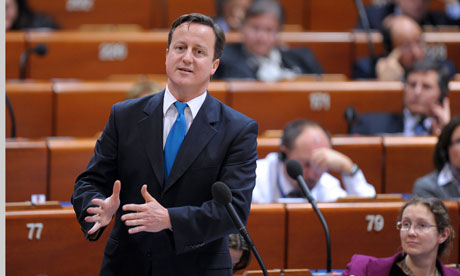
David Cameron was questioned about his proposals for reforming the human rights court at a meeting immediately after his speech in Strasbourg with the senior official of the body that runs the court.

Thorbjørn Jagland, secretary general of the Council of Europe, told the Guardian that he had discussed the principle of subsidiarity with the prime minister.

Referring to this principle, Cameron had told the council's parliamentary assembly that the human rights court should not substitute its own judgment for that of "reasonable national processes".

The prime minister added that when an issue such as whether prisoners should be allowed to vote had been "subjected to proper, reasoned debate and has also met with detailed scrutiny by national courts in line with the [human rights] convention, the decision made at a national level should be treated with respect".

Jagland told the Guardian that it was very important to decide how subsidiarity should be defined.

"If you say that, in those countries that have applied the convention fully, the court should keep its hands off, this can be misused," he said. "It is very important to say that this court is for all."

In apparent disagreement with the UK's position, Jagland said it was for the court, not member states, to decide which countries had complied with the convention. Under the UK's proposals for limiting the number of cases brought before the court, an application would be declared inadmissible if it was "substantially the same" as a matter that had already been examined by a domestic court applying the human rights convention.

An exception would be made where the national court had "manifestly erred in its interpretation or application of the convention rights".

And there would be a further exception if the application raised a "serious question affecting interpretation or application of the convention".

Despite these exceptions, this change would lead to fewer adverse rulings for the UK. It appears that the secretary general is worried that it would also lead to fewer adverse rulings in cases brought against countries with more questionable records than the UK on human rights.

Under another UK proposal, there could be a "sunset clause" under which cases would be thrown out if they could not be decided within a time limit of one or two years.

But Jagland insisted that the right of individuals to take their case to the court should be safeguarded.

"Nothing should be done to undermine the right of individual petition," he said. Without that, the court would lose its power over member states.

Wednesday, January 25, 2012

Human rights: Cameron's message to Europe

Human rights: Cameron's message to Europe

The European court of human rights is not all David Cameron has his sights on


Tory backbenchers hoping for sabre-rattling by David Cameron at Strasbourg on Wednesday, when he delivered his speech on reform of the European court of human rights, will have been disappointed. He was lavish in his praise for the successes of the 60-year-old European convention on human rights (ECHR) and gentle in his admonishments. The "physically ill" feeling that apparently afflicted him when contemplating the court's ruling against the UK's blanket ban on prisoners' voting seemed to have abated.

Who can disagree with the prime minister's view that the 50,000-plus backlog of pending cases is unsustainable? Certainly not the European court itself. A new regime was introduced only in June 2010 and there are signs that it is bearing fruit. The cause of the backlog was the enlargement of the council to 47 states following the collapse of the Berlin Wall. Six countries, including Poland, Romania, Russia and Ukraine, account for two-thirds of all applications, and about 60% are "repetitive cases" where past violations have not been rectified.

But oiling the wheels of the court so that it can more swiftly hear the cases of UK applicants is hardly what has been exercising Eurosceptic politicians calling for the UK to withdraw from the ECHR every day for the last 18 months. The "lively debate" about human rights in the UK that Cameron euphemistically referred to in his speech is in reality a toxic screaming match about the legitimacy of foreign judges – and often any judges – holding elected MPs and the government to account.

Cameron's offer to the court's critics is that "the national decision should hold" where an issue "has been subjected to proper, reasoned democratic debate", and scrutinised by national courts. What? Isn't that diplomatic language for keep your tanks off our lawn? Does that not nullify Winston Churchill's basic vision for the court, to hold states to account by a higher judicial authority upholding a European-wide set of values, inspired by the Universal Declaration of Human Rights? Cameron's reply is that countries that commit "the most serious violations of human rights" should still be dealt with by the Strasbourg court. But "in Britain we have gone through all reasonable national processes". Belief in human rights has "animated the British people for centuries". Do not these foreign judges realise that the European convention was for them, not us, he seemed to be straining to say.

So which of these UK cases validates the prime minister's claim that Strasbourg has been acting like a "small claims court"? When journalists were forced to reveal sources; when police could stop and search any of us without suspicion in a designated area; when innocent people's DNA was retained indefinitely; when a 15-year-old boy was flogged by police as corporal punishment; when social services failed to act on complaints of child abuse; when foreign terror suspects were detained indefinitely without charge or trial?

Cameron rightly emphasises that human rights begins at home. This principle is written into the very first article of the ECHR, which requires each state to secure the rights in the convention to "everyone in their jurisdiction". This is what the 1998 Human Rights Act was designed to do, bringing the UK in line with every other state in the Council of Europe. But Cameron claims in his speech that he is "investigating the case for a UK bill of rights", which would overturn the Human Rights Act, to "get better at implementing the convention at national level". Yet the reason he gave when announcing this policy last year was that decisions should be "made in this parliament rather than in the courts". It is not just the Strasbourg court that he has in his sights.

David Cameron's human rights court criticism premature, say campaigners


David Cameron's human rights court criticism premature, say campaigners

Civil liberties groups say a better filtering system has already been introduced and is reducing the backlog

"It is worrying when states such as the UK try to narrow their accountability in relation to human rights protection. Not only does it reduce the protection of human rights in Europe, but it leads to a reduction in human rights protection across the world as other countries use that undermining of human rights protection as an excuse to do the same."

Cameron in Strasbourg

Cameron in Strasbourg

The Strasbourg Court is still a cranks’ paradise

The Strasbourg Court is still a cranks’ paradise

The European Court of Human Rights' corrosive effect on British justice was foreseen years ago – now we must fix it.

By Dominic Raab, 8:39PM GMT 24 Jan 2012


Today, David Cameron will make a speech in Strasbourg calling for “much-needed reform” of the European Court of Human Rights. Yesterday, Sir Nicolas Bratza, the president of the Court, got in first, dismissing criticisms of the institution as displaying the kind of ignorance “more frequently heard in the popular press”. Sir Nicolas effectively denied that there is any proper debate to be had at all. Such blind defence corrodes the currency of human rights.

Few question the list of fundamental freedoms in the European Convention. The problem lies with Strasbourg’s role. This was predicted by the Attlee government in 1950. The Foreign Office feared the court would become a “small paradise” for claims from “communists, crooks and cranks of every type”. The Lord Chancellor, Lord Jowitt, warned: “The real vice of the document… consists in its lack of precision. It completely passes the wit of man to guess what results would be arrived at by a tribunal composed of elected persons who need not even be lawyers.” As a consequence, Attlee signed up to the Convention, but not the Court. It was not until 1966 that Harold Wilson submitted Britain to Strasbourg’s jurisdiction.

The fears were borne out. Far from applying European Convention standards, the Court’s judges labelled the Convention a “living instrument”, and assumed the power to extend human rights into uncharted areas. Courts should interpret the law, but leave elected lawmakers to create it.

The Abu Qatada ruling marked the latest shifting of the goalposts. Although the terrorist suspect had failed three times to have his deportation blocked in British courts, Strasbourg decided that he might not receive a fair trial in Jordan. Putting aside the moral acrobatics of making Britain responsible for other countries’ justice systems, Strasbourg had never before upheld the “unfair trial” defence in regard to deportation. Not only does this undermine British security, it subverts our democracy that the Court is raising human rights standards, rather than simply applying them.

Sir Nicolas also complained that Britain has not complied with a 2005 ruling on prisoner voting. Yet there is no “right to vote” in the European Convention. The negotiating record from the time of its creation shows that UK officials deliberately excluded such a right, because they did not want to enfranchise “peers, felons and lunatics”.

So Strasbourg had invented a novel right. It has since gone further – the Court’s most recent rulings stipulate that the sanction of forfeiting the vote must have some link with a prisoner’s crime. That would result in 99 per cent of prisoners getting the vote. Far from a dispassionate application of the law, this is a naked political agenda to enfranchise all prisoners.

The Prime Minister’s leadership on Strasbourg reform is welcome. First, we need to strengthen quality control over the selection of judges – more than half had no prior judicial experience. Next, Strasbourg should focus on the most serious human rights abuses.

A filtering mechanism would prevent it from attacking the democratic will of Parliament or second-guessing cases that have gone through multiple domestic appeals. After all, what is the point of Britain having a Supreme Court if it doesn’t have the last word on the law of the land? The International Criminal Court offers an alternative model to Strasbourg. The ICC is a court of last resort, which only intervenes if a country’s justice system is unwilling or incapable of properly reviewing a claim.

These reforms will require patient diplomacy and take several years. In the meantime, rulings such as that on Abu Qatada, which create new law, should be subject to free votes in Parliament.

But we can’t blame everything on Europe. We have exacerbated the situation through British law, including the Human Rights Act (HRA). For example, the UK courts led the way in preventing deportation of foreign national criminals when it disrupts their family ties, under Article 8 of the Convention. No other country ties its hands in deporting foreign criminals as Britain does. Convicted drug dealers, robbers, rapists and killers have successfully frustrated deportation orders. In one case, a man who viciously raped his partner claimed the “right to family life” to trump his deportation order.

Not only does this undermine public protection, it also ends up eroding what Dinah Rose, QC, calls “roast beef” rights, steeped in Britain’s tradition of liberty. It was partly because of creeping restrictions on deportation that Labour introduced control orders and proposed ID cards and 90-day pre-charge detention. Seventy per cent of successful appeals by criminals against deportation are now on human rights grounds, with 61 per cent claiming under Article 8. Far from this being tabloid scaremongering, even the president of the Supreme Court admits British courts have gone too far. So what can be done?

The two parties in the Coalition have very different views on human rights, and so there is unlikely to be a consensus on a UK Bill of Rights to replace the HRA. But even within the parameters of the HRA, the Government could still amend the UK Borders Act 2007 to reverse the flow of spurious Article 8 challenges. To be effective, that would require an Act of Parliament, not just a change in regulations or guidance.

The Prime Minister is right to take up the mantle of human rights reform, both at home and abroad. And it means taking on the powerful vested interests in the human rights industry, right up to the president of the Strasbourg Court.

Dominic Raab is the MP for Esher and Walton, and a former international lawyer at the Foreign Office

Comment:

In February 2010 the Interlaken Conference took place and all 47 Member States of the Council of Europe reaffirmed their commitments to abide by the Convention and abide by the Court's judgments. On the agenda was the need to reform the Court, but also on the agenda was the requirement for reforms within some Member States which failed to abide by the Convention and Court decisions. It was agreed that sanctions should be applied to these rogue or pariah Member States to get them to toe the line. The Council of Europe cranked up the pressure upon the UK to deal with a failing State.

For years we were told that British justice is the best in the world. Then along came cases like the Birmingham 6, Guildford 4, Maguire 7 and Stephen Kisko, for example, and it turned out that British injustice was the best in the world! Luckily for victims like me suffering State abuse of our human rights we were and still are able to challenge the State in Strasbourg. The corrosive effect of British justice cannot be allowed to contaminate the higher standard of justice demanded in Europe. Even now the UK is tunneled visioned in relation to reform of the Court, whilst ignoring the reforms much needed in the UK. It means that certain elements in the UK are blind to the fact that their attitudes mean we are at least 60 years behind the rest of Europe in protecting human rights.

The UK signed up to the Convention but appeared to want to cherry pick when it came down to honouring its obligations under international law. As society moves forward so too does the Court and its interpretation of the Convention to meet modern standrds. But, it would appear that the UK is intent on living in the past and keep its memories of British Empire alive. The reality is the UK signed up to the idea of a United States of Europe and became 1/47th of that organisation. This entailed sacrificing to a degree sovereignty. The UK is part of a team and not a lone player. It also requires the UK to play by the rules or get red carded.

It is untrue of Dominic Raab to state that there is no right to vote in the European Convention. Clearly Article 3 of the First Protocol provides for this human right. This is what Hirst v UK (No2), the Prisoners Votes Case, established. The case showed that section 3 of the Representation of the Peoples Act 1983, which barred convicted prisoners from voting, was incompatible with the Convention. Why Dominic Raab persists with this untruth of his is a mystery given that he worked at the Foreign Office when the UK lost the Prisoners Votes Case and then lost its appeal to the Grand Chamber. The decision is final and the UK must amend domestic law to fully comply with Hirst No2. It is nonsense to claim that we did not sign up to free elections, although initially the UK had reservations about those Commonwealth countries where the British Empire still kept subdued. As time passed these countries threw off the yoke and gained independence from colonial Britain.

The Hirst case is clear, as Frodl v Austria illustrates, the Hirst test means that all convicted prisoners have the human right to vote, but this human right is not absolute and the Court stated that it may be restricted in cases of electoral fraud or where somebody has abused public office, for example, expenses fiddling MPs, because there is a direct link between crime and sanction. The Court has not moved the goalposts, rather because the UK has misinterpreted Hirst to suit its own political ends the Court reaffirmed the Hirst test in subsequent cases. As the UK decided to remain a failing State the Court laid down in Greens and MT v UK that the UK must comply and must do so within 6 months.

Strasbourg will resist the UK's attempts to pack the Court with judges who favour the UK's human rights abusing conduct. It will also resist changes to its higher standards to sink to the lower UK level. The UK must raise its standards or be forced to leave Europe altogether. It is no good William Hague claiming that the FCO has put human rights at the forefront of foreign policy, because Europe is pointing the finger and showing that the UK is failing to protect human rights at home. Instead of David Cameron laying down the law in Strasbourg and banging his drum about Sovereignty of Parliament, he will be informed that Sovereignty of Parliament is not recognised under European law because instead the Sovereignty of the People is. Even prisoners are human beings and Cameron has no right to govern as though prisoners are subhuman. All Europe demands from the UK is that human rights, democracy and rule of law prevails. Cameron will get a wake up call that sliding into a dictatorship is not acceptable in a modern Europe.

Tuesday, January 24, 2012

Prisoner John Massey denied a licence to say goodbye

Prisoner John Massey denied a licence to say goodbye

Should penal system show some compassion for people such as lifer John Massey who breached his parole to care for dying relatives?

Eric Allison
guardian.co.uk, Tuesday 24 January 2012 16.00 GMT


Imagine yourself in this scenario: you have been released on parole after serving 31 years for murder. You are sent to live in a bail hostel and ordered to comply with a strict 11pm curfew. Though technically free, you are aware that you could be recalled to prison at any moment, for a single minor breach of the terms of your licence.

Each day you travel to a hospital to visit your terminally ill father. One day, a doctor tells you your dad has only a short time to live. You want to remain by his side but your curfew is fast approaching. You call the hostel to plead for an extension but are told categorically this is out of the question.

What would your next move be? For one man this awful dilemma became a reality on 7 November 2007.

In 1976, John Massey, now 63, was sentenced to life for murdering a club bouncer after a drunken row. He was released in June 2007.

Before he was freed, Massey had been preparing for release for 18 months in an open prison in Derbyshire. Granted home leave, he was let out for five days every month to be at home with his family in London and visit his father in hospital. "I got myself a terrific job – shop fitting," he recalls. "For the first time in my life I was fully legal and it felt wonderful. All that changed when I got parole."

His sister had offered a home with her in north London, but the probation service insisted he live in a bail hostel in Streatham, south London, some distance from his family in Camden. He describes the hostel as dirty and with more rules than the open prison he had just left.

Massey complied with all the rules for several months until his father's imminent death forced him to choose between his family and his liberty. Although two doctors were prepared to verify that his father's death was near, his pleas for an extension of his curfew were rejected. He stayed with his dad, Jack, who died four days later. Without waiting for the funeral, Massey turned himself in to the police and was immediately recalled to prison.

Two and a half years after that breach, Massey thought he was on the verge of freedom again. He had been decategorised and sent to another open jail, Ford, in West Sussex, seen as a stepping stone back to society. Then in May 2010, his awful history almost repeated itself. He received news that his sister, Carol, was gravely ill. Massey asked if he could be granted release on temporary licence but was told he could not be trusted. He then pleaded for an escorted visit to the hospital but was again rebuffed.

"We haven't got the staff," he recalls being told. "In desperation, I walked out and went straight to the hospital – ironically, the same one where my dad had died." Massey did not leave Carol's bedside until she died two weeks later.

This time he didn't return to jail. He went to live with his 85-year-old mother in Camden and waited for the inevitable. Ten months later, it came: "I just waited for the knock on the door. When it came I was out back building a summer house extension. I wanted to do as much as possible for my mother before the police came."

From Pentonville prison, north London, Massey speaks candidly about the impact of his father's and sister's deaths, and his anger at an unfeeling system that has kept him locked up for fulfilling what he sees as his familial duties. He struggles to comprehend why he should remain behind bars for the crime of being a loving son and brother. "How are the public in danger of me?" he asks. "I did not commit any crime in the time I was free and my mother's neighbours know and respect me and say I was an asset to the community."

Massey admits that, since Carol's death, life in prison has been hard, yet he shudders at the thought of being absent at her deathbed: "The pain [of being inside] is excruciating at times but it is nothing compared to the agony I'd be feeling if I hadn't answered her call. I know I have done right, it feels right."

He concedes that this sort of honesty will do little to sell him as trustworthy to the parole board, within whose hands his future lies. He has had a meeting with his local board, but is not optimistic. "They wanted me to say sorry and promise not to breach my licence again. But how can I apologise for doing what seemed to be right?" He has yet to be told the date of the parole hearing that will decide his future.

The former chief inspector of prisons, Lord Ramsbotham, describes this as a very sad story, where common sense should have prevailed. "Of course, technically, Massey is in the wrong. But that's no excuse for clogging up an expensive system with people from whom the public do not seem to need to be protected," he says.

A spokesman for the Ministry of Justice says it cannot comment on individual prisoners. In March, there were 5,625 prisoners who had been recalled to jail for breaching the terms of their parole licence.

At 35 years and counting, Massey is one of Britain's longest-serving prisoners. Still a category B inmate, he nurtures hopes of freedom and using his joinery skills, but feels the system has forgotten him. "I was 26 when I first came to prison," he says, "I'm now 63 and fast running out of time to be any use to anyone."

• Additional research by Mischa Wilmers.

Comment: I know Johnny Massey and we spent some time together down the blocks, smoking ganga and listening to my radio blare out. A diamond geezer. He deserves a break.

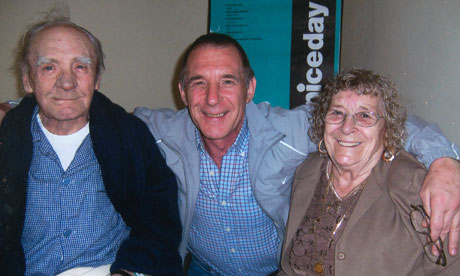
John Massey (centre, with his parents) was refused permission to extend his parole curfew when his father was dying.

JHL human rights defender, Nick Clegg human rights abuser

JHL human rights defender, Nick Clegg human rights abuser

Nick Clegg backs PM's drive to reform European court of human rights

Deputy PM tells cabinet the coalition is united behind campaign, ahead of David Cameron's speech to Council of Europe

By Nicholas Watt, chief political correspondent
guardian.co.uk, Tuesday 24 January 2012 14.31 GMT


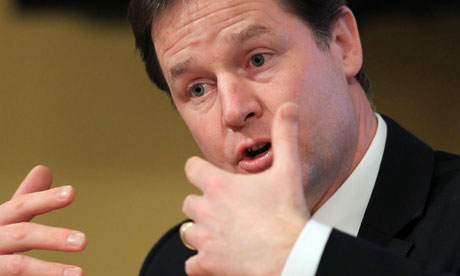
Nick Clegg told the cabinet defenders of human rights wanted to see the court working properly. Photograph: Peter Muhly/AFP/Getty Images

Nick Clegg has told the cabinet he wholeheartedly supports David Cameron's campaign to reform the European court of human rights, as the government dismissed criticism of the prime minister's plans.

In a 15-minute discussion at cabinet on the eve of a speech by Cameron to the Council of Europe in Strasbourg, Clegg said defenders of human rights should support the government as it seeks to tackle a backlog of 160,000 cases at the court.

The prime minister's spokesman said: "It [reform of the court] is very, very clearly the agenda of the coalition government. The deputy prime minister, when he spoke, was keen to make the point that the coalition is united behind this agenda. As he put it, if you are a defender of human rights then you want to see this court working properly."

Clegg was joined in the cabinet discussion by the justice secretary, Kenneth Clarke; the foreign secretary, William Hague; the home secretary, Theresa May; and the attorney general, Dominic Grieve.

The discussion took place after Sir Nicolas Bratza, the British president of the court, criticised "senior British politicians" for pandering to tabloid newspapers over the court.

Cameron, who was angered last week by the court's decision to block the deportation of Abu Qatada to Jordan, is expected to use his speech in Strasbourg on Wednesday to call for a "filtering" system to prevent cases that are dealt with in a proper manner from being referred to the court. British ministers believe that the court should focus its work on member states of the Council of Europe such as Russia and Ukraine with less impressive track records on upholding human rights, rather than the likes of Britain, Germany and France.

In an article in the Independent, Bratza wrote: "It is disappointing to hear senior British politicians lending their voices to criticisms more frequently heard in the popular press, often based on a misunderstanding of the court's role and history, and of the legal issues at stake."

Downing Street dismissed Bratza's criticisms and said Cameron remained committed to reforming the court. Cameron will outline his plans in a speech to the winter session of the parliamentary assembly of the Council of Europe. Britain currently holds the presidency of the council, the 47-member human rights watchdog set up after the second world war which oversees the court. Britain was a founding member.

The prime minister's spokesman said: "We clearly think there is a case for reforming the court. We have explained in the past where we think those reforms should come. If you have a court with a backlog of cases, which is running to 160,000, that in itself suggests there may be some need for reform and some greater prioritisation of cases.

"Clearly there are 47 countries involved here and in order to push through those reforms – we think they are sensible measures – we will have to get those countries to agree to that. That is what we are using our presidency to try and push."

The intervention by Clegg shows that Cameron has been careful to calibrate his reforms. The Liberal Democrats agreed in the coalition agreement to establish a commission to "investigate the creation of a British bill of rights that incorporates and builds on all our obligations under the European convention on human rights". The commission has been carefully balanced to include critics and defenders of the court that enforces the convention.

Comment:

The Prime Minister, David Cameron, is not interested in reform of the ECtHR, rather he seeks to curb its jurisdiction. Therefore for Nick Clegg to support this means he is as guilty as Cameron in relation to being a human rights abuser. Yes, that's right, the leader of the LibDems is a human rights abuser! This was not the case with Paddy Ashdown when he was leader, he was a human rights defender.

I am a Human Rights Defender, whereas Nick Clegg is a human rights abuser. If the government really sought to tackle the backlog of cases at the ECtHR, why has it ignored fully complying with Hirst v UK (No2) thereby sending 3,500 more prisoners cases to the ECtHR?

For the Court to work properly, me as a Human Rights Defender points out to the human rights abusing UK that not complying with the Court's judgments means it cannot work properly. Therefore, the UK needs to pull its weight and stop shirking its obligations under international law.

Sounds like a gathering of the clan or a war cabinet: "Clegg was joined in the cabinet discussion by the justice secretary, Kenneth Clarke; the foreign secretary, William Hague; the home secretary, Theresa May; and the attorney general, Dominic Grieve". All human rights abusers in one room! Damage limitation will not work so why are they wasting their time and taxpayers money trying?

If the UK had dealt with Hirst No2 in a proper manner instead of abdicating responsibility in the first place, my case need not have gone to Strasbourg. Since the UK has a less than impressive track record on human rights protection, the ECtHR is right to rule against the UK.

I want to hear Cameron and Clegg talking about the much needed reforms within the UK. In other words, tidy up your own backyard first!

Nicholas Twat needs to research his subject before putting pen to paper!

Teenage prisoner found hanging in cell

Teenage prisoner found hanging in cell

Jake Hardy, 17, dies in hospital after he is found hanging during six-month sentence for affray and common assault


Jake Hardy was thought to be the subject of open suicide and self-harm document at Hindley young offenders' institution. Photograph: Peter Macdiarmid/Getty Images

A 17-year-old prisoner has died after being found hanging in his cell, the Prison Service says.

Jake Hardy, who was serving six months' detention for affray and common assault, was found at Hindley young offenders' institution in Wigan on Friday and taken to hospital, where he died on Tuesday morning.

It is understood he was the subject of an open suicide and self-harm document.

A prison service spokeswoman said: "HMYOI Hindley prisoner Jake Hardy was found hanging in his cell at approximately 11.45pm on Friday 20 January.

"Staff attempted resuscitation, paramedics attended and he was taken to outside hospital but was pronounced dead at 8.05am on Tuesday 24 January.

"As with all deaths in custody, the Prisons and Probation Ombudsman (PPO) will conduct an investigation."

A PPO spokesman said: "The investigation will identify lessons to be learned to prevent similar deaths of young people.

"If failings are found, recommendations for improvements are made.

"The investigation will also assist HM coroner leading up to the inquest."

He went on: "The PPO will involve Jake Hardy's family in the investigation if they wish to be involved.

"The investigation will try to provide answers to family and friends about what happened."

Comment:

Why was such a vulnerable person in prison? Tragedy!

Europe's human rights judges have given Cameron the two-fingered salute

Europe's human rights judges have given Cameron the two-fingered salute

By Jack Doyle, mailonline 24/1/2012


David Cameron travels to Strasbourg tomorrow to make a major speech on the future of the European Court of Human Rights.

It is a body which could end up having as much influence over the future of Mr Cameron’s premiership as the European Union - against which there are there are at least some signs of a bit of Downing Street resistance.

The speech will be a chance for the PM to make clear how he intends to reform the court and reel in the relentlessly interfering and meddling instincts of its judges.

Early indications are good: at the weekend we were told the changes he will propose will include radically slimming down the number of cases put before the court.

Currently the ECHR is overwhelmed with its caseload as thousands of applications sit on a shelf somewhere for years before they are even heard.

Reformers say it should consider fewer cases and focus its attentions on serious human rights abuses of the kind the post- WW2 framers of the European Convention on Human Rights would have understood.

Where judges are expanding the meaning of the convention with endless judicial legislation they should be reined in sharply.

MPs also say the court should have greater regard for what is known among lawyers as the ‘margin of appreciation’ – the acceptable differences between countries in their interpretation of human rights.

Other member states appear to have some sympathy with Britain’s reforming zeal, but it would appear the court’s judges are less sympathetic.

Writing in the Independent today, Britain’s own judge on the court, Nicholas Bratza - a man who has never held senior judicial office in this country - gave Mr Cameron the two fingered salute.

He flatly denied the charge of interference, and accused reformers of a ‘misunderstanding’ of the court’s history and of the law. In effect he’s denying the possibility that opponents of the court have legitimate concerns and views – no, they’re just stupid.

He attacks Britain for not giving prisoners the right to vote, saying that judgment has been used as a ‘springboard’ for sustained attacks on the courts.

He’s wrong, of course. What the Hirst judgment has done in fact is to galvanise opposition to the court around a ruling to which the British public are overwhelmingly opposed.


And the history of prisoner voting is clear – it was explicitly not written into the convention post-war to ensure inmates could not demand voting rights.

In fact, critics of the court are not short of ammunition, barely a month goes by without some further outrage. Last week the court decided Britain could not deport one of the world’s most dangerous terrorists Abu Qatada, back to Jordan.

Next week Qatada will go before a judge to demand bail. If, as seems likely, he is freed to return to his life on benefits, it will further harden public opinion against the court.

Another ruling on prisoner votes is also due in coming months, as are judgments on the extradition of Abu Hamza.

If they go against the government, the roar for reform, or even withdrawal from the court, will become deafening.

And there is little a bit of speechifying in Strasbourg can do to change that.

Comment:

Sir Nicholas Bratza is right to stick two fingers up to Cameron, The Sun, Daily Express, Daily Mail and Daily Telegraph.

Cameron's speech can hardly be called major. Cameron and the Tory party had a blackhole on policy in Europe before the last general election. Europe did not suffer from the same gap in knowledge. The ignoramus is to make a speech calling for a British led reform of the ECtHR. The Council of Europe has been reforming the Court for the past 10 years. It needs no lessons from a human rights abusing dictator. What Cameron is ignoring is that the Council of Europe is demanding reforms within the UK, so that the UK abides by the Convention and abides by the Court's decisions.

It has been obvious to me from the start that Cameron's premiership depends upon him forming a good relationship with the Council of Europe. Cameron made the mistake of trying to score political points off vulnerable prisoners who have no voice in Parliament by being denied the vote. Now its backfired on him. Cameron underestimated that the prisoners, victims under the HRA, have the support of the EU and UN, in addition to the support of the Council of Europe. Cameron failed to appreciate the power of the Interlaken process. The triangle of power seeks to tackle human rights abuse throughout Europe. Therefore, it does not appreciate that the UK is failing to protect human rights satisfactorily. As far as the EU, UN, and Council of Europe are concerned David Cameron is a human rights abusing dictator.

David Cameron does not have the power to reform the Court or curb the jurisdiction of the Court. Therefore, his speech is empty words. The UK is but 1/47th of the Council of Europe. It is very doubtful the UK will get any support for the proposals being advanced by David Cameron. For example, if Cameron was really interested in "slimming down the number of cases put before the court", he would have fully complied with Hirst v UK (No2), because there are now 3,500 more cases by prisoners before the Court!

Jack Doyle is lying when he states "What the Hirst judgment has done in fact is to galvanise opposition to the court around a ruling to which the British public are overwhelmingly opposed". The opposition has come from the gutter press, and those extreme right wing Tory backbenchers. As Labour's consultation proved 47% of the public were in favour of the full franchise for convicted prisoners, whereas as only 4 (not 4%) were in favour of Labours limited franchise based on 4 years or 12 months or under getting the vote.

This is Cameron's Waterloo, and he is sunk!

Mr Cameron must act the statesman in Strasbourg

Mr Cameron must act the statesman in Strasbourg

Leading article, The Independent, 24/1/2012

It is not difficult to see why David Cameron might feel insecure about his party's right wing. The suspicions of hardliners about his brand of soft Conservatism have only grown since the general election, their disquiet fuelled by everything from immigration to gay marriage. That was before the Prime Minister used Britain's veto in Brussels, of course – a decision which undermined Britain's influence with our EU partners, but sent his stock soaring within the party. Now Mr Cameron is threatening another Europhobic move of equally staggering short-sightedness.

While arguably unnecessary, there is no reason the Prime Minister should not use his speech to the 47 nation Council of Europe in Strasbourg tomorrow to set out proposals for reform of the European Court of Human Rights, which the Council oversees. But the leaked suggestion that he may withdraw Britain from the ECHR altogether if his demands are not met is alarming. Threats are a wholly unconstructive approach to policy-making and, if carried out, would only add to Britain's growing isolation.

The trouble is that, much like using a veto in the EU, flaying the –unrelated– Strasbourg court offers the PM an opportunity to curry favour with his party and distract from trickier domestic issues. Never mind that no less a Conservative than Winston Churchill played a central role in creating the European Convention on Human Rights which the Strasbourg court enforces. Never mind the long list of civilising judgments on issues as diverse as hearsay evidence or the corporal punishment of minors. Never mind that the ECHR was crucial in establishing the rule of law in former Communist states. Such considerations do not count for much against Tory critics' claims that the court "meddles" in member countries' legal autonomy and is unduly tilted in favour of the rights of criminals and illegal immigrants. With Britain currently in the chair of the Council of Europe, Mr Cameron can present himself as a man of action making the most of a once-in-25 years opportunity.

There is, undeniably, scope for reform in the court. A backlog of more than 150,000 cases for example now exists. But reforms are already under way, and they are surely better developed with due consideration than forced through with menaces. It is also worth noting – as Sir Nicolas Bratza, the ECHR president, points out in this newspaper today – that Britain has lost only eight out of 955 applications to the court in the past 12 months, a proportion that hardly constitutes egregious meddling. To the avowedly anti, however, such details matter little. Last week's decision that the radical cleric Abu Qatada cannot be deported to Jordan is a case in point. The ruling was held up by many Tories as incontrovertible proof that the court goes against common sense. But the reality is more complex, as the parallel complaints of human rights groups that the decision was "one step forward, two steps back" suggest.

Once again, instead of acting the statesman, the Prime Minister is playing to the narrowest of galleries, putting internal party concerns ahead of the national interest. The value of the ECHR cannot be overstated. It sets the standard of legal protection, not just in Europe but across the world. Indeed, it is the upholder of precisely those democratic freedoms which Mr Cameron was willing to support at the point of a sword in Libya. That "human rights" is increasingly used as a derogatory term among traditionalist Tories is offensive. Rather than pandering to it, the Prime Minister should lead from the front.

Sir Nicolas rightly laments the spectacle of senior UK politicians "lending their voices to criticisms more frequently heard in the popular press". We would go even further. Mr Cameron should be ashamed of himself.

Europe's top judge: Cameron is wrong about human rights

Europe's top judge: Cameron is wrong about human rights


Europe's most senior judge launches an attack on David Cameron today, accusing the British Government of pandering to the tabloid press in its criticism of the European Court of Human Rights.

Writing in The Independent on the eve of the Prime Minister's visit to Strasbourg, where the court is based, its president, Sir Nicolas Bratza, says "senior British politicians" have betrayed their ignorance of the institution's history and legal position by joining the clamour for its reform.

Sir Nicolas's highly unusual intervention comes as the Prime Minister prepares to deliver a speech calling for sweeping changes to the court's operation. Mr Cameron will call for a "filtering system" to prevent cases properly resolved in national courts from being referred to Strasbourg and for an overhaul of how judges are appointed.

Ministers are angry that the court – which was set up in the aftermath of the Second World War – last week blocked the deportation of the radical preacher Abu Qatada to Jordon, where he is wanted on terrorist charges. The Government – backed by opposition parties – is also wrangling with the court over whether prisoners should be given the right to vote. Mr Cameron is under pressure from Tory backbenchers to withdraw completely from the court.

But Sir Nicolas, Britain's nominee to the court, insists the institution's influence on human rights in Britain has been "overwhelmingly positive". Writing in The Independent today, he defends the court's record, citing "landmark rulings" that lifted the ban on homosexuals serving in the armed forces, allowed the media to challenge restrictions in reporting the Thalidomide case and ensured child criminals were not tried in adult courts.

He directly addresses Mr Cameron's charge that the court has allowed too large a backlog of cases to build up, saying the numbers of states signing up to the European Convention on Human Rights has led to a "massive increase in its caseload".

Sir Nicolas also hits back at the Government's accusation that the court interferes too often in domestic cases, saying: "The criticism relating to interference is simply not borne out by the facts."

The Strasbourg court has been "particularly respectful of decisions" in Britain since the Human Rights Act, which enshrined the Convention in British law, because of the "very high quality of those decisions", he says. Sir Nicolas says the court has streamlined its procedures to help it deal with "repetitive cases".

He says: "Against this background, it is disappointing to hear senior British politicians lending their voices to criticisms more frequently heard in the popular press, often based on a misunderstanding of the court's role and history, and of the legal issues at stake.

"It is particularly unfortunate that a single judgment of the court on a case relating to UK prisoners' voting rights, which was delivered in 2005 and has still not been implemented, has been used as the springboard for a sustained attack on the court and has led to repeated calls for the granting of powers of Parliament to override judgments of the court against the UK, and even for the withdrawal of the UK from the Convention."

His comments reflect growing frustration in Strasbourg at the rhetoric directed at the court from Britain. Earlier this month, Tory MPs claimed that the UK loses three out of four cases it fights in the court.

But the real figure is 61 per cent, one of the lowest "violation rates" of any European country. France, Germany, Italy and Norway all lose a significantly larger proportion of cases. Britain's real violation rate is actually closer to 2 per cent because 97 per cent of British cases that come before the court are thrown out altogether.

Case study

Chris Morris, a 32-year-old lifestyle coach, was just 16 when he and other teenagers went to the European Court of Human Rights to challenge Britain's age-of-consent rules. They won, resulting in legislation that eventually equalised the age of consent for both gay and straight people.

"In my specific case, the European Court of Human Rights was vital. There was such public confusion over the age of consent. Politicians didn't want to take sides. But as soon as it became clear that the court was going to make a decision anyway, the politicians suddenly aligned themselves behind what was going to happen. It's unbelievable to think how recent the campaign was. Sometimes I look at young gay people now and think, wow, it really is a different world for them. What the court did was make it a much higher-profile cause and a clear human-rights issue. It sent out the message that this is what a civilised country should be doing. I could no longer be put in prison for what my straight friends were doing."

Case histories: what the Court of Human Rights has done for us

1972 Tyrer vs UK

Anthony Tyrer was 15 years old when he was legally flogged by police officers on the Isle of Man for assaulting a fellow schoolboy. The case went to Strasbourg where judges ruled that such punishment was "inhuman or degrading". At the time the decision was met with outrage yet one would be hard pressed to find European law enforcement agencies that still advocate judicially sanctioned beatings for criminals.

1979 The Sunday Times vs UK

Were it not for the European Court of Human Rights the true extent of the thalidomide scandal might never have been uncovered. Marketed as a cure for morning sickness, thalidomide caused thousands of children to be born with shortened limbs – the drug had never been tested properly.

The Sunday Times newspaper wanted to publish an investigative expose of the scandal but was halted by an injunction from the House of Lords because the makers of thalidomide were still being sued by its victims at the time. The ECHR later ruled that the injunction was a breach of Article 10 – the right to freedom of expression – because it was disproportionate and unnecessary. The decision directly led to a radical reworking of Britain's contempt of court laws.

2009 FT and others vs UK

Protection of sources is a cornerstone of journalism. But governments and businesses often go to extreme lengths to try and force reporters to reveal the identities of whistleblowers. In 2001 The Financial Times and four other media organisations – including The Independent – were taken to court by the Belgian company Interbrew and ordered to hand over documents concerning a confidential takeover bid. The British courts repeatedly sided with Interbrew. The case eventually wound its way to Strasbourg where – eight years later – judges ruled that giving up a source would breach the right to freedom of expression.

1996 Sutherland and Moore vs UK

In 1996 the ECHR ruled that it was discriminatory to have a different age of consent for gay men and women. Previous attempts to challenge such discrimination had failed until gay activists Euan Sutherland and

Chris Moore challenged Britain's laws which insisted homosexuals wait until 18 before they could legally have sex compared to 16 for straight men and women.

2011 Abu Qatada vs UK

Last week a ruling that radical Islamist cleric Abu Qatada could not be deported to Jordan was met with howls of derision by the popular press and politicians. Yet Qatada's deportation was not halted because judges feared he would be mistreated by the Jordanians – the judges, in fact, accepted that Britain had obtained diplomatic assurances that he would be unharmed. What they could not allow was the deportation of a man who would be tried by the Jordanians using evidence that had undoubtedly been obtained through torture. Given Britain's commitment to neither practising nor encouraging torture, the court ruled that any deportation of Qatada would result in a trial that would be "not only immoral and illegal, but also entirely unreliable in its outcome".

2011 Bamber & others vs UK

On the same day the court ruled on Abu Qatada, Strasbourg published an equally significant verdict in which judges insisted that Britain was able to impose life tariffs that meant life. Three convicted murderers – Jeremy Bamber, Douglas Vinter and Peter Moore – tried to argue that life sentences with no hope of release constituted inhumane or degrading treatment. The judges disagreed saying that as long as the convictions were safe and the crimes grave enough, there was no reason why some prisoners should not be held behind bars for the rest of their lives.

Jerome Taylor

Nicolas Bratza: Britain should be defending European justice, not attacking it

Nicolas Bratza: Britain should be defending European justice, not attacking it

It is unfortunate that the issue of prisoners' votes has been used as a springboard for attack


The United Kingdom's contribution to the European Convention on Human Rights has been immense. British parliamentarians and lawyers played a key role in its conception and its drafting. British lawyers and, since the entry into force of the Human Rights Act, British courts have exerted a major influence on the way in which the convention evolves. This judicial dialogue is a key element in the proper operation of the convention, in which the role of national courts is critical.

At the same time, the influence of the Strasbourg court on the development of fundamental rights protection in the UK has been overwhelmingly positive. It would, however, be surprising if all its decisions were popular with the Government of the day, or indeed understood and accepted by public opinion.

Yet, looking back at the landmark cases concerning Britain, few people today would dispute Strasbourg's 1978 ruling that the birching of a Manx schoolboy as a criminal sanction was unacceptable. Few would contest that the rules on contempt of court in operation at the time of the Thalidomide case were unsatisfactory, or deny that a journalist's right to protect his sources is a cornerstone of a free press.

Nor does it seems strange in 2011 to suggest that child perpetrators, even of the most heinous offences, like the Jamie Bulger killers, should not be tried in an adult court. Rulings on the legal recognition of transsexuals and the lifting of the ban on homosexuals in the armed forces meanwhile, are surely examples of where domestic UK law was lagging behind societal changes and was brought up to date as a direct consequence of the court's judgments. More recently, the finding that the indefinite retention of DNA samples of persons never convicted of an offence violated the right to private life, was widely applauded in British political and legal circles.

There are many other examples concerning the UK, but, of course, the court's jurisdiction extends to 46 other European states, covering a total population of 800 million. The court has overseen the slow but steady consolidation of the rule of law and democracy in Central and Eastern Europe. Much remains to be done, but the court can be proud of what it has achieved over the past 10 years. It has all but eliminated practices in many former communist countries which undermined the rule of law, such as the power of the executive to reopen court proceedings ad infinitum until the "right" result was achieved. The freedom of association of minority groups in the Balkans has been upheld. Its judgments have prompted greater awareness of the problems facing Roma and their right to be protected against pogroms and police brutality are now being addressed. Freedom of religion has been established in many previously intolerant countries. Journalists no longer face criminal sanctions when they criticise politicians. Homosexuality has been decriminalised across Europe. The victims of domestic violence and trafficking are increasingly receiving enhanced protection.

Two principal criticisms of the court have been voiced in Britain in recent years – that it has allowed a backlog of cases to grow to the point that it has currently more than 150,000 pending cases; and that it has shown itself too ready to interfere with domestic decision-making by substituting its own view for that of national courts and authorities.

With the accession to the convention of new states, the court has indeed had to deal with a massive increase in its caseload. The backlog is not, as has often been suggested, the result of inefficiency. The volume of incoming cases has risen on average by 10 per cent a year since 1998. In 2011, the court decided more than 52,000 cases; however, in the same year it received more than 64,000 new applications. It is a regrettable fact that more than 30,000 of the pending cases relate to repetitive violations of the convention by member states which have failed to remedy an underlying systemic problem previously identified by the court. The backlog has understandably led to calls for reform, but reforming an institution set up by international treaty is a slow and complex process. An amending protocol which came into force in 2010 reduced the number of judges required to adjudicate the most straightforward cases. Further reform is being discussed under the UK chairmanship of the Council of Europe's Committee of Ministers.

The criticism relating to interference is simply not borne out by the facts. The Strasbourg court has been particularly respectful of decisions emanating from courts in the UK since the coming into effect of the Human Rights Act, and this because of the very high quality of those judgments. To take 2011 as the most recent example: of the 955 applications against the UK decided, the court found a violation of the convention in just eight cases.

In the context of reform, the court itself has sought new solutions. It has rationalised procedures to maximise relatively scarce resources. Thus, it has established a pilot judgment procedure for structural or systemic violations generating the large numbers of repetitive cases. It has adopted a prioritisation policy and has used the new single judge procedure to great effect, achieving an increase of more than 30 per cent in the number of applications dealt with in this way in 2011.

There are, therefore, reasons for optimism, not only because the court's judgments continue to help to maintain and improve human rights standards throughout the wider Europe, but also because the seemingly insuperable problem posed by the sheer quantity of cases appears less daunting than a few years ago.

Against this background, it is disappointing to hear senior British politicians lending their voices to criticisms more frequently heard in the popular press, often based on a misunderstanding of the court's role and history, and of the legal issues at stake. It is particularly unfortunate that a single judgment of the court on a case relating to UK prisoners' voting rights, which was delivered in 2005 and has still not been implemented, has been used as the springboard for a sustained attack on the court and has led to repeated calls for the granting of powers of Parliament to override judgments of the court against the UK, and even for the withdrawal of the UK from the convention.

The European Court of Human Rights is an institution of inestimable value not just for Europeans, but for all those who throughout the world look to its judgments for guidance, and particularly those who do not have the benefit of democratic institutions operating within the rule of law. The UK can be proud of its real contribution to this unique system and its influence in bringing about effective human rights protection throughout the European continent. It would be deeply regrettable if it were to allow its commitment to that system to be called into question by a failure to defend it against its detractors or to offer its strong support for the vital work of the court.

Sir Nicolas Bratza is President of the European Court of Human Rights

David Cameron's criticism of ECHR 'not based on facts', says top judge

David Cameron's criticism of ECHR 'not based on facts', says top judge

David Cameron’s criticism the European Court of Human Rights is wrong and panders to popular opinion without an understanding of the facts, Europe’s most senior judge has said.


Newly elected president of the European Court of Human Rights, British Sir Nicolas Bratza, QC Photo: AFP/GETTY IMAGES

Sir Nicolas Bratza QC, the new president of Strasbourg-based court, accused “senior British politicians” of failing to understand its role and history.

The Oxford-educated lawyer, Britain’s nominee to court, rejected widespread claims that it interferes in Britain’s legal system, insisting that “criticism relating to interference is simply not borne out by the facts”.

The 66 year-old admitted it would be "deeply regrettable" if the government's support of the European Convention of Human Rights, which is enforced by the court, was to be called into question.

His intervention comes on the eve of a speech from the Prime Minister, in which he will call for “much-needed reform” to the court’s function and operation.

In a speech in Strasbourg on Wednesday, Mr Cameron will call for a “filtering system” that would stop the ECHR dealing with cases that have already been resolved “properly” by national courts.

But writing in the Independent on Tuesday, Sir Nicolas insists that is unnecessary because its influence on human rights had been “overwhelmingly positive”.

It has also handed down “landmark rulings” on a range of issues including making sure children are not tried in adult courts and the legal recognition of transsexuals.

Critics, however, claim the judgments have been blamed for allowing dozens of foreign criminals and terrorists to claim they have a "human right" to remain in this country and also to give prisoners the right to vote.

Sir Nicolas, who became president in November, writes: “Against this background, it is disappointing to hear senior British politicians lending their voices to criticisms more frequently heard in the popular press, often based on a misunderstanding of the court’s role and history, and of the legal issues at stake.

“It is particularly unfortunate that a single judgment of the court on a case relating to UK prisoners’ voting rights, which was delivered in 2005 and has still not been implemented, has been used as the springboard for a sustained attack on the court and has led to repeated calls for the granting of powers of Parliament to override judgments of the court against the UK, and even for the withdrawal of the UK from the Convention.

"It would … be surprising if all its decisions were popular with the government of the day, or indeed understood and accepted by public opinion."

Writing under the headline "Britain should be defending European justice, not attacking it", he added: "The UK can be proud of its real contribution to this unique system and its influence in bringing about effective human rights protection throughout the European continent.

"It would be deeply regrettable if it were to allow its commitment to that system to be called into question by a failure to defend it against its detractors or to offer its strong support for the vital work of the court."

The European court has 47 judges, representing every member state of the Council of Europe including Liechtenstein, Monaco and Andorra.

New figures show that Britain has lost three out of four cases taken to the court, which was established in the wake of the Second World War.

Last week, the court was criticised after it ruled that Abu Qatada, once described as "Osama bin Laden's right hand man in Europe", cannot be extradited to Jordan even though he does not face torture.

Judges said the radical Islamist clerAbu Qatada, who featured in hate sermons found on videos in the flat of one of the 9/11 bombers, would not receive a fair trial if he was returned by Britain to his native country, where he faces terrorism charges.

Qatada, 51, whose real name is Omar Mahmoud Mohammed Othman, has been convicted twice in Jordan in his absence for conspiracy to carry out bomb attacks on two hotels in Amman in 1998, and providing finance and advice for a series of bomb attacks in Jordan planned to coincide with the Millennium. The cases were to be retried.

Frirday's judgment is not final. The Government has three months in which to request that the case be referred to the court's Grand Chamber for a final judgment, although the request may be refused.

Britain ratified the Convention in 1951 and the Labour government enabled its rights to be enforced in national courts through the 1998 Human Right Act.

Monday, January 23, 2012

Harassment website man Christopher Perry given Asbo

Harassment website man Christopher Perry given Asbo

A man from East Yorkshire has been given a 10-year anti-social behaviour order (Asbo) after harassing a number of community members.

Christopher Perry, 65, of Southfield Close, Wetwang, near Driffield, has been banned from contacting a local vicar, a former mayor and a town clerk.

Perry had set up a website where he had accused them of corruption.

He could be fined or face up to five years in prison if he breaches the order.

'Two-year campaign'

Hull Magistrates' Court issued the Asbo on Friday.

Under the order, Perry is banned from entering private land without permission, contacting and causing harassment, alarm or distress to the Reverend Robert Amos, of Driffield Methodist Church, and former mayor of Driffield Steven Poessl and his wife Myra.

Mrs Poessl said she and her husband had been subjected to a two-year campaign of harassment.

Perry had falsely accused the former mayor of using his connections to get off a motoring offence.

Other victims include the former police inspector and now clerk to Pocklington Town Council Richard Wood and his wife Diane, William Buckle, Polat Akcicek and Deborah Louise Akcicek.

Jean-Claude Mignon sets out priorities

Jean-Claude Mignon sets out priorities


New Parliamentary Assembly President Jean-Claude Mignon will seek an expansion of democracy, gender equality and solutions to frozen conflicts during his term in office.

“First and foremost, I want to make sure in my new position that the rule of law, respect for human rights and the promotion of democracy are not just empty words, and that we are moving forward in these areas, including beyond our borders, in particular by engaging with Europe’s neighbours who are moving down the path to democracy,” he said after today’s election.

Mignon, 52, is now the 26th President of the Parliamentary Assembly after succeeding Mevlüt Çavuşoğlu (Turkey).

The new president also wishes to restore the Council of Europe to the centre of European and international affairs. “The vision that I have for the Council of Europe is as follows: that the Europe of human rights should become an inescapable reality,” he said during his inaugural address.

“For too long, this organisation was on the defensive, in particular vis-à-vis the European Union, and in danger of being the ‘overlooked beauty’ on the banks of the Ill, an institution that belonged in the past.

“Following the glorious decade of the 1990s when the organisation welcomed in the countries of central and eastern Europe, we acquired a new purpose: namely, to bring the Council of Europe closer to the European Union in order to reconcile ordinary people with Europe, a tangible, human Europe that makes itself felt in their everyday lives through the observance of fundamental rights, security, the freedom to come and go, dignity and respect for the rights of the opposition.

The new President is also eager to find solutions to frozen conflicts and will promote greater gender awareness.

“The Assembly recently spoke out on these issues: the dangers of selective abortion are a reality in Europe itself, violence against women is still all too often a fact of life and equality in the workplace is still an unfulfilled goal.”

Video of President's speech

Comment: Can this be seen as a shot across David Cameron's bow?

Northern Lights seen from Flambrough Head last night

Northern Lights seen from Flambrough Head last night


Photo: Source

Tan Hill Inn in North Yorkshire

Source

Human Rights, Democracy and Rule of law or dictatorship?

Human Rights, Democracy and Rule of law or dictatorship?

It went under the legal/political radar. On 20 December 2011 the Joint Committee on Human Rights (JCHR) heard oral evidence from the Rt Hon Kenneth Clarke MP on the Government's human rights policy and human rights judgments. Human rights are not just for Christmas!

I raised my eyebrows when Dr Hywel Francis MP (Chairman) said “It is a year since we had the privilege of having you before us”. Privilege to hear a human rights abuser waffle? This should not be so cosy if transparency is to mean anything. Kenneth Clarke should have been in the hot seat.

Q2 The Chairman: “There have been a number of outspoken criticisms of the European Court of Human Rights by Government Ministers and calls by the Home Secretary and the Prime Minister for the Human Rights Act to be repealed. Does the Government remain committed to the European Convention on Human Rights and the Human Rights Act?”.

Rt Hon Kenneth Clarke MP: “The Government’s policy, which I have always adhered to myself, is that we remain fully committed to the European Convention on Human Rights. We think it is a very important international obligation for all 47 member states to commit themselves to. We are awaiting the advice of a commission on the best way of implementing our obligations under the Convention in this country. We have the Human Rights Act on the statute book and we have asked a commission to advise us on the possibility of replacing that with a Bill of Rights. We have one member of the commission on your Committee, Lord Lester. We await the results of that commission, but meanwhile, the Government’s highest priority during our chairmanship of the Council of Europe is to seek to achieve reform of the European Court of Human Rights. We have no intention of interfering with the right of individual application to the court. We have no intention whatever of weakening the court. Indeed, we believe that we would strengthen it by bringing to a head the long-expected demands for reform, which many people in Strasbourg agree is desirable. We wish to see it operating properly as an international court, dealing with those matters that require an international judgment to make sure that all 47 member states comply with their obligations. The last time that it was most authoritatively set out on behalf of the Government was by the Foreign Secretary when he made his first speech upon taking up the chairmanship of the European Council. He spoke for the Government as a whole. I am sometimes accused of being slightly off message. I am not one of those who always rigidly adheres to what I should do by reading out the line to take, but on this occasion I have always stuck impeccably to the policy of the Government and I see not the slightest prospect of this Government having any other policy in the foreseeable future”.

If the Government's policy is to remain fully committed, then why is it that the Government has not abided by the Convention and Court judgments? The UK is in breach of its international obligations. Given that the Convention is 60 years old, why is it necessary this late down the line for a commission to advise the UK on the best way of implementing our obligations? I would have thought this was obvious, honour the objectives of the Council of Europe; Human Rights, Democracy, and Rule of law, and abide by the Convention and Court decisions. Given that the ECtHR is already undergoing reform, and has been for the last 10 years, it beggars belief that the UK states it is making this its highest priority during its chairmanship of the Committee of Ministers. Surely, in line with the Interlaken Declaration, the UK should prioritise the reforms much needed in the UK to guarantee the human rights under the Convention and abide by the Court decisions? By ignoring the Court decision in Hirst v UK (No2) for over 6 years, it can be argued that the UK has interfered with my right of individual application to the Court. Furthermore, by ignoring the judgment it weakens the Court by challenging its authority. It is all very well the UK saying it desires to see the Court making sure all 47 Member States comply with their obligations when the UK is ignoring that the onus is upon itself to honour its obligations. The UK cannot be allowed to get away with saying one thing and doing the complete opposite. This amounts to rank hypocrisy.

During a reply to Lord Lester of Herne Hill, Kenneth Clarke stated: “There is at least one case pending where eventually we might be required to take some action to comply with a judgment”. It is, of course, a reference to Hirst v UK (No2). After 6 years of procrastination why is the Minister still talking about “eventually” and “might”, when the Convention clearly requires an action plan for compliance within 6 months of a judgment? The Council of Europe must accept a measure of guilt because it has allowed the UK to dither for over 6 years! The Committee of Ministers has failed me because it has not supervised execution of the judgment. As a result 1 human rights violation has now become over 100,000 human rights violations as convicted prisoners were denied the vote in elections. To add insult to injury, the Council of Europe has neglected to provide a grievance procedure to allow the 800,000,000 citizens in Europe to raise a complaint and have it investigated. Following the Strangeways Prison riot in April 1990, Lord Woolf concluded in his report that there was a lack of justice in prisons because of the absence of a grievance procedure. By the same token, there is a lack of justice in the Council of Europe.

Q28 Mr Raab: “Whatever the outcome of Scoppola v Italy, it is clear that any replacement of the current prohibition on prisoner voting is more likely to withstand judicial scrutiny, at least in Strasbourg, if there has been full parliamentary debate. That was one of the things required in Hirst. Do the Government plan to introduce legislative proposals, pending the Scoppola judgment, to provide that opportunity to extended parliamentary consideration of the options?”.

Rt Hon Kenneth Clarke MP: “As you say, we are waiting for the judgment in this Italian case. Pending the outcome of that case, the Government are not proposing to take this matter any further. We have debated it in Parliament, and we could have a full parliamentary debate. It is a matter for the business managers to see whether they can get time for more debate on the subject. I would have thought that further parliamentary debate would most sensibly await the outcome of the Italian case, the name of which I cannot remember off the cuff”.

Mr Raab: “Scoppola and Frodl, I think, but Scoppola is the one that we are waiting for”.

Rt Hon Kenneth Clarke MP: “Scoppola, where the Attorney-General has actually been appearing before the court, arguing the British position”.

Mr Raab: “Following on from that, if Scoppola is upheld and the line in Frodl is upheld as well, it would seem that the previously mooted ideas of a one-year or four-year deal, where prisoners serve more than those sentences, would be ruled out under the terms of the judgments in both those cases. What contingency planning have you done for that eventuality, and do you think that you could get a one-year or four-year deal though the House of Commons?”.

Rt Hon Kenneth Clarke MP: “I think we would be very well advised not to start speculating about how we would respond until we have a judgment in Scoppola. Once we get a judgment, we will just have to consider it in a legal and political context. I would be most unwise to go beyond that. At least it will be more considered than on the first case. We had certainly reached the conclusion on the first case that we could not get anything through Parliament because there was such a great deal of feeling on the issue. If this turns out to be the final judgment on the subject, we will take a considered view and come forward with our proposals in due course, I am sure”.

Lord Lester of Herne Hill: “I am sure you know that the Irish and the Cypriots implemented Hirst, even through they were not parties, by immediately giving postal votes to all convicted prisoners in custody. Would you agree that, given the judgments of the Strasbourg court, including Hirst, that court has made it clear that provided that Parliament has properly considered legislation, a very wide range of legislative choices is open with which the court will not interfere unless it is manifestly irrational or arbitrary”.

Rt Hon Kenneth Clarke MP: “That is certainly my understanding of Hirst. That being the case, the next question arises: what will Parliament agree to? How can we do something that is not arbitrary or irrational? We already give votes to prisoners who are on remand in prison, so the organisation of postal votes in prison is not an innovation in Britain. The question of those who have been sentenced is highly controversial. We will address it in the light of whatever is said in Scoppola. There is no European rule. The court has never said that every member state should give the vote to people who are serving more than two years, less than two years or anything like that. Other cases raise troublesome issues about whether you give the vote to everyone who did not get themselves convicted of electoral reform or fraud, but I do not think that that is likely to last as the final outcome of this legislation. If that were to happen, I do not think that Parliament would remotely consider giving the vote to murderers, rapists and so on. In the British Parliament, you would not find a Member of Parliament who would vote for that”.

In Hirst v UK (No2) I had argued that there had been no substantive parliamentary debate before disenfranchising convicted prisoners, which the Court accepted. But, the Court did not rule go back and now debate the issue. All that was required was for the UK to amend the law to remedy the breach and to ensure that the human rights breach did not reoccur. Why is the UK awaiting the judgment in an Italian case when we already have the leading judgment in Hirst v UK (No2)? It is another delaying tactic by the UK and the Council of Europe should hang its head in shame that it has allowed the UK even more unnecessary delay in fully complying with Hirst No2. There is no provision within the Convention to appeal against a final judgment, and yet the Council of Europe has twice allowed the UK to appeal against Hirst No2 in Greens and MT v UK and Scoppola v Italy! Neither my lawyers nor me were allowed to make submissions to the Court. It beggars belief that Kenneth Clarke is speaking about if Scoppola turns out to be the final judgment on the subject, when under Strasbourg case law Hirst No2 is the final judgment! The Council of Europe must be firmer with the UK and threaten to invoke sanctions for non compliance with Hirst No2.

On 3 January 2012 the Parliamentary Assembly of the Council of Europe (PACE) published Doc. 12811 Guaranteeing the authority and effectiveness of the European Convention on Human Rights by Rapporteur: Ms Marie-Louise BEMELMANS-VIDEC. She writes: “The European Court of Human Rights is facing difficulties on several fronts: the backlog of cases continues to grow, threatening to swamp the Court altogether, while certain of its judgments have been subjected to criticism in some states parties...If the right of individual application is to be preserved in essence, and if the Court is to deliver authoritative and high-quality judgments within a reasonable time, the pressing priority must be to improve the situation in those countries where the standards of the European Convention on Human Rights are not being properly implemented”. The UK is responsible for 3,500 of these backlog of cases by not complying with Hirst No2. Whatever the merits of criticisms levelled at the Court, it is a bit rich that the UK is criticising the Court for its judgments finding the UK guilty of human rights violations.

On Wednesday 25 January 2012 David Cameron is to address PACE. According to David Cameron as reported in the Daily Telegraph: “I'm going to Strasbourg next week to make the argument that, as we are chairing the Council of Europe, this is a good time to actually make reforms to the European Court of Human Rights and make sure it acts in a more proportionate way." He is confusing chairmanship of the Committee of Ministers with the Council of Europe. PACE needs to inform David Cameron that he cannot come over here and start dictating and laying down the law. He is responsible for failing to abide by European and international law obligations. It is not for Member States to seek to overturn judgments it does not like, but for Member States to fully comply with those judgments where a Member State has been found guilty of a human rights violation. PACE also needs to get tough with David Cameron and threaten severe sanctions for continued non compliance. Either a Member State abides by the Convention and Court decisions or the Member State will face suspension or expulsion from the Council of Europe. There is no scope for both in and out of Europe at the same time, nor for picking and choosing which human rights and Court decisions to abide by. This is not a time for kid gloves diplomacy, the gloves must come off.

On January 18 2012 Vernon Bogdanor wrote an article in The Times “Only judges, not MPs, will defend human rights”. The article was subheaded “ We should have more faith in the courts than Parliament to protect unpopular minorities”. The author raises a pertinent question 'What happens if the principle of the rule of law and the doctrine of the Supremacy of Parliament are in conflict'? A judge replies that that is a question which ought not to be asked. However, this is the elephant in the room. Human rights and Supremacy of Parliament are not compatible. European law does not recognise the Sovereignty of Parliament, rather it recognises the sovereignty of the people. The 3 objectives of the Council of Europe; Human Rights, Democracy and Rule of law are contrary to the UK's Supremacy of Parliament. One or other must prevail. The Human Rights Act 1998 did not incorporate Articles 1 and 13 of the Convention into domestic law. Therefore, the UK does not guarantee all human rights under the Convention to all its citizens nor is there a provision for an effective remedy by a national authority for their breach. In effect, it is not a human rights statute at all but a statute confirming Supremacy of Parliament. Bogdanor states: “To someone whose rights are infringed, a court can only say that the remedy lies with Parliament or, alternatively, your rights would have been infringed if you had any, but because Parliament is sovereign, you cannot enjoy rights against Parliament”.

There is no room within the Council of Europe for a rogue or pariah State, which is a totalitarian or authoritarian regime. David Cameron has been likened to the dictatorship by the Greek Colonels in the 1960s and to the President of Belarus. There is only one way to deal with a bully and that is to stand up to him. Has the Council of Europe got the courage and integrity to stand up to Cameron? It is simple, on the one scale is the ECtHR decision in Hirst v UK (No2). On the other scale is David Cameron stating that the thought of giving convicted prisoners the vote makes him feel physically ill. In other words, giving human beings their human rights makes the Prime Minister feel ill. The Council of Europe cannot afford to let such a pathetic excuse overrule the a decision of the highest court in Europe. 800,000,000 European citizens rely upon the Court to protect their human rights. If the Council of Europe does not tackle the UK dictatorship firmly, then everything gained over the last 60 years will be lost. Hitler dehumanised those to justify the Final Solution. The UK's policy of dehumanising prisoners cannot go unchallenged. Either human rights apply to everybody without exception or they apply to nobody. PACE must rally against David Cameron and ensure that it puts out media releases to inform Europeans that such conduct cannot be tolerated in Europe. The UK needs to be dragged into the 21st century, it cannot govern itself 60 years behind the rest of Europe. A failing State is a failing State, the systemic failures of the Executive, Parliament and Judiciary have to be addressed. PACE needs to let the UK know that its politicians and media do not tell the public the truth of the situation. Human Rights, Democracy and Rule of law or dictatorship?

Sunday, January 22, 2012

Cameron to tell European human rights judges to 'stop meddling' in British justice

Cameron to tell European human rights judges to 'stop meddling' in British justice

By Simon Walters


David Cameron will this week confront European judges blamed for stopping the deportation of extremist Islamic cleric Abu Qatada and tell them: ‘Stop meddling in British justice.’

In a hard-hitting speech in Strasbourg, the home of the European Court of Human Rights, the Prime Minister will demand major reforms in the way the court is run.

He will say European judges must be more in touch with public opinion, accept more UK court rulings and let countries protect their own citizens and stop interfering in ‘petty’ cases.

Mr Cameron is determined to take advantage of the UK’s chairmanship of Europe’s Council of Ministers, which oversees the court, to force through a shake-up. The Prime Minister believes the court must reflect public opinion and take into account the cultural, historic and other differences between Strasbourg and individual nations.

He is understood to support a cut in the total of 47 judges – one from each member nation. And he wants new rules to ensure they are more in touch with public opinion.

At present, the judges are picked by the Council of Europe from a list of three names proposed by governments. Last year, a think-tank backed by Mr Cameron said that MPs should nominate judges to the court.

Any judge who wanted to sit would have to say whether they believed the court had too much power and explain ‘their outlook and judicial philosophy’.


Britain’s £150,000-a-year judge at the court, Sir Nicolas Bratza, the son of a Serbian concert violinist, is currently president of the organisation.

Sir Nicolas, 66, who steps down later this year, is a human rights enthusiast. As a barrister, he became a QC and was made a recorder, the most junior level of Crown Court judge, before going to Strasbourg as an official in 1993. He was made a High Court judge in 1998, but has never served in that role in England.

He has taken part in several cases that have caused outrage in Britain, including being a member of the court’s appeal body, the Grand Chamber. This ruled that axe killer John Hirst was wrongfully deprived of the vote when he was in prison. Mr Cameron said he felt ‘physically ill’ at the court’s support for Hirst’s campaign to give British prisoners the vote.

The court was set up in the Fifties largely to prevent a repeat of the human rights outrages of the Second World War. It ruled recently that having a TV satellite dish was a human right and it now has a backlog of thousands of cases. Its judgments are binding on member states.

Mr Cameron believes that cases should be vetted before they go to Strasbourg. He wants more decisions to rest with British courts and Parliament. And he wants the European Court of Human Rights to give up its power to rule on immigration cases.

He has rejected calls by Right-wing Tory MPs for Britain to pull out, but well-placed sources say this ‘remains an option’ if the court refuses to change.

Its critics have grown in recent years. The Lord Chief Justice, Lord Judge, said recently while British courts must take heed of its rulings, they are not bound by them.

In a separate development, the Prime Minister and German Chancellor Angela Merkel will this week join forces against France at the Council of Europe to impose new cuts in red tape to boost EU trade.

In a phone call to the Prime Minister yesterday, Mrs Merkel pledged her support for his demand to boost jobs and commerce by reducing regulations blamed for strangling private companies.

Diplomats said the Anglo- German free trade alliance was designed to counter the threat of protectionist objections from French President Nicolas Sarkozy.

It is the latest in a series of friendly overtures to Downing Street from Mrs Merkel since Mr Cameron’s controversial decision to veto a new EU treaty to stop it imposing new curbs on the City of London.

Comment:

Cameron will not be telling the judges of the ECtHR anything because he is to address the Parliamentary Assembly of the Council of Europe (PACE) and the ECtHR is a separate and independent institution. Therefore, it is incorrect to report that Cameron will confront the judges. The truth is all he will be doing is gobbing off to other European politicians.

David Cameron is not in a position to demand anything. The UK is but 1/47th of the Council of Europe, he can have his say but this is a far cry from allowing him to have his way. The ECtHR has been undergoing reform for at least the last 10 years as part of the Interlaken process, therefore it is meaningless for Cameron to demand reforms which are already being put into place. Basically, Cameron is just gobbing off for the sake of gobbing off. Empty vessels make the most noise.

David Cameron with his Eton and Oxford education is displaying what a narrow outlook on life he has. His call for the judges to take account of public opinion has already received short measure in Hirst v UK (No2):"There is, therefore, no question that a prisoner forfeits his Convention rights merely because of his status as a person detained following conviction. Nor is there any place under the Convention system, where tolerance and broadmindedness are the acknowledged hallmarks of democratic society, for automatic disenfranchisement based purely on what might offend public opinion". And Judge Caflisch underlines the view of the ECtHR: "...the decisions taken by this Court are not made to please or indispose members of the public, but to uphold human rights principles". It is laughable that Cameron expects the ECtHR to bow down to the court of public opinion. Bearing in mind that public opinion is largely based upon ignorance, prejudice and fear, and not upon reason.

The UK courts have shown that they are not up to protecting the human rights of citizens in the UK, therefore why should the highest court in Europe accept their inferior rulings? The UK has shown itself not to be capable of protecting their own citizens, so it is a good thing that the ECtHR provides a safeguard. It is a false claim to accuse the ECtHR of interfering in petty cases. Each case before the ECtHR alleges a human rights violation, therefore each case is of a serious nature. Just because the UK keeps being found guilty it tries to dismiss this as saying the Court is dealing with petty issues. It is petty of the UK to make such a false allegation.

The UK is presently the chairman of the Committee of Ministers and not chairman of the Council of Europe as misreported by Simon Walters who should have done his research. Also as the Court is independent, the Council of Europe does not oversee the Court as falsely claimed by Simon Walters. As already stated, Cameron is not going to force anything upon the other 46 Member States. The Council of Europe opposes dictators even those from Eton and Oxford! What the Prime Minister believes should be the case is not what those believing in human rights, democracy and rule of law believe is acceptable in Europe. The UK is a 4th world country and a failing State and is close to being deemed a rogue or pariah State slipping into totalitarianism or authoritarianism. In other words, a dictatorship.

The Court has a judge for each of the 47 Member States, nobody will support Cameron's call to reduce the number of judges. It will be seen as a xenophobic and racist attack upon foreign judges by the UK. Only the UK believes that British justice is the best in the world. If British justice was all its made out to be, why is the UK being found guilty so often in the ECtHR? Cameron's call to allow MPs to pick ECtHR judges will be seen as an attempt to pack the ECtHR with political appointees who care nothing for human rights. All 47 Member States agreed that the ECtHR should have the jurisdiction to decide human rights abuse. That the UK is claiming that the Court has too much power is just sour grapes from a human rights abusing nation. The British judge Sir Nicolas Bratza is referred to as "the son of a Serbian concert violinist" in the Mail on Sunday, is an oblique reference to his being foreign and not really British.

Martin Callaghan MEP on the Sunday Politics show spoke about the amount of guilty verdicts against the UK at the ECtHR, and tried to argue that because of these the ECtHR is wrong. The flaw in his argument is that the Court is right and that the UK is wrong to fail to protect the minimum standards of human rights.

I predict that PACE will send Cameron home with a flea in his ear. And if he then throws his dolly out of the pram, and states the UK will leave the Council of Europe then the country will vote the Tories out of power.


The Strasbourg Court is in urgent need of restraining

David Cameron must insist the European Court of Human Rights take a more modest view of its aims.

By Telegraph View


When the Prime Minister visits Strasbourg, the home of the European Court of Human Rights, he will, as we report today, remind the Court that it has extended i ts powers drastically over the past 25 years, over-ruling with increasing frequency decisions taken by national courts on cases which involve human rights. He will suggest that there are no grounds for the Court in Strasbourg to act as the ultimate court of appeal in a country, such as our own, with a well-developed legal system that has demonstrated its ability to incorporate respect for human rights into its decisions. Senior Conservative ministers would even like him to say that if the Court fails to reform, Britain should consider leaving its jurisdiction.

We are delighted that the Government is coming round to this view, which we have advocated for years. The tougher stance was precipitated by last week’s ruling from the Court that Britain was not entitled to deport Abu Qatada, a radical Muslim cleric, back to Jordan while there was even a small possibility that he might not get a fair trial in his native country. Our Law Lords had carefully considered that issue and decided that his deportation should proceed. This decision was overturned by the Strasbourg Court. Qatada is known to be a dangerous fanatic. Moreover, terrorists who support him have tried to ensure his release by taking people hostage and threatening to execute them unless he is released. Edwin Dyer, a British citizen, was killed three years ago in that way, when the Government, quite rightly, refused to be blackmailed by a group of the cleric’s supporters in Africa. Keeping Qatada in Britain exposes Britons to considerable risks, but that is not a factor which weighed with the European judges.

The Court sees its role as enforcing uniformity on human rights matters across all countries that have signed the European Convention. But there is no reason why every country should interpret the Convention in exactly the same way. Different cultures interpret rights in different ways: witness how differently the French balance the right to privacy and the right to free expression from the way that our judges do. It is wrong to think that either the French way or the British way of balancing those rights must be wrong, and that there must be a single procedure which respect for rights requires to be imposed everywhere. But this is precisely the approach the Strasbourg Court takes, when it over-rules our judges on how Qatada’s rights should be weighed against those of British citizens. The Convention was instituted in order to protect citizens from tyranny; there is more than one way to do that. Its point was never, and never should be, to ensure that countries have to expose their citizens to risk in order to ensure that foreign terrorists do not face the justice systems of their own countries.

The Prime Minister is right, then, to insist that the Court should take a more modest view of its aims, one that gives far greater scope for national courts to come to their own conclusions about how rights are to be interpreted and balanced. We hope he is successful in using Britain’s chairmanship of the Council of Europe to bring about a fundamental change in the Court. But if that proves to be impossible, then Britain must consider leaving, not the European Convention on Human Rights, but the flawed jurisdiction of the Strasbourg Court.

Comment:

Alarm bells ring in my head when a country with a bad human rights record like the UK has seeks to restrain the court judging the UK to be abusing human rights. There is also an issue of the Telegraph supporting human rights abuse and supporting the dictator David Cameron.

The ECtHR exercises the jurisdiction agreed by all 47 Member States including the UK. Any extension of jurisdiction was agreed by the UK by way of ratifying the Lisbon Treaty and signing up to the Interlaken process.

If the UK does not want the ECtHR to overrule our courts, then the UK must ensure that all citizens get their minimum human rights under the Convention. The ECtHR has ruled that our courts fail to provide an effective remedy under Article 13 of the Convention. We are a failing State. But for the ECtHR acting as a safeguard people in the UK would be dependent upon the government to hand out privileges like crumbs off the table.

The issue is not Qatada’s rights should be weighed against those of British citizens, but instead ensuring that Qatada's rights are not abused by the State. The public do not come into an issue between an individual v the State. It is cowardly for the Telegraph, and politicians to try to hide behind public opinion. The Court in Hirst v UK (No2) has already excluded public opinion. The Court's role is to protect human rights and not pander to public opinion, which tends to be based upon ignorance, prejudice and fear.

The other 46 Member States are looking forward to the Witney village idiot's comic performance. The other Member States support human rights and the ECtHR. They will be defending the Court's right based upon sound reasoning to judge human rights violations against a dictator who states it makes him feel physically ill to give human beings their human rights.

The Telegraph is losing credibility after its success exposing MPs expenses fiddling, by supporting human rights violations.


British justice should not be over-ruled by the European Court of Human Rights

David Cameron is right to push for reform of this European Court, but outraged Tory MPs may want him to go further.

By Iain Martin


Why does David Cameron want to reform the European Court of Human Rights?

The court’s decision last week that Abu Qatada, the radical cleric and al-Qaeda supporter, could not be deported to Jordan to face trial in case his human rights were infringed has infuriated the Prime Minister. Strasbourg’s decision over-turned a ruling by Britain’s own Law Lords. In a long-awaited speech in Strasbourg this week Mr Cameron will argue that the European Court of Human Rights should be much less intrusive, allowing national courts more leeway to take decisions. The court is also a shambles; there are tens of thousands of cases backed up, many of them from Eastern Europe. Mr Cameron will suggest measures that mean fewer cases have to be dealt with by Strasbourg. The problem for the government is that many Conservative MPs, and many voters, are not interested in reforms which streamline the process. They see it in terms of basic sovereignty and are appalled British justice can be over-ruled by a court based abroad.

How did Britain get itself into this mess?

There is a great deal for which the European Union deserves the blame, but in this case it isn’t the guilty party. The current row over human rights legislation has its origins in the aftermath of World War Two. The United Kingdom was one of the founding signatories of the European Convention of Human Rights, which was created by the newly-formed European Council. The European Court of Human Rights was established to enforce the Convention and give citizens a court they could trust. The aim was to encourage the recognition of legal and human rights in other countries emerging from a dark period of tyranny. But gradually the court has grown in power.

Did the Human Rights Act make it worse?

Yes. In 1998 New Labour introduced the Human Rights Act, which forced judges to make their judgments compatible with the rights accorded in the Convention. It also allowed Britons to bring cases in courts here when they claimed those rights had been breached. The result has been a wave of controversial cases in which the outcomes seem to defy common sense. The killer of headmaster Philip Lawrence could not be deported to Italy on his release from prison because his “family life” was here, and nine Afghan hijackers who forced a plane to land at Stansted were allowed to remain in the country. The Home Secretary wants to scrap the HRA, and in opposition the Prime Minister promised to replace it with a British bill of rights to assert the primacy of domestic law.

So why doesn’t David Cameron get on with it?

His Coalition partner Nick Clegg won’t let him scrap the HRA or ignore the European Court of Human Rights. Mr Clegg has an ally in Ken Clarke, the pro-European Justice Secretary. In an effort to find a compromise, the Government appointed a commission to look at how a bill of rights might be drafted. But its membership is split between those appointed by the Lib Dems, who essentially want to keep the current set-up, and members chosen by the Tories who advocate reform. This gridlock means that Number 10 has decided as a first step to focus on proposing reforms of the way the European Court of Human Rights operates, something even Mr Clarke can sign up to.

So they are kicking it into the long grass?

Hardline critics say yes. But ministers claim it is a difficult situation not of their making and say that they are trying find practical ways to deal with it. Their hope is that a new generation of British judges can be encouraged to take a more robust position in their rulings and worry less about offending Strasbourg. They also hope Mr Cameron’s proposed reforms of the court will gather support from other European countries. A minister says: “The Prime Minister’s speech is the start of a diplomatic drive. It won’t be done in a few months but we are pushing strongly for reform.”

Will that satisfy the Tory party?

No. The Abu Qatada verdict feels like it could be the final straw, and the outrage of Tory MPs is matched by anger in Number 10. If Mr Cameron’s efforts at change get nowhere, expect the pressure to grow on him to go into the next election promising not only the repeal of the HRA but even British withdrawal from the unreformed Convention. A great many voters would agree with such a policy. It could be a big vote winner for the Tories.


Comment:

Given that the ECtHR has been undergoing reforms for the past 10 years as part of the Interlaken process agreed by all 47 Member States, Iain Martin asks the wrong question "Why does David Cameron want to reform the European Court of Human Rights?". It follows that Iain Martin's answer is also wrong.

Our little Hitler or Napoleon in Dad's Army, David Cameron, says he is infuriated. That's tough. The ECtHR is right to overrule when our courts fail to protect human rights. Cameron's visit to Strasbourg is akin to tilting at windmills. If the UK wants the ECtHR to be less intrusive, then our courts must provide an effective remedy against State human rights abuses. Until this happens the courts will not be given any leeway. 3,500 of the backlog of cases at the ECtHR are from convicted prisoners in the UK denied their human right to vote. Russia is moving in the right direction, ie, moving forward towards democracy, whereas the UK is going backwards and sliding into a dictatorship. All 47 Member States have agreed that individual applications to the ECtHR should still be allowed, and this will dictate how many and which cases go to Strasbourg. If the UK wants to see less cases at the ECtHR then the UK must abide by the Convention and Court decisions. Simples! The UK sacrificed sovereignty in relation to human rights, it cannot claim the right to abuse human rights just because we are British. I am more appalled that we do not protect human rights, and that it is shameful that our citizens have to go to Strasbourg for justice because British justice dispenses injustice not justice.

Britain got itself into this mess because it failed to honour its obligations under international and European law. Either The UK is in or out of Europe. It cannot continue to be both in and out when it suits the UK. Europe is right to get tough with the UK for being a rogue or pariah State.

The HRA has improved matters somewhat. However, the failure to incorporate Article 1 and Article 13 of the Convention, allowing all citizens the rights under the Convention and an effective remedy by a national authority for their breach, means that the HRA is toothless. It protects Supremacy of Parliament when its purpose was to protect the citizens human rights against abuse by the State. The cases under the HRA are not controversial. The media which has its own agenda to scrap Article 8 to allow the media to invade privacy, uses Article 10 to protect its freedom of speech. The problem is that the media abuses this right to campaign to allow human rights abuses to go unchecked in the UK. Therefore, the media is as guilty as the State for abusing human rights. A British Bill of Rights is xenophobic and racist. We are a multicultural nation and if a new Bill of Rights is needed, it does not need the word British in front of it. Moreover, a Bill of Rights which only allows rights dependent upon responsibilities is not a Bill of Rights because politicians would decide what our responsibilities are upon a whim. Moreover, what about Ministerial responsibilities? Was it responsible for MPs and member of the House of Lords to fiddle their expenses? As it stands Cameron's plan for a Bill of Rights would not pass muster in Europe.

The mistake both the Tories and LibDems made was to allow Labour to kick dealing with the Prisoners Votes Case into the long grass. Therefore, this problem is of their making for not ensuring that Labour dealt with it when in power. It is a simple case both the Venice Commission and Electoral Commission have said so. What makes it difficult is any attempt to deviate from the judgment, it then becomes a legal minefield. The only practical way to deal with it is to amend s.3 of ROPA 1983 to make it compatible with Article 3 of the First Protocol of the Convention and to fully comply with Hirst v UK (No2). The UK has already corrupted the UKSC by appointing Jonathan Sumption QC above more competent and experienced judges. He was appointed to act as goalkeeper for the Secretary of State, and to allow human rights abuses to continue. Cameron will get as much support as he did when he vetoed the EU recently. Billy No Mates of Europe. If this is Cameron's diplomatic drive, then its a car crash waiting to happen. What is being ignored here is that Europe is demanding reforms in the UK. Meanwhile the UK is only talking about reform of the ECtHR, when the Interlaken Declaration requires reforms in Member States. The UK is a failing State.

The country is bigger than the Tory party. Who cares what disgruntled Tory backbenchers say? I hope that Cameron goes into the next election claiming to scrap the HRA and leave the Council of Europe. He has misread the position. I suspect the next election will be Labour/LibDem coalition.