Drug can reverse the effects of MS
Discovery is hailed as breakthrough in treatment of debilitating condition
"Scientists have made a dramatic leap forward in the treatment of multiple sclerosis with the discovery of a drug that not only halts the disease but can also reverse it".

A mixture of law, politics, autobiography and humour. Once described as "The Devilish Advocate" (Guardian), I do have the ability to provoke a response. Sometimes it comes from someone who uses a thought process, and sometimes from jerks usually associated with the knee.
Site Meter

Thursday, October 23, 2008


Internet related
Internet related
Did the piano teacher, who has really been arrested, 'murder' her husband by strangling him with a piano wire? No, she deleted his not real life on-line digital persona.
And, Del Boy's been at it again...
A man is being threatened with a libel action after posting critical comments on the internet about an eBay user who sold him a mobile phone
In my view, it was fair comment. And the fact that the money was refunded does not alter the state of the goods sold. If people cannot give feedback what is the point of the facility, and how else are people to be warned off from dodgy salespeople?
Did the piano teacher, who has really been arrested, 'murder' her husband by strangling him with a piano wire? No, she deleted his not real life on-line digital persona.
And, Del Boy's been at it again...
A man is being threatened with a libel action after posting critical comments on the internet about an eBay user who sold him a mobile phone
In my view, it was fair comment. And the fact that the money was refunded does not alter the state of the goods sold. If people cannot give feedback what is the point of the facility, and how else are people to be warned off from dodgy salespeople?
Going going gone - Chairman no chair no man
Going going gone - Chairman no chair no man
Chairman no chair no man
"South African MP Nhlanhla Nene was being interviewed live on a parliamentary review programme when a loud-crack was heard, seconds later his chair collapsed.
The South African Broadcasting Commission has apologised to Mr Nene, and said that "all necessary precautions are being put in place to avoid a similar incident".
How did that interviewer keep a straight face?
Chairman no chair no man
"South African MP Nhlanhla Nene was being interviewed live on a parliamentary review programme when a loud-crack was heard, seconds later his chair collapsed.
The South African Broadcasting Commission has apologised to Mr Nene, and said that "all necessary precautions are being put in place to avoid a similar incident".
How did that interviewer keep a straight face?


Sitemeter and spam
Sitemeter and spam
For technical reasons I am unable to publish the screengrab. However, as you can clearly see from the list of visits to my blog all bar the last has my blog URL as the address. Therefore what is the last one doing there and who has allowed it to encroach upon my blog?
sitemeter
statistics | manager | logout
Oct 23 2008
00: 15: 19AM
GMT: 1:00Oct 22 2008
23: 46: 05PM
GMT: 1:00
home
general
Summary
Who's On?
Traffic Prediction
recent visitors
By Details
By Referrals
By World Map
By Location
By Out Clicks
By Entry Pages
By Exit Pages
visits
Current Day
Previous 7 Days
Previous 30 Days
Previous 12 Months
visits and page views
Current Day
Previous 7 Days
Previous 30 Days
Previous 12 Months
page ranking
Entry Pages
Exit Pages
support+service
KnowledgeCenter
Submit Support Request
Upgrade Account
Jailhouselawyers Blog
Entry Pages Ranked by Visits
Entry Page
1 http://prisonersvoice.blogspot...adteacher-philip-lawrence.html
1 http://prisonersvoice.blogspot...2008/08/lamb-to-slaughter.html
1 http://prisonersvoice.blogspot...-sick-as-parrot-over-hull.html
1 http://prisonersvoice.blogspot...09/cocaine-flavoured-wigs.html
1 http://prisonersvoice.blogspot...banned-from-travelling-to.html
1 http://prisonersvoice.blogspot...lands-very-few-grand-17th.html
1 http://prisonersvoice.blogspot...html?showComment=1220568540000
1 http://prisonersvoice.blogspot...hat-10-guilty-men-go-free.html
1 http://prisonersvoice.blogspot...d-from-schools-over-knife.html
1 http://prisonersvoice.blogspot...station-games-taken-again.html
1 http://prisonersvoice.blogspot...thday-to-human-rights-act.html
1 http://prisonersvoice.blogspot...pigeons-spying-on-nuclear.html
1 http://prisonersvoice.blogspot...ealing-comedy-its-scandal.html
1 http://prisonersvoice.blogspot...omalia-under-reported-war.html
1 http://prisonersvoice.blogspot.com/2008/10/up-spout.html
1 http://prisonersvoice.blogspot...search/label/TV Licensing case
1 http://prisonersvoice.blogspot...01-01T00:00:00Z&max-results=50
1 http://www.adgridwork.com
1 2 [3]
Navigation
Trends Location
Tracking Visitor
Tracking Web
Browsers [Help]
Today's Visit Depth
Daily Visit Depth
Daily Durations
Continents
Countries
Distance
Time Zones
Language
OS
Domain
Organization
Browser Share
JavaScript
Monitor Resolution
Color Depth
©2007 Site Meter (0.48 s 03) Privacy Statement Contact
Site MeterSite Meter Site Meter
For technical reasons I am unable to publish the screengrab. However, as you can clearly see from the list of visits to my blog all bar the last has my blog URL as the address. Therefore what is the last one doing there and who has allowed it to encroach upon my blog?
sitemeter
statistics | manager | logout
Oct 23 2008
00: 15: 19AM
GMT: 1:00Oct 22 2008
23: 46: 05PM
GMT: 1:00
home
general
Summary
Who's On?
Traffic Prediction
recent visitors
By Details
By Referrals
By World Map
By Location
By Out Clicks
By Entry Pages
By Exit Pages
visits
Current Day
Previous 7 Days
Previous 30 Days
Previous 12 Months
visits and page views
Current Day
Previous 7 Days
Previous 30 Days
Previous 12 Months
page ranking
Entry Pages
Exit Pages
support+service
KnowledgeCenter
Submit Support Request
Upgrade Account
Jailhouselawyers Blog
Entry Pages Ranked by Visits
Entry Page
1 http://prisonersvoice.blogspot...adteacher-philip-lawrence.html
1 http://prisonersvoice.blogspot...2008/08/lamb-to-slaughter.html
1 http://prisonersvoice.blogspot...-sick-as-parrot-over-hull.html
1 http://prisonersvoice.blogspot...09/cocaine-flavoured-wigs.html
1 http://prisonersvoice.blogspot...banned-from-travelling-to.html
1 http://prisonersvoice.blogspot...lands-very-few-grand-17th.html
1 http://prisonersvoice.blogspot...html?showComment=1220568540000
1 http://prisonersvoice.blogspot...hat-10-guilty-men-go-free.html
1 http://prisonersvoice.blogspot...d-from-schools-over-knife.html
1 http://prisonersvoice.blogspot...station-games-taken-again.html
1 http://prisonersvoice.blogspot...thday-to-human-rights-act.html
1 http://prisonersvoice.blogspot...pigeons-spying-on-nuclear.html
1 http://prisonersvoice.blogspot...ealing-comedy-its-scandal.html
1 http://prisonersvoice.blogspot...omalia-under-reported-war.html
1 http://prisonersvoice.blogspot.com/2008/10/up-spout.html
1 http://prisonersvoice.blogspot...search/label/TV Licensing case
1 http://prisonersvoice.blogspot...01-01T00:00:00Z&max-results=50
1 http://www.adgridwork.com
1 2 [3]
Navigation
Trends Location
Tracking Visitor
Tracking Web
Browsers [Help]
Today's Visit Depth
Daily Visit Depth
Daily Durations
Continents
Countries
Distance
Time Zones
Language
OS
Domain
Organization
Browser Share
JavaScript
Monitor Resolution
Color Depth
©2007 Site Meter (0.48 s 03) Privacy Statement Contact
Site MeterSite Meter Site Meter
Wednesday, October 22, 2008
Jailhouselawyer beats the Daily Telegraph to number one on Google
Jailhouselawyer beats the Daily Telegraph to number one on Google
Link.
The difference between has and could have?
Update: I couldn't help but notice that the so-called number one political blogger Iain Dale only managed to reach number 8 in the list (according to Total Politics only the first 7 count for anything).
Link.
The difference between has and could have?
Update: I couldn't help but notice that the so-called number one political blogger Iain Dale only managed to reach number 8 in the list (according to Total Politics only the first 7 count for anything).
Is there a link between the rise of Islamists in the penal system and the proposed Titan Prisons?
Is there a link between the rise of Islamists in the penal system and the proposed Titan Prisons?
UK prison officers are ill-equipped to deal with the growing threat of Muslim terrorists and those converting to Islam whilst in prison. Briefly, it has reopened the Concentration versus Dispersal debate. However, the Director General of the National Offender Management Service, Phil Wheatley, favours the Dispersal concept.
A problem as I see it is this, if the threat was Aids rather than radical Islamists then if unprotected contact occurred there is a danger of the contagion spreading to the general population. Instead of reducing the problem by dispersal, it would spread like a oil slick discharged from a tanker.
Update: This is interesting Christianity in prisons as a bulwark against radical Islam?
UK prison officers are ill-equipped to deal with the growing threat of Muslim terrorists and those converting to Islam whilst in prison. Briefly, it has reopened the Concentration versus Dispersal debate. However, the Director General of the National Offender Management Service, Phil Wheatley, favours the Dispersal concept.
A problem as I see it is this, if the threat was Aids rather than radical Islamists then if unprotected contact occurred there is a danger of the contagion spreading to the general population. Instead of reducing the problem by dispersal, it would spread like a oil slick discharged from a tanker.
Update: This is interesting Christianity in prisons as a bulwark against radical Islam?
Happy 10th birthday to the Human Rights Act (1998)
Happy 10th birthday to the Human Rights Act (1998)
Jack Straw has given a speech to mark the 10th anniversary of the Human Rights Act at the Annual Human Rights Law Conference.
[Check against delivery: this is the prepared text of the speech, and may differ from the delivered version.]
The Right Honourable Jack Straw MP, Lord Chancellor and Secretary of State for Justice:
Introduction
2008 marks three very significant anniversaries: the 60th anniversary of the Universal Declaration of Human Rights, the 60th birthday of the NHS and the 10th anniversary of the passage of the Human Rights Act through Parliament.
It would seem opportune, therefore, to reflect on how we got here and where the next chapter in this rather epic story of rights will take us. Such an illustrious gathering of experts as this will need few lessons in the history and etymology of the rights we enjoy today. But permit me briefly to set the context.
Human Rights Act 10 years on
The Human Rights Act was an important and defining piece of legislation, a landmark which set the liberties we have long enjoyed in the United Kingdom onto a constitutional footing.
I believe - although I am completely biased as I introduced the Bill in Parliament - that the introduction of the 1998 Act will be seen as one of the great legal, constitutional and social reforms of this government.
I could, and I do, claim that this is part of a long tradition in my party which goes back to Attlee and the Welfare State, the fundamentals of which were about giving people much more tangible economic and social, as well as legal, rights.
But I cannot claim a monopoly here. It happened to be a distinguished Conservative MP and lawyer - and also by chance, my old Head of Chambers - the late Sir Edward Gardner, who first called for the incorporation of the European Convention on Human Rights (ECHR) into UK law in a Private Members Bill back in 1987. A Bill which, I may say, did not meet approbation from either of the front benches at the time.
This is one of many reasons why I was anxious during the passage of the Bill to secure, what was in the event secured, namely bipartisan consensus on its terms. The Conservatives opposed the Bill at Second Reading, but not at the Third Reading as a result of changes. The passage of the Bill culminated in the then Conservative spokesperson and former Attorney General, Nick (now Lord) Lyell wishing the Bill well on its Third Reading in the Commons.
And in the 10 years since its inception, the Act has done what it set out to do. As I said at the Second Reading:
'The Bill will guarantee to everyone the means to enforce a set of basic civil and political rights … by giving further effect in our domestic law to the fundamental rights and freedoms contained in the European Convention on Human Rights.'
It has done. And this, in and of itself, is remarkable.
Which makes it all the more disappointing that the widespread support and approval that was a feature of the passage of the Act a decade ago, seems to have dissipated and been replaced by opinions as confused as in my judgement they are retrograde.
Now, the Opposition Justice Minister, Nick Herbert, says that the 'Human Rights Act should be scrapped, and replaced by a British bill of rights and responsibilities that would enable us to take action against, for instance, those who commit acts of terrorism'.
Whilst the Opposition leader, David Cameron, told the Observer that a British Bill of Rights would result in the judges in Strasbourg giving the United Kingdom a greater 'margin of appreciation', but promises at the same time quite explicitly that the Opposition will not resile from the ECHR itself.
Both have cited the German Basic Law as their example of the 'margin of appreciation' in operation, claiming that the Strasbourg court rarely challenges the decisions of the German courts.
It is well worth setting out once again why this is the case. It is because the Basic Law rights go further than the ECHR, and because German courts impose a more stringent interpretation of rights than does the ECHR. In this sense, the German Basic Law is less flexible than the ECHR, with less room for competing interests to be balanced.
I do not believe that the Opposition intends to offer either further rights, or a more strictly interpreted set of rights like the Basic Law - so I suggest perhaps they simply misunderstand the implication of their policy.
Far from failing to benefit from any margin of appreciation, the UK enjoys considerable flexibility on account of the Human Rights Act because our courts apply the same criteria, in the same way, and on the same issues as the Strasbourg court. Indeed, in the debates which preceded the introduction of the Bill, one of the many arguments in favour of it was that we would benefit from the margin of appreciation.
Put simply, repealing the Human Rights Act and replacing it with a stand-alone Bill of Rights will not create such a 'margin of appreciation' that would allow a another government to circumvent, for instance, Article 3; nor would it allow them to overturn the Chahal judgment - a judgment of the Strasbourg court which was issued in 1996, two years before the passage of the 1998 Act and four years before its implementation. Quite the reverse, in fact. Any Bill of Rights that they propose could not have a reduced or more heavily qualified set of rights than currently laid out in the ECHR, without placing the UK in breach of its international obligations - which the Opposition has said it will not do this.
Repealing the Human Rights Act would be ill-advised and unwise, and to the great detriment of people across the UK.
The 1998 Act embodies fundamental principle of fairness - by ensuring that everyone has access to the same rights and benefits, not just the few who are litigious or wealthy enough to assert their rights independently.
Contrary to soothsayers' predictions that it would cripple the justice system, encourage vexatious litigants and 'throw common sense out of the window', the 1998 Act has neither caused a gridlock in our courts nor fundamentally changed the character of our law.
Far from it. The system has worked well, largely due to the skill and professionalism of our judiciary. Judges have been robust and fair in their application of the Act. Our case law is contributing to European human rights jurisprudence; and - as the 2006 review by the then Department of Constitutional Affairs highlighted - the Act has had a pronounced and powerful influence on policy formulation and decision-making throughout the state.
But one of the Act's most significant achievements has been the way in which it has made a qualitative improvement to people's lives.
First, it has helped to change the way in which public authorities and central government formulate policy, take decisions and determine procedures. I do not claim credit for the basic architecture of the Act - credit for that must go to Christopher Jenkins, former First Parliamentary Counsel. But I do claim credit for the inclusion of section 19, which requires ministers to sign a certificate to say whether or not the Bill complies with Convention rights. From the moment the legislation begins to be worked on, drafters and ministers must have regard to the need for this certificate.
The courts, local government, the police, health-care services and other public authorities are legally obliged to act compatibly with the rights enshrined in the European Convention - not just when they make decisions about the vulnerable or the marginalised, but about everybody. For all that we hear of the 'egregious' individuals who benefit from the Act, there are many law-abiding citizens who have also benefited. The Act really has affected behaviour across Whitehall and beyond.
Secondly, the Act has meant that when the standards of public authorities regrettably do fall below that of the Convention rights, it is easier and quicker for individuals to seek legal redress, to have their rights respected, and to be given meaningful protection. They no longer have to join the back of a seven-year, 95,000-case queue to get to Strasbourg - their case can be heard in front of a UK judge and their remedy lies, in the first instance, with UK courts - and normally they are satisfied with it.
I have to accept that what the Act has not done is find a place in the public's affection; this is despite its manifest benefits.
Let me suggest why this has not happened.
I have often thought about this. I think that the main reason is that the atrocities of 9/11 occurred less than a year into the operation of the Act. Having mechanisms through which to enforce rights inevitably leads to tensions, to conflicts of rights. People qualify for these basic rights not because they are good citizens but because they are human beings. But that does not always mean that they seem deserving of them. That is a fact which pre-dated 9/11. But what those events did was bring to the forefront of people's minds and onto their TV screens, an issue which had previously been there but on the periphery. For most people, this was an arcane, academic, marginal debate, with little influence on their daily life. 9/11 changed that, and the debate then became about whether terrorists themselves should be given the very rights they deny to others.
Now, I know that this may not sit easily with many people in the human rights world but the reality of the matter is that the events of 9/11 have made the concept of inalienable rights much more difficult for many people to accept. To admit so is not to deny the fundamental nature of human rights or their philosophical basis; it is to acknowledge that these events have hardened many people's attitudes towards them and towards the Act.
The reality is that the Act has not impeded our efforts to counter terrorism; indeed it has helped to provide the moral framework for our response and the legitimacy of it. But this has not always been the perception. That was something brought out eloquently in Sir Ken Macdonald's valedictory speech last night.
The Human Rights Act has not had an easy childhood. Without 9/11, I firmly believe that it would have passed into the fabric of our lives without incident. Instead, it has attracted the attention of elements of the media which seek to blame it for much they do not like. Myths abound about the Act, compounded by inaccurate headlines about prisoners being given KFC, or hardcore pornography 'because of their human rights'. Anyone with the most basic understanding of the operation of the Act would realise quite how these things have nothing whatever to do with human rights or the 1998 Act.
Prisoners do not have access to hardcore pornography, and whether being fed KFC could be perceived as a fulfilment of a person's human rights or a denial of them is open to question!
It is a measure of this society's progress - not a mark of its degeneration - that rights now are part and parcel of our everyday lives. Rights which in very many countries are embedded into constitutions.
The need for a Bill of Rights and Responsibilities
Whilst the Human Rights Act represents a significant milestone, it was never intended to be the final destination. Ten years ago, I described it as 'a living development of rights to assist our citizens' – 'a floor and not a ceiling'. We have learnt, since then, both the strengths of the Human Rights Act and its limits.
One of the great strengths of the UK constitutional arrangements is that they have constantly been able to adapt, to stay relevant, to evolve with the times. It is the organic quality that Walter Bagehot described which gives it the flexibility to grow and to develop. It has always been our belief that the incorporation of the ECHR into UK law could provide the basis for our own Bill of Rights. But not merely a Bill of Rights which builds on the Human Rights Act and does not detract from it - we also want to emphasise the responsibilities that go with them.
A Bill of Rights and Responsibilities therefore represents the next stage of an evolutionary process begun long ago.
The need for a Bill is important because the context in which the ECHR and Human Rights Act operate has changed so significantly.
Not only when Bagehot wrote his great work towards the end of the 19th century, but 80 years later when the jurist and Conservative MP, later Lord Chancellor Lord Kilmuir - David Maxwell Fyfe - played a key role in the drafting of the Convention, the UK was a much more homogeneous society. But today advances in communications, greater ease of transport and the growth of international trade have contributed to the diversity and increasing heterogeneity of our population. And as David Pannick has expressed, 'the less homogeneous British society becomes, the greater the need for a fundamental constitutional charter to identify the values that bind us together.'
Meanwhile, the structure of our society which developed over a century or more of industrialisation has been transformed as a result of economic globalisation. And such profound socio-economic change has encouraged or coincided with the rise of an individualistic, consumerist public, more inclined to think of themselves as customers rather than citizens.
In fact, some see rights themselves as commodities to be claimed and consumed at our pleasure rather than mutually balancing entitlements and obligations, fought for over the course of centuries. This is demonstrated in the way some seek to assert their rights selfishly, with little regard to others.
In the aftermath of the Second World War, the drafters of the European Convention had in the forefront of their minds issues such as how, for future generations, to prevent the development of fascist, totalitarian states. They did not have in mind such issues as we consider important today - the need to protect the environment, the need for good administration, for instance. From the vantage point of a more peaceful and prosperous 2008, we should consider whether to give status to these rights in the context of a new constitutional instrument.
Indeed, now is also the time to discuss whether a Bill of Rights and Responsibilities should bring together those rights which have developed in parallel with the ECHR, but are not incorporated into it - for instance, the social and economic entitlements I mentioned earlier which were established as part of the Welfare State. A new Bill presents the opportunity to bring the rights currently scattered across a host of different places together into one document.
I should explain that this would not in any sense be a move towards giving judges the power to allocate resources. These decisions must always remain a matter for our democratically elected Parliament.
So, I suggest a Bill of Rights and Responsibilities is needed because the context in which the Human Rights Act operates - that is to say, society - has changed significantly.
And it is also required because the development of a rights culture seen since the 1998 Act has not always been matched by a culture of duty.
Responsibilities are something of a poor cousin to rights in our national discourse. They are deeply woven into our social and moral fabric, and we have a latent understanding and acceptance of our duties to one another and to the state, but they have never been given the same prominence in our constitutional architecture.
This is despite the fact that many duties and responsibilities already exist in statute, common law and our ethical framework, and despite the fact that the text and case law of the European Convention require a balance to be struck between the two.
'Liberty means responsibility', wrote George Bernard Shaw, 'that is why most men dread it'. It is perhaps not surprising that we have so far been less willing to accept what we owe than what we are owed. But just as there was a powerful legal and moral case for the incorporation of Convention rights in 1998, I believe there is now a compelling societal case for emphasising the importance of exercising rights responsibly.
There are those who say that to emphasise the importance of responsibilities is to dilute the importance of rights. This is not the case. There is no question of fundamental human rights like the right to life and a fair trial being made contingent on the fulfilment of responsibilities. But equally, it is a basic tenet of human rights theory that one's rights cannot be claimed or exercised without regard to the rights of others, that most human rights are subject to inherent balance and qualification.
So for the first time, our aim is that responsibilities should be elevated to a new status in a constitutional document, reflecting their importance to the healthy functioning of our democracy, but also bringing out that no one is suggesting that rights and responsibilities are symmetrical.
A lasting impact
But if a new Bill of Rights and Responsibilities is to have any real and lasting impact, it must win the public's support - and indeed a degree of affection - in a way that the Human Rights Act has yet to do.
The experiences of countries like Canada and South Africa - and earlier in its history, the United States - have shown that Bills of Rights can have great symbolic and totemic importance where they are borne out of existential threats, moral hazards or massive upheaval to a country's system of values or governance. The South African and Canadian Bills of Rights, and the first ten amendments to the US Constitution, are all iconic statements of liberty, with a character and value which have captivated the public consciousness. They have made a reality of Philip Alston's assertion that Bills of Rights should be 'a combination of law, symbolism and aspiration'.
The UK, itself, has been lucky in many ways, not having had to struggle in many centuries for self-determination or nationhood, nor has it been torn apart by social strife or had to fight bitterly for equality. We do not wear our freedom on our sleeves in the same way as those do in the United States, or Canada, or South Africa. But what the experiences of those countries have shown is that Bills of Rights can be more than just dry legal documents - they can be mechanisms for unifying nations around common sets of values, and provide an ethical framework to give practical effect to those values.
If a Bill that clarifies our rights and responsibilities is to be more than just a legal treatise and to become a document around which we unite, then it is vital that it is owned by people across the United Kingdom and not just lawyers and politicians.
I should make clear at this point that in seeking to bring greater clarity and status to the relationship between citizen, state and community, we are mindful of the important questions raised by devolution and of the need to work in partnership with the devolved administrations and legislatures in resolving them. And I have already begun that process.
We will of course greatly depend on the contribution of experts like those present today in articulating our rights in a new constitutional document and emphasising - for the first time - the responsibilities that go with them. I am grateful to Justice for the valuable contribution it has already made to the debate.
But the public will also have to be involved in developing the Bill if they are to have 'ownership' of it and an emotional stake in it. Sparking their interest and engaging them in this process will be no easy task. The Green Paper that we will soon be publishing is just the starting point.
Conclusion
In conclusion, I hope I have shown some of what the Human Rights Act has achieved over the past decade - without preaching too much to the converted - and also been honest about what it has not. I have always seen the Human Rights Act as a platform on which to build and not, as some would have it, an inconvenience to be dismantled.
A Bill of Rights and Responsibilities forms the next natural and necessary step in a process which began 60 years ago with the Universal Declaration. It is an opportunity to bring together existing rights and responsibilities in one place and to provide a clearer articulation of the duties which we all owe. It can help better to define the relationship between citizen and state, in a new and unifying constitutional document fit for this century. And it is an opportunity which I firmly hope the people of the United Kingdom will seize.
Thank you.
Comment: It's also the 3rd birthday of prisoners winning the human right to vote at the ECtHR. So, Jack, why have you not fulfilled the UK's obligation to the Convention by implementing the measure?
Jack Straw has given a speech to mark the 10th anniversary of the Human Rights Act at the Annual Human Rights Law Conference.
[Check against delivery: this is the prepared text of the speech, and may differ from the delivered version.]
The Right Honourable Jack Straw MP, Lord Chancellor and Secretary of State for Justice:
Introduction
2008 marks three very significant anniversaries: the 60th anniversary of the Universal Declaration of Human Rights, the 60th birthday of the NHS and the 10th anniversary of the passage of the Human Rights Act through Parliament.
It would seem opportune, therefore, to reflect on how we got here and where the next chapter in this rather epic story of rights will take us. Such an illustrious gathering of experts as this will need few lessons in the history and etymology of the rights we enjoy today. But permit me briefly to set the context.
Human Rights Act 10 years on
The Human Rights Act was an important and defining piece of legislation, a landmark which set the liberties we have long enjoyed in the United Kingdom onto a constitutional footing.
I believe - although I am completely biased as I introduced the Bill in Parliament - that the introduction of the 1998 Act will be seen as one of the great legal, constitutional and social reforms of this government.
I could, and I do, claim that this is part of a long tradition in my party which goes back to Attlee and the Welfare State, the fundamentals of which were about giving people much more tangible economic and social, as well as legal, rights.
But I cannot claim a monopoly here. It happened to be a distinguished Conservative MP and lawyer - and also by chance, my old Head of Chambers - the late Sir Edward Gardner, who first called for the incorporation of the European Convention on Human Rights (ECHR) into UK law in a Private Members Bill back in 1987. A Bill which, I may say, did not meet approbation from either of the front benches at the time.
This is one of many reasons why I was anxious during the passage of the Bill to secure, what was in the event secured, namely bipartisan consensus on its terms. The Conservatives opposed the Bill at Second Reading, but not at the Third Reading as a result of changes. The passage of the Bill culminated in the then Conservative spokesperson and former Attorney General, Nick (now Lord) Lyell wishing the Bill well on its Third Reading in the Commons.
And in the 10 years since its inception, the Act has done what it set out to do. As I said at the Second Reading:
'The Bill will guarantee to everyone the means to enforce a set of basic civil and political rights … by giving further effect in our domestic law to the fundamental rights and freedoms contained in the European Convention on Human Rights.'
It has done. And this, in and of itself, is remarkable.
Which makes it all the more disappointing that the widespread support and approval that was a feature of the passage of the Act a decade ago, seems to have dissipated and been replaced by opinions as confused as in my judgement they are retrograde.
Now, the Opposition Justice Minister, Nick Herbert, says that the 'Human Rights Act should be scrapped, and replaced by a British bill of rights and responsibilities that would enable us to take action against, for instance, those who commit acts of terrorism'.
Whilst the Opposition leader, David Cameron, told the Observer that a British Bill of Rights would result in the judges in Strasbourg giving the United Kingdom a greater 'margin of appreciation', but promises at the same time quite explicitly that the Opposition will not resile from the ECHR itself.
Both have cited the German Basic Law as their example of the 'margin of appreciation' in operation, claiming that the Strasbourg court rarely challenges the decisions of the German courts.
It is well worth setting out once again why this is the case. It is because the Basic Law rights go further than the ECHR, and because German courts impose a more stringent interpretation of rights than does the ECHR. In this sense, the German Basic Law is less flexible than the ECHR, with less room for competing interests to be balanced.
I do not believe that the Opposition intends to offer either further rights, or a more strictly interpreted set of rights like the Basic Law - so I suggest perhaps they simply misunderstand the implication of their policy.
Far from failing to benefit from any margin of appreciation, the UK enjoys considerable flexibility on account of the Human Rights Act because our courts apply the same criteria, in the same way, and on the same issues as the Strasbourg court. Indeed, in the debates which preceded the introduction of the Bill, one of the many arguments in favour of it was that we would benefit from the margin of appreciation.
Put simply, repealing the Human Rights Act and replacing it with a stand-alone Bill of Rights will not create such a 'margin of appreciation' that would allow a another government to circumvent, for instance, Article 3; nor would it allow them to overturn the Chahal judgment - a judgment of the Strasbourg court which was issued in 1996, two years before the passage of the 1998 Act and four years before its implementation. Quite the reverse, in fact. Any Bill of Rights that they propose could not have a reduced or more heavily qualified set of rights than currently laid out in the ECHR, without placing the UK in breach of its international obligations - which the Opposition has said it will not do this.
Repealing the Human Rights Act would be ill-advised and unwise, and to the great detriment of people across the UK.
The 1998 Act embodies fundamental principle of fairness - by ensuring that everyone has access to the same rights and benefits, not just the few who are litigious or wealthy enough to assert their rights independently.
Contrary to soothsayers' predictions that it would cripple the justice system, encourage vexatious litigants and 'throw common sense out of the window', the 1998 Act has neither caused a gridlock in our courts nor fundamentally changed the character of our law.
Far from it. The system has worked well, largely due to the skill and professionalism of our judiciary. Judges have been robust and fair in their application of the Act. Our case law is contributing to European human rights jurisprudence; and - as the 2006 review by the then Department of Constitutional Affairs highlighted - the Act has had a pronounced and powerful influence on policy formulation and decision-making throughout the state.
But one of the Act's most significant achievements has been the way in which it has made a qualitative improvement to people's lives.
First, it has helped to change the way in which public authorities and central government formulate policy, take decisions and determine procedures. I do not claim credit for the basic architecture of the Act - credit for that must go to Christopher Jenkins, former First Parliamentary Counsel. But I do claim credit for the inclusion of section 19, which requires ministers to sign a certificate to say whether or not the Bill complies with Convention rights. From the moment the legislation begins to be worked on, drafters and ministers must have regard to the need for this certificate.
The courts, local government, the police, health-care services and other public authorities are legally obliged to act compatibly with the rights enshrined in the European Convention - not just when they make decisions about the vulnerable or the marginalised, but about everybody. For all that we hear of the 'egregious' individuals who benefit from the Act, there are many law-abiding citizens who have also benefited. The Act really has affected behaviour across Whitehall and beyond.
Secondly, the Act has meant that when the standards of public authorities regrettably do fall below that of the Convention rights, it is easier and quicker for individuals to seek legal redress, to have their rights respected, and to be given meaningful protection. They no longer have to join the back of a seven-year, 95,000-case queue to get to Strasbourg - their case can be heard in front of a UK judge and their remedy lies, in the first instance, with UK courts - and normally they are satisfied with it.
I have to accept that what the Act has not done is find a place in the public's affection; this is despite its manifest benefits.
Let me suggest why this has not happened.
I have often thought about this. I think that the main reason is that the atrocities of 9/11 occurred less than a year into the operation of the Act. Having mechanisms through which to enforce rights inevitably leads to tensions, to conflicts of rights. People qualify for these basic rights not because they are good citizens but because they are human beings. But that does not always mean that they seem deserving of them. That is a fact which pre-dated 9/11. But what those events did was bring to the forefront of people's minds and onto their TV screens, an issue which had previously been there but on the periphery. For most people, this was an arcane, academic, marginal debate, with little influence on their daily life. 9/11 changed that, and the debate then became about whether terrorists themselves should be given the very rights they deny to others.
Now, I know that this may not sit easily with many people in the human rights world but the reality of the matter is that the events of 9/11 have made the concept of inalienable rights much more difficult for many people to accept. To admit so is not to deny the fundamental nature of human rights or their philosophical basis; it is to acknowledge that these events have hardened many people's attitudes towards them and towards the Act.
The reality is that the Act has not impeded our efforts to counter terrorism; indeed it has helped to provide the moral framework for our response and the legitimacy of it. But this has not always been the perception. That was something brought out eloquently in Sir Ken Macdonald's valedictory speech last night.
The Human Rights Act has not had an easy childhood. Without 9/11, I firmly believe that it would have passed into the fabric of our lives without incident. Instead, it has attracted the attention of elements of the media which seek to blame it for much they do not like. Myths abound about the Act, compounded by inaccurate headlines about prisoners being given KFC, or hardcore pornography 'because of their human rights'. Anyone with the most basic understanding of the operation of the Act would realise quite how these things have nothing whatever to do with human rights or the 1998 Act.
Prisoners do not have access to hardcore pornography, and whether being fed KFC could be perceived as a fulfilment of a person's human rights or a denial of them is open to question!
It is a measure of this society's progress - not a mark of its degeneration - that rights now are part and parcel of our everyday lives. Rights which in very many countries are embedded into constitutions.
The need for a Bill of Rights and Responsibilities
Whilst the Human Rights Act represents a significant milestone, it was never intended to be the final destination. Ten years ago, I described it as 'a living development of rights to assist our citizens' – 'a floor and not a ceiling'. We have learnt, since then, both the strengths of the Human Rights Act and its limits.
One of the great strengths of the UK constitutional arrangements is that they have constantly been able to adapt, to stay relevant, to evolve with the times. It is the organic quality that Walter Bagehot described which gives it the flexibility to grow and to develop. It has always been our belief that the incorporation of the ECHR into UK law could provide the basis for our own Bill of Rights. But not merely a Bill of Rights which builds on the Human Rights Act and does not detract from it - we also want to emphasise the responsibilities that go with them.
A Bill of Rights and Responsibilities therefore represents the next stage of an evolutionary process begun long ago.
The need for a Bill is important because the context in which the ECHR and Human Rights Act operate has changed so significantly.
Not only when Bagehot wrote his great work towards the end of the 19th century, but 80 years later when the jurist and Conservative MP, later Lord Chancellor Lord Kilmuir - David Maxwell Fyfe - played a key role in the drafting of the Convention, the UK was a much more homogeneous society. But today advances in communications, greater ease of transport and the growth of international trade have contributed to the diversity and increasing heterogeneity of our population. And as David Pannick has expressed, 'the less homogeneous British society becomes, the greater the need for a fundamental constitutional charter to identify the values that bind us together.'
Meanwhile, the structure of our society which developed over a century or more of industrialisation has been transformed as a result of economic globalisation. And such profound socio-economic change has encouraged or coincided with the rise of an individualistic, consumerist public, more inclined to think of themselves as customers rather than citizens.
In fact, some see rights themselves as commodities to be claimed and consumed at our pleasure rather than mutually balancing entitlements and obligations, fought for over the course of centuries. This is demonstrated in the way some seek to assert their rights selfishly, with little regard to others.
In the aftermath of the Second World War, the drafters of the European Convention had in the forefront of their minds issues such as how, for future generations, to prevent the development of fascist, totalitarian states. They did not have in mind such issues as we consider important today - the need to protect the environment, the need for good administration, for instance. From the vantage point of a more peaceful and prosperous 2008, we should consider whether to give status to these rights in the context of a new constitutional instrument.
Indeed, now is also the time to discuss whether a Bill of Rights and Responsibilities should bring together those rights which have developed in parallel with the ECHR, but are not incorporated into it - for instance, the social and economic entitlements I mentioned earlier which were established as part of the Welfare State. A new Bill presents the opportunity to bring the rights currently scattered across a host of different places together into one document.
I should explain that this would not in any sense be a move towards giving judges the power to allocate resources. These decisions must always remain a matter for our democratically elected Parliament.
So, I suggest a Bill of Rights and Responsibilities is needed because the context in which the Human Rights Act operates - that is to say, society - has changed significantly.
And it is also required because the development of a rights culture seen since the 1998 Act has not always been matched by a culture of duty.
Responsibilities are something of a poor cousin to rights in our national discourse. They are deeply woven into our social and moral fabric, and we have a latent understanding and acceptance of our duties to one another and to the state, but they have never been given the same prominence in our constitutional architecture.
This is despite the fact that many duties and responsibilities already exist in statute, common law and our ethical framework, and despite the fact that the text and case law of the European Convention require a balance to be struck between the two.
'Liberty means responsibility', wrote George Bernard Shaw, 'that is why most men dread it'. It is perhaps not surprising that we have so far been less willing to accept what we owe than what we are owed. But just as there was a powerful legal and moral case for the incorporation of Convention rights in 1998, I believe there is now a compelling societal case for emphasising the importance of exercising rights responsibly.
There are those who say that to emphasise the importance of responsibilities is to dilute the importance of rights. This is not the case. There is no question of fundamental human rights like the right to life and a fair trial being made contingent on the fulfilment of responsibilities. But equally, it is a basic tenet of human rights theory that one's rights cannot be claimed or exercised without regard to the rights of others, that most human rights are subject to inherent balance and qualification.
So for the first time, our aim is that responsibilities should be elevated to a new status in a constitutional document, reflecting their importance to the healthy functioning of our democracy, but also bringing out that no one is suggesting that rights and responsibilities are symmetrical.
A lasting impact
But if a new Bill of Rights and Responsibilities is to have any real and lasting impact, it must win the public's support - and indeed a degree of affection - in a way that the Human Rights Act has yet to do.
The experiences of countries like Canada and South Africa - and earlier in its history, the United States - have shown that Bills of Rights can have great symbolic and totemic importance where they are borne out of existential threats, moral hazards or massive upheaval to a country's system of values or governance. The South African and Canadian Bills of Rights, and the first ten amendments to the US Constitution, are all iconic statements of liberty, with a character and value which have captivated the public consciousness. They have made a reality of Philip Alston's assertion that Bills of Rights should be 'a combination of law, symbolism and aspiration'.
The UK, itself, has been lucky in many ways, not having had to struggle in many centuries for self-determination or nationhood, nor has it been torn apart by social strife or had to fight bitterly for equality. We do not wear our freedom on our sleeves in the same way as those do in the United States, or Canada, or South Africa. But what the experiences of those countries have shown is that Bills of Rights can be more than just dry legal documents - they can be mechanisms for unifying nations around common sets of values, and provide an ethical framework to give practical effect to those values.
If a Bill that clarifies our rights and responsibilities is to be more than just a legal treatise and to become a document around which we unite, then it is vital that it is owned by people across the United Kingdom and not just lawyers and politicians.
I should make clear at this point that in seeking to bring greater clarity and status to the relationship between citizen, state and community, we are mindful of the important questions raised by devolution and of the need to work in partnership with the devolved administrations and legislatures in resolving them. And I have already begun that process.
We will of course greatly depend on the contribution of experts like those present today in articulating our rights in a new constitutional document and emphasising - for the first time - the responsibilities that go with them. I am grateful to Justice for the valuable contribution it has already made to the debate.
But the public will also have to be involved in developing the Bill if they are to have 'ownership' of it and an emotional stake in it. Sparking their interest and engaging them in this process will be no easy task. The Green Paper that we will soon be publishing is just the starting point.
Conclusion
In conclusion, I hope I have shown some of what the Human Rights Act has achieved over the past decade - without preaching too much to the converted - and also been honest about what it has not. I have always seen the Human Rights Act as a platform on which to build and not, as some would have it, an inconvenience to be dismantled.
A Bill of Rights and Responsibilities forms the next natural and necessary step in a process which began 60 years ago with the Universal Declaration. It is an opportunity to bring together existing rights and responsibilities in one place and to provide a clearer articulation of the duties which we all owe. It can help better to define the relationship between citizen and state, in a new and unifying constitutional document fit for this century. And it is an opportunity which I firmly hope the people of the United Kingdom will seize.
Thank you.
Comment: It's also the 3rd birthday of prisoners winning the human right to vote at the ECtHR. So, Jack, why have you not fulfilled the UK's obligation to the Convention by implementing the measure?


Pervez death sentence quashed by Afghan court

Pervez death sentence quashed by Afghan court
A Kabul appeals court has quashed a death sentence imposed on the Afghan student Sayed Pervez Kambaksh for downloading information from the internet on women's rights.
The judges ruled however, that the 24-year-old trainee journalist should serve 20 years in jail – a decision Mr Kambaksh's lawyers insisted was unconstitutional and should be overturned by the country's supreme court.
There are some crimes that warrant 20 years in prison. However, this should not even be a crime let alone one that carries a 20 year sentence.
Blogging plant posts daily news on its mood
Blogging plant posts daily news on its mood
Revealed. The author of Iain Dale's Diary is actually a Japanese plant in a plant pot.
A potted plant that posts daily news on its mood and health is believed to be the world's first botanical blogger.
Revealed. The author of Iain Dale's Diary is actually a Japanese plant in a plant pot.
A potted plant that posts daily news on its mood and health is believed to be the world's first botanical blogger.
Thousands more ex-frontline soldiers in the criminal justice system than previously believed
Thousands more ex-frontline soldiers in the criminal justice system than previously believed
The number of former soldiers who have been convicted of a crime after returning from the frontline is 4,000 higher than previously thought, it was claimed yesterday.
Elfyn Llwyd told fellow MPs that an estimated 4,000 ex-servicemen were serving community punishments for drug dealing, robbery and sexual offences.
This is in addition to the estimated 8,500 prisoners - one in 10 of the jail population in England and Wales - who probation officers say are in jail after serving the country in Iraq or Afghanistan.
It also emerged that the Ministry of Defence had for the first time commissioned an internal study to try to understand the scale of the problem.
Mr Llwyd said it was a "massive problem": "At a time when serving soldiers have to make do with inferior kit, failure to act on this problem - and to do so positively and urgently - will be seen as further evidence that this Government has breached the covenant with the armed services in the most obvious and serious way.
"With proper support and counselling I believe that several thousands currently in custody would not be there."
Related link...
Data laws hamper MoD prison study
Data protection rules are preventing the number of military veterans in prison from being discovered, BBC News has learned.
The number of former soldiers who have been convicted of a crime after returning from the frontline is 4,000 higher than previously thought, it was claimed yesterday.
Elfyn Llwyd told fellow MPs that an estimated 4,000 ex-servicemen were serving community punishments for drug dealing, robbery and sexual offences.
This is in addition to the estimated 8,500 prisoners - one in 10 of the jail population in England and Wales - who probation officers say are in jail after serving the country in Iraq or Afghanistan.
It also emerged that the Ministry of Defence had for the first time commissioned an internal study to try to understand the scale of the problem.
Mr Llwyd said it was a "massive problem": "At a time when serving soldiers have to make do with inferior kit, failure to act on this problem - and to do so positively and urgently - will be seen as further evidence that this Government has breached the covenant with the armed services in the most obvious and serious way.
"With proper support and counselling I believe that several thousands currently in custody would not be there."
Related link...
Data laws hamper MoD prison study
Data protection rules are preventing the number of military veterans in prison from being discovered, BBC News has learned.
Should we want to cure autism?
Should we want to cure autism?
Two American grandparents are raising the global profile of the condition starting with a controversial debate in London tonight. Cassandra Jardine reports.
"Autism might have kept a low profile in the United States, if it hadn't affected Bob Wright's grandson, Christian. The chief executive of NBC Universal - the American television and film company - is not the kind of alpha male to take a problem in the family lying down. He's used to shaking trees, kicking ass, making things happen - and that is exactly what he has done in the five years following his grandson's regression into autism".
I saw this report on Breakfast News when the grandparents were being interviewed. I was particularly struck by the claim that it affects 1 child in 150 (increased to 1 in a 100 in this article). Also that part of the problem is believed to be environmental issues. It is a shame that it is only when it happens to a rich and powerful family and they begin to make noises that politicians and the media take notice. And it is a shame that those professionals allow their egos to get in the way of trying to understand and try and find a cure for autism.
Two American grandparents are raising the global profile of the condition starting with a controversial debate in London tonight. Cassandra Jardine reports.
"Autism might have kept a low profile in the United States, if it hadn't affected Bob Wright's grandson, Christian. The chief executive of NBC Universal - the American television and film company - is not the kind of alpha male to take a problem in the family lying down. He's used to shaking trees, kicking ass, making things happen - and that is exactly what he has done in the five years following his grandson's regression into autism".
I saw this report on Breakfast News when the grandparents were being interviewed. I was particularly struck by the claim that it affects 1 child in 150 (increased to 1 in a 100 in this article). Also that part of the problem is believed to be environmental issues. It is a shame that it is only when it happens to a rich and powerful family and they begin to make noises that politicians and the media take notice. And it is a shame that those professionals allow their egos to get in the way of trying to understand and try and find a cure for autism.
More Effing Madness from local councils
More Effing Madness from local councils

Woman, 80, warned she faces prosecution for feeding birds in her garden
Don't you just wish sometimes that nosy neighbours would just mind their own business, and that councils would busy themselves with important issues rather than try to make peoples lives a misery?

Woman, 80, warned she faces prosecution for feeding birds in her garden
Don't you just wish sometimes that nosy neighbours would just mind their own business, and that councils would busy themselves with important issues rather than try to make peoples lives a misery?
Tuesday, October 21, 2008
Glasshouse gases
Glasshouse gases

Osborne denies seeking donation from oligarch
Wind. He could have at least said "What yacht?"
Cow burps are making a growing contribution to global warming
Greenhouse gases produced by cow burps are growing at a faster rate than the man-made emissions responsible for global warming, according to the latest research.
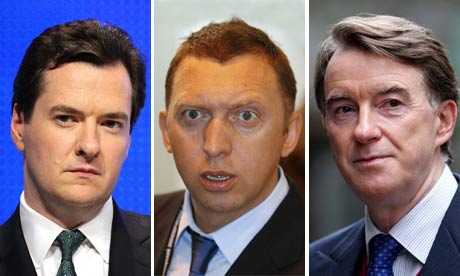
Osborne denies seeking donation from oligarch
Wind. He could have at least said "What yacht?"
Cow burps are making a growing contribution to global warming
Greenhouse gases produced by cow burps are growing at a faster rate than the man-made emissions responsible for global warming, according to the latest research.
Subscribe to:
Posts (Atom)