Site Meter

Thursday, February 11, 2010

Reebok Classic cause of crime

Reebok Classic cause of crime


Scientists discover the burglar's trainer of choice

The burglar's trainer of choice is the Reebok Classic, according to a university study which examined footprints found at crime scenes.


As an ex-burglar a tool for the job must be footwear designed for speed and comfort!

Crime of the century

Crime of the century

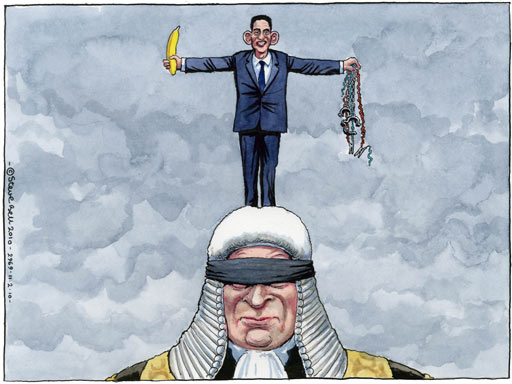
Jack Straw ignorance of the law is no excuse

Jack Straw ignorance of the law is no excuse

"It's unlawful, it's against prison rules which is the law".

In Becker V Home Office [1972] 2 QB 407, Lord Denning stated that the Prison Rules are "regulatory directions only", therefore they do not have the force of law. Delegated legislation is not primary legislation. You would think that as a lawyer Jack Straw would know the law. As the Minister of Justice who is responsible for prisons, I would expect him to know the legal status of the Prison Rules.

I'm not a dedicated follower of fashion so I shrugged this off

I'm not a dedicated follower of fashion so I shrugged this off


Don't tell me that he designed that fucking jacket? Not sure whether it looks more like curtains or a deck chair. In any event, he's kicked the bucket.

Lib Dem dog sitting on the fence

Lib Dem dog sitting on the fence


Photo: Hat-Tip to Devonshire Dumpling over at No Clue

Prisoner Facebook pages removed after victim taunts

Prisoner Facebook pages removed after victim taunts

Thirty Facebook pages have been taken down because prisoners were using them to taunt their victims, Justice Secretary Jack Straw has said.

Mr Straw was speaking after a meeting with victim campaigners to discuss prisoners using social networking sites to taunt families.

"This is horrible, profoundly disturbing... and it's deeply offensive to public morality," he said.

It is one thing to post on Facebook etc, and quite another to post deliberately offensive content. Some victims are so pathetic that any media attention at all given to offenders they deem to be offensive and a slap in the face. Only if content is genuinely offensive should it be removed.

I think Jack Straw has got some nerve talking about offending public morality. What with his involvement in the illegal war with Iraq, and the sanctioning of torture of suspected terrorists when he was Foreign Secretary. Then there is his breach of human rights of prisoners denying them the vote.

"He said it might be possible to change the rules under which prisoners are freed on parole and temporary licence, to make it "explicit" that they cannot make use of sites in this way". I notice he did not say that they will be prevented from posting full stop. This is an impossibility. Those who abuse the system will face the consequences like any other user of Facebook. I would be very strongly against any measure which sought to censor prisoners just because they speak out.

Binyam Mohamed: a shameful cover-up

Binyam Mohamed: a shameful cover-up

The court of appeal has highlighted the way our leaders have placed the suppression of torture revelations above citizens' welfare


In a scathing judgment running to 84 pages, the court of appeal has slapped the government down in the case of Binyam Mohamed. As many will recall, Mohamed was seized by the Pakistanis in April 2002, turned over to the Americans for a $5,000 bounty, abused for three months, rendered to Morocco, tortured with razor blades to the genitals, rendered on to the "Dark Prison" in Kabul, tortured some more, and then held for five years without charge or trial in Bagram air force base and Guantánamo Bay. The verdict of the court – comprised of three of the country's most senior judges – underlines the shameful way in which, in this case and beyond, our political leaders have placed their desire to suppress embarrassing revelations above the welfare of citizens.

Nelson Mandela anniversary: South Africa 20 years after his release

Nelson Mandela anniversary: South Africa 20 years after his release

It was a day I thought I would never see. Having spent my youth as a sporadically active anti-apartheidist (I was deported from South Africa in the mid 1970s) not in my wildest dreams did I think I would witness Mandela walking free.


I did, and thus proved that predicting the ebb and flow of African politics was a mug's game.

In the four years between that famous day and Mandela's swearing in as South Africa's first democratically elected president I was equally certain a peaceful outcome was impossible. The smell of cordite hung in the air, Zulus were threatening to engage in civil war with Xhosas, and white Afrikaner hard-liners were threatening to blow the seemingly endless constitutional talks to smithereens.

Wednesday, February 10, 2010

Calling Mike Rouse of RouseMedia

Hi Mike

Are you going to see this, The Fear Factory, on 1st of March in London?

Even as a techie I think you will find it interesting.

R.S.V.P. A.S.A.P.

This post has been sponsored by:


Personal Injury Claims

No win no fee solicitor

BBC loses way in Moral Maze on the Prisoners Votes Case

BBC loses way in Moral Maze on the Prisoners Votes Case

More than 70,000 citizens will be denied their chance to vote in the general election this Spring. They're prisoners and the ban has been in place since 1870. In 2005 the European Court of Human Rights ruled that the ban breaches prisoners' right to free elections. Prison reform charities have warned that the government has had enough time to sort this out and if the general election goes ahead and prisoners aren't allowed to vote, it could be challenged in the courts. Have criminals by definition lost their moral authority to vote or could it help with their rehabilitation and keep them in touch with society and their role as citizens? How do we balance the rights of prisoners with our rights to punish them, and who should decide which takes precedence?

People:

* BBC michael buerk
* BBC claire fox
* BBC clifford longley
* BBC kenan malik

Witnesses:

Bobby Cummines
Chief executive of UNLOCK and reformed offender.

Sir Ivan Lawrence QC
Criminal lawyer mainly engaged in defence for 48 years, and Conservative MP for 23 years where he was chairman of the Conservative Party legal and home affairs committee.

David Green
Director of Civitas, institute for the study of civil society.

John Walsh QC
Barrister at Doughty Street Chambers specialising in immigration and prison law. He is also chair of the trustees of Irish Chaplaincy in Britain, which supports Irish prisoners abroad.


If you can stomach it, you can listen to it again on Sat 13 Feb 2010 at 22:15.

Speaking to my friend, a judge, straight after the broadcast, he said: "Doesn't it make you angry?". It was a rhetorical question, because he continued: "Voting is a fucking right, not a privilege!". It was slapping down Sir Ivan Lawrence QC, who is guilty of failing to take into account, when he opened his eloquent gob, the legal maxim 'ignorance of the law is no excuse'. My friend concluded that: "At least it has stoked the fires". I agree.

For that small mercy I am grateful. But, like Oliver Twist asking Mr Bumble "Please, Sir, I want more". For example, when the BBC stitched up Nick Griffin on Question Time, he complained about the bias and demanded more air time which the BBC has said it will give him to compensate for their unacceptable conduct.

I felt sorry for Bobby Cummines, all alone, drifting up shit creek in a dingy without a paddle, having to think on his feet, and at times completely out of his depth. All credit to the man for giving it a go. He was under pressure of a 8 minute time limit (The Prison Reform Trust told me I could only have 2 minutes at their gig in Parliament on the 8th!).

At the centre of the maze is the fountain of all knowledge on the Prisoners Votes Case, available to the BBC upon request, but the BBC choses instead another guide who has expertise in another area altogether and as a result both are lost in the Moral Maze. If a prisoner needs assistance in relation to release, then Bobby Cummines is your man. If a prisoner has a legal problem in relation to his custody, then I am your man. And, if in either case the Prison Reform Trust is approached there is the danger of part of the problem rather than the cure.

I will be returning to this topic in due course. Meanwhile, I will leave this message for the BBC: There are several routes into the Moral Maze, but only one route out from the centre, therefore it is more logical to start from the centre and work your way out than not be sure about the way in!

Listen Again.

BBC in a Moral Maze over the Prisoners Votes Case

BBC in a Moral Maze over the Prisoners Votes Case

Tonight at 8pm on Radio 4 FM the Moral Maze is discussing the Prisoners Votes Case. Has the BBC lost its moral compass? The reason I ask is because I am the one person who knows this case inside out, and so far the BBC has failed to invite me to speak on the programme.

Tut, tut, because now I am a TV Licence payer!

Disgusted of Tumbridge Wells, Iain Dale, was offered the chance to take part but declined the invitation.

Alan Duncan MP and Eric Pickles at odds over the Prisoners Votes Case

Alan Duncan MP and Eric Pickles at odds over the Prisoners Votes Case


The video has not captured the story off camera. However, Alan Duncan MP was overheard in private conversation to Juliet Lyon, Director of the Prison Reform Trust, "This issue has been allowed to fester for far too long".

It was said in the context of Hirst v UK(No2) and referred to the government's lack of action in implementing the Court judgment.

Whilst I agree with what Alan Duncan had to say, I am aware that his outspoken comment is contrary to the Tory party secret policy on the issue leaked by Eric Pickles. That is, "The Conservative Party has a direct interest in electoral law. We do not support giving convicted prisoners the right to vote, as a term of imprisonment should involve a loss of civic rights - from freedom of movement to the right to vote".

Judges order release of secret Binyam Mohamed torture evidence

Judges order release of secret Binyam Mohamed torture evidence

The Foreign Secretary David Miliband today lost his appeal court bid to prevent senior judges disclosing secret information relating to torture allegations in the case of Binyam Mohamed.

The former Guantanamo Bay detainee says that he was tortured in Pakistan while held by the CIA, with the knowledge of the British.

Lord Justice Thomas and Mr Justice Lloyd Jones want to disclose summaries of information held by the British security services. Mr Miliband, branded them “irresponsible” in an unprecedented attack on the judiciary, but today three of the country’s highest-ranking judges rejected both the minister’s accusations and his appeal.

The court rejected the Government's claim that revealing the information would damage transatlantic intelligence co-operation.


The 7 previously redacted paragraphs...

[It was reported that a new series of interviews was conducted by the United States authorities prior to 17 May 2001 as part of a new strategy designed by an expert interviewer.

v) It was reported that at some stage during that further interview process by the United States authorities, BM had been intentionally subjected to continuous sleep deprivation. The effects of the sleep deprivation were carefully observed.

vi) It was reported that combined with the sleep deprivation, threats and inducements were made to him. His fears of being removed from United States custody and “disappearing” were played upon.

vii) It was reported that the stress brought about by these deliberate tactics was increased by him being shackled in his interviews

viii) It was clear not only from the reports of the content of the interviews but also from the report that he was being kept under self-harm observation, that the inter views were having a marked effect upon him and causing him significant mental stress and suffering.

ix) We regret to have to conclude that the reports provide to the SyS made clear to anyone reading them that BM was being subjected to the treatment that we have described and the effect upon him of that intentional treatment.

x) The treatment reported, if had been administered on behalf of the United Kingdom, would clearly have been in breach of the undertakings given by the United Kingdom in 1972. Although it is not necessary for us to categorise the treatment reported, it could readily be contended to be at the very least cruel, inhuman and degrading treatment by the United States authorities]

Prisoner vote ban is not a human rights issue

Prisoner vote ban is not a human rights issue


“The UK is coming under pressure to allow prison inmates to vote in elections, because according to campaign groups and the European Court of Human Rights, the human rights of prisoners denied a vote are being infringed. Lord Ramsbotham, a former Chief Inspector of prisons is leading the charge, along with the activists from the Prison Reform Trust, Unlock and Barred from Voting.

Ramsbotham is lockstep with bureaucrats and those who are opposed to the concept of prison generally in believing it is a great injustice that the government has not allowed prisoners to vote, especially after the Grand Chamber of the European Court of Human Rights decided it was unlawful to deny all sentenced prisoners voting rights in UK elections. Today he told BBC Radio 4’s Today programme:
‘The Grand Chamber of the European Court, in rejecting the government’s appeal against its ruling, said that there is no place under the convention system for automatic disfranchisement based purely on what might offend public opinion.’
Ramsbotham and the European Court are wrong. This is another example of entitlements being wrongly defined as human rights. Voting is not a human right, it is an entitlement granted to those in society who respect its laws. People are not born with the right to vote, otherwise we would be carted off the polling station straight from the maternity wing. So this should not be a matter for the European Court in the first place. But as is the way with supranational bureaucracy, mission creep is seeing an increasing labelling of entitlements as rights, bringing control of certain matters under legal jurisdiction and the result is a perverse undermining the rule of law and ability of the state to impose appropriate sanctions on offenders.

Men and women who have been handed custodial sentences are not in prision because they have ‘offended public opinion’ as Ramsbotham ludicrously stated on the Today programme. Such an assertion is idiotic in the extreme. They are there because they have broken the law of the land by committing criminal offences that have caused harm or loss to other members of society. After trial by a jury of their peers and being found guilty of a crime, inmates have been subsequently denied their liberty and ability to participate in society in order to protect the public, punish them for their offence and, if prison actually worked properly, rehabilitate them so they do not offend again.

Why should people who have broken the law and are serving a custodial sentence be allowed to vote for those representatives who we ask in principle to make that law? The removal of voting entitlements from offenders whose crimes were so serious it warranted imprisonment is proportional and entirely appropriate. Many people rightly argue that rights should never be separated from responsibilities and that society has to be able to impose consequences on those whose actions harm society. But that argument confuses the matter at hand because as I said above this issue of votes for prisoners is not one of human rights, it is about the removal of an entitlement granted by the law of the land. Remember, the state cannot grant us rights, they are ours by default. Don’t be confused by it. Prisoners should not be entitled to vote”.

Good attention grabbing headline. However, what lets it down is that the post supposedly supporting it is riddled with so many holes that it fails to stand up and is easily knocked down. Actually, the charge is being led by myself and supported by the others. Unlike this statement which is not supported by cited examples: “are opposed to the concept of prison generally”. In other words, it is an unfair attack.

“Ramsbotham and the European Court are wrong”. Again strong words. However, they are followed by unsupporting reasons with no foundation in law or fact. “This is another example of entitlements being wrongly defined as human rights”. The author has failed to cite a prior example or examples for comparison. Quite apart from it being nonsensensical in itself. The legal maxim “ignorance of the law is no excuse” applies, and the author is blissfully ignorant of the subject. Wikipedia provides: “Entitlement is a guarantee of access to benefits because of rights or by agreement through law. It also refers, in a more casual sense, to someone's belief that one is deserving of some particular reward or benefit. It is often used pejoratively in common parlance (e.g. a "sense of entitlement")”. Article 3 of the First Protocol of the Convention is the highest legal authority in Europe for the proposition that voting is a human right. “Voting is not a human right, it is an entitlement granted to those in society who respect its laws”. As said, voting is a human right. And human rights are not dependent upon a human being respecting a State’s laws. The author has attempted to insert a morality clause in place of the absolute right in an attempt to limit its scope.

“People are not born with the right to vote, otherwise we would be carted off the polling station straight from the maternity wing”. All humans are born with the rights under the Convention, although a State has a margin of appreciation to the extent, for example, by a requirement that the voter reach the age of 18 years old. “So this should not be a matter for the European Court in the first place”. This is correct to the extent that s.3 of the Representation of the People Act 1983 should have been made compatible with Article 3 of the First Protocol when the Human Rights Act 1998 was passed. So, Parliament failed in the first place to address this anomaly. In the second place, the High Court failed to do the right thing and give a declaration of incompatibly. It was only in the last resort that the jurisdiction of the ECtHR was sought to find the UK guilty of a human rights violation and informed to rectify this breach of human rights or else. The author claims that the Court’s decision “is a perverse undermining the rule of law and ability of the state to impose appropriate sanctions on offenders”. The Court applied the rule of law to the situation because it was the State which was undermining it with an illegitimate sanction. The State may impose appropriate sanctions, but not inappropriate ones. The Court is the final arbitrator of whether a citizen is a victim of State abuse of his or her human rights.
“Men and women who have been handed custodial sentences are not in prision because they have ‘offended public opinion’ as Ramsbotham ludicrously stated on the Today programme”. No, he did not say this. He was quoting from the Court judgment where the Court stated that it rejected the UK’s claim that the disenfranchisement could be justified because enfranchisement of prisoners might offend public opinion. The Court placed the prisoners human right above any actual or believed public opinion which stated that prisoners are not worthy of the vote. Yes, “Such an assertion is idiotic in the extreme”, and I wonder why the author made it?

“After trial by a jury of their peers and being found guilty of a crime, inmates have been subsequently denied their liberty and ability to participate in society in order to protect the public, punish them for their offence and, if prison actually worked properly, rehabilitate them so they do not offend again”. Prisoners are members of the public, as such they are part of society. The sentence of the court is the punishment, and imprisonment ensures that the sentence is carried out. This is justice being seen to be done. Reading comments on blogs and forums on this subject, sadly far too many people labour under the false belief that prisoners go to prison for punishment and not as a punishment. The Court stated that prisoners only lose their liberty and not their human rights. By obtaining the vote for prisoners, prisons would get the reforms necessary to assist in prisoners rehabilitation. It is a sad state of affairs when MPs are so frightened of losing votes themselves that they try to ignore their guilt in conspiring to deny prisoner their human right to the vote.

“Why should people who have broken the law and are serving a custodial sentence be allowed to vote for those representatives who we ask in principle to make that law?”. It is for the electorate to choose who represents them, and not for the MPs to choose the electorate. This is what democracy is all about. Democracy is weakened when a section of the public is disenfranchised. And, because the highest legal authority in Europe has decided the issue. The rule of law is weakened when the Minister legally responsible for ensuring the human rights of all UK citizens, including prisoners, fails to do his duty and implement the Court judgment. The author is claiming that prisoners unlawfulness is unacceptable conduct, by the same token Jack Straw’s conduct is unacceptable. He must rectify the situation, or resign and allow somebody else with more responsibility to do the job. An irresponsible Minister of Justice is justice denied.

The author’s conclusion fails to deliver the goods. “The removal of voting entitlements from offenders whose crimes were so serious it warranted imprisonment is proportional and entirely appropriate. Many people rightly argue that rights should never be separated from responsibilities and that society has to be able to impose consequences on those whose actions harm society. But that argument confuses the matter at hand because as I said above this issue of votes for prisoners is not one of human rights, it is about the removal of an entitlement granted by the law of the land. Remember, the state cannot grant us rights, they are ours by default. Don’t be confused by it. Prisoners should not be entitled to vote”. It is said that writers should only write about subjects that they are familiar with. “The removal of voting entitlements from offenders whose crimes were so serious it warranted imprisonment is proportional and entirely appropriate”. A reading of the Hirst v UK(No2) judgment will show that the UK argued these proportional and appropriate elements but the Court judged them to be neither proportional nor appropriate in a democracy applying the rule of law. The author is obviously confused by the subject, and I hope that this fisking teaches him a lesson, and that he will now concede that his previously held views have been shown to be in error, and that he would rather not share in the government’s humiliation any further.

Related content...

Disinfranchisement

This post has been sponsored by:


Personal Injury Claims

No win no fee solicitor

Tuesday, February 09, 2010

Disenfranchisement.

Disenfranchisement.

by Anna Raccoon on February 8, 2010


The “Barred from Voting” campaign deserves some credit for illustrating their cause with perhaps the most exotic and least likely to elicit a sympathetic response, sector of the vast population of disenfranchised. They solely represent the 83,000 prison population in the British Isles.

I take no issue with John Hirst on this particular point, he has doggedly and successfully pursued his quarry – the British Government – through every court in the land, and on to Strasbourg, resulting in the Hirst v UK (No2) decision which may yet see the Government paying out millions of pounds to British prisoners in compensation for not implementing the ECtHR ruling that the government was in violation of Article 3, Protocol 1 of the European Convention on Human Rights, which guarantees the right to vote.

Prisoners incontrovertibly have an interest in who precisely is making the legislation that governs their stay at Her Majesty’s Pleasure, and I see no merit in the argument that part of their punishment should be further removing them from engagement in civic society. No legislation without representation may well be their motto. That prisoners might not be best disposed towards the government responsible for the laws which currently see them incarcerated may account for the strange reluctance of this ‘Equality for all’ Government to implement the ECtHR recommendations.

I am slightly bemused that ‘Barred from Voting’ should have taken up such a narrow remit. As Jess the Dog pointed out, most would agree that those who risk their lives to defend democracy should be the first in line to participate in it – and he gives a thorough airing to the problems faced by our armed forces in taking their place in the democratic process. More than worth reading. ‘No regimentation with representation’ does not seem to appeal to the Harmanisation of Equality Laws – do they fear a backlash at the ballot box if too many of the armed forces are able to access their vote?


Why are so many former soldiers in prison?

Why are so many former soldiers in prison?

By Erwin James

Jimmy Johnson was jailed for murder after leaving the army in 1973. After his release he killed again. But is he just one of thousands who didn't receive help for post traumatic stress disorder?


'All I'm trying to do is get the government to acknowledge the truth," says Jimmy Johnson, 63, once a model soldier and now a model prisoner. Johnson, currently in Frankland maximum-security prison in Durham, where for the last 25 years he has been serving his second life sentence for murder, is a man with a mission. "The prison system is awash with ex-servicemen," he says, "and unless the government, and in particular the Ministry of Justice, starts taking this problem seriously, things are going to get much much worse."

Hat-Tip to Charles Cowling for sending me the link to this story.

Thought crime 'Wannabe suicide bomber' released on appeal

Thought crime 'Wannabe suicide bomber' released on appeal


Mohammed Atif Siddique said he should not have been jailed for “thought crime” and never had the intention of using terrorist materials he had accumulated to hurt anyone.

Prosecutors confirmed the 24-year-old, who was Scotland’s first man found guilty of being an Islamist terrorist, will not face a retrial.

The Court of Criminal Appeal in Edinburgh ruled last month that Siddique had suffered a miscarriage of justice after the judge in his original trial misdirected the jury.

Three senior judges today formally overturned his most serious conviction, which accounted for six years of the eight-year sentence he was handed in October 2007.

Monday, February 08, 2010

Human rights don’t count if they cost votes

Human rights don’t count if they cost votes


By Sam Leith
08.02.10

Prisoners in this country — a situation that is rare in liberal democracies — are not allowed to cast votes in elections. You may think this is a good thing, and you may think this is a bad thing. But it is, beyond question, an unlawful thing.

Campaigning bodies have warned that if Britain's 83,000 prisoners aren't allowed to vote in the next general election, they will be within their rights to sue. They'll have a case. And at a time when frontline public services are being cut to pay interest on money we've had to bail out the bankers with, we're entitled to wonder whether paying lawyers to defend the status quo is a good use of public money.

In 2005, the European Court at Strasbourg ruled that our blanket refusal to give prisoners the vote violated the European Convention on Human Rights. Our government's appeal failed.

So New Labour — fearless champion of human rights, except when they might cost votes — stuck its fingers in its ears and started singing: “LA LA LA, I can't HEAR you!” The Lib-Dem peer Lord Lester calls the position “a gross violation of a binding judgment”.

Certainly, it seems odd. The Government is deliberately breaking the law — or, at least, is resisting it with every means in its power — in order to prevent, um, lawbreakers being allowed to have a say in who the, um, government is.

This is the policy equivalent of one of those MC Escher staircases with all the people walking upside downside and nobody going anywhere. You look at it, and it seems to make sense, but then as you start to follow the staircase around with your eyes you feel a migraine coming on.

It also seems weirdly indicative of what's wrong with the Government, of whom a senior member lately appealed to “the court of public opinion”. As a flagship part of its legislative programme, New Labour set about binding our judiciary to implement European human rights law. But now, when it says something that they don't like, they ignore it.

It's hard not to conclude that this government — a government stuffed as never before with lawyers, and one that for its first decade in office chucked new laws onto the statute books at the rate of one per day — nevertheless doesn't really get what the law is for.

It seems to think of the law — like a number of other institutions such as parliamentary scrutiny, Cabinet decision-making, and United Nations resolutions — as essentially an administrative convenience, for optional use as and when it might be helpful.

That seems a good argument in itself for getting prisoners involved in the political process. With first-hand experience of just how crunchy the law can be, they can give Labour ministers the basic lessons in it they need.

Prisoner vote ban 'means election could break law'

Prisoner vote ban 'means election could break law'

The general election will break the law unless the ban on prisoners voting is lifted, a pressure group has warned.

The government has resisted calls to allow prisoners the vote

"Barred From Voting, which includes prison governors, penal reformers, politicians and church leaders, says new legislation is needed immediately.

In December, the Council of Europe's Committee of Ministers said the ban meant the election risked breaching the European human rights convention.

The Ministry of Justice said the issue remained under "careful consideration".

In 2005, the Grand Chamber of the European Court of Human Rights declared that it was unlawful to deny all sentenced prisoners voting rights in UK elections.

Since then, the government has consulted twice on voting reforms, but there is no sign that any changes will be in place by the general election.

The Committee of Ministers at the Council of Europe expressed "serious concern" that there was a "significant risk" the election might fail to comply with the European Convention on Human Rights.

The Barred from Voting group has amplified those concerns, but says there is still time for ministers to introduce measures to enfranchise sentenced prisoners".

If the government calls for the general election before all convicted prisoners get the vote, it is not a question of could rather it is a fact that the government will be breaking the law.

This response is not good enough but is just a fob off: "The Ministry of Justice said the issue remained under "careful consideration".

It is the Minister of Justice, Jack Straw's legal and political and moral responsibility to lay a draft Bill before Parliament to enable Parliament to debate the issue before passing the necessary legislation to comply with the UK's obligations to abide by the Convention and ECtHR decision in Hirst v UK(No2).

The government is at the crossroads but "there is no sign that any changes will be in place by the general election".

Is it pantomime season again already?

Eric Pickles Tory party chairman

The government is not giving any sign to the general population the seriousness of the trouble that the UK is in with the Committee of Ministers in the Council of Europe. The interim resolution is the penultimate stage for resolving the UK's problem. The next stage is that in March, my legal team will make submissions alleging systemic violation by the UK and seek that Hirst v UK(No2) is returned to the ECtHR for a ruling and invoke the final resolution. The Court then lays down in specific terms what the UK must do to comply with the judgment and within what time limit. A failure to comply will result in the UK being suspended from the Council of Europe. Although this is separate from the EU, because it is also a requirement that EU Member States abide by the Convention and ECtHR decisions, the UK will also be suspended or kicked out of the EU.

Is this a gamble the UK is prepared to take? I wouldn't gamble on the government's position. However, I have gambled £20 with William Hill at 20/1 that all or the majority of prisoners will get the vote by the next general election.

Time besides the law is on the prisoners side. There is still time for Parliament to resolve this issue.

Welcome to Gobbler's Knob Family Fun Park!

Welcome to Gobbler's Knob Family Fun Park!

Link.

I don't know about a turkey, I think it is funny and I suspect it will tickle White Rabbit's sense of humour.

Nadine Dorries and the boob job

Nadine Dorries and the boob job


MP Nadine Dorries hid money in bra

The country's politicians have already been shamed for exploiting the Westminster expenses system to subsidise their sometimes-lavish lifestyles.


Related content:

Did anyone else notice the boob on the Antiques Roadshow? The presenter with a low cut dress leaned forward, camera zooming in, and said they are a beautiful pair of globes...she was referring to a pair of 17th century globes on the table in front of her. I hope someone sticks it up on YouTube!

Brainless Cameron talks out of the top of his head

Brainless Cameron talks out of the top of his head


MPs' expenses: David Cameron will bring in law to stop privilege defence to expenses crimes

David Cameron is to vow to change the law to stop three MPs charged with false accounting from escaping justice.


There is no need for a law change because parliamentary privilege does not extend to a licence to break the law; no-one is above the law.

If Cameron does not know MPs bluff when he sees it he is not fit to be Tory leader let alone leader of the country!

Brown ponders April election as poll gap narrows .... Prisoners "could sue" if denied vote in general election ...

Brown ponders April election as poll gap narrows .... Prisoners "could sue" if denied vote in general election ...

Gordon Brown has told the Observer that the secrecy surrounding the Conservative party's biggest financial backer, Lord Ashcroft, is "a scandal".

In a speech on Monday launching a Conservative "parliamentary privilege bill" designed to prevent MPs from misusing Commons privileges, David Cameron will accuse Gordon Brown of being "secretive, power-hoarding and controlling” and call him "a shameless defender of the old elite."


Pot, kettle, black...

Sunday, February 07, 2010

Should prisoners be allowed to vote?

Should prisoners be allowed to vote?

By Albert Muriuki, Posted Monday, February 8 2010 at 00:00


Kamiti Maximum Security Prison in Nairobi. The number of inmates in Kenya runs into tens of thousands.

One unique thing about Kenya is the obsession with politics.

Years before the next elections, politicians are crisscrossing the country campaigning.

At least four politicians have declared their presidential hopes.

However there is one area all the presidential hopefuls have neglected, the loads of untapped votes lying idle in prisons.

Prisoners 'could sue' if denied vote in general election

"Give me the vote or I'll slit yer fuckin throat"

Prisoners 'could sue' if denied vote in general election

Ministers' reluctance to comply with 2005 European ruling could breach inmates' human rights

By Jamie Doward, home affairs editor, The Observer, Sunday 7 February 2010

Tens of thousands of prisoners could sue if they are not allowed to vote in this year's general election, the government is being warned.

The UK, one of the few countries in the world to impose a blanket ban on prisoners voting, must give those held behind bars the vote in order to comply with a European legal ruling, dating back six years. However, ministers have been procrastinating on the issue, fearing that it will prove unpopular with the electorate.

But with the election now looming, a high-profile coalition of judicial experts, politicians and lawyers will tomorrow warn the government that continuing the ban could result in widespread legal challenges after the election.

The Barred From Voting campaign – organised by the Prison Reform Trust and Unlock, the national association of reformed offenders, and supported by the Prison Governors Association and the civil rights group, Liberty – claims that barring the UK's 83,000-strong prison population from voting "has no place in a modern democracy and is legally and morally unsustainable".

"What message does the government think that the continued defiance of the rule of law sends to prisoners as well as the other countries in the Council of Europe?" said Lord Ramsbotham, the former chief inspector of prisons and a supporter of the campaign.

Last year the government was forced to acknowledge that some prisoners must be allowed to vote, although it is likely some categories of offender will continue to be barred.

The decision followed a lengthy legal battle dating back to 2005 when a UK prisoner, John Hirst, brought a case before the European Court of Human Rights that ruled the government was in violation of Article 3, Protocol 1 of the European Convention on Human Rights, which guarantees the right to vote. A subsequent government appeal was rejected, prompting the Ministry of Justice to launch a series of consultation exercises on the issue that were condemned by opponents as simple delaying tactics.

Liberal Democrat peer and human rights expert Lord Lester has warned the government its delaying tactics "will lead to costs to the taxpayer if prisoners take their cases to Strasbourg for this gross violation of a binding judgment".

The Liberal Democrat leader, Nick Clegg, senior Conservative politicians including former home secretary Lord Hurd, and senior Labour figures such as David Winnick MP and Lord Corbett of Castle Vale, have criticised the blanket ban on votes for prisoners.

Photo: Hat-Tip to "Give me the vote or I'll slit yer fuckin throat"

Accused MPs may still get huge payoffs

Accused MPs may still get huge payoffs


THREE MPs facing charges over their expenses claims could still receive huge resettlement grants totalling £150,000 between them when they step down from parliament.

Elliot Morley, Jim Devine and David Chaytor may be entitled to the payments despite being charged with false accounting.


I've got a better idea. Use the £50,000 each on paying for their 12 months imprisonment, then give them each £50 discharge grant like other prisoners receive for resettlement!

Will Brown be an April Fool?

Will Brown be an April Fool?


Brown ponders April election as Labour narrows poll gap

A new opinion poll has shown the narrowing of the Tory lead over Labour – boosting the chances of Gordon Brown calling an earlier than expected general election to be held in April.

Saturday, February 06, 2010

Knicker nicker nicked and in nick

Knicker nicker nicked and in nick


The ex-mayor of a Lancashire village who got "sexual kicks" from breaking into women's homes to steal underwear has been jailed for two years.

Pants!

Father who beat baby son to death in Dorset jailed

Father who beat baby son to death in Dorset jailed

A Dorset man who beat his 10-week-old baby son to death after drinking a bottle of vodka has been jailed for five years.

When Ethan Tattum died at his home in at Gordon Road, in Wimborne, on 4 July 2008 he weighed less than 6lbs (2.7kg).

His injuries were so severe medical experts said he must have been punched, slapped or hit against a hard surface.

Craig Tattum, 35, denied manslaughter but was found guilty on 15 December at Winchester Crown Court.


Why only 5 years? He could be out in 20 months on parole, or at worst he serves 3 years 4 months. It's not much for a young life is it?

Pair jailed for smuggling immigrants into Portsmouth

Pair jailed for smuggling immigrants into Portsmouth

A French local councillor and her son have been jailed for helping to smuggle 16 Vietnamese immigrants into the UK.


Christiane Chocat, 51, of Lumigny-Nesles-Ormeaux, France, admitted hiding the group in a vehicle which arrived at Portsmouth on a ferry in October 2009.

Her son Benjamin, 20, of Choisy-Le-Roi, France, pleaded guilty to the same offence last month.

They were sentenced at Portsmouth Crown Court to three years and five years respectively.


The Shrimp Noodles smuggling gang...it's got a certain ring to it!

Nelson Mandela dinner celebrates 20 years of freedom

Nelson Mandela dinner celebrates 20 years of freedom

Nelson Mandela has celebrated the 20th anniversary of his release from prison with a special dinner, inviting ex-wife Winnie and one of his former jailers.

Mr Mandela, who became South Africa's first black president, was freed from Robben Island jail on 11 February 1990 after a prison sentence of 27 years.

Mr Mandela has said he developed a friendship with warder Christo Brand that cemented his views of humanity.

The Nobel Prize winner, 91, was also joined by children and grandchildren.

Friday, February 05, 2010

McCannspin money laundering

McCannspin money laundering

It is generally the case money laundering involves turning dirty money into clean money.

However, the McCannspin laundry takes clean money and turns it into dirty money via the Madeleine’s Fund.

Madeleine's Fund: A turn up for the books

Madeleine's Fund: A turn up for the books

Link.

Having a wonderful time...

Having a wonderful time...


The four parliamentarians have been summoned to appear at Westminster magistrates courts on 11 March.

The maximum sentence for false accounting under the Theft Act is seven years in prison.


First they claimed that they were all getting tarred with the same brush. And now that each individual case has been dealt with on individual merit...

"We maintain that this is an issue that should be resolved by the parliamentary commissioner who is there to enforce any breach of the rules. Clearly parliament's system of expenses is utterly discredited, but we believe there has been a complete inconsistency of approach to different individual cases."

Expenses MPs to defy courts over prosecutions

"Three MPs said today that they planned to dispute the right of the courts to try them over their expenses claims after they learnt that they are to face prosecution.

The Labour MPs Elliot Morley, David Chaytor and Jim Devine, as well as Lord Hanningfield, a Tory frontbencher and leader of Essex County Council, face up to seven years in jail for theft. They are expected to stand trial later this year after a nine-month police investigation.

All four have been charged under the Theft Act 1968 and will appear in court at 2pm on March 11. They are the first MPs to face legal action by prosecutors over their expenses.

The three Labour MPs announced today that they would fight the charges by seeking to claim parliamentary privilege over their expenses activities. This has enraged other MPs who fear that this will suggest one rule for MPs and the another for the rest of the country".


Judge: You have been charged with theft, how do you plead?

Defendants: Not guilty, your honour, because it is a parliamentary privilege to steal the taxpayers money.

Judge: Ha, ha, ha!

Three MPs and one peer to be charged over expenses

Three MPs and one peer to be charged over expenses

Three Labour MPs and one Tory peer will face criminal charges over their expenses, Director of Public Prosecutions Keir Starmer has said.


MPs Elliot Morley, Jim Devine, David Chaytor and Lord Hanningfield will be charged under the Theft Act.

In a joint statement the MPs said they denied any charges and would "defend our position robustly".


Get 4 prison cells ready...

CPS statement in video

Related content...

CPS Charges in full

The prisoners causing trouble on Facebook

The prisoners causing trouble on Facebook

Like many of its 350 million users worldwide, jailed underworld boss Colin Gunn used his Facebook account to let his friends know what was on his mind.

Gunn, a big-time Nottingham gangster who ordered the revenge killings of John and Joan Stirland, threatened: "I will be home one day and I can't wait to look into certain people's eyes and see the fear of me being there."

An inquest opened this week to determine whether police corruption contributed to the Stirlands' death. They were gunned down at their bungalow in Lincolnshire in 2004.

Gunn had set up his Facebook profile in November, claiming prison authorities had relaxed their attitude towards him after he had served part of his sentence in Whitemoor jail, Cambridgeshire, the Sunday Times reported at the weekend.

The Ministry of Justice says prisoners are banned from using social networking sites, and his page was closed by Facebook for violating its policies.

But Gunn is the latest in a line of convicted criminals who have used social networking sites to abuse victims and boast about life in prison.


The BBC asks: How can you stop inmates making online threats?

It might help if the media did not blow up his character with terms like "jailed underworld boss" and "a big-time Nottingham gangster", and instead call him what he really is a murderer of a couple of old age pensioners. Real gangsters do not do that!

Lockerbie bomber jail visit 'inappropriate', say MSPs

Lockerbie bomber jail visit 'inappropriate', say MSPs

The Scottish justice secretary's visit to Greenock Prison to see the man convicted of the Lockerbie bombing was "inappropriate", an inquiry has said.

Kenny MacAskill made the decision to release terminally-ill Abdelbaset al-Megrahi from jail on compassionate grounds.

The probe by Holyrood's justice committee expressed concern about other aspects leading up to the release.

The Scottish government said Mr MacAskill had followed "due process".

Megrahi, who has cancer, was the only man convicted for the murder of 270 people in the bombing of Pan Am flight 103 over Lockerbie on 21 December, 1988.

The decision to allow him to return home to Libya last August sparked a political storm.

In its inquiry report, the cross-party justice committee said it was "inappropriate" for Mr MacAskill to have visited Megrahi in jail before his release, citing comments from UK Justice Secretary Jack Straw that there was only an obligation to make written representations.

Damned by Statistics

Damned by Statistics

Chris Grayling has done public debate a disservice by claiming too much

A big part of the argument that Britain is broken, the pitch of the man who seeks to be Home Secretary, Chris Grayling, is the claim that crime is going up. It is, then, a rebuke to his central case when he is upbraided, as he was yesterday, by Sir Michael Scholar, the head of the UK Statistics Authority, for misleading the public.

The Conservative Party in Milton Keynes has published a leaflet containing the claim that violent crime had increased by 236 per cent since 1999. In a letter to Mr Grayling, Sir Michael tartly pointed out that comparisons between the late 1990s and today are unreliable. A change to the definition of violent crime produced an immediate 35 per cent increase, which it is completely remiss not to mention.

The smell from Westminster hasn’t gone away

The smell from Westminster hasn’t gone away

MPs’ behaviour has been unforgivable. Although many are leaving, we must watch the class of 2010 with an eagle eye

It took Sir Thomas Legg to remind us that the scandal has not gone away, that the system of MPs’ expenses was indeed deeply flawed and that too many of our Honourable Members appeared to be in public life for what they could get out of it. The culture of deference claimed many casualties, chiefly the reputation of the House of Commons.

Having been elected to Parliament on an issue of trust back in 1997, I am reminded by the Legg report how much worse things are now than they were then. I wish to admire MPs. I want them to be men and women of competence and integrity. The Parliament of 2005 showed shortages of both. As far as I am concerned it cannot pass into history soon enough. It will be unmourned by all but its inmates.

I have long argued that the corruptions of politics are not occasional and particular but widespread and endemic; but I had never believed them to be practised on quite this scale. It is now known that 390 MPs, more than half the total, claimed and received public money that they are now required to pay back. It is probably unfair to conclude that more than half of them are crooks — some of the mistakes were inadvertent — but that will be the belief of many people outside the political class who do not have a taxpayers’ pot of gold to dip into to make ends meet.

Let us be clear too that these MPs are not victims but the authors of their misfortunes. They were not brought down by a press campaign. They did this to themselves. From Jacqui Smith’s bath plug all the way up to Quentin Davies’s bell tower, these were claims made by MPs on forms signed by themselves. I doubt that a Relief Fund for Distressed Members would become a popular cause for public compassion.

Thursday, February 04, 2010

What our supreme courts say about us

What our supreme courts say about us

In the UK, a new law is created to overturn its decision. In the US, they slug it out. And in Canada? Bland indifference

In western democracies like the UK, the USA and Canada, the role of the supreme court can be revealing. Constitutionally, it is straightforward enough – the court lays down the law, and the other civil institutions listen carefully and respond.

But this can be stressful for the institutions and the politicians who inhabit them. A politician's ears must be exquisitely attuned to every subtle harmony in the symphony of power; a supreme court decision can burst through the music like a jack hammer starting up in the lobby. How institutions respond to that kind of stress can reveal the political and cultural peculiarities of the democracies involved. Three recent cases show just how peculiar a political culture can get.

Eric in a pickle

Eric in a pickle


To: PICKLES, Eric
Subject: Website Enquiry

Enquiry:
I would like to know why you asked the following question?

Mr. Pickles: To ask the Secretary of State for Justice (1) who the respondents were to the second round of consultation on voting rights for prisoners; [308289]

(2) how many respondents to the second round of consultation on voting rights for prisoners were convicted prisoners. [308290]

Mr. Wills: The second stage consultation on the voting rights of convicted prisoners closed on 29 September. A detailed analysis of the replies to the second stage consultation-including a breakdown of respondents-will be available upon publication of the Government's response. There have been over 100 responses to the consultation from a number of different groups including charities, local authorities, members of the public and prisoners, which we are currently considering carefully.

Dear Mr Hirst,

Thank you for your email to Eric Pickles MP, the Conservative Party Chairman. He has asked me to reply to you on his behalf.

The Conservative Party has a direct interest in electoral law. We do not support giving convicted prisoners the right to vote, as a term of imprisonment should involve a loss of civic rights - from freedom of movement to the right to vote.

I hope that this has helped to clarify the matter for you. Thank you for writing to us.

Yours sincerely,

Sarah Bridgman

Dear Sarah Bridgman

Thank you for your email in response to my enquiry.

However, this view "We do not support giving convicted prisoners the right to vote, as a term of imprisonment should involve a loss of civic rights - from freedom of movement to the right to vote." is not in line with the ECtHR judgment in Hirst v UK(No2).

"69. In this case, the Court would begin by underlining that prisoners in general continue to enjoy all the fundamental rights and freedoms guaranteed under the Convention save for the right to liberty, where lawfully imposed detention expressly falls within the scope of Article 5 of the Convention".

"59. As pointed out by the applicant, the right to vote is not a privilege. In the twenty-first century, the presumption in a democratic State must be in favour of inclusion, as may be illustrated, for example, by the parliamentary history of the United Kingdom and other countries where the franchise was gradually extended over the centuries from select individuals, elite groupings or sections of the population approved of by those in power. Universal suffrage has become the basic principle (Mathieu-Mohin, 51, citing X. v. Germany, no. 2728/66, Commission decision of 6 October 1967, Collection 25, pp. 38-41)".

"63. The present case highlights the status of the right to vote of convicted prisoners who are detained". The Court concluded that the UK was in violation of the Convention".

The Tory party appears to be in a conspiracy with Labour to support the breach of citizens human rights, rather than attacking Labours breaches of the law.

Will you please now confirm that the Tory party does not care about human rights and the rule of law?

Yours sincerely

John Hirst

Eric Pickles accuses Gordon Brown of misleading Parliament

The Legg Report

The Legg Report

House of Commons Members Estimate Committee

Review of past ACA payments

First Report of Session 2009–10

If this is meant to restore public confidence in the system, I would say it has not got a Legg to stand on!

Wednesday, February 03, 2010

Prisoners votes: It's just not cricket

Prisoners votes: It's just not cricket

I have no doubt in my mind that Charles Falconer placed spin on the Prisoners Votes Case aka Hirst v UK(No2). I just don't know whether Alastair Campbell was behind the delivery?

The Times Online ran with the headline "Government will block blanket vote for prisoners after ruling"

"Thousands of UK prisoners are likely to be given the right to vote after a former lifer won a long legal battle at the European Court of Human Rights today.

But the Government has indicated that not all the UK's 60,000-plus convicted prisoners would automatically be able to vote from jail after a ruling by the Strasbourg court".

Lord Falconer said: "I can make it absolutely clear that in relation to convicted prisoners, the result of this is not that every convicted prisoner is in the future going to get the right to vote".

Jonathan Aitken has said "The Lord Chancellor on The World at One gave a dangerous hostage to fortune when he said yesterday, "Not every convicted prisoner is in the future going to get the right to vote … we need to look and see whether there are any categories that should be given the right".

It would have helped if he had even read the judgment before spouting off...

Iain Duncan Smith and Boris Johnson call david Cameron and Chris Grayling liars

Iain Duncan Smith and Boris Johnson call david Cameron and Chris Grayling liars

David Cameron is a liar
Chris Grayling is a liar

Tories accused of fiddling violent crime statistics

The Conservatives were accused of fiddling statistics today after they claimed that violent crime had soared under Labour.

Chris Grayling, the Shadow Home Secretary, has sent out press releases to every Tory constituency purporting to show how "violent attacks" have jumped in their area in the last decade.

David Cameron has also quoted what he says is a significant increase in violent crime – particularly gun and knife crime – to justify categorising Britain as a "broken society", one of the key catchphrases of his pre-election campaign.

Both politicians were accused today of deliberately misleading the public, after it emerged that they had failed to mention that the way violent crime is recorded was changed in 2002, invalidating comparisons before and after that date.

Tuesday, February 02, 2010

Gordon Brown: voting age should be lowered to 16

Gordon Brown: voting age should be lowered to 16

The voting age should be lowered to 16 as part of a package of radical reforms to the electoral system, Gordon Brown has said.


And what about prisoners and the vote?

Votes at 16 and for Prisoners?

"The office this morning has been alive with a debate started by me huffing and puffing over votes at 16. I argued that 18 is the age limit for most things and that’s how it should be. We have to have a limit somewhere. I agree that it’s not right for a young man to be able to join the Army at 16, but not decide who sends him there until he’s 18. I would argue that I would rather see the joining age brought up to 18 rather than votes down to 18. Sure there are also some very clever 16 year olds out there, but then there’s also some clever 14 year olds and 12 year old… Where would the line be drawn? Without any testing method to determine the line it has to be an arbitary choice and 18 seems sensible.

We then moved on to votes for prisoners. The argument I was facing was in favour of granting votes. The argument was that by giving prisoners’ a stake in society you are contributing to their rehabilitation. I argued that certain categories of prisoner could be given votes, but that the highest categories should not. The way I see it is that if you have committed a crime then you are taken out of society and that should also include the right to shape that society through voting.

There’s also the campaigning point. With significant numbers of prisoners it might be tempting for a politician to campaign for prison votes. Can you imagine the scene where a candidate goes to the local prison to tout for votes from a collection of murderers and rapists? It’s not a picture that sits well with me.

Alas, one thing that was concluded all round was that there doesn’t seem to be enough conversation on this issue. None of us could remember the last time we talked about prisoner votes.

One person that does talk about votes for prisoners is John Hirst. He won a case in the European Court of Human Rights against the removal of his right to free votes. I asked him for his thoughts on this issue:

In Bricks of Shame – Britain’s Prisons by Vivien Stern there is a chapter called No Votes in Prisons. The author writes: “There are supposed to be ‘no votes in prisons’ and no political prizes for doing something about them or grasp the nettle and try to change the way they are run is likely, so it is believed, to run into difficulties with public opinion”.

I don’t think public opinion is the problem. For example, the Death Penalty was abolished contrary to public opinion. In my judgment before the ECtHR, the Court rejected the government’s argument based upon public opinion would be offended. You might recall, the then Liberal Democrat leader Charles Kennedy saying he supported convicted prisoners having the franchise. And, a Daily Mail reporter raised a question about Ian Huntley getting the vote. I was asked the same question, and I responded that he was just one man and one vote and in the great scheme of things it doesn’t really matter. Nevertheless, Charles Kennedy was crucified for his comment. In short, I am saying it is the Sun headlines which politicians fear more than public opinion.

Recently, Barry George served 8 years for a crime he didn’t commit. He could well have missed two elections in that time. The ECtHR was not interested in length of sentence or severity of crime. The franchise has never been about moral worthiness of the electorate. The Court relied upon the principle of Universal Suffrage. That is, everybody of voting age has the basic human right to vote. In response to the judgment, Ireland has passed a Bill allowing prisoners, across the board, the postal vote. It is a good example of a country meeting its obligations to the Convention. Countries like Sweden and Holland have given prisoners the vote since 1968. Those countries have not collapsed as a result.

If it is accepted that prisoners are human, and humans have rights, and it is a human right to vote, then it follows that prisoners are entitled to the vote.

John makes a very persuasive point and I leave this article thinking more about votes for prisoners. My initial reaction was ‘no way – they’re criminals and don’t deserve the priviledge’, but now I question my opinion over moral worthiness. It’s an issue I will return to in future posts as I explore this area of democracy" (Mike Rouse).

Prisoners: TV or not TV that is the question

Prisoners: TV or not TV that is the question

Over 27,000 televisions bought for prisoners in the past two years

More than 27,000 televisions destined for prisoners' cells have been bought in the past two years, according to new figures.


Next week, shock horror prisoners allowed toilet paper...

Kestrel vs Barn Owl

Kestrel vs Barn Owl

Amazing photographs capture Kestrel and Barn Owl's battle over vole

This is the incredible moment a Kestrel is caught on camera stealing lunch - from the jaws of a Barn Owl.


Wildlife photographer Mark Hancox was in the right place and the right time to get these images of a cheeky kestrel stealing a barn owl's breakfast... Photo: MARK HANCOX / NEWSTEAm

...The kestrel chose its moment well before pouncing and snatching the mouse out of the owl's beak in the blink of an eye, leaving the hapless owl without his early morning meal Photo: MARK HANCOX / NEWSTEAM

Straw urged to take action against court gagging orders

Straw urged to take action against court gagging orders

Jack Straw, the Justice Secretary, was challenged last night to take immediate action to tackle the proliferation of "super-injunctions" issued by courts.


The demands follow the failed attempt by footballer, John Terry, to obtain a double gagging order preventing reporting of his affair with a team-mate's ex-girlfriend. Vanessa Perroncel was last night at the centre of a bidding war, with newspapers offering her a reported £250,000 to tell the story of her affair with the England captain.

The disclosures over Terry's private life have given fresh impetus to calls at Westminster for a crackdown on the soaring incidence of super-injunctions.

The use of the legal orders, preventing the disclosure of even the existence of the original injunction, was highlighted when the oil trading firm Trafigura attempted to block reporting of a parliamentary question about an injunction it had taken out.

Mr Straw has signalled his concern over the issue and has launched a review into super-injunctions. The former minister, Denis MacShane, has called for action within weeks.

Mr MacShane said: "Any order that bans the press from reporting the facts, and then bans the reporting of the ban itself, is Kafkaesque."

Washington State gives prisoners the vote

Washington State gives prisoners the vote


State AG McKenna will appeal felony voting ruling

Washington state's Attorney General is appealing a ruling that would allow convicted felons to vote.

"We have just made the decision that we're going to appeal this case directly to the U.S. Supreme Court," Rob McKenna told KIRO Radio.

"The first step in that effort is we're going to file a motion to stay the 9th Circuit Court Decision, to put it on hold so that we can prepare our case for the U.S. Supreme Court," said McKenna.

A federal appeals court ruled that imprisoned felons should be allowed to vote in Washington to ensure that racial minorities are protected under the Voting Rights Act.


The case is Farrakhan v. Gregoire. Ruling here.

Renaissance in prison law

Renaissance in prison law

Lifer Ben Gunn is convinced that the number of ‘jailhouselawyers’ needs to be increased and suitably equipped with the proper tools

The prison system is an animal in a state of perpetual change. Whilst our political masters seem to have the decisive say in that change, we should always remember that
prisoners have played a large part in creating the system as it is today.

One of the ways in which we have, collectively and individually, forced change is
through the use of the Rules and the law. For whilst management may use the word ‘jailhouselawyer’ as a term of abuse, they do so because jailhouselawyers can make their life more difficult whenever some inconvenient piece of law gets in their way of screwing over some prisoner.

We live in good times as far as these things go. It was only about fifteen years ago that we finally got access to all the rules and regulations that are used to govern the minutiae of our daily lives. Before then, governors could happily look you in the eye and quote some secret Circular Instruction to justify the latest dumb decision.

Now, if the urge strikes us, we can phone the Prisoners’ Advice Service or wander to
the library to check the actual regulation. If nothing else, this has hindered governors in their perpetual challenge of lying through their teeth from morning till night.

After decades of neglect, the courts now actually take an interest in prison matters.
Previously they had a nasty habit of letting the Minister do pretty much what he wanted, and governors to railroad us. But in a series of landmark cases over thirty years, desperate rules which restricted our ability to reach out to lawyers and judges were worn away. Somewhere along the line, judges began to get a backbone and tell the Ministry to stop buggering about and pointed out that the law doesn’t stop at prison gates; an obvious point perhaps, but one that everybody conveniently
forgot for a century or two.

So, now we have access to the regulations, access to lawyers and access to the courts. We can add to that the legal opportunities that come with the Human Rights Act (and the Daily Mail can go screw themselves). This all has an awful lot of potential for picking a fight with our masters. At the very least, it should
help us to blunt the worst stupidities inflicted upon us.

The scope for jailhouselawyers is probably greater than it has ever been in British prison history. We may even end up as competent as the Americans in this respect. Their jailhouselawyers seem to be way ahead of the game, probably due to two important factors. Firstly, American prisoners became radicalised and politicised during the counter-culture days of the 1960s and 70s. With the Muslim Brotherhood and Black Panther Party there was an influx of informed, able and willing prisoners who were organised and focused on asserting themselves. Britain has never had this sort of prisoner movement. Secondly, American prisoners have access to law libraries. This is something that the prison service has deliberately neglected over here, leaving us scrabbling around for bits of case law and rules on civil procedure. Despite the legal doctrine of ‘equality of arms’, most of us walk into an Adjudication having barely glimpsed the Discipline Manual let alone mastered it, and we face a governor who has been specifically trained in Adjudications law and who has a direct phone line to PSHQ for more help.

This lack of politicization and will to resist, coupled with shelves empty of information, has hindered the efforts of jailhouselawyers in British prisons. Yet it needn’t be that way.

It could be possible to increase the number of jailhouselawyers very quickly. Each one has to be equipped with only the basic tools, including the Prison Rules; Discipline Manual; Index to PSOs and PSIs; Staff Professional Standards; PLRG Bulletin; PAS number and address; Lots of COMP1 and the address of the nearest County Court. As a starter kit, that should allow most prisoners to resist abuses
with a knowledge and vigour that would depress any governor. Just forcing them to do
Adjudications properly would strain their brain and test their patience. Goody.

At present there are disparate, isolated individuals beavering away in odd corners of
the system, doing the jailhouselawyer bit for waifs and strays who darken their doorway. This is work well worth doing (and is vastly under appreciated).

Their efforts could be given a massive boost in effectiveness if there were a network to connect these people, a channel to share advice, cases and learn from each other. I’ll resist suggesting it be called an Association of Jailhouselawyers.

Given the nasty habits of prisons in disrupting inter-prison mail, this network would really benefit from being supported from the outside. Some group could act as a post-box, a collator of information which they could then re-distribute around the system’s jailhouselawyers.

Let us not underestimate the opportunities for change in such an effort. If every prison had just one informed prisoner able to act as a McKenzie Friend on Adjudications; one person who knew the BPS Code of Ethics; one man who could quote chapter and verse from a hundred PSOs; then prisoners would find themselves in a position to cut years off their time and be able to live a life where they suffer
far less harassment. And this is not to detail the many highly significant legal challenges that could be made, on everything from parole delays to erroneous probation reports, slave labour to shoddy risk assessments … it’s limited by our determination and imagination.

Are there 100 prisoners amongst the 90,000 of us in the UK prison system prepared to play this role? Is there just one prisoner in each nick willing to step up and play a part in changing the system?

And is there a reform or campaign group out there willing to sponsor a resurgence in jailhouselawyers and support a renaissance in prison law?

(First published in Inside Time, February issue)

Progress at HMP Liverpool 'has stalled' says watchdog

Progress at HMP Liverpool 'has stalled' says watchdog

Drugs, violence and bullying are still rife at HMP Liverpool despite its attempts to improve, an inspection by a prison watchdog has revealed.


Progress at the Walton jail, which has been blighted by strikes by staff and complaints from inmates, has "stalled".

HM Inspectorate of Prisons said it "was a better prison than four years ago" but areas still needed tackling.

Monday, February 01, 2010

Gerry McCann: We did kill daughter

Gerry McCann: We did kill daughter

Link.

Cameron guilty of incitement to murder

Cameron guilty of incitement to murder


Cameron and Kill a burglar

"I only did what I did because David Cameron told me to".

Incitement

Hull stays top of car theft table

Hull stays top of car theft table

Hull is the riskiest place in Britain to leave your vehicle, according to newly published research.

The East Yorkshire city held its spot at the top of a motor theft index compiled by Endsleigh insurers for the second year running.

Nottingham, Bradford, Manchester and Doncaster completed the five worst spots for motorists looking to avoid thieves.

At the other end of the scale Swindon was named as the safest place, with the fewest reports of thefts of vehicles or their contents.

The results came against a background of falling car crime, with Government figures revealing offences fell by around a fifth over the past year.

They were collected by analysing motor claims over the last three years from tens of thousands of insurance policyholders across Britain.

Stuart Wartalski, of Endsleigh, said the risk of theft is particularly high after Christmas when vehicles are targeted for satnavs, DVDs, laptops and cameras.

He said motorists should always keep valuables out of sight, fit their vehicle with an alarm and immobiliser and park in well-lit places.


At least Hull is top of something...

David Cameron: Not fit for purpose

David Cameron: Not fit for purpose

David Cameron: burglars leave human rights at the door

David Cameron has stoked the row over the prosecution of ‘have a go heroes’ by saying that burglars leave their human rights at the door when they break into a property.


Clearly someone who does not believe that other human beings possess human rights, given that the Human Rights Act 1998 forms part of English law, cannot be the right person to lead this country. Only a mad man would make such a statement made by David Cameron.

Photo: Hat-Tip to Charon QC

No Votes in Prisons

No Votes in Prisons


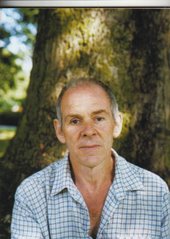
Since serving a 35 years prison sentence John Hirst has campaigned for prisoners rights and penal reform. Mr Hirst argues here that in the run up to a general election we should be asking “Why should a prisoner (or indeed anyone) seek the permission of the State to legally challenge the State?”
Read the rest of this entry