HMP Ford inmates 'fought as prison burned'
Inmates fought among themselves as an open prison was torched in a riot, a court has heard.
While some prisoners at Ford Open Prison in West Sussex smashed windows and set fire to buildings, others were trying to save their "home".
But those who tried to put the fires out were called "screws" by those causing the damage on on 1 January 2011, Hove Crown Court heard.
Seven men deny a charge of prison mutiny at the jail in Arundel.
They are Lee Roberts, 41, Thomas Regan, 23, Ryan Martin, 25, Lennie Franklin, 23, Roche Allen, 25, Paul Hadcroft, 25, and Carniel Francis, 25.
The trouble lasted 12 hours before the authorities regained control of the prison.
Shouting and threatening
Prosecutor Ian Acheson said inmates could sense tension in the air over breathalyser tests for alcohol which had taken place in the run-up to the new year.
He said one of the inmates described seeing Mr Allen and Mr Martin shouting and threatening to burn the prison down.
Mr Allen was hitting the window of the B wing office with a fire extinguisher, and Mr Martin and Mr Franklin were trying to lever the window away from the frame with a metal bar.
They were also lighting pieces of paper and putting them through the window.
Mr Acheson said one inmate picked up a fire extinguisher and joined others in trying to put the blaze out, receiving abuse from other prisoners.
Inmates also heard fellow prisoners smashing up the oast house and the mail room while bricks and stones were thrown against another building.
Mr Regan was seen by other inmates using a mop handle to try to break windows and saying something along the lines of: "We rule the prison, let's break into the office to get out our nicking sheets."
The court heard Mr Roberts was also involved in causing damage and could be heard threatening other prisoners who were trying to put fires out.
Mr Acheson said Mr Hadcroft was seen leaning through the window of the B wing office while trying to start a fire, while Mr Francis was spotted in an office wearing latex gloves and rifling through a brown folder.
Mr Roberts, Mr Martin, Mr Franklin, Mr Allen, Mr Hadcroft and Mr Francis have also pleaded not guilty to a charge of violent disorder.
Mr Roberts, Mr Regan, Mr Martin, Mr Franklin, Mr Allen and Mr Hadcroft deny a further charge of arson, being reckless as to whether life was endangered.
Mr Regan has pleaded guilty to violent disorder and Mr Roberts has pleaded guilty to an offence of arson in the association block.
The trial continues.
Site Meter
Saturday, January 21, 2012
Benefit cheat must pay back £10k
HESSLE: A benefit cheat has been ordered to pay back almost £10,000.
Diane Ransom, 51, of Boothferry Road, was also given a 12-month conditional discharge at Beverley Magistrates' Court.
Ransom admitted making false statements in order to obtain housing, council tax and income support benefits.
She submitted a claim in March 2009 stating that she was single and that her landlord was Tony Clisby.
Investigators discovered the couple were in fact married.
Ransom will also have to pay £400 costs, as well as £9,808.50 in housing benefit, council tax benefit and income support she received from March 2009 to February last year.
Andy Hardy, East Riding Council's fraud investigation manager, said: "This was a deliberate act intended to fraudulently obtain money from the public purse.
"Those who choose to deliberately obtain benefits dishonestly should be aware that it is only a matter of time before they are brought before the courts."
Comment: I cannot help wondering when expenses fiddling MPs and members of the House of Lords will be required to pay back what they fraudulently claimed?
HESSLE: A benefit cheat has been ordered to pay back almost £10,000.
Diane Ransom, 51, of Boothferry Road, was also given a 12-month conditional discharge at Beverley Magistrates' Court.
Ransom admitted making false statements in order to obtain housing, council tax and income support benefits.
She submitted a claim in March 2009 stating that she was single and that her landlord was Tony Clisby.
Investigators discovered the couple were in fact married.
Ransom will also have to pay £400 costs, as well as £9,808.50 in housing benefit, council tax benefit and income support she received from March 2009 to February last year.
Andy Hardy, East Riding Council's fraud investigation manager, said: "This was a deliberate act intended to fraudulently obtain money from the public purse.
"Those who choose to deliberately obtain benefits dishonestly should be aware that it is only a matter of time before they are brought before the courts."
Comment: I cannot help wondering when expenses fiddling MPs and members of the House of Lords will be required to pay back what they fraudulently claimed?
Hull City Council offers to take on Humber Bridge debt
A new deal has been proposed over the Humber Bridge debt that could see tolls fall.
The government agreed last year to clear £150m of the £330m owed and said tolls could be halved.
The four local councils on the bridge board met on Friday to discuss how the remaining debt could be managed.
At the meeting Hull City Council offered to underwrite the remaining £180m debt, paving the way for a toll cut within months.
The Chancellor made the offer to cut the bridge debt in his Autumn Statement last November.
It was proposed in return that the four local authorities on the bridge board should divide the remaining debt between them but one, North East Lincolnshire Council, was reluctant.
It suggested the larger authorities should take on more of the liability.
Hull City Council said on Friday that if an agreement to share the liability could not be reached then it was prepared to shoulder it alone.
The Labour-run authority said it was confident the government would accept its offer and tolls could be lowered from April.
That could see the cost of a single-crossing by a car fall to £1.50.
The Humber Bridge opened in 1981 and has an outstanding debt of £330m after it was financed with a £150m government loan, which rose due to interest.
The toll was raised from £2.70 to £3 in October.
A new deal has been proposed over the Humber Bridge debt that could see tolls fall.
The government agreed last year to clear £150m of the £330m owed and said tolls could be halved.
The four local councils on the bridge board met on Friday to discuss how the remaining debt could be managed.
At the meeting Hull City Council offered to underwrite the remaining £180m debt, paving the way for a toll cut within months.
The Chancellor made the offer to cut the bridge debt in his Autumn Statement last November.
It was proposed in return that the four local authorities on the bridge board should divide the remaining debt between them but one, North East Lincolnshire Council, was reluctant.
It suggested the larger authorities should take on more of the liability.
Hull City Council said on Friday that if an agreement to share the liability could not be reached then it was prepared to shoulder it alone.
The Labour-run authority said it was confident the government would accept its offer and tolls could be lowered from April.
That could see the cost of a single-crossing by a car fall to £1.50.
The Humber Bridge opened in 1981 and has an outstanding debt of £330m after it was financed with a £150m government loan, which rose due to interest.
The toll was raised from £2.70 to £3 in October.
Friday, January 20, 2012
Styal women's prison mental health unit 'shocking'
A special unit for women with mental health problems at a jail in Cheshire is "wholly unsuitable", an inspection has found.
Chief Inspector of Prisons Nick Hardwick said an unannounced visit found Styal prison had improved.
But he said the condition of the women in the mental health unit was "more shocking and distressing than anything I have yet seen on an inspection".
The Ministry of Justice said the unit could be supplemented or replaced.
'Very seriously damaged'
Inspectors found staff are overstretched at the prison's Keller unit.
"Despite the best efforts of the staff at Styal, the Keller unit remains a wholly unsuitable place to safely hold and manage very seriously damaged and mentally ill women," said Mr Hardwick.
"The staff I met on the Keller unit were deeply impressive. Nevertheless, the circumstances of the women on the Keller unit were more shocking and distressing than anything I have yet seen on an inspection.
"So long as these women remain in prison there is a need to ensure that they receive similar resources to those provided for the most disruptive men in close supervision."
The chief inspector said the inspection of the jail, near Wilmslow, was positive overall and it was apparent that the "upward curve" of recent improvements had been maintained.
He said a national review into vulnerable women in jail by Baroness Corston in 2007 had recommended a reduction of the number of women in jail.
This review was prompted by the death of six women in Styal between 2002 and 2003.
'Committed to building'
Mr Hardwick added: "It was therefore disappointing to find too many cases of women, some of whom were clearly mentally ill, serving very short prison sentences which served little purpose except to further disrupt sometimes already chaotic lives."
Michael Spurr, Chief Executive Officer of the National Offender Management Service (NOMS), said: "Overall this is a very positive report that recognises the continuing improvements made by Styal since the last inspection."
He added: "The governor and his staff are committed to building on the solid improvements identified in the inspection report.
"NOMS and its partners, including the National Health Service, are committed to enhancing the provision of care for those women with mental health and behavioural issues.
"The potential for provision of updated facilities to supplement or replace the Keller unit are being reviewed by NOMS."
A special unit for women with mental health problems at a jail in Cheshire is "wholly unsuitable", an inspection has found.
Chief Inspector of Prisons Nick Hardwick said an unannounced visit found Styal prison had improved.
But he said the condition of the women in the mental health unit was "more shocking and distressing than anything I have yet seen on an inspection".
The Ministry of Justice said the unit could be supplemented or replaced.
'Very seriously damaged'
Inspectors found staff are overstretched at the prison's Keller unit.
"Despite the best efforts of the staff at Styal, the Keller unit remains a wholly unsuitable place to safely hold and manage very seriously damaged and mentally ill women," said Mr Hardwick.
"The staff I met on the Keller unit were deeply impressive. Nevertheless, the circumstances of the women on the Keller unit were more shocking and distressing than anything I have yet seen on an inspection.
"So long as these women remain in prison there is a need to ensure that they receive similar resources to those provided for the most disruptive men in close supervision."
The chief inspector said the inspection of the jail, near Wilmslow, was positive overall and it was apparent that the "upward curve" of recent improvements had been maintained.
He said a national review into vulnerable women in jail by Baroness Corston in 2007 had recommended a reduction of the number of women in jail.
This review was prompted by the death of six women in Styal between 2002 and 2003.
'Committed to building'
Mr Hardwick added: "It was therefore disappointing to find too many cases of women, some of whom were clearly mentally ill, serving very short prison sentences which served little purpose except to further disrupt sometimes already chaotic lives."
Michael Spurr, Chief Executive Officer of the National Offender Management Service (NOMS), said: "Overall this is a very positive report that recognises the continuing improvements made by Styal since the last inspection."
He added: "The governor and his staff are committed to building on the solid improvements identified in the inspection report.
"NOMS and its partners, including the National Health Service, are committed to enhancing the provision of care for those women with mental health and behavioural issues.
"The potential for provision of updated facilities to supplement or replace the Keller unit are being reviewed by NOMS."
Cuban dissident dies in jail after hunger strike
Death of Wilmar Villar Mendoza, jailed in November for crimes against the state, blamed on mistreatment by Cuban government
Cuban president Raúl Castro: Cuba drew international condemnation when another imprisoned dissident, Orlando Zapata Tamayo, died in February 2010.
A 31-year-old jailed dissident, Wilmar Villar Mendoza, has died in eastern Cuba from the effects of a 56-day hunger strike and what fellow opposition activists believe was mistreatment by the Cuban government, according to a human rights activist.
Villar launched his hunger strike shortly after he was arrested in November, put on trial and sentenced to four years in prison for crimes including disobedience, resistance and crimes against the state, said Elizardo Sanchez of the Cuban Commission of Human Rights.
He said Villar had joined an opposition group called the Cuban Patriotic Union in the eastern province of Santiago de Cuba last summer and had been an active dissident since then.
He was placed in solitary confinement, which, combined with his hunger strike, caused serious health problems that led to his death on Thursday, Sanchez told Reuters.
He was taken to a hospital in Santiago de Cuba on 14 January as his condition deteriorated and died there.
"We hold the Cuban government categorically responsible because he died under their care. We consider this another avoidable death," Sanchez said.
Cuba drew international condemnation when another imprisoned dissident, Orlando Zapata Tamayo, died in February 2010 following an 85-day hunger strike.
The Cuban president, Raúl Castro, said Zapata was a common criminal, but his death is believed to have contributed to Castro's decision in the summer of 2010 to release 130 political prisoners in a deal brokered by the Roman Catholic church.
Zapata was classified a "prisoner of conscience" by Amnesty International but Villar's case has drawn little attention.
The Cuban government has not yet commented on Villar's death, but pro-government blogger Yohandry announced it in his blog, saying "the delinquent Wilmar Villar Mendoza died".
He predicted the death would bring criticism of Cuba from opponents of the Cuban government in the US.
"The scavengers are beginning to arrive. Another campaign against Cuba starts to take off," he wrote.
The dissident blogger Yoani Sanchez tweeted the news of Villar's death and asked "How many more have to die? How many more?"
Death of Wilmar Villar Mendoza, jailed in November for crimes against the state, blamed on mistreatment by Cuban government
Cuban president Raúl Castro: Cuba drew international condemnation when another imprisoned dissident, Orlando Zapata Tamayo, died in February 2010.
A 31-year-old jailed dissident, Wilmar Villar Mendoza, has died in eastern Cuba from the effects of a 56-day hunger strike and what fellow opposition activists believe was mistreatment by the Cuban government, according to a human rights activist.
Villar launched his hunger strike shortly after he was arrested in November, put on trial and sentenced to four years in prison for crimes including disobedience, resistance and crimes against the state, said Elizardo Sanchez of the Cuban Commission of Human Rights.
He said Villar had joined an opposition group called the Cuban Patriotic Union in the eastern province of Santiago de Cuba last summer and had been an active dissident since then.
He was placed in solitary confinement, which, combined with his hunger strike, caused serious health problems that led to his death on Thursday, Sanchez told Reuters.
He was taken to a hospital in Santiago de Cuba on 14 January as his condition deteriorated and died there.
"We hold the Cuban government categorically responsible because he died under their care. We consider this another avoidable death," Sanchez said.
Cuba drew international condemnation when another imprisoned dissident, Orlando Zapata Tamayo, died in February 2010 following an 85-day hunger strike.
The Cuban president, Raúl Castro, said Zapata was a common criminal, but his death is believed to have contributed to Castro's decision in the summer of 2010 to release 130 political prisoners in a deal brokered by the Roman Catholic church.
Zapata was classified a "prisoner of conscience" by Amnesty International but Villar's case has drawn little attention.
The Cuban government has not yet commented on Villar's death, but pro-government blogger Yohandry announced it in his blog, saying "the delinquent Wilmar Villar Mendoza died".
He predicted the death would bring criticism of Cuba from opponents of the Cuban government in the US.
"The scavengers are beginning to arrive. Another campaign against Cuba starts to take off," he wrote.
The dissident blogger Yoani Sanchez tweeted the news of Villar's death and asked "How many more have to die? How many more?"
Prisoners ran riot as only two guards were trained to restrain them
Prison guards were powerless to prevent a New Year's Day mutiny among inmates because too few were trained in restraint techniques, a court has heard.
The guards at Ford Open Prison had to surrender control after the rampaging criminals shouted "there are 550 of us and only five of you – what are you going to do?"
A group of around 30 masked and armed prisoners led the riot, looting and smashing up the buildings and setting fire to a whole block.
Workers were forced to retreat into their office because only two were trained prison guards. The other three were support grade staff.
Prison rules state guards can only use physical force when in groups of three or more, the court heard.
By the time the authorities restored calm 12 hours later more than £5m damage had been caused to the prison in Arundel, West Sussex.
Yesterday seven men appeared at Hove Crown Court charged with various offences including prison mutiny, arson to endanger life and violent disorder.
Ian Acheson, prosecutor, said resentment had grown among inmates over alcohol breath testing which had taken place in the run-up to New Year's Eve in December 2010.
He said that it culminated in tension erupting at he turn of New Year and the five staff in charge being overpowered.
The guards had found empty bottles of alcohol and music coming from one room which had been wedged shut from the inside.
Fire alarms were set off in A and B wings and shouting could be heard coming from an area of B wing, the court was told.
About 30 prisoners started to advance towards the staff, making threats, shouting and making "monkey" noises, he said.
Mr Acheson said one of the defendants, stepped forward and said: "There are 550 of us. There are five of you. We run the prison, what are you going to do?"
Many had obscured their faces by tying clothes around their heads, the court heard.
Then to shouts of "kill the ******* screws, let's do them" the rioters advanced, smashing windows and threatening staff.
Mr Acheson said the staff "very quickly appreciated that they were very much not wanted and to ensure their safety they would have to withdraw".
"That night there were only two because officer support grades, the different qualifying grade, are not allowed to use restraint technique at all," Mr Acheson said.
"As they withdrew and left the prisoners unsupervised in the prison the first words were, and repeated to the duty governor 'We've lost the prison'."
It rook 12 hours from when the alarm was raised for the riot to be brought under control.
Fire crews arrived at about 2am on New Year's Day but the engines were not allowed into the prison until trained riot officers deemed it safe.
Six men are charged with prison mutiny, arson to endanger life and violent disorder.
They are Lee Roberts, 40, Lenny Franklin, 23, Paul Hadcroft, 25, Ryan Martin, 24, Roche Allen, 25, Thomas Reegan, 23.
A seventh man Carneil Francis, 25, is charged with prison mutiny and violent disorder.
Roberts pleaded guilty to arson but not guilty to arson with intent to endanger life. Reegan pleaded guilty to violent disorder.
The hearing continues.
Prison guards were powerless to prevent a New Year's Day mutiny among inmates because too few were trained in restraint techniques, a court has heard.
The guards at Ford Open Prison had to surrender control after the rampaging criminals shouted "there are 550 of us and only five of you – what are you going to do?"
A group of around 30 masked and armed prisoners led the riot, looting and smashing up the buildings and setting fire to a whole block.
Workers were forced to retreat into their office because only two were trained prison guards. The other three were support grade staff.
Prison rules state guards can only use physical force when in groups of three or more, the court heard.
By the time the authorities restored calm 12 hours later more than £5m damage had been caused to the prison in Arundel, West Sussex.
Yesterday seven men appeared at Hove Crown Court charged with various offences including prison mutiny, arson to endanger life and violent disorder.
Ian Acheson, prosecutor, said resentment had grown among inmates over alcohol breath testing which had taken place in the run-up to New Year's Eve in December 2010.
He said that it culminated in tension erupting at he turn of New Year and the five staff in charge being overpowered.
The guards had found empty bottles of alcohol and music coming from one room which had been wedged shut from the inside.
Fire alarms were set off in A and B wings and shouting could be heard coming from an area of B wing, the court was told.
About 30 prisoners started to advance towards the staff, making threats, shouting and making "monkey" noises, he said.
Mr Acheson said one of the defendants, stepped forward and said: "There are 550 of us. There are five of you. We run the prison, what are you going to do?"
Many had obscured their faces by tying clothes around their heads, the court heard.
Then to shouts of "kill the ******* screws, let's do them" the rioters advanced, smashing windows and threatening staff.
Mr Acheson said the staff "very quickly appreciated that they were very much not wanted and to ensure their safety they would have to withdraw".
"That night there were only two because officer support grades, the different qualifying grade, are not allowed to use restraint technique at all," Mr Acheson said.
"As they withdrew and left the prisoners unsupervised in the prison the first words were, and repeated to the duty governor 'We've lost the prison'."
It rook 12 hours from when the alarm was raised for the riot to be brought under control.
Fire crews arrived at about 2am on New Year's Day but the engines were not allowed into the prison until trained riot officers deemed it safe.
Six men are charged with prison mutiny, arson to endanger life and violent disorder.
They are Lee Roberts, 40, Lenny Franklin, 23, Paul Hadcroft, 25, Ryan Martin, 24, Roche Allen, 25, Thomas Reegan, 23.
A seventh man Carneil Francis, 25, is charged with prison mutiny and violent disorder.
Roberts pleaded guilty to arson but not guilty to arson with intent to endanger life. Reegan pleaded guilty to violent disorder.
The hearing continues.
Why punish ex-offenders with a voting ban?
By Charles W. Colson, Published: January 19
Charles W. Colson is founder of Prison Fellowship, the nation’s largest outreach to prisoners, former prisoners and their families. A former special counsel to President Richard Nixon, he was convicted of an offense related to Watergate and served seven months in a federal prison.
In a heated presidential campaign, politicians have, like clockwork, started hitting each other over who is soft on crime. And here I thought we’d outgrown the Willie Horton era of playing political football with people’s lives.
In Florida, a political action committee supporting Mitt Romney ran an ad last week criticizing Rick Santorum for voting to restore voting rights to ex-offenders who have finished their sentences. The issue popped up again during Monday’s heated Republican debate. I have never endorsed a candidate, but I feel compelled to speak up about this effort to demonize anyone who votes to return civil rights to criminals who have paid their debt to society.
What is the objection to allowing past offenders to vote? Voting does not put anyone in danger. Sound public policy would teach us that if we want to turn ex-offenders into responsible citizens, we must demand of them responsible behavior. And once they demonstrate responsible behavior, what possible justification is there, beyond scoring political points during an election, for stripping them of their civil rights for the rest of their lives?
Restoring voting rights is an important way society can welcome back those who strayed, sometimes seriously, but are now on the right path. It costs taxpayers nothing, but it means a great deal to an ex-offender.
I served time in a federal prison. And while I paid my debt to society in less than a year, it took me 30 years to have my voting rights restored. Maybe I’m not a good example, having been part of a national political scandal. But what about a young person, say, in his early 20s, who is convicted of three minor drug offenses? Once he serves his time, grows up and straightens out his life, should he be denied the right to vote again?
I know politics is a bare-knuckled game, but demonizing an entire class of Americans for electoral gain is wrong.
Consider recent events in Mississippi, where Attorney General Jim Hood (D) has made an effort to overturn the pardons issued by outgoing governor Haley Barbour (R). As Barbour wrote in The Post this week, he recently pardoned 215 offenders, more than 90 percent of whom had been recommended for pardon by the state parole board. The most controversial pardons were given to four murderers and one robber, all of whom had served an average of more than 20 years in prison, had acknowledged responsibility for their crimes and had proved themselves trustworthy.
The power to pardon criminals is inherent in the executive power and is explicit in the U.S. Constitution and in all 50 state constitutions. The sovereign power of clemency has existed from ancient times. It provides a last opportunity for injustice to be righted or for people who have been rehabilitated to be restored as free citizens. I realize that the pardon process can be very difficult for victims and their families, but that power exists not just to correct mistakes but also to forgive.
The political flaps over pardons and voting rights for ex-felons raise the larger issue of how long we will exact invisible punishments on offenders after they have paid their debt to the community. Many offenders are barred from employment in jobs that have nothing to do with their crime. Many more are barred from public housing, grants for tuition aid or even licenses for practicing a trade, such as being a barber.
If we want these ex-offenders to become contributing members of the community, we should not kick the bottom rungs off the ladder they have to climb. Those steps are already difficult.
Making a political controversy over traditional mercies extended to ex-offenders may reap a short-term political gain, but the politicians who do so also make it harder for offenders to get back on their feet. And that definitely does not serve the common good.
By Charles W. Colson, Published: January 19
Charles W. Colson is founder of Prison Fellowship, the nation’s largest outreach to prisoners, former prisoners and their families. A former special counsel to President Richard Nixon, he was convicted of an offense related to Watergate and served seven months in a federal prison.
In a heated presidential campaign, politicians have, like clockwork, started hitting each other over who is soft on crime. And here I thought we’d outgrown the Willie Horton era of playing political football with people’s lives.
In Florida, a political action committee supporting Mitt Romney ran an ad last week criticizing Rick Santorum for voting to restore voting rights to ex-offenders who have finished their sentences. The issue popped up again during Monday’s heated Republican debate. I have never endorsed a candidate, but I feel compelled to speak up about this effort to demonize anyone who votes to return civil rights to criminals who have paid their debt to society.
What is the objection to allowing past offenders to vote? Voting does not put anyone in danger. Sound public policy would teach us that if we want to turn ex-offenders into responsible citizens, we must demand of them responsible behavior. And once they demonstrate responsible behavior, what possible justification is there, beyond scoring political points during an election, for stripping them of their civil rights for the rest of their lives?
Restoring voting rights is an important way society can welcome back those who strayed, sometimes seriously, but are now on the right path. It costs taxpayers nothing, but it means a great deal to an ex-offender.
I served time in a federal prison. And while I paid my debt to society in less than a year, it took me 30 years to have my voting rights restored. Maybe I’m not a good example, having been part of a national political scandal. But what about a young person, say, in his early 20s, who is convicted of three minor drug offenses? Once he serves his time, grows up and straightens out his life, should he be denied the right to vote again?
I know politics is a bare-knuckled game, but demonizing an entire class of Americans for electoral gain is wrong.
Consider recent events in Mississippi, where Attorney General Jim Hood (D) has made an effort to overturn the pardons issued by outgoing governor Haley Barbour (R). As Barbour wrote in The Post this week, he recently pardoned 215 offenders, more than 90 percent of whom had been recommended for pardon by the state parole board. The most controversial pardons were given to four murderers and one robber, all of whom had served an average of more than 20 years in prison, had acknowledged responsibility for their crimes and had proved themselves trustworthy.
The power to pardon criminals is inherent in the executive power and is explicit in the U.S. Constitution and in all 50 state constitutions. The sovereign power of clemency has existed from ancient times. It provides a last opportunity for injustice to be righted or for people who have been rehabilitated to be restored as free citizens. I realize that the pardon process can be very difficult for victims and their families, but that power exists not just to correct mistakes but also to forgive.
The political flaps over pardons and voting rights for ex-felons raise the larger issue of how long we will exact invisible punishments on offenders after they have paid their debt to the community. Many offenders are barred from employment in jobs that have nothing to do with their crime. Many more are barred from public housing, grants for tuition aid or even licenses for practicing a trade, such as being a barber.
If we want these ex-offenders to become contributing members of the community, we should not kick the bottom rungs off the ladder they have to climb. Those steps are already difficult.
Making a political controversy over traditional mercies extended to ex-offenders may reap a short-term political gain, but the politicians who do so also make it harder for offenders to get back on their feet. And that definitely does not serve the common good.
Thursday, January 19, 2012
Man took his dead mother home on bus
Son wanted to get his mother home to Chorley after she died suddenly during day trip to Lancaster
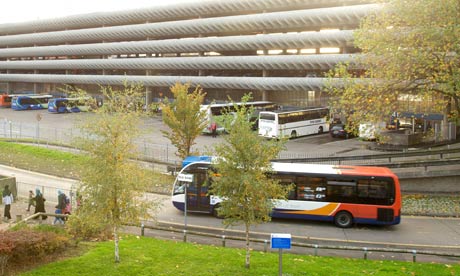
After arriving at Preston bus station, the man pushed his dead mother in a wheelchair on to a bus for Chorley. Photograph: Alamy
A man took his mother's dead body on a 30-mile bus journey after she died during a day trip they had enjoyed together.
The 52-year-old man, who is thought to have learning difficulties, wanted to get his 88-year-old mother home when she died suddenly on a trip to Lancaster on Monday.
The woman, who has not been identified, is believed to have died on the bus on the journey back from Lancaster to Preston. Police said the woman's death was not being treated as suspicious.
A spokesman for Lancashire police said the woman's son did not know what to do. "He wanted to just get his mother home. It is just very tragic."
After arriving at Preston bus station, the man pushed his mother in her wheelchair off the bus and caught a second bus to Chorley. He got off the Stagecoach 125 service at Chorley at around 8.30pm on Monday.
Station staff and fellow passengers became suspicious and police were called as the man left the bus station with his mother in the wheelchair. CCTV footage was examined and the man was stopped by officers on Friday Street in the town.
Ambulance staff declared the woman dead at the scene.
The police spokesman said the death was deemed to be non-suspicious. "We spoke to a number of people at the time. We were there for several hours. This man has lost his mother and was struggling to know how to deal with it."
A fellow passenger on the bus to Chorley said he saw a security guard follow the man at Chorley interchange bus station.
He told the Lancashire Evening Post: "I was not paying attention, I did not realise until I got off the bus and the security guard was asking 'Does she need an ambulance? Is she OK?'.
"He just ran off along the bus station and the security guard chased after him. The bus driver was with him. I was shocked when I found out the lady was dead. I had not noticed but it was the security guard who said 'I think she has passed away'."
Son wanted to get his mother home to Chorley after she died suddenly during day trip to Lancaster
After arriving at Preston bus station, the man pushed his dead mother in a wheelchair on to a bus for Chorley. Photograph: Alamy
A man took his mother's dead body on a 30-mile bus journey after she died during a day trip they had enjoyed together.
The 52-year-old man, who is thought to have learning difficulties, wanted to get his 88-year-old mother home when she died suddenly on a trip to Lancaster on Monday.
The woman, who has not been identified, is believed to have died on the bus on the journey back from Lancaster to Preston. Police said the woman's death was not being treated as suspicious.
A spokesman for Lancashire police said the woman's son did not know what to do. "He wanted to just get his mother home. It is just very tragic."
After arriving at Preston bus station, the man pushed his mother in her wheelchair off the bus and caught a second bus to Chorley. He got off the Stagecoach 125 service at Chorley at around 8.30pm on Monday.
Station staff and fellow passengers became suspicious and police were called as the man left the bus station with his mother in the wheelchair. CCTV footage was examined and the man was stopped by officers on Friday Street in the town.
Ambulance staff declared the woman dead at the scene.
The police spokesman said the death was deemed to be non-suspicious. "We spoke to a number of people at the time. We were there for several hours. This man has lost his mother and was struggling to know how to deal with it."
A fellow passenger on the bus to Chorley said he saw a security guard follow the man at Chorley interchange bus station.
He told the Lancashire Evening Post: "I was not paying attention, I did not realise until I got off the bus and the security guard was asking 'Does she need an ambulance? Is she OK?'.
"He just ran off along the bus station and the security guard chased after him. The bus driver was with him. I was shocked when I found out the lady was dead. I had not noticed but it was the security guard who said 'I think she has passed away'."
Cameron to give an extra £17.5bn to bail out the Euro
Trouble ahead for Cameron as IMF seeks extra £17.5bn funding
Body's desire for buffer to stabilise euro currency crisis could spark Eurosceptic rebellion
David Cameron faces a showdown with Tory Eurosceptics over a move to increase Britain's contribution to the International Monetary Fund by up to £17.5bn because of the single currency crisis.
The Prime Minister would have to face a Commons vote before being allowed to hand over the extra cash, inevitably triggering a damaging backbench rebellion.
The IMF warned yesterday that it would need to ask member states, including Britain, for another $600bn (£390bn) to fulfil its mandate of stabilising the global economy. A spokesman said the Fund's resources needed to more than double from $400bn to $1trn to insulate the world against an intensification of the euro's woes. Britain's share of the increase could be $27bn (£17.5bn).
George Osborne, the Chancellor, has already warned that Britain's contribution to IMF coffers could have to increase. And Downing Street confirmed yesterday he was ready to put any "decent" request from the IMF for more money to MPs for approval.
But the potential scale of the demand would infuriate Tory Eurosceptics, who accuse members of the eurozone of failing to take tough enough action to boost their own bailout mechanism. Douglas Carswell MP said: "George Osborne needs to get a grip, and instead of drifting along with Treasury advice, he needs to make clear there will be no more bailouts."
Tory MP Peter Bone said: "The Government would have a good deal of trouble getting this through."
"We are absolutely against putting money into countries where they are in the euro and have no way of devaluing their currencies," he added.
Eighty-one Tory MPs defied their whips in October to demand a referendum on Britain's place in the European Union. Given the state of Euroscepticism on his backbenches, Mr Cameron's fate could rest with Labour's attitude to boosting the IMF.
The IMF said yesterday that it wanted to raise another $500bn in "additional lending resources" and $100bn as a "protection buffer".
Its belief that its resources urgently need to increase signals that it expects the present stabilisation efforts of eurozone leaders to fail and that large European economies, such as Spain and Italy, will need some form of support before too long.
The Chancellor, who has said that it is not the IMF's job to support currencies, will lobby for any additional funds from Britain to be pledged to the IMF's general resources, rather than a special account to help eurozone nations. But there would be nothing to stop the IMF using the additional resources to help Italy or Spain if they did need assistance.
Speaking yesterday after talks with Italian Prime Minister Mario Monti, Mr Cameron said: "We are founder members and great supporters of the IMF. It's a key international institution.
"We set out our conditions at the Cannes G20 summit about expansion of the IMF. We believe the IMF must always lend to countries, not to currencies. We would only act if that was with others, not just as part of a eurozone measure. But above all, we want to see the eurozone standing behind its own currency."
Comment: Tory Eurosceptics are like dinosours. They should be extinct and their bones in a museum.
Trouble ahead for Cameron as IMF seeks extra £17.5bn funding
Body's desire for buffer to stabilise euro currency crisis could spark Eurosceptic rebellion
David Cameron faces a showdown with Tory Eurosceptics over a move to increase Britain's contribution to the International Monetary Fund by up to £17.5bn because of the single currency crisis.
The Prime Minister would have to face a Commons vote before being allowed to hand over the extra cash, inevitably triggering a damaging backbench rebellion.
The IMF warned yesterday that it would need to ask member states, including Britain, for another $600bn (£390bn) to fulfil its mandate of stabilising the global economy. A spokesman said the Fund's resources needed to more than double from $400bn to $1trn to insulate the world against an intensification of the euro's woes. Britain's share of the increase could be $27bn (£17.5bn).
George Osborne, the Chancellor, has already warned that Britain's contribution to IMF coffers could have to increase. And Downing Street confirmed yesterday he was ready to put any "decent" request from the IMF for more money to MPs for approval.
But the potential scale of the demand would infuriate Tory Eurosceptics, who accuse members of the eurozone of failing to take tough enough action to boost their own bailout mechanism. Douglas Carswell MP said: "George Osborne needs to get a grip, and instead of drifting along with Treasury advice, he needs to make clear there will be no more bailouts."
Tory MP Peter Bone said: "The Government would have a good deal of trouble getting this through."
"We are absolutely against putting money into countries where they are in the euro and have no way of devaluing their currencies," he added.
Eighty-one Tory MPs defied their whips in October to demand a referendum on Britain's place in the European Union. Given the state of Euroscepticism on his backbenches, Mr Cameron's fate could rest with Labour's attitude to boosting the IMF.
The IMF said yesterday that it wanted to raise another $500bn in "additional lending resources" and $100bn as a "protection buffer".
Its belief that its resources urgently need to increase signals that it expects the present stabilisation efforts of eurozone leaders to fail and that large European economies, such as Spain and Italy, will need some form of support before too long.
The Chancellor, who has said that it is not the IMF's job to support currencies, will lobby for any additional funds from Britain to be pledged to the IMF's general resources, rather than a special account to help eurozone nations. But there would be nothing to stop the IMF using the additional resources to help Italy or Spain if they did need assistance.
Speaking yesterday after talks with Italian Prime Minister Mario Monti, Mr Cameron said: "We are founder members and great supporters of the IMF. It's a key international institution.
"We set out our conditions at the Cannes G20 summit about expansion of the IMF. We believe the IMF must always lend to countries, not to currencies. We would only act if that was with others, not just as part of a eurozone measure. But above all, we want to see the eurozone standing behind its own currency."
Comment: Tory Eurosceptics are like dinosours. They should be extinct and their bones in a museum.
Goldman Sachs pays out bonuses of £8bn!
Investment bank's pay and bonuses for the year equal to the size of Albania's GDP
Goldman Sachs, the City of London and Wall Street totem, will divvy up a $12.2bn (£7.9bn) pay and bonus pool among its staff, despite public and political anger and in the face of crumbling revenues and profits.
Even though the investment bank said it had cut its remuneration bill – salaries, bonuses and benefits – by more than a fifth, it still came out to about the size of the GDP of Albania and prompted an outcry from unions.
The figures were revealed alongside Goldman's latest annual results, which showed how post-credit crisis regulations and volatility in the eurozone are hurting bank profits. Revenues fell 26 per cent in 2011, the bank said, and profits slumped by 47 per cent to $4.4bn.
Some 42.4 per cent of revenues will go to employees, in the form of salaries, bonuses and benefits, the company said, up from 40.5 per cent last year, though a bank spokeswoman said that an increase in basic pay and benefits was the main reason for the increase.
Year-end bonuses, handed out in the coming weeks, will be down more sharply than revenues, she said.
Goldman also said it diverted $78m from its remuneration pool to fund Goldman Sachs Gives, its charitable organisation.
The bank has shed staff in some of its worst-hit operations and said it expected to save $1.4bn in annual costs once the cuts were fully implemented. It ended the year with 33,300 employees, 2,400 fewer than in 2010. It employs over 5,000 people in London.
The average remuneration for Goldman employees worked out to $367,057 – perhaps the most hotly anticipated single number to come out of the finance industry since the "Occupy" movements turned up the heat on banks. The figure this time last year was $430,700.
TUC general secretary, Brendan Barber, accused Goldman of "brazenly defying their own sliding profits by dishing out pay and top bonuses worth almost £240,000 a head". He said: "This latest example of excessive rewards for mediocrity should give the Government the green light to get tough on top pay. Ministers should start by putting workers on remuneration committees and making pay and bonuses above £260,000 liable for corporation tax."
Goldman is understood to be concentrating the bonus reductions among higher-level employees. The average partner faces cuts of one-half or more, though they could still be taking home between $3m and $6.5m.
Across the investment banking industry, bonuses are expected to be up to 40 per cent lower overall this season, compared to a year ago. As well as the ongoing nervousness caused by eurozone turmoil, which has hit bond trading and curtailed the big corporate deals that Goldman advises on, there has been a wider drop in speculative activity that reflects the lessons learned from the credit crisis.
Lloyd Blankfein, Goldman chief executive, held out the hope of an upturn in the near future. "This past year was dominated by global macro-economic concerns which significantly affected our clients' risk tolerance and willingness to transact," he said. "As economies and markets improve – and we see encouraging signs of this – Goldman Sachs is very well positioned."
Stock market investors hailed the bank's ability to push bonuses lower – not something that seemed possible on Wall Street in the boom years, when employees routinely threatened to walk out if they didn't get their expected payout. Goldman's profit downturn was also less bad than some forecasters had predicted, so its shares jumped more than 6 per cent in early trading.
Comment: When we reward failure it's time to pack up.
Investment bank's pay and bonuses for the year equal to the size of Albania's GDP
Goldman Sachs, the City of London and Wall Street totem, will divvy up a $12.2bn (£7.9bn) pay and bonus pool among its staff, despite public and political anger and in the face of crumbling revenues and profits.
Even though the investment bank said it had cut its remuneration bill – salaries, bonuses and benefits – by more than a fifth, it still came out to about the size of the GDP of Albania and prompted an outcry from unions.
The figures were revealed alongside Goldman's latest annual results, which showed how post-credit crisis regulations and volatility in the eurozone are hurting bank profits. Revenues fell 26 per cent in 2011, the bank said, and profits slumped by 47 per cent to $4.4bn.
Some 42.4 per cent of revenues will go to employees, in the form of salaries, bonuses and benefits, the company said, up from 40.5 per cent last year, though a bank spokeswoman said that an increase in basic pay and benefits was the main reason for the increase.
Year-end bonuses, handed out in the coming weeks, will be down more sharply than revenues, she said.
Goldman also said it diverted $78m from its remuneration pool to fund Goldman Sachs Gives, its charitable organisation.
The bank has shed staff in some of its worst-hit operations and said it expected to save $1.4bn in annual costs once the cuts were fully implemented. It ended the year with 33,300 employees, 2,400 fewer than in 2010. It employs over 5,000 people in London.
The average remuneration for Goldman employees worked out to $367,057 – perhaps the most hotly anticipated single number to come out of the finance industry since the "Occupy" movements turned up the heat on banks. The figure this time last year was $430,700.
TUC general secretary, Brendan Barber, accused Goldman of "brazenly defying their own sliding profits by dishing out pay and top bonuses worth almost £240,000 a head". He said: "This latest example of excessive rewards for mediocrity should give the Government the green light to get tough on top pay. Ministers should start by putting workers on remuneration committees and making pay and bonuses above £260,000 liable for corporation tax."
Goldman is understood to be concentrating the bonus reductions among higher-level employees. The average partner faces cuts of one-half or more, though they could still be taking home between $3m and $6.5m.
Across the investment banking industry, bonuses are expected to be up to 40 per cent lower overall this season, compared to a year ago. As well as the ongoing nervousness caused by eurozone turmoil, which has hit bond trading and curtailed the big corporate deals that Goldman advises on, there has been a wider drop in speculative activity that reflects the lessons learned from the credit crisis.
Lloyd Blankfein, Goldman chief executive, held out the hope of an upturn in the near future. "This past year was dominated by global macro-economic concerns which significantly affected our clients' risk tolerance and willingness to transact," he said. "As economies and markets improve – and we see encouraging signs of this – Goldman Sachs is very well positioned."
Stock market investors hailed the bank's ability to push bonuses lower – not something that seemed possible on Wall Street in the boom years, when employees routinely threatened to walk out if they didn't get their expected payout. Goldman's profit downturn was also less bad than some forecasters had predicted, so its shares jumped more than 6 per cent in early trading.
Comment: When we reward failure it's time to pack up.
Wednesday, January 18, 2012
Not only is David Cameron Billy No Mates in Europe, he's also Billy Liar!
David Cameron: Decision to block deportation of terrorist Abu Qatada 'immensely frustrating'
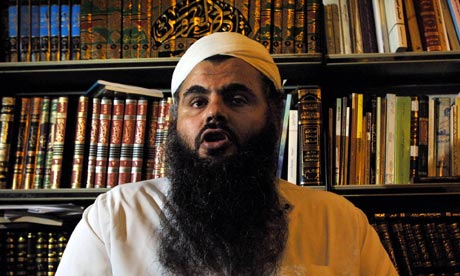
The Prime Minister vowed to push for reforms in the European Court of Human Rights after radical cleric Abu Qatada, described as "Osama bin Laden's right-hand man in Europe", won his appeal against against the UK's efforts to deport him.
At Prime Minister's Questions, Mr Cameron said: "It's immensely frustrating. I do think a country like Britain, that has got such a long tradition of human rights, should be able to deport people who mean us harm.
"That principle is vitally important. We're not just going to have strong rhetoric about it - I'm going to Strasbourg next week to make the argument that, as we are chairing the Council of Europe, this is a good time to actually make reforms to the European Court of Human Rights and make sure it acts in a more proportionate way."
Comment: It's immensely frustrating to have won a case against the UK in the ECtHR over 6 years ago and that the UK has failed to remedy this breach of human rights. The UK has a long tradition of breaching human rights, the ECtHR statistics bear this out. So, why is David Cameron lying?
The ECtHR is undergoing reforms. However, David Cameron is failing to mention that Strasbourg is demanding that the UK undergo reforms to ensure human rights and to provide an effective remedy when they are breached.
David Cameron: Decision to block deportation of terrorist Abu Qatada 'immensely frustrating'
The Prime Minister vowed to push for reforms in the European Court of Human Rights after radical cleric Abu Qatada, described as "Osama bin Laden's right-hand man in Europe", won his appeal against against the UK's efforts to deport him.
At Prime Minister's Questions, Mr Cameron said: "It's immensely frustrating. I do think a country like Britain, that has got such a long tradition of human rights, should be able to deport people who mean us harm.
"That principle is vitally important. We're not just going to have strong rhetoric about it - I'm going to Strasbourg next week to make the argument that, as we are chairing the Council of Europe, this is a good time to actually make reforms to the European Court of Human Rights and make sure it acts in a more proportionate way."
Comment: It's immensely frustrating to have won a case against the UK in the ECtHR over 6 years ago and that the UK has failed to remedy this breach of human rights. The UK has a long tradition of breaching human rights, the ECtHR statistics bear this out. So, why is David Cameron lying?
The ECtHR is undergoing reforms. However, David Cameron is failing to mention that Strasbourg is demanding that the UK undergo reforms to ensure human rights and to provide an effective remedy when they are breached.
Cameron steps up efforts to heal rifts with Europe
By George Parker in London and Peter Spiegel in Brussels
David Cameron stepped up his efforts on Wednesday to repair Britain’s strained relations in the European Union, as he joined forces with Mario Monti, Italy’s new prime minister, in promising to deepen the single market.
Mr Cameron and Nick Clegg, deputy prime minister, have engaged in a little-noticed but intensive round of diplomacy in the weeks since Britain deployed its veto in Brussels treaty talks in the early hours of December 9.
An EU summit at the end of this month – devoted to developing a European growth strategy – has given Britain an early chance to get back on the front foot after what Mr Clegg admitted was a “damaging” rift with its 26 partners.
Downing St admitted that Mr Cameron has not spoken to Nicolas Sarkozy since that night in Brussels, but the prime minister has been active in trying to place himself in an alliance of liberal-minded EU leaders who feel uncomfortable with the French president’s European vision.
“There are clearly now two Europes,” Mr Sarkozy said last month. “One that wants more solidarity and regulation between its members, and the other that is attached to the sole logic of the single market.”
Mr Cameron may be isolated on the question of a new eurozone fiscal treaty, but there are many other leaders who share his belief that Europe can only escape its debt spiral if it commits itself to breaking down barriers in the single market.
Angela Merkel, German chancellor, is among those who want Britain at the table when single market issues are being discussed, not least because of her country’s dependence on open markets.
Ms Merkel telephoned Mr Cameron in his Oxfordshire constituency last month to explain that she did not want Britain pushed to the sidelines and to reiterate her insistence that Britain would “remain an important partner”.
The German chancellor insisted that Britain should have “observer status” in the drawing up of a new fiscal compact for the eurozone and has resisted French suggestions that the treaty should be expanded to cover single market issues.
But Mr Cameron has also been working his network of northern European leaders – typically just as committed to open markets as the UK – that he first assembled at a Baltic-Nordic summit in London in January 2011, including his friend Fredrik Reinfeldt, Sweden’s prime minister.
Mark Rutte, the young Dutch prime minister, was in London last week for a summit hosted by Mr Clegg (a Dutch speaker), where the assembled leaders and European commissioners from liberal parties across the EU vowed to press for expansion of the single market.
Among those commissioners is Olli Rehn, EU monetary affairs commissioner, who was an Oxford contemporary of George Osborne, chancellor, and Karel De Gucht, the Belgium trade commissioner.
Despite a historically rocky relationship with the UK, the European Commission has emerged as one of the strongest allies of London in fighting against Mr Sarkozy’s efforts to create a “two-speed Europe”.
Both José Manuel Barroso, the anglophile Commission president, and Mr Rehn have argued that nearly everything Germany would like in a new treaty could be accomplished through normal EU legislative procedures, where Britain would have its normal say.
Meanwhile, Mr Cameron has been on the phone to Helle Thorning-Schmidt, the new Danish prime minister, who wants to use her EU presidency to heal rifts in Europe. She sees Britain as having a valuable contribution to make on issues such as trade and regulation. Another key British ally is Enda Kenny, Irish premier.
However, perhaps the most unexpected upside of the eurozone crisis – from a British point of view – is the appointment of Mario Monti as Italian prime minister, a champion of free markets dating back to his time as a highly respected European commissioner.
Both leaders committed themselves in Downing St to championing the single market in areas such as services, the digital economy and energy at the Brussels summit on January 30 – and Mr Monti stressed the need to ensure the rules are rigorously enforced.
By George Parker in London and Peter Spiegel in Brussels
David Cameron stepped up his efforts on Wednesday to repair Britain’s strained relations in the European Union, as he joined forces with Mario Monti, Italy’s new prime minister, in promising to deepen the single market.
Mr Cameron and Nick Clegg, deputy prime minister, have engaged in a little-noticed but intensive round of diplomacy in the weeks since Britain deployed its veto in Brussels treaty talks in the early hours of December 9.
An EU summit at the end of this month – devoted to developing a European growth strategy – has given Britain an early chance to get back on the front foot after what Mr Clegg admitted was a “damaging” rift with its 26 partners.
Downing St admitted that Mr Cameron has not spoken to Nicolas Sarkozy since that night in Brussels, but the prime minister has been active in trying to place himself in an alliance of liberal-minded EU leaders who feel uncomfortable with the French president’s European vision.
“There are clearly now two Europes,” Mr Sarkozy said last month. “One that wants more solidarity and regulation between its members, and the other that is attached to the sole logic of the single market.”
Mr Cameron may be isolated on the question of a new eurozone fiscal treaty, but there are many other leaders who share his belief that Europe can only escape its debt spiral if it commits itself to breaking down barriers in the single market.
Angela Merkel, German chancellor, is among those who want Britain at the table when single market issues are being discussed, not least because of her country’s dependence on open markets.
Ms Merkel telephoned Mr Cameron in his Oxfordshire constituency last month to explain that she did not want Britain pushed to the sidelines and to reiterate her insistence that Britain would “remain an important partner”.
The German chancellor insisted that Britain should have “observer status” in the drawing up of a new fiscal compact for the eurozone and has resisted French suggestions that the treaty should be expanded to cover single market issues.
But Mr Cameron has also been working his network of northern European leaders – typically just as committed to open markets as the UK – that he first assembled at a Baltic-Nordic summit in London in January 2011, including his friend Fredrik Reinfeldt, Sweden’s prime minister.
Mark Rutte, the young Dutch prime minister, was in London last week for a summit hosted by Mr Clegg (a Dutch speaker), where the assembled leaders and European commissioners from liberal parties across the EU vowed to press for expansion of the single market.
Among those commissioners is Olli Rehn, EU monetary affairs commissioner, who was an Oxford contemporary of George Osborne, chancellor, and Karel De Gucht, the Belgium trade commissioner.
Despite a historically rocky relationship with the UK, the European Commission has emerged as one of the strongest allies of London in fighting against Mr Sarkozy’s efforts to create a “two-speed Europe”.
Both José Manuel Barroso, the anglophile Commission president, and Mr Rehn have argued that nearly everything Germany would like in a new treaty could be accomplished through normal EU legislative procedures, where Britain would have its normal say.
Meanwhile, Mr Cameron has been on the phone to Helle Thorning-Schmidt, the new Danish prime minister, who wants to use her EU presidency to heal rifts in Europe. She sees Britain as having a valuable contribution to make on issues such as trade and regulation. Another key British ally is Enda Kenny, Irish premier.
However, perhaps the most unexpected upside of the eurozone crisis – from a British point of view – is the appointment of Mario Monti as Italian prime minister, a champion of free markets dating back to his time as a highly respected European commissioner.
Both leaders committed themselves in Downing St to championing the single market in areas such as services, the digital economy and energy at the Brussels summit on January 30 – and Mr Monti stressed the need to ensure the rules are rigorously enforced.
Only judges, not MPs, will defend human rights
By Vernon Bogdanor
January 18 2012 12:01AM
We should have more faith in the courts than Parliament to protect unpopular minorities
Judges, Francis Bacon believed, should be lions but “lions under the throne”, “circumspect that they do not check or oppose any points of sovereignty”. But, in Britain, the sovereignty of Parliament has come to be qualified by the rule of law, as exemplified in the Human Rights Act. What happens, I once asked a senior judge, if the two principles conflict? “That”, the judge replied, smiling, “is a question that ought not to be asked.”
But it has now been asked by the newest member of our Supreme Court, Jonathan Sumption, who believes that judges are in danger of becoming too political. Lord Sumption recently warned that the Human Rights Act (HRA) has moved issues such as immigration, penal policy, security and policing, privacy and freedom of expression “out of the political arena altogether, and into the domain of judicial decision-making where public accountability has no place”. Judges, not politicians, are coming to decide if prisoners should vote, or sex offenders be allowed a right of review.
Britain, however, is one of the few Council of Europe member states not to have incorporated the European Convention on Human Rights into its laws. Article 13 of the Convention requires “an effective remedy before a national authority”. Yet that is not part of the HRA. The only remedy if rights are infringed lies at the discretion of Parliament or the Government. Even though we now have a Supreme Court, all it can do is to issue declarations of incompatibility that are, in the words of the LSE law professor Conor Gearty, merely “courteous requests for a conversation, not pronouncements of truth from on high”.
To someone whose rights are infringed, a court can only say that the remedy lies with Parliament or, alternatively, your rights would have been infringed if you had any, but because Parliament is sovereign, you cannot enjoy rights against Parliament.
Our judges have less power, not more, than in countries such as Germany, where they can strike down legislation infringing human rights. But is there any reason to believe that our parliamentarians are so much more sensitive to abuses than legislators in other countries that they, rather than judges, should remain the final court of appeal on human rights matters?
The presumption that a majority, having won power in a free election, can govern as it wishes is dangerous. In Germany, the Nazi Party in two free elections in 1932 secured a higher vote than any other party; while, more recently, Iranians voted in 1980 for a theocratic republic in which human rights are ignored. In Northern Ireland from 1922 to 1972 the Catholic minority were treated as second-class citizens.
Parliamentarians are vulnerable to moral panics. During an IRA bombing campaign in 1974, Lord Scarman declared: “When times are normal and fear is not stalking the land, English law sturdily protects the freedom of the individual and respects human personality. But when times are abnormally alive with fear and prejudice, the common law is at a disadvantage: it cannot resist the will, however, frightened and prejudiced, it may be, of Parliament”. That was why he became the first prominent advocate of a British Bill of Rights.
Of course, large ethnic and religious minorities can ensure that their rights are respected through the ballot box. But many of the minorities protected by the HRA are small, unpopular and vulnerable: asylum seekers, prisoners, terrorist suspects. Only the courts can ensure that their rights are protected. For the Act protects the rights not just of nice people such as ourselves but people who are not so nice, such as Abu Qatada, whose deportation has been stopped by the European Court of Human Rights. (Incidentally, our law lords wanted to deport Qatada.) Lord Sumption also complains that the European convention “has been construed as attributing rights to humans simply by virtue of their humanity, irrespective of their membership of any particular legal or national community”. Echoing Edmund Burke, he argues that “rights are necessarily claims against the claimant’s own community, and in a democracy they depend for their legitimacy on a measure of recognition by that community”. Yet, “extremes apart, political communities may and do legitimately differ on what rights should be recognised”.
The Convention was, of course, established as a protest against this sort of cultural relativism. The HRA is founded on the belief that human rights are fundamental and flow from our common humanity, and do not depend on the norms of the community in which we happen to live. These rights are more likely to be protected by judges than by politicians.
British constitutional thinking has traditionally emphasised the sovereignty of Parliament. The time has come to play down that as we journey towards a true constitutional state in which judges come to be the guardians of our fundamental rights.
Vernon Bogdanor is Research Professor at the Institute of Contemporary History, King’s College London, and author of The Coalition and the Constitution (Hart)
Source: The Times (£)
By Vernon Bogdanor
January 18 2012 12:01AM
We should have more faith in the courts than Parliament to protect unpopular minorities
Judges, Francis Bacon believed, should be lions but “lions under the throne”, “circumspect that they do not check or oppose any points of sovereignty”. But, in Britain, the sovereignty of Parliament has come to be qualified by the rule of law, as exemplified in the Human Rights Act. What happens, I once asked a senior judge, if the two principles conflict? “That”, the judge replied, smiling, “is a question that ought not to be asked.”
But it has now been asked by the newest member of our Supreme Court, Jonathan Sumption, who believes that judges are in danger of becoming too political. Lord Sumption recently warned that the Human Rights Act (HRA) has moved issues such as immigration, penal policy, security and policing, privacy and freedom of expression “out of the political arena altogether, and into the domain of judicial decision-making where public accountability has no place”. Judges, not politicians, are coming to decide if prisoners should vote, or sex offenders be allowed a right of review.
Britain, however, is one of the few Council of Europe member states not to have incorporated the European Convention on Human Rights into its laws. Article 13 of the Convention requires “an effective remedy before a national authority”. Yet that is not part of the HRA. The only remedy if rights are infringed lies at the discretion of Parliament or the Government. Even though we now have a Supreme Court, all it can do is to issue declarations of incompatibility that are, in the words of the LSE law professor Conor Gearty, merely “courteous requests for a conversation, not pronouncements of truth from on high”.
To someone whose rights are infringed, a court can only say that the remedy lies with Parliament or, alternatively, your rights would have been infringed if you had any, but because Parliament is sovereign, you cannot enjoy rights against Parliament.
Our judges have less power, not more, than in countries such as Germany, where they can strike down legislation infringing human rights. But is there any reason to believe that our parliamentarians are so much more sensitive to abuses than legislators in other countries that they, rather than judges, should remain the final court of appeal on human rights matters?
The presumption that a majority, having won power in a free election, can govern as it wishes is dangerous. In Germany, the Nazi Party in two free elections in 1932 secured a higher vote than any other party; while, more recently, Iranians voted in 1980 for a theocratic republic in which human rights are ignored. In Northern Ireland from 1922 to 1972 the Catholic minority were treated as second-class citizens.
Parliamentarians are vulnerable to moral panics. During an IRA bombing campaign in 1974, Lord Scarman declared: “When times are normal and fear is not stalking the land, English law sturdily protects the freedom of the individual and respects human personality. But when times are abnormally alive with fear and prejudice, the common law is at a disadvantage: it cannot resist the will, however, frightened and prejudiced, it may be, of Parliament”. That was why he became the first prominent advocate of a British Bill of Rights.
Of course, large ethnic and religious minorities can ensure that their rights are respected through the ballot box. But many of the minorities protected by the HRA are small, unpopular and vulnerable: asylum seekers, prisoners, terrorist suspects. Only the courts can ensure that their rights are protected. For the Act protects the rights not just of nice people such as ourselves but people who are not so nice, such as Abu Qatada, whose deportation has been stopped by the European Court of Human Rights. (Incidentally, our law lords wanted to deport Qatada.) Lord Sumption also complains that the European convention “has been construed as attributing rights to humans simply by virtue of their humanity, irrespective of their membership of any particular legal or national community”. Echoing Edmund Burke, he argues that “rights are necessarily claims against the claimant’s own community, and in a democracy they depend for their legitimacy on a measure of recognition by that community”. Yet, “extremes apart, political communities may and do legitimately differ on what rights should be recognised”.
The Convention was, of course, established as a protest against this sort of cultural relativism. The HRA is founded on the belief that human rights are fundamental and flow from our common humanity, and do not depend on the norms of the community in which we happen to live. These rights are more likely to be protected by judges than by politicians.
British constitutional thinking has traditionally emphasised the sovereignty of Parliament. The time has come to play down that as we journey towards a true constitutional state in which judges come to be the guardians of our fundamental rights.
Vernon Bogdanor is Research Professor at the Institute of Contemporary History, King’s College London, and author of The Coalition and the Constitution (Hart)
Source: The Times (£)
Judge Martin Steiger QC appears to have lost the plot somewhat!
Gang members walk free from court after leaving man for dead
Daniel Chrapkowski and Thomas Lane celebrated outside Manchester Crown Court after they were given non-custodial sentences for their part in a vicious assault which left an innocent man for dead.
Gang members walk free from court after leaving man for dead
Daniel Chrapkowski and Thomas Lane celebrated outside Manchester Crown Court after they were given non-custodial sentences for their part in a vicious assault which left an innocent man for dead.
Lithuanian child rapist allowed into UK
A senior judge has asked why a Lithuanian sex offender was allowed into the UK when he had a previous conviction for raping a seven-year-old girl.
The court heard Akulic amassed a number of previous convictions in his native country before he came to the UK in early 2010
Lady Justice Hallett questioned immigration policy and asked if criminals with such serious convictions were let in like “just anyone”.
Her remarks came as lawyers for Victor Akulic challenged the life sentence handed to him at Maidstone Crown Court in February, after he was convicted of rape, assault and intmidation of a woman.
During argument, Lady Justice Hallett asked Akulic's barrister, Catherine Purnell, how he was allowed to enter the UK with such a serious conviction to his name.
The judge said: "He comes into this country with a conviction for raping a child. Do we let in just anyone, even if they have such a serious conviction?"
When Ms Purnell said Akulic is a Lithuanian national and Lithuania is now part of the European Union, Lady Justice Hallett retorted: "I appreciate that, but do we have to take in anybody, even if they have a conviction for raping a child."
Ms Purnell replied: "I'm afraid I don't know about that; it may be that if the authorities had known about that then something may have been done earlier.
"I do know it was very difficult for the prosecuting authorities to find out details of the offence."
Akulic, 44, of Sheerness, Kent, was initially ordered to serve at least eight-and-a-half years behind bars before he can apply for parole but the Appeal Court overturned the sentence, replacing it with imprisonment for public protection with a seven-year minimum term.
The court heard Akulic amassed a number of previous convictions in his native country before he came to the UK in early 2010.
In 1992, in Lithuania, he was convicted of assault causing grievous bodily harm, for which he received a seven-year jail term, and in 1997 he was handed a five-year jail term for another offence - which was unrecorded.
He was jailed for eight years in March 2001 for raping a seven-year-old girl and was released in February 2009.
Mr Justice Irwin, sitting with Lady Justice Hallett and Judge Warwick McKinnon QC, told the court Akulic committed his most recent crimes in England in August 2010.
He raped a woman and subjected her to three vicious assaults - including one in which he knocked her to the ground and stamped on her head - before trying to intimidate her following his arrest.
Ms Purnell accepted Akulic was a "dangerous offender", but the Appeal Court replaced his life sentence with less draconian imprisonment for public protection and reduced his minimum term to seven years.
Ms Purnell said Akulic is in the process of applying for a transfer to a prison in Lithuania, and told the court: "Hopefully he will not be a burden on the taxpayer too much longer."
A senior judge has asked why a Lithuanian sex offender was allowed into the UK when he had a previous conviction for raping a seven-year-old girl.
The court heard Akulic amassed a number of previous convictions in his native country before he came to the UK in early 2010
Lady Justice Hallett questioned immigration policy and asked if criminals with such serious convictions were let in like “just anyone”.
Her remarks came as lawyers for Victor Akulic challenged the life sentence handed to him at Maidstone Crown Court in February, after he was convicted of rape, assault and intmidation of a woman.
During argument, Lady Justice Hallett asked Akulic's barrister, Catherine Purnell, how he was allowed to enter the UK with such a serious conviction to his name.
The judge said: "He comes into this country with a conviction for raping a child. Do we let in just anyone, even if they have such a serious conviction?"
When Ms Purnell said Akulic is a Lithuanian national and Lithuania is now part of the European Union, Lady Justice Hallett retorted: "I appreciate that, but do we have to take in anybody, even if they have a conviction for raping a child."
Ms Purnell replied: "I'm afraid I don't know about that; it may be that if the authorities had known about that then something may have been done earlier.
"I do know it was very difficult for the prosecuting authorities to find out details of the offence."
Akulic, 44, of Sheerness, Kent, was initially ordered to serve at least eight-and-a-half years behind bars before he can apply for parole but the Appeal Court overturned the sentence, replacing it with imprisonment for public protection with a seven-year minimum term.
The court heard Akulic amassed a number of previous convictions in his native country before he came to the UK in early 2010.
In 1992, in Lithuania, he was convicted of assault causing grievous bodily harm, for which he received a seven-year jail term, and in 1997 he was handed a five-year jail term for another offence - which was unrecorded.
He was jailed for eight years in March 2001 for raping a seven-year-old girl and was released in February 2009.
Mr Justice Irwin, sitting with Lady Justice Hallett and Judge Warwick McKinnon QC, told the court Akulic committed his most recent crimes in England in August 2010.
He raped a woman and subjected her to three vicious assaults - including one in which he knocked her to the ground and stamped on her head - before trying to intimidate her following his arrest.
Ms Purnell accepted Akulic was a "dangerous offender", but the Appeal Court replaced his life sentence with less draconian imprisonment for public protection and reduced his minimum term to seven years.
Ms Purnell said Akulic is in the process of applying for a transfer to a prison in Lithuania, and told the court: "Hopefully he will not be a burden on the taxpayer too much longer."
Tuesday, January 17, 2012
Killers can die in jail
Britain's most dangerous and notorious criminals can be kept behind bars for the rest of their lives, European judges ruled today.
Jeremy Bamber was convicted of shooting dead his adoptive parents, his sister, and her two six-year-old nephews with a semi-automatic rifle Photo: PA. Comment: Bastard!
Killer Jeremy Bamber and two convicted murderers lost their appeal to the European Court of Human Rights (ECHR) that whole-life tariffs condemning prisoners to die in jail amounted to ''inhuman or degrading treatment''.
The whole-life tariff is not ''grossly disproportionate'' and in each case London's High Court had ''decided that an all-life tariff was required, relatively recently and following a fair and detailed consideration'', the judges ruled.
Bamber, who has been behind bars for more than 25 years for shooting his wealthy adopted parents, his sister and her six-year-old twin sons at their Essex farmhouse in 1986, attacked the decision.
In a statement released by his supporters, he said: "If the state wishes to have a death penalty, then they should be honest and re-introduce hanging.
"Instead, this political decision that I must die in jail is the death penalty using old age or infirmity as the method.
"It is a method whereby I'm locked in a cell until I'm dead - no matter if it should take 70 or 80 years to happen. I shall be dead the next time I leave jail.
"This despite that the trial judge said 25 years was punishment enough for a crime I did not commit."
He continued: "Both the trial judge and the Lord Chief Justice set my minimum tariff as 25 years.
"Quite why the Home Secretary felt that I should die in jail when the judges felt otherwise is a mystery.
"To then be told by the European Court that it was reasonable and fair for the Home Secretary to re-sentence me to die in jail is quite extraordinary."
Bamber has always protested his innocence and claims his schizophrenic sister Ms Caffell shot her family before turning the gun on herself in the remote farmhouse in Tolleshunt D'Arcy, Essex.
In 2009, Bamber lost a Court of Appeal challenge against the order that he must die behind bars. He has twice lost appeals against conviction.
He added: "The evidence upon which the Crown have built their case is no longer credible, yet my imprisonment must continue until I'm dead, as evidence of my innocence cannot be disclosed because the Criminal Cases Review Commission have refused to request it from Essex Police.
"I will continue to campaign to prove my innocence and I am hoping that this will happen before my death sentence is carried out."
Bamber's legal team, which is also representing convicted killers Peter Moore and Douglas Vinter, submitted the application to the ECHR in December 2009.
But their claims were strongly opposed by Justice Secretary Kenneth Clarke, who has said the Government has been "fighting the case vigorously and defending the principle of the whole-life tariff".
Under current law, whole-life tariff prisoners will almost certainly never be released from prison as their offences are deemed to be so serious.
They can be freed only by the Justice Secretary, who can give discretion on compassionate grounds when the prisoner is terminally ill or seriously incapacitated.
The Criminal Cases Review Commission reached a provisional decision not to refer his case back to the Court of Appeal last February despite claims by his legal team that they had new evidence that could overturn his conviction.
Vinter was released from prison after serving nine years for the 1995 murder of work colleague Carl Edon, 22. Three years later he stabbed wife Anne White four times and strangled her, before being given a whole-life order.
Moore was convicted of four counts of murder in 1996 after killing four gay men for his sexual gratification.
A Ministry of Justice spokesman said: "The Government strongly welcomes this decision.
"We argued vigorously that there are certain prisoners whose crimes are so appalling that they should never become eligible for parole.
"We are pleased that the European court has upheld the whole life tariff as a legitimate sentence in British courts."
Britain's most dangerous and notorious criminals can be kept behind bars for the rest of their lives, European judges ruled today.
Jeremy Bamber was convicted of shooting dead his adoptive parents, his sister, and her two six-year-old nephews with a semi-automatic rifle Photo: PA. Comment: Bastard!
Killer Jeremy Bamber and two convicted murderers lost their appeal to the European Court of Human Rights (ECHR) that whole-life tariffs condemning prisoners to die in jail amounted to ''inhuman or degrading treatment''.
The whole-life tariff is not ''grossly disproportionate'' and in each case London's High Court had ''decided that an all-life tariff was required, relatively recently and following a fair and detailed consideration'', the judges ruled.
Bamber, who has been behind bars for more than 25 years for shooting his wealthy adopted parents, his sister and her six-year-old twin sons at their Essex farmhouse in 1986, attacked the decision.
In a statement released by his supporters, he said: "If the state wishes to have a death penalty, then they should be honest and re-introduce hanging.
"Instead, this political decision that I must die in jail is the death penalty using old age or infirmity as the method.
"It is a method whereby I'm locked in a cell until I'm dead - no matter if it should take 70 or 80 years to happen. I shall be dead the next time I leave jail.
"This despite that the trial judge said 25 years was punishment enough for a crime I did not commit."
He continued: "Both the trial judge and the Lord Chief Justice set my minimum tariff as 25 years.
"Quite why the Home Secretary felt that I should die in jail when the judges felt otherwise is a mystery.
"To then be told by the European Court that it was reasonable and fair for the Home Secretary to re-sentence me to die in jail is quite extraordinary."
Bamber has always protested his innocence and claims his schizophrenic sister Ms Caffell shot her family before turning the gun on herself in the remote farmhouse in Tolleshunt D'Arcy, Essex.
In 2009, Bamber lost a Court of Appeal challenge against the order that he must die behind bars. He has twice lost appeals against conviction.
He added: "The evidence upon which the Crown have built their case is no longer credible, yet my imprisonment must continue until I'm dead, as evidence of my innocence cannot be disclosed because the Criminal Cases Review Commission have refused to request it from Essex Police.
"I will continue to campaign to prove my innocence and I am hoping that this will happen before my death sentence is carried out."
Bamber's legal team, which is also representing convicted killers Peter Moore and Douglas Vinter, submitted the application to the ECHR in December 2009.
But their claims were strongly opposed by Justice Secretary Kenneth Clarke, who has said the Government has been "fighting the case vigorously and defending the principle of the whole-life tariff".
Under current law, whole-life tariff prisoners will almost certainly never be released from prison as their offences are deemed to be so serious.
They can be freed only by the Justice Secretary, who can give discretion on compassionate grounds when the prisoner is terminally ill or seriously incapacitated.
The Criminal Cases Review Commission reached a provisional decision not to refer his case back to the Court of Appeal last February despite claims by his legal team that they had new evidence that could overturn his conviction.
Vinter was released from prison after serving nine years for the 1995 murder of work colleague Carl Edon, 22. Three years later he stabbed wife Anne White four times and strangled her, before being given a whole-life order.
Moore was convicted of four counts of murder in 1996 after killing four gay men for his sexual gratification.
A Ministry of Justice spokesman said: "The Government strongly welcomes this decision.
"We argued vigorously that there are certain prisoners whose crimes are so appalling that they should never become eligible for parole.
"We are pleased that the European court has upheld the whole life tariff as a legitimate sentence in British courts."
Abu Qatada deportation blocked in human rights court
Strasbourg judges stop UK from sending radical cleric back to Jordan because of risk of trial on torture-tainted evidence
The Abu Qatada ruling casts doubt on the credibility of the British government's policy on international terror suspects. Photograph: AP
The European court of human rights has blocked the deportation to Jordan of Abu Qatada – who has been called Osama bin Laden's right-hand man in Europe – because he risks facing a trial based on torture-tainted evidence.
The Strasbourg judges upheld the British government's strategy of attempting to deport international terror suspects to countries which have given diplomatic assurances that they will not face torture or inhuman or degrading treatment.
But in a ruling published on Tuesday the human rights court said there remained a real risk that evidence obtained by torture would be used against Qatada, or Omar Othman as he is also known, and that would amount to a "flagrant denial of justice".
The human rights judges say that in Jordan torture and the use of evidence obtained by torture in the courts is widespread
The ruling means that Qatada could apply for bail within days to be released from Long Lartin maximum security prison in Worcestershire. It is expected that the Home Office will try to insist on the strictest possible bail conditions, similar to a new form of control order that would place him under house arrest for part of the day.
Although the Strasbourg judges upheld Britain's "deportation with assurances" agreement with Jordan, their decision to block the removal of the most high-profile international terror suspect remaining in the UK must put a question mark against the credibility of the strategy. The ruling says that the failure of the Jordanians to give a specific assurance that torture-tainted evidence would not be used against Qatada means he should not be sent back.
More than a decade after 9/11 there are about half a dozen remaining terror suspects that Britain is trying to deport to countries, including Algeria and Egypt.
Qatada, a Jordanian national born in 1960 near Bethlehem, was first detained in Britain in 2002 under the "Belmarsh" legislation as an al-Qaida suspect. He has been convicted in his absence in Jordan of being involved in two terrorist conspiracies in 1999 and 2000 to carry out bomb attacks. The human rights court ruling says that the evidence of his involvement was obtained by torturing one of his co-defendants and there was a high probability it would be used at his re-trial and that it would be "of considerable, perhaps decisive importance".
The ruling says: "In the absence of any assurance by Jordan that the torture evidence would not be used against Mr Othman, the court therefore concluded that his deportation to Jordan to be retried would give rise to a flagrant denial of justice in violation of article six." Article six of the European convention on human rights covers the right to a fair trial.
Shami Chakrabarti, the director of Liberty, said: "The court found that torture and evidence obtained that way is widespread in that country. So it is clear that if Abu Qatada is to be tried for terrorism, this should happen in a British court without further delay."
Amnesty International warned that the court's ruling on "diplomatic assurances" was an alarming setback for human rights. Its expert on human rights and counterterrorism, Julia Hall, said: "The European court has firmly declared that a person cannot be deported to stand trial in a proceeding where evidence gained through torture is likely to be admitted. The court concluded that the use of torture evidence is illegal, immoral, and nullifies the right to a fair trial.
"This positive development is eclipsed by the court's conclusion that diplomatic assurances can, under certain circumstances, be sufficient to reduce the risk of torture. This is an alarming setback for human rights."
The home secretary, Theresa May said: "I am disappointed that the court has made this ruling. This is not the end of the road, and we will now consider all the legal options available to us. In the meantime, Qatada will remain in detention in the UK.
"It is important to note that this ruling does not prevent us seeking to deport other foreign nationals."
David Cameron will next week tell the Council of Europe that the European court of human rights should stop acting as a court of appeal for national judgments and instead focus on cases from some of its 47 member states with less impressive records on human rights than Britain. In a speech to the winter session of the council's parliamentary assembly in Strasbourg, the prime minister is expected to cite the case of Abu Qatada as an example of the need for reform.
"We have been talking for some time about reform for the European court of human rights and we are using our presidency of the council to try and make some progress on that issue," a spokesman for the prime minister said.
"In particular there is this massive backlog of cases that we want to address – 160,000 cases, which is a significant backlog. It suggests that something isn't working quite as it should be. One of the most important issues is to make sure the court focuses on the cases that it should rather than essentially just being a court of appeal for national judgments. But the PM will say more about that agenda next week."
Strasbourg judges stop UK from sending radical cleric back to Jordan because of risk of trial on torture-tainted evidence
The Abu Qatada ruling casts doubt on the credibility of the British government's policy on international terror suspects. Photograph: AP
The European court of human rights has blocked the deportation to Jordan of Abu Qatada – who has been called Osama bin Laden's right-hand man in Europe – because he risks facing a trial based on torture-tainted evidence.
The Strasbourg judges upheld the British government's strategy of attempting to deport international terror suspects to countries which have given diplomatic assurances that they will not face torture or inhuman or degrading treatment.
But in a ruling published on Tuesday the human rights court said there remained a real risk that evidence obtained by torture would be used against Qatada, or Omar Othman as he is also known, and that would amount to a "flagrant denial of justice".
The human rights judges say that in Jordan torture and the use of evidence obtained by torture in the courts is widespread
The ruling means that Qatada could apply for bail within days to be released from Long Lartin maximum security prison in Worcestershire. It is expected that the Home Office will try to insist on the strictest possible bail conditions, similar to a new form of control order that would place him under house arrest for part of the day.
Although the Strasbourg judges upheld Britain's "deportation with assurances" agreement with Jordan, their decision to block the removal of the most high-profile international terror suspect remaining in the UK must put a question mark against the credibility of the strategy. The ruling says that the failure of the Jordanians to give a specific assurance that torture-tainted evidence would not be used against Qatada means he should not be sent back.
More than a decade after 9/11 there are about half a dozen remaining terror suspects that Britain is trying to deport to countries, including Algeria and Egypt.
Qatada, a Jordanian national born in 1960 near Bethlehem, was first detained in Britain in 2002 under the "Belmarsh" legislation as an al-Qaida suspect. He has been convicted in his absence in Jordan of being involved in two terrorist conspiracies in 1999 and 2000 to carry out bomb attacks. The human rights court ruling says that the evidence of his involvement was obtained by torturing one of his co-defendants and there was a high probability it would be used at his re-trial and that it would be "of considerable, perhaps decisive importance".
The ruling says: "In the absence of any assurance by Jordan that the torture evidence would not be used against Mr Othman, the court therefore concluded that his deportation to Jordan to be retried would give rise to a flagrant denial of justice in violation of article six." Article six of the European convention on human rights covers the right to a fair trial.
Shami Chakrabarti, the director of Liberty, said: "The court found that torture and evidence obtained that way is widespread in that country. So it is clear that if Abu Qatada is to be tried for terrorism, this should happen in a British court without further delay."
Amnesty International warned that the court's ruling on "diplomatic assurances" was an alarming setback for human rights. Its expert on human rights and counterterrorism, Julia Hall, said: "The European court has firmly declared that a person cannot be deported to stand trial in a proceeding where evidence gained through torture is likely to be admitted. The court concluded that the use of torture evidence is illegal, immoral, and nullifies the right to a fair trial.
"This positive development is eclipsed by the court's conclusion that diplomatic assurances can, under certain circumstances, be sufficient to reduce the risk of torture. This is an alarming setback for human rights."
The home secretary, Theresa May said: "I am disappointed that the court has made this ruling. This is not the end of the road, and we will now consider all the legal options available to us. In the meantime, Qatada will remain in detention in the UK.
"It is important to note that this ruling does not prevent us seeking to deport other foreign nationals."
David Cameron will next week tell the Council of Europe that the European court of human rights should stop acting as a court of appeal for national judgments and instead focus on cases from some of its 47 member states with less impressive records on human rights than Britain. In a speech to the winter session of the council's parliamentary assembly in Strasbourg, the prime minister is expected to cite the case of Abu Qatada as an example of the need for reform.
"We have been talking for some time about reform for the European court of human rights and we are using our presidency of the council to try and make some progress on that issue," a spokesman for the prime minister said.
"In particular there is this massive backlog of cases that we want to address – 160,000 cases, which is a significant backlog. It suggests that something isn't working quite as it should be. One of the most important issues is to make sure the court focuses on the cases that it should rather than essentially just being a court of appeal for national judgments. But the PM will say more about that agenda next week."
Shrewsbury Prison sex offenders system criticised
A prison's system for assessing high-risk sex offenders and managing their sentences lacks direction and coordination, inspectors said.
Chief Inspector of Prisons Nick Hardwick said too little was being done to address the risks of Shrewsbury Prison sex offenders, despite the fact "a significant number" were in denial.
But in publishing a report, Mr Hardwick said it was good "in many areas".
The National Offender Management Service said staff were working hard.
HMP Shrewsbury became a category C training prison for vulnerable prisoners in January 2010 and held 333 inmates, most of whom were sex offenders, at the time of an inspection in September.
'Urgent attention'
Mr Hardwick said it was "a generally good report that reflects a safe and respectful institution".
He added: "The regime is much improved and is more appropriate to the institution's purpose, although more needs to be done.
"The key role of reducing the risk of reoffending among a potentially high-risk group, however, requires urgent attention."
It was disturbing that in a prison holding so many sex offenders "systems to assess individual risk or supervise and manage sentences were so lacklustre", Mr Hardwick added.
He said: "There was no effective analysis of prisoner need and the prison's approach lacked direction, coordination and governance."
'In transition'
Chief executive officer of the National Offender Management Service Michael Spurr said the governor and his staff were working hard "to address the areas where the inspector found that improvement was required, including offender management and resettlement".
He said: "This is a generally good report on a prison which was in transition during the inspection.
"Given the age of the prison and the cramped conditions, I am particularly pleased about the positive comments about the levels of safety and respect at Shrewsbury.
"Shrewsbury is already adapting quickly to its new role and preventing re-offending and protecting the public will continue to be at the core of its work."
Mr Spurr, from the service which manages the prison service, said he was also pleased that inspectors found that "healthcare was impressive" and improvements in the regime and the learning and skills provision were welcome.
A prison's system for assessing high-risk sex offenders and managing their sentences lacks direction and coordination, inspectors said.
Chief Inspector of Prisons Nick Hardwick said too little was being done to address the risks of Shrewsbury Prison sex offenders, despite the fact "a significant number" were in denial.
But in publishing a report, Mr Hardwick said it was good "in many areas".
The National Offender Management Service said staff were working hard.
HMP Shrewsbury became a category C training prison for vulnerable prisoners in January 2010 and held 333 inmates, most of whom were sex offenders, at the time of an inspection in September.
'Urgent attention'
Mr Hardwick said it was "a generally good report that reflects a safe and respectful institution".
He added: "The regime is much improved and is more appropriate to the institution's purpose, although more needs to be done.
"The key role of reducing the risk of reoffending among a potentially high-risk group, however, requires urgent attention."
It was disturbing that in a prison holding so many sex offenders "systems to assess individual risk or supervise and manage sentences were so lacklustre", Mr Hardwick added.
He said: "There was no effective analysis of prisoner need and the prison's approach lacked direction, coordination and governance."
'In transition'
Chief executive officer of the National Offender Management Service Michael Spurr said the governor and his staff were working hard "to address the areas where the inspector found that improvement was required, including offender management and resettlement".
He said: "This is a generally good report on a prison which was in transition during the inspection.
"Given the age of the prison and the cramped conditions, I am particularly pleased about the positive comments about the levels of safety and respect at Shrewsbury.
"Shrewsbury is already adapting quickly to its new role and preventing re-offending and protecting the public will continue to be at the core of its work."
Mr Spurr, from the service which manages the prison service, said he was also pleased that inspectors found that "healthcare was impressive" and improvements in the regime and the learning and skills provision were welcome.
Monday, January 16, 2012
Dialogue, diplomacy and defiance: prisoners' voting rights at home and in Strasbourg
Dialogue, diplomacy and defiance: prisoners' voting rights at home and in
Strasbourg
Dialogue, diplomacy and defiance: prisoners' voting rights at home and in Strasbourg
Strasbourg
Dialogue, diplomacy and defiance: prisoners' voting rights at home and in Strasbourg
Hartley Colliery disaster remembered 150 years on
One hundred and fifty years after one of the worst mining accidents in England, a monument in Northumberland bears testament to the victims.
Inscribed on the obelisk in Earsdon churchyard are the names of the 204 men and boys who died in the Hartley Colliery disaster on 16 January 1862.
The youngest was 10, the eldest 71, and the same surnames are repeated time and time again. One family, the Liddles, lost nine members.
Such was the impact of the disaster that it resulted in a change of law, spelling the end of one-shaft mines, and the beginning of more support for miners' families.
The disaster in 1862 began when a beam supporting the steam engine which was used to pump sea water from the Hester pit broke, crashing down and blocking the single mineshaft.
Five men, who were in the lift coming up at the end of a shift, were killed instantly. Three others survived.
In common with many 19th Century coalmines the Hester pit had only one shaft. With this blocked, 199 men - almost double the normal numbers, as the accident happened during a changeover - were left trapped underground.
Campaign followed
A massive rescue operation began and workers from neighbouring mines came to help, but it proved more difficult than anticipated to reach the trapped men.
Progress was further delayed by the discovery of poisonous fumes, and it was six days before a passage could be cleared, by which time they were all dead.
Hardly anyone in the close-knit community was unaffected, with some families losing two generations of their menfolk.
Reports of the tragedy had appeared in the newspapers, attracting national attention.
Queen Victoria, herself in mourning after Prince Albert's recent death, sent a message of condolence.
She offered her "tenderest sympathy" to the widows and mothers of the dead, with her "own misery" making her feel the more for them.
Public attention also led to a successful campaign to make two shafts compulsory at mines, and despite opposition from some mine owners, an Act of Parliament was passed in August 1862.
Most of the dead were buried in the nearest cemetery, four miles away in Earsdon, with the Duke of Northumberland releasing additional land as the existing church grounds were too small.
'Positive legacy'
The Reverend Andrew France, current vicar of St Alban's said: "At the time the devastation was felt all around this area, but I don't think there's still a scar here. It was such a long time ago.
"I will say something about the people round here, though, they all know about the Hartley pit disaster.
"They also realise that it had a positive impact. Although it was absolutely tragic that all those people died, out of that tragedy came mining legislation.
"It meant that never again would a mine be allowed to have a single shaft, there must be two ways in and two ways out.
"That really is its legacy, it meant that those people did not die in vain."
The modern-day community will be marking the disaster with a service at New Hartley Memorial Hall on Sunday at 16:00 GMT, and an event involving local schoolchildren in the village's memorial garden, on Monday.
One hundred and fifty years after one of the worst mining accidents in England, a monument in Northumberland bears testament to the victims.
Inscribed on the obelisk in Earsdon churchyard are the names of the 204 men and boys who died in the Hartley Colliery disaster on 16 January 1862.
The youngest was 10, the eldest 71, and the same surnames are repeated time and time again. One family, the Liddles, lost nine members.
Such was the impact of the disaster that it resulted in a change of law, spelling the end of one-shaft mines, and the beginning of more support for miners' families.
The disaster in 1862 began when a beam supporting the steam engine which was used to pump sea water from the Hester pit broke, crashing down and blocking the single mineshaft.
Five men, who were in the lift coming up at the end of a shift, were killed instantly. Three others survived.
In common with many 19th Century coalmines the Hester pit had only one shaft. With this blocked, 199 men - almost double the normal numbers, as the accident happened during a changeover - were left trapped underground.
Campaign followed
A massive rescue operation began and workers from neighbouring mines came to help, but it proved more difficult than anticipated to reach the trapped men.
Progress was further delayed by the discovery of poisonous fumes, and it was six days before a passage could be cleared, by which time they were all dead.
Hardly anyone in the close-knit community was unaffected, with some families losing two generations of their menfolk.
Reports of the tragedy had appeared in the newspapers, attracting national attention.
Queen Victoria, herself in mourning after Prince Albert's recent death, sent a message of condolence.
She offered her "tenderest sympathy" to the widows and mothers of the dead, with her "own misery" making her feel the more for them.
Public attention also led to a successful campaign to make two shafts compulsory at mines, and despite opposition from some mine owners, an Act of Parliament was passed in August 1862.
Most of the dead were buried in the nearest cemetery, four miles away in Earsdon, with the Duke of Northumberland releasing additional land as the existing church grounds were too small.
'Positive legacy'
The Reverend Andrew France, current vicar of St Alban's said: "At the time the devastation was felt all around this area, but I don't think there's still a scar here. It was such a long time ago.
"I will say something about the people round here, though, they all know about the Hartley pit disaster.
"They also realise that it had a positive impact. Although it was absolutely tragic that all those people died, out of that tragedy came mining legislation.
"It meant that never again would a mine be allowed to have a single shaft, there must be two ways in and two ways out.
"That really is its legacy, it meant that those people did not die in vain."
The modern-day community will be marking the disaster with a service at New Hartley Memorial Hall on Sunday at 16:00 GMT, and an event involving local schoolchildren in the village's memorial garden, on Monday.
Sunday, January 15, 2012
Tory big beasts savage Clarke over legal aid cuts
Kenneth Clarke, the Justice Secretary, will face a rebellion over his plans to cut the legal aid budget spearheaded by former ministers who served in previous Conservative governments.
Lord Tebbit, the arch-Thatcherite former employment secretary, and Lord Newton, who was social security minister under John Major, are among a powerful coalition of peers opposed to elements of moves to save £350 billion by severely limiting access to legal aid.
Mr Clarke has warned that the legal aid system – whose critics say has been abused for decades – is facing an "existential crisis" and needs a major shake-up.
Spending on legal aid is currently higher in England and Wales than anywhere else in the world.
He is proposing removing the right to obtain legal aid from a huge range of areas – including clinical negligence, debt, housing, welfare, employment and family disputes – including some domestic violence cases.
Mr Clarke and other ministers have cited a rise both in "compensation culture" and in activity by "no-win, no fee" lawyers as being behind the need for change.
His plans, first revealed in The Sunday Telegraph in November 2010, have sparked serious controversy – and have already been hit by significant delays.
Opponents are increasingly confident the coalition will be forced to back down after a series of debates in the House of Lords over the next few weeks on the Legal Aid, Sentencing and Punishing of Offenders Bill.
Lord Tebbit and Lord Newton are among peers campaigning to save access to legal aid for children who are involved in medical negligence cases.
Campaigners say changing the law would hit youngsters such as Sophie Tyler, 17, of Risca, near Newport, South Wales, who was left paralysed from the waist down after a spinal anaesthetic was left in too long in a routine operation in 2008 Birmingham Children's Hospital admitted liability and apologised last year after a legal battle.
Other senior former Conservative ministers who oppose at least part of the Bill include Lord Mackay of Clashfern, who was Lord Chancellor for 10 years in the Thatcher and Major governments.
Lord Phillips of Sudbury said the majority of his fellow Liberal Democrat peers would either vote against the government or abstain.
He added: "We can reasonably expect major changes to the Bill at the report stage.
"There is no doubt that if the government doesn't make major concessions there will be amendments in the House of Lords and the government will lose. I promise you that."
He added there was "absolute agreement" among critics that social welfare law and domestic violence cases must remain within the scope of legal aid – and that it remains available for appeals."
Kenneth Clarke, the Justice Secretary, will face a rebellion over his plans to cut the legal aid budget spearheaded by former ministers who served in previous Conservative governments.
Lord Tebbit, the arch-Thatcherite former employment secretary, and Lord Newton, who was social security minister under John Major, are among a powerful coalition of peers opposed to elements of moves to save £350 billion by severely limiting access to legal aid.
Mr Clarke has warned that the legal aid system – whose critics say has been abused for decades – is facing an "existential crisis" and needs a major shake-up.
Spending on legal aid is currently higher in England and Wales than anywhere else in the world.
He is proposing removing the right to obtain legal aid from a huge range of areas – including clinical negligence, debt, housing, welfare, employment and family disputes – including some domestic violence cases.
Mr Clarke and other ministers have cited a rise both in "compensation culture" and in activity by "no-win, no fee" lawyers as being behind the need for change.
His plans, first revealed in The Sunday Telegraph in November 2010, have sparked serious controversy – and have already been hit by significant delays.
Opponents are increasingly confident the coalition will be forced to back down after a series of debates in the House of Lords over the next few weeks on the Legal Aid, Sentencing and Punishing of Offenders Bill.
Lord Tebbit and Lord Newton are among peers campaigning to save access to legal aid for children who are involved in medical negligence cases.
Campaigners say changing the law would hit youngsters such as Sophie Tyler, 17, of Risca, near Newport, South Wales, who was left paralysed from the waist down after a spinal anaesthetic was left in too long in a routine operation in 2008 Birmingham Children's Hospital admitted liability and apologised last year after a legal battle.
Other senior former Conservative ministers who oppose at least part of the Bill include Lord Mackay of Clashfern, who was Lord Chancellor for 10 years in the Thatcher and Major governments.
Lord Phillips of Sudbury said the majority of his fellow Liberal Democrat peers would either vote against the government or abstain.
He added: "We can reasonably expect major changes to the Bill at the report stage.
"There is no doubt that if the government doesn't make major concessions there will be amendments in the House of Lords and the government will lose. I promise you that."
He added there was "absolute agreement" among critics that social welfare law and domestic violence cases must remain within the scope of legal aid – and that it remains available for appeals."
Ken Clarke is ready to betray 800 years of British justice
The security and justice green paper threatens to deprive us of one of the vital traditions of common law
Four of the earliest surviving copies of the Magna Carta on display at the Bodleian library, Oxford. Photograph: Martin Argles for the Guardian
First, the UK Bill of Rights Commission: has anyone seen it? Are we quite sure it exists in corporeal form? Do we know where its members meet? How come people are forming the impression that the UK Bill of Rights Commission is doing rather less for the public good than a home counties bridge party?
These questions haunt me because Kenneth Clarke, the secretary of state for justice, the man who set up the commission last spring to investigate a new bill of rights – no doubt with half an eye on the 800th anniversary of Magna Carta in 2015 – is also responsible for the justice and security green paper, which threatens to deprive us of one of the vital traditions of common law, guaranteed by Magna Carta. You could dignify this with the word irony, but it is just the usual story of politics and hypocrisy. While pacifying those who worry about liberty with a footling commission, composed largely of lawyers from left and right, who cancel each other out, Clarke proposes a vast extension of secrecy in the civil courts and inquests, which will suppress evidence of corruption and negligence in high places, as well as reduce access to justice and the public's right to know.
Sometimes, I wonder if Clarke, who is a QC, read the paper before it was published last autumn, because it is arguably more menacing to our legal traditions than anything dreamed up by his predecessor, Jack Straw. But he must have read it. Indeed, the high commands of the major parties have all read and apparently support the proposals that, in the case of the Liberal Democrats, amount to a historic betrayal of the principles of open justice.
Apart from the Tory MP David Davis, there is barely a whisper of opposition to the shoddy, self-serving and manifestly illiberal measures, which Clarke claims will improve executive accountability and provide "a court system equipped to deal with sensitive material and intelligence services that are able to get on with their job".
There you have the lies summarised. Now let's look at what the proposals will actually mean.
The most important point is that Clarke will provide a magic cloak of protection for any minister or government agency that wishes to cover up a wrong, most significantly for members of the intelligence services. Under his law, evidence that British officials were involved in the rendition and torture of British resident Binyam Mohammed could have been suppressed. Evidence that emerged last autumn that British spies arranged the rendition of two Libyan opposition figures to Gaddafi's people for torture may not, if Clarke gets his way, be heard in an open British court, because the minister will be able to declare the material "sensitive" or "against the public interest".
Those are vague concepts. Anything can be thus defined: the death of someone in police custody, the contamination resulting from a nuclear accident, the details of a government contract, or security lapses in a government laboratory, to say little of the matter of gentlemen with Muslim names being conveyed to some fetid, bloodstained cellar. Executive accountability will be reduced, not improved.
Once Clarke's apparatus is in place, it is likely to encourage a sense of immunity in officials, possibly the idea that they are above the law. The result will be a worse-run country, where the state grows incrementally more heedless and irresponsible – exactly the argument I made against, among other things, Jack Straw's proposal for secret inquests.
Over the last six years, I have stressed the dangers of the tendency of illiberal practices to spread through the system, after being introduced to deal with one discrete issue. Following controversy over the deportation of terror suspects, Labour established the Special Immigration Appeals Commission and introduced the "closed material procedure", which allowed evidence to be withheld from the individual and his legal team. Instead, it was revealed to a special advocate who supposedly protected the individual's interests, yet wasn't allowed any contact with him or his lawyers.
This shameful arrangement spread quickly. In numerous other contexts, the state used the "sensitive" label to make sure that evidence was not disclosed to the other party. Clarke's innovations will mean that closed material procedures and special advocates will become much more common in civil courts and inquests, denying the public knowledge of the misbehaviour and mistakes of officials – the people we pay for with our taxes. Our servants! It is retrograde and condescending in the extreme, but, worse still, it breaks the promise in Magna Carta, which says: "To no man will we sell, delay or deny justice."
Dinah Rose QC summarised the obvious advantage to ministers in her Atkin Memorial lecture last year. The legislation would, she said, "permit courts to try common law claims for damages using a closed material procedure, whenever a government minister, who is, of course, likely to be party to the action, decides that disclosure of particular material would be damaging to national security".
We are following America, where the state secrets privilege results in the exclusion of evidence from the proceedings simply on the basis of affidavits delivered to a court by the government, and this is going to make life very difficult for serious journalism in Britain. A response to the green paper from Guardian News and Media, owners of this newspaper, says Clarke's proposal would have a serious impact on the judicial process, court reporting and public interest journalism. Closed hearings, secret evidence and secret pleadings and judgments will result in the indefinite removal of information from the public domain.
The green paper is designed almost shamelessly to prevent information concerning such things as British involvement in Binyam Mohammed's torture reaching us. That motive tells you all you need to know about the rottenness of the proposal and why we should follow the example of the many special advocates who have voiced their opposition.
Clarke's fall-back position will probably be to guarantee the intelligence services immunity from scrutiny in open court, but given the absolute lack of opposition in Parliament he may get everything he wants, in which case we will all be worse off.
Which brings me to the UK Bill of Rights Commission and my conviction that if we are to have a new bill of rights, it is the public who must wrest this process from the lawyers, academics and former civil servants, working away to boost the credentials of politicians at the next election. Just as capitalism needs reform, so do the mechanisms that guarantee freedom, scrutiny and accountability. The English gave Magna Carta to the world 800 years ago; now we need to update it properly.
The security and justice green paper threatens to deprive us of one of the vital traditions of common law
Four of the earliest surviving copies of the Magna Carta on display at the Bodleian library, Oxford. Photograph: Martin Argles for the Guardian
First, the UK Bill of Rights Commission: has anyone seen it? Are we quite sure it exists in corporeal form? Do we know where its members meet? How come people are forming the impression that the UK Bill of Rights Commission is doing rather less for the public good than a home counties bridge party?
These questions haunt me because Kenneth Clarke, the secretary of state for justice, the man who set up the commission last spring to investigate a new bill of rights – no doubt with half an eye on the 800th anniversary of Magna Carta in 2015 – is also responsible for the justice and security green paper, which threatens to deprive us of one of the vital traditions of common law, guaranteed by Magna Carta. You could dignify this with the word irony, but it is just the usual story of politics and hypocrisy. While pacifying those who worry about liberty with a footling commission, composed largely of lawyers from left and right, who cancel each other out, Clarke proposes a vast extension of secrecy in the civil courts and inquests, which will suppress evidence of corruption and negligence in high places, as well as reduce access to justice and the public's right to know.
Sometimes, I wonder if Clarke, who is a QC, read the paper before it was published last autumn, because it is arguably more menacing to our legal traditions than anything dreamed up by his predecessor, Jack Straw. But he must have read it. Indeed, the high commands of the major parties have all read and apparently support the proposals that, in the case of the Liberal Democrats, amount to a historic betrayal of the principles of open justice.
Apart from the Tory MP David Davis, there is barely a whisper of opposition to the shoddy, self-serving and manifestly illiberal measures, which Clarke claims will improve executive accountability and provide "a court system equipped to deal with sensitive material and intelligence services that are able to get on with their job".
There you have the lies summarised. Now let's look at what the proposals will actually mean.
The most important point is that Clarke will provide a magic cloak of protection for any minister or government agency that wishes to cover up a wrong, most significantly for members of the intelligence services. Under his law, evidence that British officials were involved in the rendition and torture of British resident Binyam Mohammed could have been suppressed. Evidence that emerged last autumn that British spies arranged the rendition of two Libyan opposition figures to Gaddafi's people for torture may not, if Clarke gets his way, be heard in an open British court, because the minister will be able to declare the material "sensitive" or "against the public interest".
Those are vague concepts. Anything can be thus defined: the death of someone in police custody, the contamination resulting from a nuclear accident, the details of a government contract, or security lapses in a government laboratory, to say little of the matter of gentlemen with Muslim names being conveyed to some fetid, bloodstained cellar. Executive accountability will be reduced, not improved.
Once Clarke's apparatus is in place, it is likely to encourage a sense of immunity in officials, possibly the idea that they are above the law. The result will be a worse-run country, where the state grows incrementally more heedless and irresponsible – exactly the argument I made against, among other things, Jack Straw's proposal for secret inquests.
Over the last six years, I have stressed the dangers of the tendency of illiberal practices to spread through the system, after being introduced to deal with one discrete issue. Following controversy over the deportation of terror suspects, Labour established the Special Immigration Appeals Commission and introduced the "closed material procedure", which allowed evidence to be withheld from the individual and his legal team. Instead, it was revealed to a special advocate who supposedly protected the individual's interests, yet wasn't allowed any contact with him or his lawyers.
This shameful arrangement spread quickly. In numerous other contexts, the state used the "sensitive" label to make sure that evidence was not disclosed to the other party. Clarke's innovations will mean that closed material procedures and special advocates will become much more common in civil courts and inquests, denying the public knowledge of the misbehaviour and mistakes of officials – the people we pay for with our taxes. Our servants! It is retrograde and condescending in the extreme, but, worse still, it breaks the promise in Magna Carta, which says: "To no man will we sell, delay or deny justice."
Dinah Rose QC summarised the obvious advantage to ministers in her Atkin Memorial lecture last year. The legislation would, she said, "permit courts to try common law claims for damages using a closed material procedure, whenever a government minister, who is, of course, likely to be party to the action, decides that disclosure of particular material would be damaging to national security".
We are following America, where the state secrets privilege results in the exclusion of evidence from the proceedings simply on the basis of affidavits delivered to a court by the government, and this is going to make life very difficult for serious journalism in Britain. A response to the green paper from Guardian News and Media, owners of this newspaper, says Clarke's proposal would have a serious impact on the judicial process, court reporting and public interest journalism. Closed hearings, secret evidence and secret pleadings and judgments will result in the indefinite removal of information from the public domain.
The green paper is designed almost shamelessly to prevent information concerning such things as British involvement in Binyam Mohammed's torture reaching us. That motive tells you all you need to know about the rottenness of the proposal and why we should follow the example of the many special advocates who have voiced their opposition.
Clarke's fall-back position will probably be to guarantee the intelligence services immunity from scrutiny in open court, but given the absolute lack of opposition in Parliament he may get everything he wants, in which case we will all be worse off.
Which brings me to the UK Bill of Rights Commission and my conviction that if we are to have a new bill of rights, it is the public who must wrest this process from the lawyers, academics and former civil servants, working away to boost the credentials of politicians at the next election. Just as capitalism needs reform, so do the mechanisms that guarantee freedom, scrutiny and accountability. The English gave Magna Carta to the world 800 years ago; now we need to update it properly.
Child offenders 'dumped in prison' as cuts erode social care
Thousands of children are being imprisoned for minor offences such as playground fights as support services are cut, says Centre for Social Justice thinktank
An inmate in his cell at Feltham Young Offenders Institution. Photograph: Martin Godwin for the Guardian
Thousands of children are being "needlessly dumped in prison" because of continuing cuts to traditional support services, according to a thinktank with close ties to senior Conservatives.
The Centre for Social Justice (CSJ) warns that a worrying dynamic has developed in which courts and prisons are effectively being used to "parent children". A report published tomorrow, utilising input from senior police officers, magistrates and youth justice officials, calls for a dramatic cut in the 5,000 children currently given custodial sentences a year, claiming too many are imprisoned for relatively minor offences.
Among the cases highlighted is that of one child who was imprisoned in a police cell after throwing a bowl of cereal at his care worker before jumping out of a window and climbing back inside.
The report concludes that the imprisonment of young people between the ages of 10 and 17 in England and Wales is too high and should be restricted to the "critical few" guilty of serious crimes and posing a serious public threat.
Instead, too many youngsters are appearing before youth courts for trivial reasons with some effectively prohibited from certain types of future employment following minor incidents such as "playground fights". The biggest concern, however, is the way the youth justice system is increasingly expected to sweep up cases that other departments, such as social services, are failing to address.
Gavin Poole, executive director of the CSJ, which was set up by Iain Duncan Smith, the work and pensions secretary, said: "As a society, we can do better than simply condemn these children for their crimes. We believe there are more effective and demanding ways of delivering justice than through punishment alone.
"Many young people fall into the system unnecessarily and do not receive the help they need to free themselves from it."
Poole says a new approach is required to transform the lives of child offenders. In the long term, he says, measures to prevent lawbreaking by young people should be the primary responsibility of council child welfare services rather than the youth justice system. In addition, emphasis should switch from short sentences to non-custodial punishments, such as more rigorous community sentences and restorative justice schemes. Schools, social care teams, mental health services and families should play a more central role in helping rehabilitate young offenders, states the report.
Poole added: "Custody is sometimes neither a protective nor a productive place for children. Despite years of good intentions, many young people leaving custody are still not being provided with the basic support they need for rehabilitation.
"Many of these young people consequently become the life-long persistent offenders who are saturating our adult prisons."
On Friday, the prison population rose to 86,986 – up 348 in one week – reaching 97.2% capacity and raising fears that the customary winter increase will stretch the prison system to breaking point.
Sadiq Khan MP, shadow justice secretary, said: "There isn't the capacity to cope with a similar rise this year, endangering public and staff safety as a result."
A Ministry of Justice spokesman said: "We accept that low-level youth offending is not always best dealt with by prosecution, which is why a range of techniques are used to tackle younger offenders, including out-of-court disposals, robust support and interventions.
"Reforms taking place include young people paying back victims, financial support for 12,000 troubled families, and new programmes designed to tackle the root causes of reoffending."
Reform of the youth justice system, according to the CSJ, would also bring significant savings. Places in youth custody cost between £69,600 and £193,600 a year, and computer modelling indicates an effective youth justice system would halve the annual £4bn cost of youth crime by sharply reducing reoffending and the numbers being imprisoned.
Thousands of children are being imprisoned for minor offences such as playground fights as support services are cut, says Centre for Social Justice thinktank
An inmate in his cell at Feltham Young Offenders Institution. Photograph: Martin Godwin for the Guardian
Thousands of children are being "needlessly dumped in prison" because of continuing cuts to traditional support services, according to a thinktank with close ties to senior Conservatives.
The Centre for Social Justice (CSJ) warns that a worrying dynamic has developed in which courts and prisons are effectively being used to "parent children". A report published tomorrow, utilising input from senior police officers, magistrates and youth justice officials, calls for a dramatic cut in the 5,000 children currently given custodial sentences a year, claiming too many are imprisoned for relatively minor offences.
Among the cases highlighted is that of one child who was imprisoned in a police cell after throwing a bowl of cereal at his care worker before jumping out of a window and climbing back inside.
The report concludes that the imprisonment of young people between the ages of 10 and 17 in England and Wales is too high and should be restricted to the "critical few" guilty of serious crimes and posing a serious public threat.
Instead, too many youngsters are appearing before youth courts for trivial reasons with some effectively prohibited from certain types of future employment following minor incidents such as "playground fights". The biggest concern, however, is the way the youth justice system is increasingly expected to sweep up cases that other departments, such as social services, are failing to address.
Gavin Poole, executive director of the CSJ, which was set up by Iain Duncan Smith, the work and pensions secretary, said: "As a society, we can do better than simply condemn these children for their crimes. We believe there are more effective and demanding ways of delivering justice than through punishment alone.
"Many young people fall into the system unnecessarily and do not receive the help they need to free themselves from it."
Poole says a new approach is required to transform the lives of child offenders. In the long term, he says, measures to prevent lawbreaking by young people should be the primary responsibility of council child welfare services rather than the youth justice system. In addition, emphasis should switch from short sentences to non-custodial punishments, such as more rigorous community sentences and restorative justice schemes. Schools, social care teams, mental health services and families should play a more central role in helping rehabilitate young offenders, states the report.
Poole added: "Custody is sometimes neither a protective nor a productive place for children. Despite years of good intentions, many young people leaving custody are still not being provided with the basic support they need for rehabilitation.
"Many of these young people consequently become the life-long persistent offenders who are saturating our adult prisons."
On Friday, the prison population rose to 86,986 – up 348 in one week – reaching 97.2% capacity and raising fears that the customary winter increase will stretch the prison system to breaking point.
Sadiq Khan MP, shadow justice secretary, said: "There isn't the capacity to cope with a similar rise this year, endangering public and staff safety as a result."
A Ministry of Justice spokesman said: "We accept that low-level youth offending is not always best dealt with by prosecution, which is why a range of techniques are used to tackle younger offenders, including out-of-court disposals, robust support and interventions.
"Reforms taking place include young people paying back victims, financial support for 12,000 troubled families, and new programmes designed to tackle the root causes of reoffending."
Reform of the youth justice system, according to the CSJ, would also bring significant savings. Places in youth custody cost between £69,600 and £193,600 a year, and computer modelling indicates an effective youth justice system would halve the annual £4bn cost of youth crime by sharply reducing reoffending and the numbers being imprisoned.
Andrew Neil: 'I am a better journalist than I am a businessman'
As his 'Sunday Politics' show begins on BBC1 today, the 62-year-old presenter reveals what he thinks about Murdoch, and talks about his life in journalism, politics – and what comes next. Matthew Bell meets Andrew Neil
There have always been two Andrew Neils. There's the one who jets between homes in Kensington, New York and St Tropez, oiling with the Eurotrash at Tramp, a seven-foot glamazon on his arm – all to make sure we know He's Made It. Then there's the Andrew Neil that got him there: the clever, hard-working, aggressive politico, a brilliant interviewer on top of his brief and never afraid to embarrass with a difficult question.
The one I meet in a dingy cupboard on Millbank has a touch of the Jaguar salesman. He is broad and squat, a breezeblock of grey suit, and his hair is freshly dyed and long, reminding me of the final scene of Death in Venice. I have just watched the 62-year-old journalist and businessman present a lukewarm episode of The Daily Politics, featuring three sixth-formers who turn out to be MPs, and he comes off set all chatty and bumptious, the interviewer preparing to be interviewed.
Of course, he knows better than anyone how not to give anything away, answering a question with a joke, or waffling to fill time. After a career that has included 11 years editing The Sunday Times – summarised by the chapter in his memoirs titled "Ruining the Sunday breakfasts of the Rich and Powerful" – Neil is a BBC man now, contractually forbidden from saying anything controversial.
From today, he has the chance to start ruining Sundays once again: at noon, he will host the first of a new one-hour show called Sunday Politics, which replaces The Politics Show. His weekday programme will also double in length from 30 minutes to an hour. And This Week, the late-night Thursday love-in with Michael Portillo and assorted celebrities, will celebrate its 10th birthday next year. Ten years!
It's all part of the "portfolio career" he has accumulated since parting company with Rupert Murdoch in 1994. He faced an uncertain future after they fell out, and they haven't spoken for 16 years. Neil elevated himself into the business side of journalism, and became close to Sir David and Sir Frederick Barclay, proprietors of the Telegraph titles, who made him publisher of The Scotsman. His other jobs include chairing The Spectator, a magazine he started reading aged 14. Some feel its irreverence and posh japes are at odds with his own ethos. "Sometimes, I think The Spectator is calculated to embarrass me," he laughs.
Presently, an article by Rod Liddle about the Stephen Lawrence case is under investigation for possible contempt of court. Does that embarrass him? "It's quite clear it shouldn't have been published, but if you are going to be a magazine like The Spectator, and take strong positions and be controversial, every now and then you may do something stupid."
He has made his own mistakes: his attempt to reposition the liberal- leaning Scotsman to the right alienated many readers, and he eventually oversaw its sale to the Johnston Press in 2005. He considers his time there a success, pointing out that circulation was 80,000 when it was sold, while now it sells 40,000 copies a day. He also channelled a lot of energy into The Business, a Sunday newspaper that simply never took off, and which eventually folded in 2008. He concedes it was a failure. "I am a better journalist than I am a businessman," he says. His way of whirlwinding into The Spectator and The Scotsman – demanding instant change and modernisation – suggests he might mistake busyness for good business.
Among journalists, his reputation is as a bit of a bully; but he says he was bullied himself at News International. When editor of The Sunday Times, he embodied the Thatcherite values of the 1980s, so isn't it odd that he's wound up at Mark Thompson's BBC?
"What I am doing now is a bit of a surprise," he says. "But you may be making assumptions about my politics that may not be true. I have voted for all three parties in my time, and have had some very strong views in previous incarnations. But my views now are largely irrelevant. The viewers don't want to know what they are."
In fact, Neil has always dabbled in broadcasting, having presented Tomorrow's World in the 1970s, and hosting Despatch Box and Is This Your Life? in the 1990s. "I always wanted to have a career in print and as a broadcaster. My mentor is Alastair Burnet, the greatest news anchor Britain has had. When I joined The Economist [aged 24], he was editor, and doing conference coverage and election programmes. And in a way, that was what I wanted to do."
This Week became a surprise hit soon after launching in 2003, thanks to the cosy dynamic with Michael Portillo and Diane Abbott (Abbott is no longer a regular presenter), though some viewers complain that it's on too late. "Yes, it's on far too late," he says. "Half of our viewers seem to think it's pre-recorded. That just shows you the low IQ of our viewers."
In fact, he likes it being on late, as it lets them get away with a more informal style. "We're unpolished, and it has mistakes in, and our quizzes are a joke, because we don't even know what the answers are, but we have the freedom to do what we want." Not everyone enjoys the sub-Countdown graphics and clunking puns, which Neil admits to writing himself, as he revels in its cheesiness. Was it a good idea to call Diane Abbott a chocolate HobNob, though? "No, it wasn't a good idea. Actually, I didn't write that. But I said it. I took the script. You know it never crossed my mind – we've called them much worse. Because there isn't a racist bone in anybody's body in this programme, we never saw any racist implication in it, and there wasn't any in it."
Given that Newsnight has slumped to its lowest audience ratings ever, I say, why don't they parachute you in to save it? "Why would I want to do [Newsnight] when I'm doing what I've always wanted to do?" he retorts. Is the BBC now paying him more? "No, and luckily I don't depend solely on the BBC for my income." Does money motivate him? "Yes. If you haven't had any, it's quite good to have some." He refuses to disclose how much the BBC pays him, saying it's between £1 and £1m, though I doubt it's anywhere near Jeremy Paxman's rumoured £1m. Does he feel he has been passed over for other plum BBC jobs, of the sort that go to middle-class, public-school types like the Dimblebys?
"You mean I'm not middle class?" Well, you've always described yourself as working class. "No, that's my background. I lead a pretty middle-class lifestyle, but I come from a working-class background. But it never crossed my mind until you raised it. Not at all. Everybody I work with at the BBC seems to come from a pretty similar background to mine. I think if you come into a well-established institution later in your career, from the outside, then naturally things are different from [how they would be] if you'd grown up in the BBC and done almost nothing else – like a lot of the major presenters have."
Andrew Ferguson Neil was born in 1949 in Paisley, Renfrewshire, the son of an electrician. He attended Paisley Grammar and Glasgow University, where he read economics and political science. He started out thinking he wanted to go into politics, and took a job as a research assistant for the Conservatives, but then he joined The Economist and stayed 10 years.
When the Barclay brothers bought the Telegraph group, some thought Neil was disappointed not to get the top job, but he claims he never wanted it, as it would have meant giving up his broadcasting work. However, he doesn't rule out a return to Fleet Street, saying "never say never to anything".
When conversation turns to Rupert Murdoch, he recommends that the press baron sell his British newspapers: The Sun, The Times and The Sunday Times. "If I was a shareholder, I would argue for elevating Murdoch to be a lifetime president and creating an entirely independent, non-Murdoch board. All the Wall Street analysts tell me that would add 20 per cent to the share price, and if you sold the British papers, that would increase the share price by another 20 per cent." Would the Barclay brothers buy them? "I can't speak for them. But I think there's always somebody who would want to buy The Sunday Times. We could put a few bob together, out of Daily Politics' petty cash, and put in a bid ourselves!"
In reality, the chances of Andrew Neil returning to newspapers are tiny. He loves broadcasting, and he's good at it. Though he will always be known as Brillo – the name Private Eye gave him because of his wiry hair – he has learned to laugh at himself. He has mellowed and exudes an avuncular bonhomie. He has 14 godchildren but has never married, though he does have a steady girlfriend, Susan Nilsson, a Swedish engineer 20 years his junior. He has stopped parading round town with models – "she's put a stop to all that".
Perhaps there's a third Andrew Neil emerging, one more self-aware and in control of the other two. No doubt he'll reinvent himself again, but for now, this one will do just fine.
Curriculum vitae
1949 Born in Paisley, Renfrewshire, one of two sons. His father was an electrician, his mother worked in a cotton mill.
1960 Passes the 11-plus and attends Paisley Grammar. Becomes a keen cricketer, and plays for the 1st XI.
1971 Graduates from Glasgow University, where he was tutored by Vince Cable, and becomes an adviser to a Tory minister.
1973 Joins The Economist as a correspondent, later editing the Britain section.
1983 Is controversially made editor of The Sunday Times.
1986 Helps oversee the paper's move to Wapping.
1988 Makes friends with Pamella Bordes, a former Miss India, prompting Peregrine Worsthorne to say "playboys" should not edit serious newspapers. Neil sues and wins damages.
1989 Made launch chairman of Sky TV; helps bring The Simpsons to Britain.
1994 Leaves The Sunday Times after becoming too high profile for Rupert Murdoch's liking.
1996 Publishes his memoirs, Full Disclosure. The Barclay brothers give him control of The Scotsman, The Business and The European.
1999 Becomes rector of St Andrews University.
2003 This Week launches on BBC1, with Michael Portillo and Diane Abbott.
2004 Becomes chief of The Spectator.
2005 Becomes chairman of a £30m fund to buy TV rights.
2010 Hosts celebrities on a boat during general election.
2012 Sunday Politics begins.
As his 'Sunday Politics' show begins on BBC1 today, the 62-year-old presenter reveals what he thinks about Murdoch, and talks about his life in journalism, politics – and what comes next. Matthew Bell meets Andrew Neil
There have always been two Andrew Neils. There's the one who jets between homes in Kensington, New York and St Tropez, oiling with the Eurotrash at Tramp, a seven-foot glamazon on his arm – all to make sure we know He's Made It. Then there's the Andrew Neil that got him there: the clever, hard-working, aggressive politico, a brilliant interviewer on top of his brief and never afraid to embarrass with a difficult question.
The one I meet in a dingy cupboard on Millbank has a touch of the Jaguar salesman. He is broad and squat, a breezeblock of grey suit, and his hair is freshly dyed and long, reminding me of the final scene of Death in Venice. I have just watched the 62-year-old journalist and businessman present a lukewarm episode of The Daily Politics, featuring three sixth-formers who turn out to be MPs, and he comes off set all chatty and bumptious, the interviewer preparing to be interviewed.
Of course, he knows better than anyone how not to give anything away, answering a question with a joke, or waffling to fill time. After a career that has included 11 years editing The Sunday Times – summarised by the chapter in his memoirs titled "Ruining the Sunday breakfasts of the Rich and Powerful" – Neil is a BBC man now, contractually forbidden from saying anything controversial.
From today, he has the chance to start ruining Sundays once again: at noon, he will host the first of a new one-hour show called Sunday Politics, which replaces The Politics Show. His weekday programme will also double in length from 30 minutes to an hour. And This Week, the late-night Thursday love-in with Michael Portillo and assorted celebrities, will celebrate its 10th birthday next year. Ten years!
It's all part of the "portfolio career" he has accumulated since parting company with Rupert Murdoch in 1994. He faced an uncertain future after they fell out, and they haven't spoken for 16 years. Neil elevated himself into the business side of journalism, and became close to Sir David and Sir Frederick Barclay, proprietors of the Telegraph titles, who made him publisher of The Scotsman. His other jobs include chairing The Spectator, a magazine he started reading aged 14. Some feel its irreverence and posh japes are at odds with his own ethos. "Sometimes, I think The Spectator is calculated to embarrass me," he laughs.
Presently, an article by Rod Liddle about the Stephen Lawrence case is under investigation for possible contempt of court. Does that embarrass him? "It's quite clear it shouldn't have been published, but if you are going to be a magazine like The Spectator, and take strong positions and be controversial, every now and then you may do something stupid."
He has made his own mistakes: his attempt to reposition the liberal- leaning Scotsman to the right alienated many readers, and he eventually oversaw its sale to the Johnston Press in 2005. He considers his time there a success, pointing out that circulation was 80,000 when it was sold, while now it sells 40,000 copies a day. He also channelled a lot of energy into The Business, a Sunday newspaper that simply never took off, and which eventually folded in 2008. He concedes it was a failure. "I am a better journalist than I am a businessman," he says. His way of whirlwinding into The Spectator and The Scotsman – demanding instant change and modernisation – suggests he might mistake busyness for good business.
Among journalists, his reputation is as a bit of a bully; but he says he was bullied himself at News International. When editor of The Sunday Times, he embodied the Thatcherite values of the 1980s, so isn't it odd that he's wound up at Mark Thompson's BBC?
"What I am doing now is a bit of a surprise," he says. "But you may be making assumptions about my politics that may not be true. I have voted for all three parties in my time, and have had some very strong views in previous incarnations. But my views now are largely irrelevant. The viewers don't want to know what they are."
In fact, Neil has always dabbled in broadcasting, having presented Tomorrow's World in the 1970s, and hosting Despatch Box and Is This Your Life? in the 1990s. "I always wanted to have a career in print and as a broadcaster. My mentor is Alastair Burnet, the greatest news anchor Britain has had. When I joined The Economist [aged 24], he was editor, and doing conference coverage and election programmes. And in a way, that was what I wanted to do."
This Week became a surprise hit soon after launching in 2003, thanks to the cosy dynamic with Michael Portillo and Diane Abbott (Abbott is no longer a regular presenter), though some viewers complain that it's on too late. "Yes, it's on far too late," he says. "Half of our viewers seem to think it's pre-recorded. That just shows you the low IQ of our viewers."
In fact, he likes it being on late, as it lets them get away with a more informal style. "We're unpolished, and it has mistakes in, and our quizzes are a joke, because we don't even know what the answers are, but we have the freedom to do what we want." Not everyone enjoys the sub-Countdown graphics and clunking puns, which Neil admits to writing himself, as he revels in its cheesiness. Was it a good idea to call Diane Abbott a chocolate HobNob, though? "No, it wasn't a good idea. Actually, I didn't write that. But I said it. I took the script. You know it never crossed my mind – we've called them much worse. Because there isn't a racist bone in anybody's body in this programme, we never saw any racist implication in it, and there wasn't any in it."
Given that Newsnight has slumped to its lowest audience ratings ever, I say, why don't they parachute you in to save it? "Why would I want to do [Newsnight] when I'm doing what I've always wanted to do?" he retorts. Is the BBC now paying him more? "No, and luckily I don't depend solely on the BBC for my income." Does money motivate him? "Yes. If you haven't had any, it's quite good to have some." He refuses to disclose how much the BBC pays him, saying it's between £1 and £1m, though I doubt it's anywhere near Jeremy Paxman's rumoured £1m. Does he feel he has been passed over for other plum BBC jobs, of the sort that go to middle-class, public-school types like the Dimblebys?
"You mean I'm not middle class?" Well, you've always described yourself as working class. "No, that's my background. I lead a pretty middle-class lifestyle, but I come from a working-class background. But it never crossed my mind until you raised it. Not at all. Everybody I work with at the BBC seems to come from a pretty similar background to mine. I think if you come into a well-established institution later in your career, from the outside, then naturally things are different from [how they would be] if you'd grown up in the BBC and done almost nothing else – like a lot of the major presenters have."
Andrew Ferguson Neil was born in 1949 in Paisley, Renfrewshire, the son of an electrician. He attended Paisley Grammar and Glasgow University, where he read economics and political science. He started out thinking he wanted to go into politics, and took a job as a research assistant for the Conservatives, but then he joined The Economist and stayed 10 years.
When the Barclay brothers bought the Telegraph group, some thought Neil was disappointed not to get the top job, but he claims he never wanted it, as it would have meant giving up his broadcasting work. However, he doesn't rule out a return to Fleet Street, saying "never say never to anything".
When conversation turns to Rupert Murdoch, he recommends that the press baron sell his British newspapers: The Sun, The Times and The Sunday Times. "If I was a shareholder, I would argue for elevating Murdoch to be a lifetime president and creating an entirely independent, non-Murdoch board. All the Wall Street analysts tell me that would add 20 per cent to the share price, and if you sold the British papers, that would increase the share price by another 20 per cent." Would the Barclay brothers buy them? "I can't speak for them. But I think there's always somebody who would want to buy The Sunday Times. We could put a few bob together, out of Daily Politics' petty cash, and put in a bid ourselves!"
In reality, the chances of Andrew Neil returning to newspapers are tiny. He loves broadcasting, and he's good at it. Though he will always be known as Brillo – the name Private Eye gave him because of his wiry hair – he has learned to laugh at himself. He has mellowed and exudes an avuncular bonhomie. He has 14 godchildren but has never married, though he does have a steady girlfriend, Susan Nilsson, a Swedish engineer 20 years his junior. He has stopped parading round town with models – "she's put a stop to all that".
Perhaps there's a third Andrew Neil emerging, one more self-aware and in control of the other two. No doubt he'll reinvent himself again, but for now, this one will do just fine.
Curriculum vitae
1949 Born in Paisley, Renfrewshire, one of two sons. His father was an electrician, his mother worked in a cotton mill.
1960 Passes the 11-plus and attends Paisley Grammar. Becomes a keen cricketer, and plays for the 1st XI.
1971 Graduates from Glasgow University, where he was tutored by Vince Cable, and becomes an adviser to a Tory minister.
1973 Joins The Economist as a correspondent, later editing the Britain section.
1983 Is controversially made editor of The Sunday Times.
1986 Helps oversee the paper's move to Wapping.
1988 Makes friends with Pamella Bordes, a former Miss India, prompting Peregrine Worsthorne to say "playboys" should not edit serious newspapers. Neil sues and wins damages.
1989 Made launch chairman of Sky TV; helps bring The Simpsons to Britain.
1994 Leaves The Sunday Times after becoming too high profile for Rupert Murdoch's liking.
1996 Publishes his memoirs, Full Disclosure. The Barclay brothers give him control of The Scotsman, The Business and The European.
1999 Becomes rector of St Andrews University.
2003 This Week launches on BBC1, with Michael Portillo and Diane Abbott.
2004 Becomes chief of The Spectator.
2005 Becomes chairman of a £30m fund to buy TV rights.
2010 Hosts celebrities on a boat during general election.
2012 Sunday Politics begins.
50th anniversary of Z-Cars Ford Zephyr
The Ford Zephyr found fame as the star of both the BBC drama series Z-Cars and the actual police force.
Adrian Cottle poses with his Ford Zephyr, which he has equipped to the standard of a Lancashire traffic patrol car Photo: ANDREW CROWLEY
Adrian Cottle in his 1962 Ford Zephyr Photo: ANDREW CROWLEY
Fifty years ago, BBC television premiered a new police drama that simultaneously achieved viewing figures that a current controller can only dream about, enraged a chief constable and made a star of one of Dagenham’s most handsome products.
Z-Cars was to be the Corporation’s ratings weapon for the Sixties and to ensure verisimilitude the BBC approached Col Sir Eric St Johnston, the dynamic chief constable of Lancashire Constabulary. One of the force’s recent initiatives had been the “Crime Patrol”, in which two officers drove an unmarked Ford Zephyr that could cover a large beat far more effectively than a constable on foot, and this was to be the basis of the series.
The Colonel granted the BBC his support in the sincere expectation that Z-Cars would follow the lines of ITV’s No Hiding Place, with gentlemanly CID officers in black Humbers and Wolseleys, his co-operation extending to providing Ford Zephyr Mk2s for the crews of Z-Victor One and Z-Victor Two. However, prior to the transmission of the pilot episode on January 2 1962, St Johnston had already seen a preview and was not terribly amused – the sight of the Zephyr zooming towards the camera may have been a magnificent one but the idea that police officers might have bad habits (and awful table manners) was beyond the pale to the Colonel.
Official Lancashire police support for Z-Cars ended after the first series, resulting in the BBC needing to source a new Z-Victor One and Z-Victor Two. Meanwhile, Dagenham had recently launched the latest, Mk3 incarnation of the Zephyr and Zodiac and were pleased to provide the Corporation with examples of their new car. The new Z-cars were finished in daffodil yellow – which gave extra resonance when being shot on the black and white videotape of the time – and ever afterwards the sight of a Zephyr 6’s canted tail fins would trigger the show’s theme tune in the minds of a generation.
In 1963, the Ford Zephyr was the car of choice of many a provincial force and Ford offered a Police Special version fitted with the higher-powered engine from the upmarket Zodiac, extra wiring looms for official equipment, a laminated windscreen, heavy-duty suspension, nylon tyres, a modified dashboard with a battery cut-off switch, an alternator and even a reinforced front seat. For ease of operation, the Police Special came with a floor-mounted gear lever in place of the standard column shift, while to improve the Zephyr’s lumbering handling some drivers placed concrete breeze-blocks in the boot.
Surviving police Zephyrs are understandably few in number, which is why Adrian Cottle, a car collector, was very intrigued when in 2010 he was offered a black 1963 Zephyr 6 with a Birkenhead registration. Adrian had previously owned a 1964 ex-North Riding police Zephyr but although he “asked around and several people told me that it probably was an ex-Crime Car that served in Liverpool, there is no official documentation that dates back any earlier than 1978”.
Adrian is still trying to trace the car’s history but in the meantime he took two months to re-spray his Zephyr in white. He has also equipped it to the standard of a Lancashire traffic patrol car – the Z-Cars, as with the Crime Cars of that time, were only identifiable via their twin wireless antennae. The result was one of the undoubted stars of last year's Goodwood Revival, although the Zephyr’s real habitat is not the leafy glades of Sussex but a grim windswept docklands, the wipers fighting the drizzle as the crew keep a constant watch for spivs, teds and scallies. BD to Z-Victor One…
Comment: The good old days. I remember it well...
The Ford Zephyr found fame as the star of both the BBC drama series Z-Cars and the actual police force.
Adrian Cottle poses with his Ford Zephyr, which he has equipped to the standard of a Lancashire traffic patrol car Photo: ANDREW CROWLEY
Adrian Cottle in his 1962 Ford Zephyr Photo: ANDREW CROWLEY
Fifty years ago, BBC television premiered a new police drama that simultaneously achieved viewing figures that a current controller can only dream about, enraged a chief constable and made a star of one of Dagenham’s most handsome products.
Z-Cars was to be the Corporation’s ratings weapon for the Sixties and to ensure verisimilitude the BBC approached Col Sir Eric St Johnston, the dynamic chief constable of Lancashire Constabulary. One of the force’s recent initiatives had been the “Crime Patrol”, in which two officers drove an unmarked Ford Zephyr that could cover a large beat far more effectively than a constable on foot, and this was to be the basis of the series.
The Colonel granted the BBC his support in the sincere expectation that Z-Cars would follow the lines of ITV’s No Hiding Place, with gentlemanly CID officers in black Humbers and Wolseleys, his co-operation extending to providing Ford Zephyr Mk2s for the crews of Z-Victor One and Z-Victor Two. However, prior to the transmission of the pilot episode on January 2 1962, St Johnston had already seen a preview and was not terribly amused – the sight of the Zephyr zooming towards the camera may have been a magnificent one but the idea that police officers might have bad habits (and awful table manners) was beyond the pale to the Colonel.
Official Lancashire police support for Z-Cars ended after the first series, resulting in the BBC needing to source a new Z-Victor One and Z-Victor Two. Meanwhile, Dagenham had recently launched the latest, Mk3 incarnation of the Zephyr and Zodiac and were pleased to provide the Corporation with examples of their new car. The new Z-cars were finished in daffodil yellow – which gave extra resonance when being shot on the black and white videotape of the time – and ever afterwards the sight of a Zephyr 6’s canted tail fins would trigger the show’s theme tune in the minds of a generation.
In 1963, the Ford Zephyr was the car of choice of many a provincial force and Ford offered a Police Special version fitted with the higher-powered engine from the upmarket Zodiac, extra wiring looms for official equipment, a laminated windscreen, heavy-duty suspension, nylon tyres, a modified dashboard with a battery cut-off switch, an alternator and even a reinforced front seat. For ease of operation, the Police Special came with a floor-mounted gear lever in place of the standard column shift, while to improve the Zephyr’s lumbering handling some drivers placed concrete breeze-blocks in the boot.
Surviving police Zephyrs are understandably few in number, which is why Adrian Cottle, a car collector, was very intrigued when in 2010 he was offered a black 1963 Zephyr 6 with a Birkenhead registration. Adrian had previously owned a 1964 ex-North Riding police Zephyr but although he “asked around and several people told me that it probably was an ex-Crime Car that served in Liverpool, there is no official documentation that dates back any earlier than 1978”.
Adrian is still trying to trace the car’s history but in the meantime he took two months to re-spray his Zephyr in white. He has also equipped it to the standard of a Lancashire traffic patrol car – the Z-Cars, as with the Crime Cars of that time, were only identifiable via their twin wireless antennae. The result was one of the undoubted stars of last year's Goodwood Revival, although the Zephyr’s real habitat is not the leafy glades of Sussex but a grim windswept docklands, the wipers fighting the drizzle as the crew keep a constant watch for spivs, teds and scallies. BD to Z-Victor One…
Comment: The good old days. I remember it well...
Subscribe to:
Posts (Atom)