Ex-prisoner only get a third of damages for false imprisonment!
Prisoner kept in jail for 10 months too long wins £10,000 payout for breach of human rights
"Officials are considering whether to appeal against the £10,000 award – triple the usual sum in unlawful detention cases. The amount will raise fears of higher payouts in future hearings".
Comment: My understanding is that a case of unlawful imprisonment is worth a minimum £100 per day. On this basis, rather than be triple the usual sum the award is 3 times less than it should have been. The ex-prisoner should have received at least £30,000 and not a measley £10,000.
In 1991 in R (on the application of Hirst) v the Governor of Durham Prison, I received £3,000 for 30 days unlawful segregation.
Sedley LJ, should be ashamed of himself if he thinks it is appropriate only to award a third of the damgages for loss of liberty compared to what I received for loss of association on normal location. And Blair J, should resign or step down until he learns how to judge a case properly!

A mixture of law, politics, autobiography and humour. Once described as "The Devilish Advocate" (Guardian), I do have the ability to provoke a response. Sometimes it comes from someone who uses a thought process, and sometimes from jerks usually associated with the knee.
Site Meter
Wednesday, March 30, 2011


Tuesday, March 29, 2011
Gloucester prison accommodation criticised by report
Gloucester prison accommodation criticised by report
A report on Gloucester's prison has criticised the repeated failure to address "serious problems" with the jail's Victorian accommodation.
 Gloucester Prison is a category B adult jail and young offender centre
The Independent Monitoring Board (IMB) said cuts to the prison budget had made it harder to rehabilitate prisoners and put some staff under stress.
But it praised the prison's leadership and the relationship between employees and inmates.
The Ministry of Justice said it would respond to the findings in due course.
In the report, the board said it was "profoundly dismayed by the repeated failure to deal with accommodation problems highlighted in previous reports by the IMB and HM Chief Inspector of Prisons".
'Very poor state'
It said the present first floor reception was "not fit for purpose," worn out and not accessible to prisoners with mobility problems.
The report said the fabric of C wing was in a "very poor state" despite the the "valiant attempts" of the prison work's department.
It said despite modifications to the night sanitation regime prisoners still had no 24 hour access to a toilet and running water facilities.
The report also said prisoners in A and B wings did not enjoy a "decent environment" as their cells had a toilet behind a curtain screen yet had to eat in them.
Brian Drury, chairman of the IMB, said until a few years ago it was hopeful the worst of the accommodation blocks would be rebuilt but government spending cuts had led to those proposals being dropped.
"Until fairly recently funds were afoot to replace it - that would have got rid of the problem of night sanitation.
"The system that is operated means they cannot get out and have access to toilet and water 24 hours-a-day.
"There's no chance, or so it seems, for that [C] wing now being renovated," he added.
Earlier this year the Chief Inspector of Prisons, Nick Hardwick, said the jail needed "urgent attention" and said the prison's performance had deteriorated and was disappointing.
Gloucester Prison is a Category B adult jail and young offender centre which houses some 323 prisoners.
A report on Gloucester's prison has criticised the repeated failure to address "serious problems" with the jail's Victorian accommodation.
Gloucester Prison is a category B adult jail and young offender centre The Independent Monitoring Board (IMB) said cuts to the prison budget had made it harder to rehabilitate prisoners and put some staff under stress.
But it praised the prison's leadership and the relationship between employees and inmates.
The Ministry of Justice said it would respond to the findings in due course.
In the report, the board said it was "profoundly dismayed by the repeated failure to deal with accommodation problems highlighted in previous reports by the IMB and HM Chief Inspector of Prisons".
'Very poor state'
It said the present first floor reception was "not fit for purpose," worn out and not accessible to prisoners with mobility problems.
The report said the fabric of C wing was in a "very poor state" despite the the "valiant attempts" of the prison work's department.
It said despite modifications to the night sanitation regime prisoners still had no 24 hour access to a toilet and running water facilities.
The report also said prisoners in A and B wings did not enjoy a "decent environment" as their cells had a toilet behind a curtain screen yet had to eat in them.
Brian Drury, chairman of the IMB, said until a few years ago it was hopeful the worst of the accommodation blocks would be rebuilt but government spending cuts had led to those proposals being dropped.
"Until fairly recently funds were afoot to replace it - that would have got rid of the problem of night sanitation.
"The system that is operated means they cannot get out and have access to toilet and water 24 hours-a-day.
"There's no chance, or so it seems, for that [C] wing now being renovated," he added.
Earlier this year the Chief Inspector of Prisons, Nick Hardwick, said the jail needed "urgent attention" and said the prison's performance had deteriorated and was disappointing.
Gloucester Prison is a Category B adult jail and young offender centre which houses some 323 prisoners.
Helen Newlove is a public menace!
Helen Newlove is a public menace!
The crackpot Helen Newlove who's husband, Gary, was murdered when he went to tackle vandals damaging her car, is urging other people to go out and tackle crime! You would have thought she would have learnt her lesson by now! The stupid bitch is only suggesting that everybody becomes a police informant, to spy on each other, like Nazi Germany and Stalinist Russia, and reward them with vouchers to go shopping! I suppose it didn't help matters David Cameron elevating her to the House of Lords as a baroness just because her husband was murdered!
Story here...
Helen Newlove urges communities to help tackle crime
Communities Champion, LOL!
Can writing stop prisoners reoffending?
Can writing stop prisoners reoffending?
By Liam Allen Arts reporter, BBC News, 29 March 2011 Last updated at 03:12
 As part of its service, the Writers in Prison Network helps offenders to record stories for their children
An organisation that sends writers into prison to work with offenders is among arts groups across England that fear their funding is about to be cut. But can arts for prisoners save the government money?
Erwin James, a former inmate who served 20 years for two "appallingly serious" murders, says prisons are "full of people who are not very good at communicating effectively or appropriately".
"They can communicate with a pool ball in a sock or a razor on the end of a toothbrush or by shouting and bawling," he adds.
The 53-year-old says he went into prison in 1984 "with massive social inhibitions, I couldn't speak or to talk people, I was always acting, I was always trying to be somebody else - I didn't know who the hell I was".
"What we did in the group went back to the wing with us and made us more thoughtful and more reflective," he says. "Writing does that."
Communication is no longer a problem for James, now a successful author and Guardian journalist.
The Writers in Prison Network (WIPN) - started in 1992 by Arts Council England and the Home Office under a Tory government - was "instrumental in making me think that maybe I could do this as a job", he says.
The network funds writers-in-residence, each costing £20,000, at 16 prisons across England. Alongside creative and autobiographical writing, they help offenders with projects including oral storytelling, staging plays, publishing magazines, making videos, producing radio shows and recording rap music.
On Wednesday, Arts Council England - which has had its budget slashed by 30% and which currently funds half of the residencies - will tell the Writers in Prison Network if it is going to reduce or cut its grants.
If it does, the network could be forced to reduce its number of residencies - or even fold.
Erwin James, who now lives with his wife in the Welsh borders, is one of a handful of offenders helped by the network who have gone on to make a living from writing.
Its real ability to transform lives comes in building up the "very, very low self-esteem" of prisoners, says poet Pat Winslow, the writer-in-residence at category A prison Long Lartin, in Worcestershire.
"I think it's really about opening doors, oddly, in prisons," she says.
"People who are in prison have often been victims themselves and they've often had very little opportunity to express themselves or even find themselves. So I think writing is a way of validating life experiences and, also, finding out who you are and articulating things."
For some, like 53-year-old Esther Maurice, who says she was convicted of accidental injury thanks to "a rather perverse jury decision", it was "something to fill the hours" while she served three months of a nine-month sentence at Styal prison, in Cheshire.
"It was very difficult to bear under the circumstances - I really needed something to with my time so I didn't stew about it," adds the mother-of-three who is now writing a book based on her experiences of prison life.
But for another ex-prisoner, who did not wish to be named, the poetry he wrote in Shrewsbury prison while working with its writer-in-residence had a more profound impact.
"It definitely stopped me from reoffending," says the 41-year-old from Barnstaple, north Devon.
"Before, I didn't know how to express my emotions, it used to come out in bad ways but now I'm a hell of a lot calmer," he adds.
"It usually used to come out in violence, it did boil over inside and get worse and worse and then it would explode."
Now, instead, he says he "actually feels the anger flowing through my pen and on to the paper".
Despite applying for 300 jobs without success since his release last year, he says he has a new-found confidence and is setting up his own business selling greeting cards featuring his own poetry.
No illusions
The latest figures released by the Ministry of Justice suggest that, in 2009, 59% of prisoners who served sentences of less than 12 months were reconvicted within a year. The figure for young offenders was 72%.
While little research has been done to measure the impact of the arts in prison, Writers in Prison Network co-director Clive Hopwood is confident its work "helps contribute towards people not reoffending, or reoffending to a lesser degree".
"The average cost of keeping someone in prison is £47,000 so if one of my writers - at the price of £20,000 - can have influence on one person to stay out of prison for one year, £27,000 is saved by the taxpayer," he says.
"Lots of people will say, 'prisoners are enjoying putting on plays and making videos - why should they have all the fun when they've committed crime'?"
"But there are 85,000 people in prison and all but a handful are coming out on a street near you soon. Would you like them to be better or worse?"
Lifer-turned-journalist Erwin James is also under no illusions about public sympathy for prisoners.
"Some people think my situation's great - 'oh wow, you're rehabilitated,' they say. Other people think rehabilitation is an insult to the victim.
"It's a difficult one - what do you do? I did the best I could."
James, who also completed an arts degree with the Open University while he was inside, agrees rehabilitation is "not just for the offenders' sake, it's for all our sake".
A National Audit Office report published last year found that reoffending by criminals serving short prison terms in England and Wales cost the taxpayer up to £10bn a year.
"Anything that reduces the chances of that happening - arts intervention, education, giving people a chance once they get out - that's going to save us all a whole lot of money," he says.
"The arts is a real means of allowing you to feel some self-respect and self-worth. People that feel like that are less likely to want to cause other people harm."
The government and Arts Council England declined to comment ahead of Wednesday's grant announcements.

Prison figures
* There are 85,419 prisoners in England and Wales (81,202 men, 4,252 women)
* About 60,000 people each year are jailed for less than 12 months
* In 2009, 59% of prisoners serving sentences of less than 12 months were reconvicted within a year
* The figure for young offenders was 72%
* The average cost of keeping someone in prison is £47,000 a year
Sources: HM Prison Service, National Audit Office and Ministry of Justice
Stories Connect
By Clive Hopwood, Writers in Prison Network
As part of our work, we run a reading group programme called Stories Connect for both offenders and staff, including uniformed officers.
Everybody reads the same story or poem or text or it's put onto CD if you can't read. We choose pieces about things like male violence or about drugs. We have an incredibly low dropout rate.
It's inspired by the Changing Lives Through Literature course that started in America as a sentencing alternative. The judge either sentences you to three months in prison or you can go on this three-month literacy group. It started in Massachusetts where the offenders visited a professor of English at university.
If you fail to turn up, or you fail to contribute or fail to read, you'll be back in front of the judge and he sentences you to prison. [Research in the US found that in a control group of readers that had not done the course, 42% had reoffended compared with 18% in a group that had done the course.]
We haven't convinced the Home Office or the Ministry of Justice to use it here - yet.
By Liam Allen Arts reporter, BBC News, 29 March 2011 Last updated at 03:12
As part of its service, the Writers in Prison Network helps offenders to record stories for their childrenAn organisation that sends writers into prison to work with offenders is among arts groups across England that fear their funding is about to be cut. But can arts for prisoners save the government money?
Erwin James, a former inmate who served 20 years for two "appallingly serious" murders, says prisons are "full of people who are not very good at communicating effectively or appropriately".
"They can communicate with a pool ball in a sock or a razor on the end of a toothbrush or by shouting and bawling," he adds.
The 53-year-old says he went into prison in 1984 "with massive social inhibitions, I couldn't speak or to talk people, I was always acting, I was always trying to be somebody else - I didn't know who the hell I was".
"What we did in the group went back to the wing with us and made us more thoughtful and more reflective," he says. "Writing does that."
Communication is no longer a problem for James, now a successful author and Guardian journalist.
The Writers in Prison Network (WIPN) - started in 1992 by Arts Council England and the Home Office under a Tory government - was "instrumental in making me think that maybe I could do this as a job", he says.
The network funds writers-in-residence, each costing £20,000, at 16 prisons across England. Alongside creative and autobiographical writing, they help offenders with projects including oral storytelling, staging plays, publishing magazines, making videos, producing radio shows and recording rap music.
On Wednesday, Arts Council England - which has had its budget slashed by 30% and which currently funds half of the residencies - will tell the Writers in Prison Network if it is going to reduce or cut its grants.
If it does, the network could be forced to reduce its number of residencies - or even fold.
Erwin James, who now lives with his wife in the Welsh borders, is one of a handful of offenders helped by the network who have gone on to make a living from writing.
Its real ability to transform lives comes in building up the "very, very low self-esteem" of prisoners, says poet Pat Winslow, the writer-in-residence at category A prison Long Lartin, in Worcestershire.
"I think it's really about opening doors, oddly, in prisons," she says.
"People who are in prison have often been victims themselves and they've often had very little opportunity to express themselves or even find themselves. So I think writing is a way of validating life experiences and, also, finding out who you are and articulating things."
For some, like 53-year-old Esther Maurice, who says she was convicted of accidental injury thanks to "a rather perverse jury decision", it was "something to fill the hours" while she served three months of a nine-month sentence at Styal prison, in Cheshire.
"It was very difficult to bear under the circumstances - I really needed something to with my time so I didn't stew about it," adds the mother-of-three who is now writing a book based on her experiences of prison life.
But for another ex-prisoner, who did not wish to be named, the poetry he wrote in Shrewsbury prison while working with its writer-in-residence had a more profound impact.
"It definitely stopped me from reoffending," says the 41-year-old from Barnstaple, north Devon.
"Before, I didn't know how to express my emotions, it used to come out in bad ways but now I'm a hell of a lot calmer," he adds.
"It usually used to come out in violence, it did boil over inside and get worse and worse and then it would explode."
Now, instead, he says he "actually feels the anger flowing through my pen and on to the paper".
Despite applying for 300 jobs without success since his release last year, he says he has a new-found confidence and is setting up his own business selling greeting cards featuring his own poetry.
No illusions
The latest figures released by the Ministry of Justice suggest that, in 2009, 59% of prisoners who served sentences of less than 12 months were reconvicted within a year. The figure for young offenders was 72%.
While little research has been done to measure the impact of the arts in prison, Writers in Prison Network co-director Clive Hopwood is confident its work "helps contribute towards people not reoffending, or reoffending to a lesser degree".
"The average cost of keeping someone in prison is £47,000 so if one of my writers - at the price of £20,000 - can have influence on one person to stay out of prison for one year, £27,000 is saved by the taxpayer," he says.
"Lots of people will say, 'prisoners are enjoying putting on plays and making videos - why should they have all the fun when they've committed crime'?"
"But there are 85,000 people in prison and all but a handful are coming out on a street near you soon. Would you like them to be better or worse?"
Lifer-turned-journalist Erwin James is also under no illusions about public sympathy for prisoners.
"Some people think my situation's great - 'oh wow, you're rehabilitated,' they say. Other people think rehabilitation is an insult to the victim.
"It's a difficult one - what do you do? I did the best I could."
James, who also completed an arts degree with the Open University while he was inside, agrees rehabilitation is "not just for the offenders' sake, it's for all our sake".
A National Audit Office report published last year found that reoffending by criminals serving short prison terms in England and Wales cost the taxpayer up to £10bn a year.
"Anything that reduces the chances of that happening - arts intervention, education, giving people a chance once they get out - that's going to save us all a whole lot of money," he says.
"The arts is a real means of allowing you to feel some self-respect and self-worth. People that feel like that are less likely to want to cause other people harm."
The government and Arts Council England declined to comment ahead of Wednesday's grant announcements.
Prison figures
* There are 85,419 prisoners in England and Wales (81,202 men, 4,252 women)
* About 60,000 people each year are jailed for less than 12 months
* In 2009, 59% of prisoners serving sentences of less than 12 months were reconvicted within a year
* The figure for young offenders was 72%
* The average cost of keeping someone in prison is £47,000 a year
Sources: HM Prison Service, National Audit Office and Ministry of Justice
Stories Connect
By Clive Hopwood, Writers in Prison Network
As part of our work, we run a reading group programme called Stories Connect for both offenders and staff, including uniformed officers.
Everybody reads the same story or poem or text or it's put onto CD if you can't read. We choose pieces about things like male violence or about drugs. We have an incredibly low dropout rate.
It's inspired by the Changing Lives Through Literature course that started in America as a sentencing alternative. The judge either sentences you to three months in prison or you can go on this three-month literacy group. It started in Massachusetts where the offenders visited a professor of English at university.
If you fail to turn up, or you fail to contribute or fail to read, you'll be back in front of the judge and he sentences you to prison. [Research in the US found that in a control group of readers that had not done the course, 42% had reoffended compared with 18% in a group that had done the course.]
We haven't convinced the Home Office or the Ministry of Justice to use it here - yet.
State has no right to cut access to justice
State has no right to cut access to justice
Letters, The Guardian, Tuesday 29 March 2011
In your article (He's awake!, 27 March), you reported the lord chancellor's arguments supporting the proposed reform of legal costs, which disguises a chilling attack on the fundamental rights of citizens to seek redress when they are injured. It was the previous government that expanded the use of "no-win no-fee" agreements to cut legal aid 10 years ago. If they are now costing the government more than legal aid did, it may be right to review the policy, but not to cut people's right to seek justice. No win no fee arrangements provide access to justice where government refuses to do so.
The government also expresses concern about the lack of proportionality about costs and fees. It is a well-understood fact that there is a irreducable minimum for case costs, irrespective of the economic value of a case. The Law Society rejects the claim that, if the amount of damages at stake is small compared to the costs of pursuing the claim, then the claim is somehow less legitimate. While the amount of damages recovered may be small, the significance of it to the claimant depends on their own financial situation. For the poorest in society even winning a small claim may be very significant to their personal circumstances.
One reason high payments are sometimes paid is that defendants, particularly government bodies, sometimes defend the indefensible or delay settlement unnecessarily. In part the government is legislating to avoid being required to meet the costs of its own abuse of people's rights. It will be able to deny claims with impunity, knowing it has ensured that people will not be able to afford to challenge that denial.
Linda Lee
President, Law Society
Euro court rulings ARE the law, says our top judge
Euro court rulings ARE the law, says our top judge
By Steve Doughty, Daily Mail, Last updated at 12:36 AM on 29th March 2011
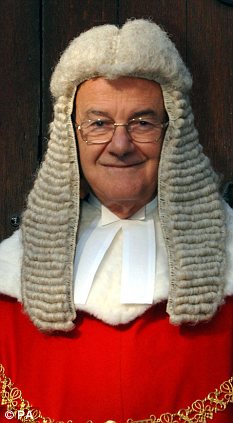 No nonsense: Lord Chief Justice Lord Judge said that the Human Rights Act meant British judges must follow the decisions set down in Strasbourg, 'no more and no less'
Rulings by the European human rights court are the law of the land in Britain, England’s most senior judge declared yesterday.
Lord Chief Justice Lord Judge said that the Human Rights Act meant British judges must follow the decisions set down in Strasbourg, ‘no more and no less’.
His intervention came at a time of high tension between Westminster and the court in Strasbourg over the right of prisoners to vote.
Last month MPs voted overwhelmingly to reject the demand by European human rights judges that prisoners should have the vote, insisting that it is a matter for Parliament.
But Lord Judge’s opinion will pile pressure on David Cameron to find a compromise.
Lord Judge said in a lecture in Jerusalem yesterday that people were free to attack human rights law in print.
But he said judges have no choice but to follow the instructions of European courts because Labour’s 1998 Human Rights Act made European human rights rules part of British law.
‘The words “human rights” are sometimes described in language which might suggest they stand not for the noblest ideals, but, using polite language, as woolly nonsense,’ he said. But he added that the European human rights convention and decisions by the EU’s Luxembourg-based Court of Justice ‘must be applied whether we judges in the United Kingdom agree with them or not’.
He said: ‘Judges are obliged to apply the legislation enacted by our sovereign Parliament, and the European Communities Act 1972 and the Human Rights Act 1998 are two such Acts. No more and no less.’
Many Tory MPs see the prisoner votes debate as symbolic of the domination of Westminster by undemocratic European institutions.
Advice to the Government from its legal officers suggested that they are free to ignore Strasbourg’s instructions on prisoner voting.
But justice secretary Kenneth Clarke has said that although the human rights court needs reform, Britain must be bound by its decisions.
The Strasbourg judges have given Britain until August to obey their ruling that prisoners should have the vote.
Lord Judge also called in his lecture for newspapers to stop making personal criticism of judges.
He said it was ‘corrosive’ and could undermine public confidence in the judiciary.
Politicians to blame for human rights rulings, says judge
Politicians should stop criticising human rights ruling as they are to blame for tying the hands of courts, the country’s most senior judge signalled yesterday.
By Steve Doughty, Daily Mail, Last updated at 12:36 AM on 29th March 2011
No nonsense: Lord Chief Justice Lord Judge said that the Human Rights Act meant British judges must follow the decisions set down in Strasbourg, 'no more and no less'Rulings by the European human rights court are the law of the land in Britain, England’s most senior judge declared yesterday.
Lord Chief Justice Lord Judge said that the Human Rights Act meant British judges must follow the decisions set down in Strasbourg, ‘no more and no less’.
His intervention came at a time of high tension between Westminster and the court in Strasbourg over the right of prisoners to vote.
Last month MPs voted overwhelmingly to reject the demand by European human rights judges that prisoners should have the vote, insisting that it is a matter for Parliament.
But Lord Judge’s opinion will pile pressure on David Cameron to find a compromise.
Lord Judge said in a lecture in Jerusalem yesterday that people were free to attack human rights law in print.
But he said judges have no choice but to follow the instructions of European courts because Labour’s 1998 Human Rights Act made European human rights rules part of British law.
‘The words “human rights” are sometimes described in language which might suggest they stand not for the noblest ideals, but, using polite language, as woolly nonsense,’ he said. But he added that the European human rights convention and decisions by the EU’s Luxembourg-based Court of Justice ‘must be applied whether we judges in the United Kingdom agree with them or not’.
He said: ‘Judges are obliged to apply the legislation enacted by our sovereign Parliament, and the European Communities Act 1972 and the Human Rights Act 1998 are two such Acts. No more and no less.’
Many Tory MPs see the prisoner votes debate as symbolic of the domination of Westminster by undemocratic European institutions.
Advice to the Government from its legal officers suggested that they are free to ignore Strasbourg’s instructions on prisoner voting.
But justice secretary Kenneth Clarke has said that although the human rights court needs reform, Britain must be bound by its decisions.
The Strasbourg judges have given Britain until August to obey their ruling that prisoners should have the vote.
Lord Judge also called in his lecture for newspapers to stop making personal criticism of judges.
He said it was ‘corrosive’ and could undermine public confidence in the judiciary.
Politicians to blame for human rights rulings, says judge
Politicians should stop criticising human rights ruling as they are to blame for tying the hands of courts, the country’s most senior judge signalled yesterday.
Monday, March 28, 2011
Boothtown burglary suspect falls down old well
Boothtown burglary suspect falls down old well
A suspected burglar has been rescued after being trapped down an old well next to a Halifax churchyard.

The man fell 30ft (9m) down the well after vaulting a wall at St Thomas' Church in Claremount Road, Boothtown, West Yorkshire Police said.
Firefighters and paramedics were called out after the man raised the alarm on a mobile phone at 0515 BST on Sunday.
Police had earlier been called to a house in nearby Bell Street, Boothtown, to reports of a burglary.
The suspect was finally brought out of the well at 0745 BST and arrested before being taken to Huddersfield Royal Infirmary, police said.
He complained of back injuries, but the extent of his injuries is not yet known.
A suspected burglar has been rescued after being trapped down an old well next to a Halifax churchyard.
The man fell 30ft (9m) down the well after vaulting a wall at St Thomas' Church in Claremount Road, Boothtown, West Yorkshire Police said.
Firefighters and paramedics were called out after the man raised the alarm on a mobile phone at 0515 BST on Sunday.
Police had earlier been called to a house in nearby Bell Street, Boothtown, to reports of a burglary.
The suspect was finally brought out of the well at 0745 BST and arrested before being taken to Huddersfield Royal Infirmary, police said.
He complained of back injuries, but the extent of his injuries is not yet known.
£5m scheme to divert mentally ill offenders from prison
£5m scheme to divert mentally ill offenders from prison
Andrew Lansley and Ken Clarke launch first stage of plan to create national liaison and diversion service by 2014
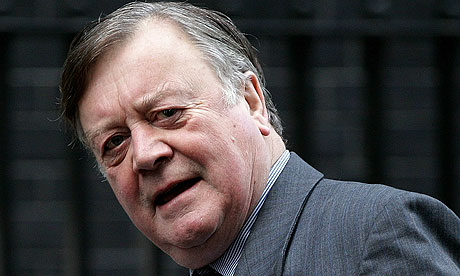 Ken Clarke is planning a radical restructuring of sentencing and the prison system. Photograph: Matthew Lloyd/Getty Images
The first stage in setting up a national service to divert mentally ill people from prison is due to be announced by the health secretary, Andrew Lansley, and the justice secretary, Ken Clarke.
The two cabinet ministers are to announce they have found £5m to put into 100 "diversion sites" across England and Wales as part of their plan to create a national liaison and diversion service by 2014.
The decision is part of Clarke's plans for a radical restructuring of sentencing and the prison system, with the money coming mainly from the health budget as the justice ministry grapples with a 23% cut in its spending.
Clarke's green paper, Breaking the Cycle, recognises that the justice system is not always the best place to manage the problems of less serious offenders where their criminal behaviour is related to their mental health problems. A prison service survey published in November revealed that 12% of inmates had a mental illness or depression as a longstanding illness.
The justice ministry says there are currently some limited liaison and diversion services in place around the country, in which health staff are placed at police stations or in courts to screen and assess people for mental health problems. They refer offenders to health services rather than prison or probation, but they are not consistently available.
Lansley will announce that £3m is to be spent creating up to a further 40 diversion sites for adults and £2m for up to a further 60 sites for young people this year. They hope it will be a national service by 2014.
Clarke and Lansley are to make their announcement at a Westminster reception with the Women's Institute and the Prison Reform Trust. The WI launched a "care, not custody" campaign three years ago after the death in Manchester prison of a Norfolk WI member's mentally ill son who had suffered a nervous breakdown while studying for a Phd in astrophysics.
Lansley said each death in custody was a tragedy for those involved and that active steps were being taken to ensure offenders got the same quality healthcare in prison as they would in the community.
"Ensuring the health needs of offenders are identified promptly will help the police and courts to make informed decisions about charging and sentencing," he said. "But we also need to ensure that the right treatment is available. We know early intervention and prevention is essential and that more needs to be done to divert offenders with mental health problems away from prison and into community-based health treatment."
Ruth Bond, the WI chair, said their campaign aimed to ensure a higher level of co-operation between the health and justice sectors. She welcomed the announcement but said the WI would be vigilant to ensure there was "sufficient political might" behind the government's commitments.
Juliet Lyon, of the Prison Reform Trust, said: "When a highly respected organisation like the WI looks at the dark, neglected world of prisons and highlights the plight of people who are mentally ill then things start changing for the better."
Andrew Lansley and Ken Clarke launch first stage of plan to create national liaison and diversion service by 2014
Ken Clarke is planning a radical restructuring of sentencing and the prison system. Photograph: Matthew Lloyd/Getty ImagesThe first stage in setting up a national service to divert mentally ill people from prison is due to be announced by the health secretary, Andrew Lansley, and the justice secretary, Ken Clarke.
The two cabinet ministers are to announce they have found £5m to put into 100 "diversion sites" across England and Wales as part of their plan to create a national liaison and diversion service by 2014.
The decision is part of Clarke's plans for a radical restructuring of sentencing and the prison system, with the money coming mainly from the health budget as the justice ministry grapples with a 23% cut in its spending.
Clarke's green paper, Breaking the Cycle, recognises that the justice system is not always the best place to manage the problems of less serious offenders where their criminal behaviour is related to their mental health problems. A prison service survey published in November revealed that 12% of inmates had a mental illness or depression as a longstanding illness.
The justice ministry says there are currently some limited liaison and diversion services in place around the country, in which health staff are placed at police stations or in courts to screen and assess people for mental health problems. They refer offenders to health services rather than prison or probation, but they are not consistently available.
Lansley will announce that £3m is to be spent creating up to a further 40 diversion sites for adults and £2m for up to a further 60 sites for young people this year. They hope it will be a national service by 2014.
Clarke and Lansley are to make their announcement at a Westminster reception with the Women's Institute and the Prison Reform Trust. The WI launched a "care, not custody" campaign three years ago after the death in Manchester prison of a Norfolk WI member's mentally ill son who had suffered a nervous breakdown while studying for a Phd in astrophysics.
Lansley said each death in custody was a tragedy for those involved and that active steps were being taken to ensure offenders got the same quality healthcare in prison as they would in the community.
"Ensuring the health needs of offenders are identified promptly will help the police and courts to make informed decisions about charging and sentencing," he said. "But we also need to ensure that the right treatment is available. We know early intervention and prevention is essential and that more needs to be done to divert offenders with mental health problems away from prison and into community-based health treatment."
Ruth Bond, the WI chair, said their campaign aimed to ensure a higher level of co-operation between the health and justice sectors. She welcomed the announcement but said the WI would be vigilant to ensure there was "sufficient political might" behind the government's commitments.
Juliet Lyon, of the Prison Reform Trust, said: "When a highly respected organisation like the WI looks at the dark, neglected world of prisons and highlights the plight of people who are mentally ill then things start changing for the better."
Sunday, March 27, 2011
Video reveals abuse of elephant
Video reveals abuse of elephant
Press Association, Sunday March 27 2011

Animal rights campaigners have called for a ban on the use of wild animals in circuses after undercover video footage revealed shocking abuse of the UK's last circus elephant.
Annie the Asian elephant was filmed being struck with a metal pitchfork, kicked in the face and body and shackled by heavy chains in the winter quarters of the Bobby Roberts Super Circus in Polebrook, Northamptonshire. Images show the elephant being hit 48 times and reveal a poor feeding regime, said Animal Defenders International (ADI).
The pressure group, which has previously campaigned for Annie to be released from the circus, shot the covert video over three weeks earlier this year amid concerns for the 57-year-old animal's wellbeing.
Jan Creamer, ADI's Chief Executive, said: "Annie's tragic story symbolises the plight of circus animals and is a shocking indictment of the circus industry at a key time as government considers a ban on the use of wild animals in circuses.
"We have presented successive governments with extensive evidence from our undercover investigations over the years into UK circuses that proves conclusively that routine violence and deprivation is endemic within the industry.
"To Lord Henley, the Minister responsible, we say enough is enough. It is now time for him to act decisively to stop this appalling suffering. It is time for him to enact a total ban once and for all."
Moira Roberts, 72, who runs the circus with her 68-year-old husband Bobby and their family, said they reacted with "shock and horror" when they saw the footage of Annie being abused.
She said they knew nothing of what was going on, adding that the Romanian groom employed to care for the animal had left the circus overnight. She said: "I presume he is on his way back to where he came from. We wish we had been given the opportunity to prosecute him and hand him over to the police.
"What has upset us more than anything is the fact that this filming took place five weeks ago. Why didn't they tell us, why have they left it until now? We don't know what Anne has gone through in the last five weeks."
Mrs Roberts added: "We are shocked and disgusted. When Bobby saw it (the footage) it just wouldn't sink in. So much so that having seen the footage he couldn't watch, he couldn't face it. She is part of the family. She hasn't performed for ten years and we certainly don't earn any money from her."
Copyright (c) Press Association Ltd. 2011, All Rights Reserved.
Abuse of Britain's last circus elephant caught on camera
Animal rights campaigners have called for a ban on the use of wild animals in circuses after undercover video footage revealed shocking abuse of the UK's last circus elephant.
Saturday, March 26, 2011
Inmates on Facebook? South Carolina Considers Banning Social Media Behind Bars
Inmates on Facebook? South Carolina Considers Banning Social Media Behind Bars
By Elizabeth Prann
Published March 26, 2011, FoxNews.com
Should prisoners be allowed to use Facebook or Twitter or have a MySpace page? One South Carolina state lawmaker says, absolutely not, and he is trying to make it punishable by law if they are caught using social media sites.
“This bill would be the first bill of such in the whole country that would be a crime for any inmate while in prison to set up social media as a means of communications. If a person gets caught, he or she would have a lot of time added to what they’ve been given. It also carries a fine,” said state Rep. Wendell Gilliard, a Democrat from Charleston who is proposing the law.
Inmates are accessing the popular social websites using smartphones smuggled inside prison walls, which is already illegal in South Carolina. But prisoners aren’t just using Facebook to update their status or share interesting videos. Some victims and victims’ families have complained that the inmates are using popular social networking sites to stalk, harass and threaten them.
“Stalkers, batterers, gang members live to intimidate, harass and terrorize their victim, that’s what they do,” says Veronica Swain Kunz, CEO with the South Carolina Victim Assistance Network. “Anybody on Facebook can reach out and send a message to anybody that they want to, and it could be a really terrorizing thing for them.”
The bill to stop social networking for prisoners would add 30 days to a prisoner's sentence and require them to pay a $500 fine if they are caught posting on social networking sites.
“It will send a message to our youth, crime doesn’t pay,” said Gilliard. “We have to get back to reforming people, we have not done that. We have given them an outfit where they feel comfortable.”
And the reach of this proposed law wouldn’t stop at prison walls. Families or friends of prisoners could face misdemeanor charges if they are caught setting up social network pages or posting any messages for prisoners on the Internet. Rep. Gilliard hopes just proposing the bill sends a message across the country.
“It’s just not South Carolina and Northern California, other states have this problem too. Hopefully this will bring it out to the forefront,” he said.
But the proposed bill has already met resistance. The ACLU calls it a violation of the First Amendment right to free speech in the Constitution. Ashleigh Merchant, a criminal defense attorney in Atlanta, agrees saying that any move to restrict free speech in any form for anybody is wrong.
“A lot of times, this is an only outlet for an inmate. If a son or daughter is in prison, their family wants to have an outlet, sort of keep family members up to date on what’s going on with that inmates life – that’s still a member of that family,” she says.
Merchant agrees that inmates should not be using cell phones in prison and says prison officials should spend more energy enforcing the inmate cell phone bans and stalking laws that are already on the books. She says a proposed social networking ban is redundant and unnecessary.
“It’s already illegal to have cell phones in prison – so if they enforce that law and they actually worked a little harder to keep cell phones out of prison, I think that would serve the same goal,” Merchant said. “There has been some talk about threats being made through social media and threats are already illegal, so they have an avenue to enforce that. They don’t need another law to enforce that.”
Rep. Gilliard said the Republican leadership in the South Carolina State House supports his bill and he hopes that it will come up for a vote as early as next week.
Inmates on Facebook? South Carolina Considers Banning Social Media Behind Bars
Inmates on Facebook? South Carolina Considers Banning Social Media Behind Bars
By Elizabeth Prann
Published March 26, 2011, FoxNews.com
Should prisoners be allowed to use Facebook or Twitter or have a MySpace page? One South Carolina state lawmaker says, absolutely not, and he is trying to make it punishable by law if they are caught using social media sites.
“This bill would be the first bill of such in the whole country that would be a crime for any inmate while in prison to set up social media as a means of communications. If a person gets caught, he or she would have a lot of time added to what they’ve been given. It also carries a fine,” said state Rep. Wendell Gilliard, a Democrat from Charleston who is proposing the law.
Inmates are accessing the popular social websites using smartphones smuggled inside prison walls, which is already illegal in South Carolina. But prisoners aren’t just using Facebook to update their status or share interesting videos. Some victims and victims’ families have complained that the inmates are using popular social networking sites to stalk, harass and threaten them.
“Stalkers, batterers, gang members live to intimidate, harass and terrorize their victim, that’s what they do,” says Veronica Swain Kunz, CEO with the South Carolina Victim Assistance Network. “Anybody on Facebook can reach out and send a message to anybody that they want to, and it could be a really terrorizing thing for them.”
The bill to stop social networking for prisoners would add 30 days to a prisoner's sentence and require them to pay a $500 fine if they are caught posting on social networking sites.
“It will send a message to our youth, crime doesn’t pay,” said Gilliard. “We have to get back to reforming people, we have not done that. We have given them an outfit where they feel comfortable.”
And the reach of this proposed law wouldn’t stop at prison walls. Families or friends of prisoners could face misdemeanor charges if they are caught setting up social network pages or posting any messages for prisoners on the Internet. Rep. Gilliard hopes just proposing the bill sends a message across the country.
“It’s just not South Carolina and Northern California, other states have this problem too. Hopefully this will bring it out to the forefront,” he said.
But the proposed bill has already met resistance. The ACLU calls it a violation of the First Amendment right to free speech in the Constitution. Ashleigh Merchant, a criminal defense attorney in Atlanta, agrees saying that any move to restrict free speech in any form for anybody is wrong.
“A lot of times, this is an only outlet for an inmate. If a son or daughter is in prison, their family wants to have an outlet, sort of keep family members up to date on what’s going on with that inmates life – that’s still a member of that family,” she says.
Merchant agrees that inmates should not be using cell phones in prison and says prison officials should spend more energy enforcing the inmate cell phone bans and stalking laws that are already on the books. She says a proposed social networking ban is redundant and unnecessary.
“It’s already illegal to have cell phones in prison – so if they enforce that law and they actually worked a little harder to keep cell phones out of prison, I think that would serve the same goal,” Merchant said. “There has been some talk about threats being made through social media and threats are already illegal, so they have an avenue to enforce that. They don’t need another law to enforce that.”
Rep. Gilliard said the Republican leadership in the South Carolina State House supports his bill and he hopes that it will come up for a vote as early as next week.
Why are worst violators put in charge of human rights?
Why are worst violators put in charge of human rights?
Clarke also revealed he was drawing up plans to reform the European court of human rights in Strasbourg when Britain takes over its chairmanship this autumn.
He has been accused by the Tory right of bowing to the court's judgments, such as allowing the vote to prisoners. But he said supporters of the court were also deeply concerned by its inadequacies. "It is too big. There are 47 judges. It also has tens of thousands of old cases because it does not have the power to get rid of the frivolous ones. It just needs to have some new way of sitting to get rid of this backlog."
The UK has shown itself to be incapable of drawing up plans to fully comply with Hirst v UK (No2) in over 5 years, yet we are supposed to have confidence that the UK is capable of the far larger task of reforming the ECtHR?
Presently, the chairmanship is with Turkey. I wish somebody would explain how it is that Turkey with the second worst human rights abuse record in Europe can chair an organisation dedicated to protecting human rights?
Surely this kind of thing only casts doubts upon the legitimacy of the whole set up? I would like to see the UK denied Chairmanship until it cleans up its image. However, if Europe turns a blind eye towards Turkey's very bad record then the UK's middling to bad record won't raise any eyebrows. Russia has had 10,019 cases where the ECtHR has found human rights violations; Turkey 2245, Ukraine 709 and the UK 271.
The next chairmanship is Ukraine followed by the UK.
Ukraine: 11 May-November 2011
United Kingdom: November 2011-May 2012
Inside Gaddafi's brutal prison: Ghaith Abdul-Ahad's Libyan ordeal
Inside Gaddafi's brutal prison: Ghaith Abdul-Ahad's Libyan ordeal
While reporting the war in western Libya, award-winning Guardian correspondent Ghaith Abdul-Ahad was seized by Gaddafi's militia. Here he describes two weeks inside the regime's brutal prison system
 Muammar Gaddafi's supporters in Sabratha, Libya, where Brazilian journalist Andrei Netto and the Guardian's Ghaith Abdul-Ahad were captured. Photograph: Ben Curtis/AP
We ran into Gaddafi's troops on the outskirts of Zawiya, less than a mile beyond the last signs of rebel activity: a destroyed checkpoint, a bullet-ridden building and five burnt-out cars.
The soldiers were blocking the main highway to the coast with pickup trucks and armoured vehicles, so our driver took to the desert, skirting the roadblock in a wide arc before cutting back to the road. He was edgy after that, spooked even by the sight of a distant abandoned car parked in the middle of the road.
We – the Brazilian journalist Andrei Netto and I, travelling in the company of rebels from western Libya – would not be able reach Zawiya that night as planned. Instead we made for Sabratha, 12 miles to the west.
It was clear that Sabratha had been reclaimed by Gaddafi loyalists. The police and intelligence service buildings were charred, but they had new green flags of the regime flying above them.
We separated from our rebel escorts and took shelter in an empty half-built house, away from the militiamen roaming the streets. Later that night we saw four men approaching, dressed in dark tracksuits and carrying sticks except for one, who had a gun. When they surrounded the house there was no way to escape. They took our phones then frogmarched us, heads down, to an SUV, ranting as we went. "You sons of bitches! You Jews and Zionists! You Arab traitors! You want to topple Gaddafi? We will rape your mothers! Gaddafi will show you!"
I was put in the pickup first, then Netto. As he was getting in, a tall militiaman swung a metal pipe that struck him on the head. Inside the car the man sat behind us, jabbing at us with a stick as he continued his tirade.
We were taken a short distance to a compound guarded by armed men, where we were interrogated, then blindfolded and driven for two hours to a prison that I now know is in Tripoli. We were separated there; I have not seen Netto since. Still blindfolded, I was interrogated for four hours about my "collaboration" with the infidel British newspaper the Guardian. Then they walked me downstairs to the cells.
They removed the blindfold in a neon-lit corridor lined with 20 great iron doors with sliding bolts and white numbers. Each door had two small hatches, at the top and the bottom. Empty cartons of juice, plastic packaging and trash were piled up outside the doors.
I was pushed into cell 11, a windowless box, 2.5 metres x 1.5 metres, painted dark grey and lit by a weak bulb. The room contained a dirty mattress, blanket and soiled pillow. A low wall separated a broken toilet seat covered with a thick brown crust, a tap and a bucket. There was a strong smell of sewage.
It was Wednesday 2 March. The prison would be home for a fortnight.
Day and night in the prison, bolts were pulled, doors slammed and guards, in combat trousers, T-shirts and trainers, shoved shackled prisoners in and out of the cells.
One guard in particular – a tall man with rimless spectacles whose civilian clothes implied rank – spoke the most. "All the people we are capturing are al-Qaida infiltrators," he said at one point. "Al-Qaida are beheading civilians, burning them and eating their hearts."
Another day, he delivered a paean to Colonel Gaddafi. "We love him," he said, rolling his eyes until they were just two white slits. "We love, love, love him! And we want him. It's up to us Libyans to choose him – not the west.
"With him we have survived so many things. So many crises have passed and we will survive this. It's history we have with him. It's 42 years! I have known nothing but him and they want us to turn against him now. He is not just our leader, he is a philosopher and a thinker. He is everything."
Worse than the guards, the fear and the smell were the ravings from a prisoner down the corridor. This man's shouting, made incomprehensible by being delivered through his hands or a blanket, echoed around the jail day and night. Sometimes he would break off, a moment of silence would ensue and he would begin crying and squealing in apparent pain.
When a guard passed by he would ask in a very polite voice: "You are not serving tea or coffee today?" "We are not getting newspapers today?"
Days later I discovered that he, like many of the others, was being regularly interrogated and beaten.
In the early hours of Sunday 6 March a gunbattle began outside the prison. It started with a few bursts of small arms fire, then came the deeper note of anti-aircraft guns, which turned into a continuous long drumming. At one point guns were being fired from somewhere just next to the cells.
The inmates became excited. Were the rebels storming into the prison? Had the uprising reached Tripoli? Were we being saved? The raving man gave a long, ululating victory cry while the prisoner in cell 12 continuously repeated "O Lord" like a mantra.
The sounds of shooting rose and fell for more than half an hour before fizzling away and finally stopping when two helicopters came circling overhead.
The officer with the rimless glasses came through the corridor later, fuming with anger. He shoved breakfast through the door hatch. "Those filthy Europeans, we will crush them with the tips of our shoes," he said. "If those rebel dogs come here to attack we will all die together. The sons of Gaddafi will never run. A man lives once and dies once, so better die fighting."
On the evening after the battle the cells began to fill up. There was a man from Zwara, another from Zawiya, and a chubby grey-haired man named Richard who spoke English with an American accent. By Monday some cells had three inmates. "Why am I kept here?" I overheard one man say. "I have handed myself in after the amnesty."
"Sure," laughed a guard. "We will take you to a five-star hotel very soon."
I was moved to a bigger cell upstairs. I could still hear the doors slamming and the man shouting and the new cell was also windowless, but it was whitewashed and lit by neon night and day.
Later I heard the first of the voices coming through the wall. The cell was next to two interrogation rooms, where men were brought throughout the day. Each interrogation began and ended with the clinking sound of a man in shackles walking to or from the room. The madman was brought for interrogation at least twice.
I heard snatches of shouted questions or accusations from the interrogators – "Qaida", "attack Libya", "Muammar", "who are they?" – punctuated with smacks and thuds, like someone throwing sacks of rice at a wall, and the sound of prisoners pleading, screaming and weeping.
One interrogation on Wednesday evening went as follows:
"Stand up!"
Smack came the sound. Smack. Smack.
"I said stand up!"
Smack. Smack.
This cycle was repeated five times.
Somewhere down the hall a TV blasted pro-Gaddafi marching songs.
On Thursday 10 March I was taken out of the big cell and put in cell 18 in the downstairs corridor. This was also dark, tiny and filthy, but this time I was to share with another prisoner.
He was sitting on a torn mattress, his back resting against the wall and his legs covered with a dirty yellow and red blanket. His hair was slicked back and a few days of white stubble sprouted from his chin. "Bangladesh," he said, pointing at himself. He was shivering in a thin shirt and after few minutes of silence he added, in Arabic: "Cold. All clothes with them."
He told his story in broken sentences. He had lived in Dhaka with his wife and three children. Some years ago he had gone to "a big manager in big glass building with a big office" and paid money to get a visa to Saudi Arabia to work in construction. He had been promised a good salary, but the visa never came. After five months he was told there was no visa for Saudi, but he could get a visa for Dubai. So he paid the manager more money and waited.
Two months later, he was told there would be no visa to Dubai but there was one for Libya. "The manager said Libya is like Dubai, lots of petrol and a good salary." He arrived in Libya on a tourist visa that soon expired and the work permit and job he was promised never came, but he worked anyway, on building sites in Benghazi, then Tripoli.
When the fighting and demonstrations erupted and foreigners started leaving Libya, he asked his Libyan boss to pay him the money he was owed so he could leave the country. "He said 'later, later'."
While his friends all left for Tunis, he stayed to wait for his 800 dinars (£400).
"Four days ago" – he counted them out with his fingers – "a soldier stopped me and said where is my visa. I said I had no visa. They beat me and brought me here.
"Everywhere Bangladesh worker go, India, China, Indonesia … only here in Libya they do this to you and put you in a locked room." He crossed his hands to indicate handcuffs.
A week had passed and he hadn't been able to speak to his wife. "What is she to do now?"
Later he asked what would happen if he found enough money to get a ticket to Bangladesh: "Would they let me go?"
The following day I was moved into solitary again, but towards the end of the second week I noticed small differences in the way I was treated. On day 12, a guard brought a toothbrush. On day 13, a bar of soap and shampoo arrived. On day 14 they brought a cup of coffee and even offered a cigarette.
There was no information about what was happening outside or why I was being held, despite being told when I was first interrogated that I would be released the next day. When, I wondered, might they come and take me to the room where the beating took place?
On Tuesday night a smiling officer came to say I would be released. I was blindfolded and taken to a bathroom with a mirror, given a razor and told to shave. I did not want to shave. I pleaded with him and he relented. An hour later I was told my release had been postponed.
The next morning, Wednesday 16 March, I was given my notebooks and camera and blindfolded again. I had to lie in the back of a van and was driven for half an hour before being led into a room. When they took off the blindfold, I discovered I was back in my cell. "We made a mistake," said an officer as he locked the door.
Two hours later I was blindfolded and bundled into the van again. I would have to face trial, the officer said. There was an armed guard in the van.
The van stopped and the guard told me to move closer to him. He took off the blindfold and I could see we were outside a grand building. A second man came and led me up some marble steps.
At the top I found three colleagues from the Guardian waiting to receive me and take me out of Libya. The Brazilian journalist Andrei Netto, they said, had been released six days earlier.
While reporting the war in western Libya, award-winning Guardian correspondent Ghaith Abdul-Ahad was seized by Gaddafi's militia. Here he describes two weeks inside the regime's brutal prison system
Muammar Gaddafi's supporters in Sabratha, Libya, where Brazilian journalist Andrei Netto and the Guardian's Ghaith Abdul-Ahad were captured. Photograph: Ben Curtis/APWe ran into Gaddafi's troops on the outskirts of Zawiya, less than a mile beyond the last signs of rebel activity: a destroyed checkpoint, a bullet-ridden building and five burnt-out cars.
The soldiers were blocking the main highway to the coast with pickup trucks and armoured vehicles, so our driver took to the desert, skirting the roadblock in a wide arc before cutting back to the road. He was edgy after that, spooked even by the sight of a distant abandoned car parked in the middle of the road.
We – the Brazilian journalist Andrei Netto and I, travelling in the company of rebels from western Libya – would not be able reach Zawiya that night as planned. Instead we made for Sabratha, 12 miles to the west.
It was clear that Sabratha had been reclaimed by Gaddafi loyalists. The police and intelligence service buildings were charred, but they had new green flags of the regime flying above them.
We separated from our rebel escorts and took shelter in an empty half-built house, away from the militiamen roaming the streets. Later that night we saw four men approaching, dressed in dark tracksuits and carrying sticks except for one, who had a gun. When they surrounded the house there was no way to escape. They took our phones then frogmarched us, heads down, to an SUV, ranting as we went. "You sons of bitches! You Jews and Zionists! You Arab traitors! You want to topple Gaddafi? We will rape your mothers! Gaddafi will show you!"
I was put in the pickup first, then Netto. As he was getting in, a tall militiaman swung a metal pipe that struck him on the head. Inside the car the man sat behind us, jabbing at us with a stick as he continued his tirade.
We were taken a short distance to a compound guarded by armed men, where we were interrogated, then blindfolded and driven for two hours to a prison that I now know is in Tripoli. We were separated there; I have not seen Netto since. Still blindfolded, I was interrogated for four hours about my "collaboration" with the infidel British newspaper the Guardian. Then they walked me downstairs to the cells.
They removed the blindfold in a neon-lit corridor lined with 20 great iron doors with sliding bolts and white numbers. Each door had two small hatches, at the top and the bottom. Empty cartons of juice, plastic packaging and trash were piled up outside the doors.
I was pushed into cell 11, a windowless box, 2.5 metres x 1.5 metres, painted dark grey and lit by a weak bulb. The room contained a dirty mattress, blanket and soiled pillow. A low wall separated a broken toilet seat covered with a thick brown crust, a tap and a bucket. There was a strong smell of sewage.
It was Wednesday 2 March. The prison would be home for a fortnight.
Day and night in the prison, bolts were pulled, doors slammed and guards, in combat trousers, T-shirts and trainers, shoved shackled prisoners in and out of the cells.
One guard in particular – a tall man with rimless spectacles whose civilian clothes implied rank – spoke the most. "All the people we are capturing are al-Qaida infiltrators," he said at one point. "Al-Qaida are beheading civilians, burning them and eating their hearts."
Another day, he delivered a paean to Colonel Gaddafi. "We love him," he said, rolling his eyes until they were just two white slits. "We love, love, love him! And we want him. It's up to us Libyans to choose him – not the west.
"With him we have survived so many things. So many crises have passed and we will survive this. It's history we have with him. It's 42 years! I have known nothing but him and they want us to turn against him now. He is not just our leader, he is a philosopher and a thinker. He is everything."
Worse than the guards, the fear and the smell were the ravings from a prisoner down the corridor. This man's shouting, made incomprehensible by being delivered through his hands or a blanket, echoed around the jail day and night. Sometimes he would break off, a moment of silence would ensue and he would begin crying and squealing in apparent pain.
When a guard passed by he would ask in a very polite voice: "You are not serving tea or coffee today?" "We are not getting newspapers today?"
Days later I discovered that he, like many of the others, was being regularly interrogated and beaten.
In the early hours of Sunday 6 March a gunbattle began outside the prison. It started with a few bursts of small arms fire, then came the deeper note of anti-aircraft guns, which turned into a continuous long drumming. At one point guns were being fired from somewhere just next to the cells.
The inmates became excited. Were the rebels storming into the prison? Had the uprising reached Tripoli? Were we being saved? The raving man gave a long, ululating victory cry while the prisoner in cell 12 continuously repeated "O Lord" like a mantra.
The sounds of shooting rose and fell for more than half an hour before fizzling away and finally stopping when two helicopters came circling overhead.
The officer with the rimless glasses came through the corridor later, fuming with anger. He shoved breakfast through the door hatch. "Those filthy Europeans, we will crush them with the tips of our shoes," he said. "If those rebel dogs come here to attack we will all die together. The sons of Gaddafi will never run. A man lives once and dies once, so better die fighting."
On the evening after the battle the cells began to fill up. There was a man from Zwara, another from Zawiya, and a chubby grey-haired man named Richard who spoke English with an American accent. By Monday some cells had three inmates. "Why am I kept here?" I overheard one man say. "I have handed myself in after the amnesty."
"Sure," laughed a guard. "We will take you to a five-star hotel very soon."
I was moved to a bigger cell upstairs. I could still hear the doors slamming and the man shouting and the new cell was also windowless, but it was whitewashed and lit by neon night and day.
Later I heard the first of the voices coming through the wall. The cell was next to two interrogation rooms, where men were brought throughout the day. Each interrogation began and ended with the clinking sound of a man in shackles walking to or from the room. The madman was brought for interrogation at least twice.
I heard snatches of shouted questions or accusations from the interrogators – "Qaida", "attack Libya", "Muammar", "who are they?" – punctuated with smacks and thuds, like someone throwing sacks of rice at a wall, and the sound of prisoners pleading, screaming and weeping.
One interrogation on Wednesday evening went as follows:
"Stand up!"
Smack came the sound. Smack. Smack.
"I said stand up!"
Smack. Smack.
This cycle was repeated five times.
Somewhere down the hall a TV blasted pro-Gaddafi marching songs.
On Thursday 10 March I was taken out of the big cell and put in cell 18 in the downstairs corridor. This was also dark, tiny and filthy, but this time I was to share with another prisoner.
He was sitting on a torn mattress, his back resting against the wall and his legs covered with a dirty yellow and red blanket. His hair was slicked back and a few days of white stubble sprouted from his chin. "Bangladesh," he said, pointing at himself. He was shivering in a thin shirt and after few minutes of silence he added, in Arabic: "Cold. All clothes with them."
He told his story in broken sentences. He had lived in Dhaka with his wife and three children. Some years ago he had gone to "a big manager in big glass building with a big office" and paid money to get a visa to Saudi Arabia to work in construction. He had been promised a good salary, but the visa never came. After five months he was told there was no visa for Saudi, but he could get a visa for Dubai. So he paid the manager more money and waited.
Two months later, he was told there would be no visa to Dubai but there was one for Libya. "The manager said Libya is like Dubai, lots of petrol and a good salary." He arrived in Libya on a tourist visa that soon expired and the work permit and job he was promised never came, but he worked anyway, on building sites in Benghazi, then Tripoli.
When the fighting and demonstrations erupted and foreigners started leaving Libya, he asked his Libyan boss to pay him the money he was owed so he could leave the country. "He said 'later, later'."
While his friends all left for Tunis, he stayed to wait for his 800 dinars (£400).
"Four days ago" – he counted them out with his fingers – "a soldier stopped me and said where is my visa. I said I had no visa. They beat me and brought me here.
"Everywhere Bangladesh worker go, India, China, Indonesia … only here in Libya they do this to you and put you in a locked room." He crossed his hands to indicate handcuffs.
A week had passed and he hadn't been able to speak to his wife. "What is she to do now?"
Later he asked what would happen if he found enough money to get a ticket to Bangladesh: "Would they let me go?"
The following day I was moved into solitary again, but towards the end of the second week I noticed small differences in the way I was treated. On day 12, a guard brought a toothbrush. On day 13, a bar of soap and shampoo arrived. On day 14 they brought a cup of coffee and even offered a cigarette.
There was no information about what was happening outside or why I was being held, despite being told when I was first interrogated that I would be released the next day. When, I wondered, might they come and take me to the room where the beating took place?
On Tuesday night a smiling officer came to say I would be released. I was blindfolded and taken to a bathroom with a mirror, given a razor and told to shave. I did not want to shave. I pleaded with him and he relented. An hour later I was told my release had been postponed.
The next morning, Wednesday 16 March, I was given my notebooks and camera and blindfolded again. I had to lie in the back of a van and was driven for half an hour before being led into a room. When they took off the blindfold, I discovered I was back in my cell. "We made a mistake," said an officer as he locked the door.
Two hours later I was blindfolded and bundled into the van again. I would have to face trial, the officer said. There was an armed guard in the van.
The van stopped and the guard told me to move closer to him. He took off the blindfold and I could see we were outside a grand building. A second man came and led me up some marble steps.
At the top I found three colleagues from the Guardian waiting to receive me and take me out of Libya. The Brazilian journalist Andrei Netto, they said, had been released six days earlier.
Friday, March 25, 2011
MPs' expenses: is forget and carry on the British way?
MPs' expenses: is forget and carry on the British way?
Plans to relax the rules on MPs' expenses seem to have been met without protest – but this may not be the end of the matter
By Paul Goodman, Guardian, Friday 25 March 2011 16.30 GMT
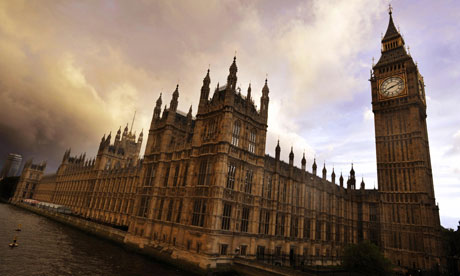 MPs are unhappy about constrictions on their expenses. Photograph: Tim Ireland/PA
In his novel Arthur and George, Julian Barnes writes his thoughts into the mind of its central character, George Edalji – a cause celebre in England whom Barnes compares to Dreyfus in France. Across the channel, he suggests, memories are long, but here they're otherwise.
"This has happened, now let us forget about it and carry on as before: such was the English way. Something was broken, but now it has been repaired, so let us pretend that nothing much was wrong in the first place."
Is the aftermath of the expenses scandal about to prove Barnes right? The Independent Parliamentary Standards Authority (Ipsa) has released recommendations about MPs' expenses. It proposed relaxing the rules: MPs from outer London are to be allowed to claim for second homes; some restrictions on family claims are to be relaxed; wide use of parliamentary credit cards is to be allowed. When these changes were floated, there was no media explosion, no voter backlash.
Why so, when the expenses debacle caused such public rage? Perhaps because Ipsa has faced opposition on two fronts. Many MPs see it as arbitrary and inefficient – usurping their right, as they see it, to determine their own conditions. And parts of Fleet Street view it as bureaucratic and expensive – achieving nothing, they say, that couldn't be done by simply publishing MPs' expenses online at a fraction of the cost.
This is roughly the position of the Daily Telegraph, which first exposed the expenses story. The tormentor of MPs and its victims thus find themselves in unlikely agreement. Under pressure from this alliance, Ipsa has been left friendless. And while this morning's reports of its recommendations weren't exactly supportive – it would be a wonder if they had been – the tabloids didn't clear their front pages to assault the package and the topic didn't trend on Twitter.
But that isn't quite the end of the matter. For like the wind, newspaper editorials and the social media blow where they will. There's never a good time to propose that the constrictions on MPs' expenses be eased; but to do so in the aftermath of a budget that reminds voters of pain to come is hazardous. And although the matter is nothing to do with the government, strictly speaking – MPs' pay and expenses are a matter for the Commons – the risk is largely being shouldered by the prime minister.
It was his predecessor, after all, who introduced the act that set up Ipsa in the first place, in response to pressure to sort out the scandal. So if the media and public mood changes, and David Cameron comes under similar stress, shouldn't he simply block Ipsa's plans, if only for the sake of a quiet life? If only matters were so simple. For at the same time as many voters will believe that Ipsa's has gone too far, some MPs will mutter that it hasn't gone far enough.
Their core gripe isn't so much about particulars as a principle: that claims must be backed by receipts. As long as the latter are required, many say, one MP's claims will be compared against those of others in their local papers when receipts are released each quarter. And as they view it, this leaves them pinned by a Morton's Fork: they either claim, and see voter support erode as they're pilloried by their local press; or don't claim, and end up subsidising their own work. They want the receipts regime replaced by flat-rate allowances.
The last release of quarterly receipts ignited an explosion during the usually staid proceedings of the 1922 Committee. MPs lined up to denounce Ipsa. The prime minister is caught between voters – who want receipts and tough conditions – and MPs who want allowances and less constriction. With local elections and the alternative vote referendum looming – not to mention war in Libya and turmoil in Portugal – the latter will probably keep their complaints to themselves for the time being.
But for Cameron, this looks like trouble postponed, perhaps until the next quarterly release – rather than trouble sorted. Above all, it's too early to tell whether memories of the expenses saga are fading away, like memories of the Edalji controversy, or will blaze up again with the explosive quality of the Dreyfus affair.
Plans to relax the rules on MPs' expenses seem to have been met without protest – but this may not be the end of the matter
By Paul Goodman, Guardian, Friday 25 March 2011 16.30 GMT
MPs are unhappy about constrictions on their expenses. Photograph: Tim Ireland/PAIn his novel Arthur and George, Julian Barnes writes his thoughts into the mind of its central character, George Edalji – a cause celebre in England whom Barnes compares to Dreyfus in France. Across the channel, he suggests, memories are long, but here they're otherwise.
"This has happened, now let us forget about it and carry on as before: such was the English way. Something was broken, but now it has been repaired, so let us pretend that nothing much was wrong in the first place."
Is the aftermath of the expenses scandal about to prove Barnes right? The Independent Parliamentary Standards Authority (Ipsa) has released recommendations about MPs' expenses. It proposed relaxing the rules: MPs from outer London are to be allowed to claim for second homes; some restrictions on family claims are to be relaxed; wide use of parliamentary credit cards is to be allowed. When these changes were floated, there was no media explosion, no voter backlash.
Why so, when the expenses debacle caused such public rage? Perhaps because Ipsa has faced opposition on two fronts. Many MPs see it as arbitrary and inefficient – usurping their right, as they see it, to determine their own conditions. And parts of Fleet Street view it as bureaucratic and expensive – achieving nothing, they say, that couldn't be done by simply publishing MPs' expenses online at a fraction of the cost.
This is roughly the position of the Daily Telegraph, which first exposed the expenses story. The tormentor of MPs and its victims thus find themselves in unlikely agreement. Under pressure from this alliance, Ipsa has been left friendless. And while this morning's reports of its recommendations weren't exactly supportive – it would be a wonder if they had been – the tabloids didn't clear their front pages to assault the package and the topic didn't trend on Twitter.
But that isn't quite the end of the matter. For like the wind, newspaper editorials and the social media blow where they will. There's never a good time to propose that the constrictions on MPs' expenses be eased; but to do so in the aftermath of a budget that reminds voters of pain to come is hazardous. And although the matter is nothing to do with the government, strictly speaking – MPs' pay and expenses are a matter for the Commons – the risk is largely being shouldered by the prime minister.
It was his predecessor, after all, who introduced the act that set up Ipsa in the first place, in response to pressure to sort out the scandal. So if the media and public mood changes, and David Cameron comes under similar stress, shouldn't he simply block Ipsa's plans, if only for the sake of a quiet life? If only matters were so simple. For at the same time as many voters will believe that Ipsa's has gone too far, some MPs will mutter that it hasn't gone far enough.
Their core gripe isn't so much about particulars as a principle: that claims must be backed by receipts. As long as the latter are required, many say, one MP's claims will be compared against those of others in their local papers when receipts are released each quarter. And as they view it, this leaves them pinned by a Morton's Fork: they either claim, and see voter support erode as they're pilloried by their local press; or don't claim, and end up subsidising their own work. They want the receipts regime replaced by flat-rate allowances.
The last release of quarterly receipts ignited an explosion during the usually staid proceedings of the 1922 Committee. MPs lined up to denounce Ipsa. The prime minister is caught between voters – who want receipts and tough conditions – and MPs who want allowances and less constriction. With local elections and the alternative vote referendum looming – not to mention war in Libya and turmoil in Portugal – the latter will probably keep their complaints to themselves for the time being.
But for Cameron, this looks like trouble postponed, perhaps until the next quarterly release – rather than trouble sorted. Above all, it's too early to tell whether memories of the expenses saga are fading away, like memories of the Edalji controversy, or will blaze up again with the explosive quality of the Dreyfus affair.
Chinese vase frenzy: £500 vase sells for £11 million
Chinese vase frenzy: £500 vase sells for £11 million
A Chinese vase appraised at £500 to £750 has sold for £11 million in New York.
By Malcolm Moore, Shanghai 12:00PM GMT 25 Mar 2011
 The vase came from the collection of Dai Run Zhai, a Chineseman who became New York's most distinguished art dealer after moving to America in 1950
More than seven bidders fought for the vase, which was dated by Sotheby's, the auction house, to the early 20th-century.
However, Sotheby's said there had been "a healthy debate" about the dating of the vase, with some collectors believing it may be "significantly" older.
The eventual winner made his bid anonymously and over the telephone.
The vase was delicately painted with a scene of birds and flowers painted in gold and "famille rose", or a soft palette of colours. The famille rose style was first introduced in about 1720, during the reign of the Kangxi emperor.
The vase came from the collection of Dai Run Zhai, a Chinese who became New York's most distinguished art dealer after moving to America in 1950. Under his Americanised name, JT Tai, he amassed one of the world's most important collections of Chinese art.
Other pieces from that collection have already caused sensations. Last October, a Qing dynasty gourd-shaped vase, acquired by Mr Dai in 1971 at a London auction for £1,680 was sold for $32.15 million in Hong Kong to Alice Cheng, the sister of another famous art collector and one of China's richest women.
The frenzy for Chinese vases is expected to continue in Hong Kong in the Spring, when another 18th century Chinese imperial vase goes under the hammer.
The Falangcai vase with golden pheasants, which is again being sold at Sotheby's, is the centrepiece of a sale from the Meiyintang collection, one of the world's most important private collections of Chinese ceramics. The vase has been appraised at £14 million.
A Chinese vase appraised at £500 to £750 has sold for £11 million in New York.
By Malcolm Moore, Shanghai 12:00PM GMT 25 Mar 2011
The vase came from the collection of Dai Run Zhai, a Chineseman who became New York's most distinguished art dealer after moving to America in 1950More than seven bidders fought for the vase, which was dated by Sotheby's, the auction house, to the early 20th-century.
However, Sotheby's said there had been "a healthy debate" about the dating of the vase, with some collectors believing it may be "significantly" older.
The eventual winner made his bid anonymously and over the telephone.
The vase was delicately painted with a scene of birds and flowers painted in gold and "famille rose", or a soft palette of colours. The famille rose style was first introduced in about 1720, during the reign of the Kangxi emperor.
The vase came from the collection of Dai Run Zhai, a Chinese who became New York's most distinguished art dealer after moving to America in 1950. Under his Americanised name, JT Tai, he amassed one of the world's most important collections of Chinese art.
Other pieces from that collection have already caused sensations. Last October, a Qing dynasty gourd-shaped vase, acquired by Mr Dai in 1971 at a London auction for £1,680 was sold for $32.15 million in Hong Kong to Alice Cheng, the sister of another famous art collector and one of China's richest women.
The frenzy for Chinese vases is expected to continue in Hong Kong in the Spring, when another 18th century Chinese imperial vase goes under the hammer.
The Falangcai vase with golden pheasants, which is again being sold at Sotheby's, is the centrepiece of a sale from the Meiyintang collection, one of the world's most important private collections of Chinese ceramics. The vase has been appraised at £14 million.
UN declaration on human rights education and training
UN declaration on human rights education and training
The United Nations Human Rights Council on 23 March adopted a declaration on human rights education and training.
24 March 2011

The declaration is not a legal instrument and does not contain any new rights but is important in signifying the international community's commitment to making people aware of their fundamental rights.
The declaration consists of 14 articles that cover a range of practical education and training activities which aim to help people to understand their fundamental rights and liberties better.
Commenting on the UK's support for the UN declaration Justice Minister Lord McNally said:
'Everyone agrees on the importance of upholding human rights. The coalition's programme for government outlines our commitment to promote a better understanding of the true scope of these rights so that the UK offers an inspiring example of a society that upholds human rights and democracy. In that context I am delighted that the UK is supporting the United Nation's Declaration on Human Rights Education and Training.
'There are many examples of how promoting understanding of our obligations can lead to better outcomes for citizens, and practical ways in which people have been helped, for example human rights law has ensured that the elderly are able to demand acceptable standards of care in care homes, and that those with a terminal illness, or a disability are able to access appropriate and necessary services.
'The events that are happening across the world demonstrate now more than ever the power which a strong understanding and commitment to inalienable human rights can bring to bear.'
The Ministry of Justice has a broad programme of awareness raising including the provision of guidance to public authorities to ensure their decision making and service delivery is done in a way that respects people's rights.
Further information is available: United Nations Human Rights Council
Comment: If everyone agrees on the importance of upholding human rights, then why is Lord McNally not upholding the human rights of convicted prisoners to vote? How can the Coalition's programme include a commitment to promote a better understanding on the scope of these rights and be a shining example, when the UK fails to understand over prisoners votes and is a very bad example to follow? The UK is in no position to promote understanding how to fulfill its obligations when it has failed in this respect in prisoners votes for over 5 years! The UK is not in a powerful position to moralise across the world when its own understanding is poor and commitment weak.
The United Nations Human Rights Council on 23 March adopted a declaration on human rights education and training.
24 March 2011
The declaration is not a legal instrument and does not contain any new rights but is important in signifying the international community's commitment to making people aware of their fundamental rights.
The declaration consists of 14 articles that cover a range of practical education and training activities which aim to help people to understand their fundamental rights and liberties better.
Commenting on the UK's support for the UN declaration Justice Minister Lord McNally said:
'Everyone agrees on the importance of upholding human rights. The coalition's programme for government outlines our commitment to promote a better understanding of the true scope of these rights so that the UK offers an inspiring example of a society that upholds human rights and democracy. In that context I am delighted that the UK is supporting the United Nation's Declaration on Human Rights Education and Training.
'There are many examples of how promoting understanding of our obligations can lead to better outcomes for citizens, and practical ways in which people have been helped, for example human rights law has ensured that the elderly are able to demand acceptable standards of care in care homes, and that those with a terminal illness, or a disability are able to access appropriate and necessary services.
'The events that are happening across the world demonstrate now more than ever the power which a strong understanding and commitment to inalienable human rights can bring to bear.'
The Ministry of Justice has a broad programme of awareness raising including the provision of guidance to public authorities to ensure their decision making and service delivery is done in a way that respects people's rights.
Further information is available: United Nations Human Rights Council
Comment: If everyone agrees on the importance of upholding human rights, then why is Lord McNally not upholding the human rights of convicted prisoners to vote? How can the Coalition's programme include a commitment to promote a better understanding on the scope of these rights and be a shining example, when the UK fails to understand over prisoners votes and is a very bad example to follow? The UK is in no position to promote understanding how to fulfill its obligations when it has failed in this respect in prisoners votes for over 5 years! The UK is not in a powerful position to moralise across the world when its own understanding is poor and commitment weak.
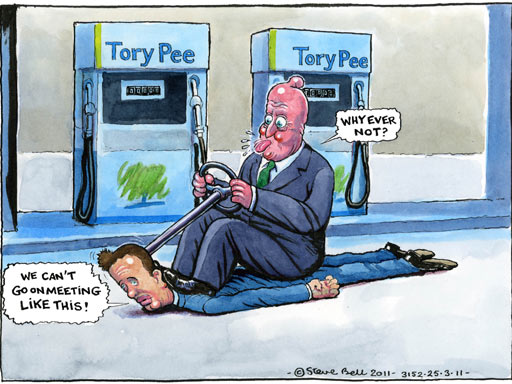
Cameron tells MPs to carry on fiddling expenses!
Cameron tells MPs to carry on fiddling expenses!
Expenses bill to soar as MPs force watchdog to relax rules
MPs will be able to claim millions of pounds more in expenses under reforms to the system to be announced today.
 David Cameron had threatened to abolish the new regulator if it did not agree to water down the rules. Photo: AFP
Tory Toff David Cameron has gone back on his word to clean up the expenses scandal, after he was bullied by the 1922 Committee to curb the power of IPSA to allow MPs to carry on fiddling their expenses. Even millionaire MPs will be able to charge the poor taxpayers £50 per week maintainance for each MPs child under the age of 18! MPs family and friends will also be allowed to get paid under the guise of "staffing allowance". MPs who live within commuter distance of London will be allowed to claim for second home allowance, and MPs will be issued with credit cards to pay for things at the taxpayers expense.
All this means that MPs will be able to reclaim back the £18m in savings since IPSA started and cost the taxpayers a lot more besides. In one foul swoop David Cameron has wiped out all independence, openness and transparency to the expenses system and dirtied it all again!
Tories, same old nasty party rides again!
Expenses bill to soar as MPs force watchdog to relax rules
MPs will be able to claim millions of pounds more in expenses under reforms to the system to be announced today.
David Cameron had threatened to abolish the new regulator if it did not agree to water down the rules. Photo: AFPTory Toff David Cameron has gone back on his word to clean up the expenses scandal, after he was bullied by the 1922 Committee to curb the power of IPSA to allow MPs to carry on fiddling their expenses. Even millionaire MPs will be able to charge the poor taxpayers £50 per week maintainance for each MPs child under the age of 18! MPs family and friends will also be allowed to get paid under the guise of "staffing allowance". MPs who live within commuter distance of London will be allowed to claim for second home allowance, and MPs will be issued with credit cards to pay for things at the taxpayers expense.
All this means that MPs will be able to reclaim back the £18m in savings since IPSA started and cost the taxpayers a lot more besides. In one foul swoop David Cameron has wiped out all independence, openness and transparency to the expenses system and dirtied it all again!
Tories, same old nasty party rides again!
Thursday, March 24, 2011
Implementation of European Court of Human Rights Judgments
Implementation of European Court of Human Rights Judgments
1. “States are primarily responsible for enforcing the Convention in their jurisdiction, under the supervision of the Committee of Ministers. In addition, the Court and the Parliamentary Assembly of the Council of Europe (PACE) have the ability to influence the process to ensure better execution”.
2. With Hirst v UK (No2) the State has failed in its duty to act responsibly and honour its obligations under the Convention.
3. This failure by the 3 arms of Government indicates a systemic structural problem.
4. It gives another meaning to Broken Britain. The Separation of Powers between the Executive, Parliament and the Judiciary is effectively fettered by the fusion of powers. The checks and balances do not work.
5. The UK appears to adopt The King’s New Clothes propaganda line. A suggested counter to this could be for Human Rights Defenders to be active in presenting a view which shows that The King is in the Altogether! Exposing the untruthfulness of Government.
6. A compare and contrast study will highlight the gap between what the UK states to be the case, and what the case is in reality.
7. The individual and NGOs should be able to influence reforms.
8. Without losing sight of the need to clear up our own backyard, it has to be said that there is also a need for reform of the Convention, Council of Europe, Committee of Ministers and Court.
Subscribe to:
Posts (Atom)